




TL;DR:
- Choosing the right kid-friendly powersports involves verifying federal safety compliance and matching engine size to the child’s age and skill level. Proper gear, formal training, and active supervision significantly reduce injury risks and ensure safe riding experiences. Parents should prioritize vehicle compliance documentation and safety controls over marketing hype or engine displacement.
Kid-friendly powersports is the category of youth-scaled recreational vehicles, including ATVs, mini bikes, and side-by-sides, designed with reduced engine sizes, speed limiters, and age-appropriate controls. Knowing how to select kid-friendly powersports correctly means going far beyond picking the smallest machine on the lot. The American Academy of Pediatrics discourages children 16 and under from riding ATVs because young riders lack the cognitive and motor skills required for safe operation. That guidance sets the tone for every decision you make as a parent. The right vehicle, the right gear, and the right training together determine whether your child’s first ride is a memory worth keeping.
How to select kid-friendly powersports: safety standards that matter most
Safety compliance is the first filter you apply before any other consideration. Federal law requires youth ATVs to ship with functioning lights, reflectors, a parking brake, proper labeling, and an owner’s manual. These are not optional extras. They are the legal baseline, and a surprising number of vehicles sold online fail to meet it.
In 2025, the CPSC issued stop-use warnings for Joyracer and Pulse Performance youth ATVs because both brands were missing federally mandated safety features. That recall is a direct warning: a “youth” label on the box does not guarantee the vehicle inside meets federal standards. Separately, Chepei youth ATVs were recalled specifically because they shipped without required manuals, removing the primary source of safe-operation guidance for parents and kids alike.
Beyond documentation, physical design features matter just as much. Non-compliant handlebars, for example, pose a laceration risk in any collision or fall, a hazard that no helmet can fully offset. Research into quad bike stability standards also shows that youth-branded models are not always held to the same stability testing as general-use machines, meaning the branding alone tells you nothing about rollover protection.
Here is what to verify on any vehicle before you buy:
- Functioning headlights, taillights, and reflectors
- A working parking brake and foot brake system
- Manufacturer-supplied owner’s manual with age and weight guidelines
- Visible compliance labeling on the frame
- No active CPSC recall (check cpsc.gov before purchase)
- Handlebar end caps and padding that meet federal specs
Pro Tip: Search the CPSC recall database at cpsc.gov using the brand name and model number before you finalize any purchase. This two-minute check has saved families from bringing home vehicles that were already flagged as dangerous.
Protective gear is the second layer of compliance. Wearing an approved helmet, eye protection, gloves, and boots substantially reduces injury risk. Gear selection is not a post-purchase afterthought. Buy the helmet before the vehicle arrives so your child is protected from the very first test ride. Review the ATV safety checklist from Gokartsusa to confirm you have covered every item before your child mounts up.
What vehicle type and engine size fit your child’s age and skill?
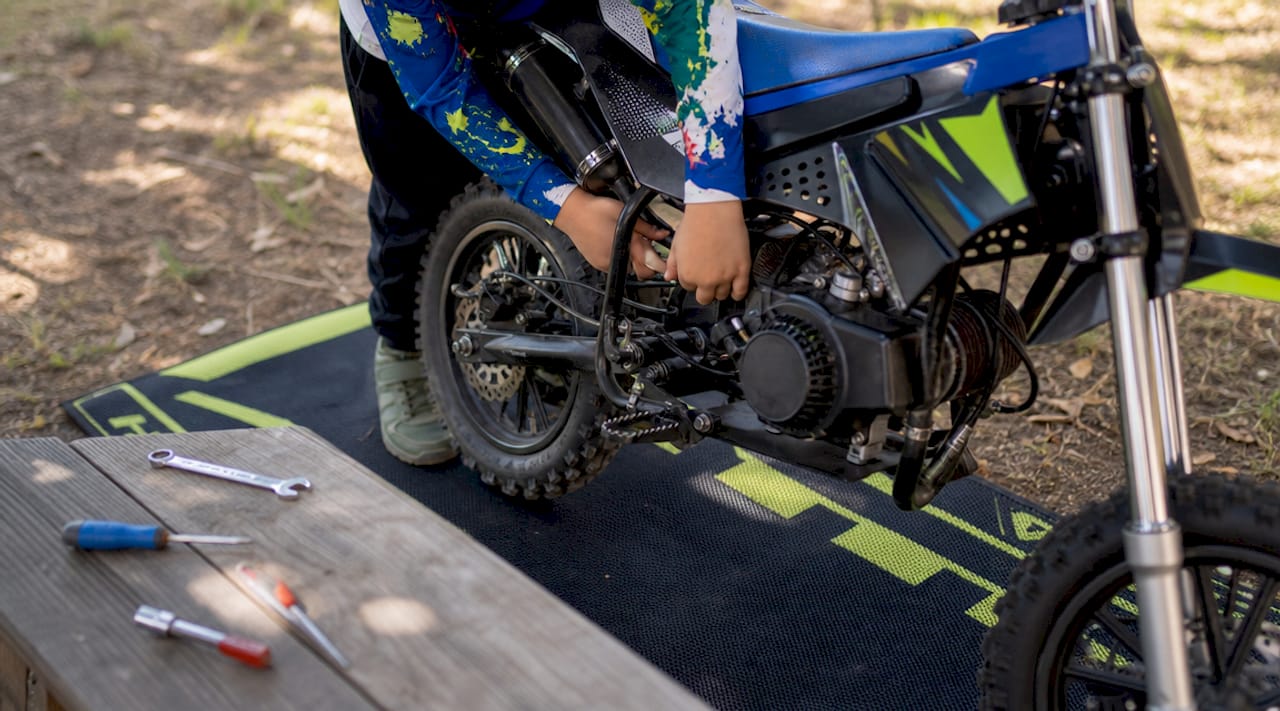
Matching the machine to the rider is where most parents make their biggest mistake. Engine size in cubic centimeters (cc) is a useful starting point, but it is not the whole picture. A general rule used across the youth powersports industry places children under 11 on vehicles with engines at or below 70cc. Kids aged 12 to 15 typically move into the 70cc to 110cc range, while teenagers with demonstrated skill can handle up to 125cc with proper supervision.
The table below gives you a practical reference for matching vehicle type and power to your child’s profile:
| Age range | Recommended engine size | Best vehicle type | Key safety control |
|---|---|---|---|
| 6 to 8 years | Under 50cc or electric | Mini ATV or electric dirt bike | Remote kill switch, speed cap at 5 mph |
| 9 to 11 years | 50cc to 70cc | Youth ATV or mini bike | Speed limiter, parental remote |
| 12 to 14 years | 70cc to 110cc | Youth ATV or small side-by-side | Adjustable governor, roll cage |
| 15 to 16 years | 110cc to 125cc | Youth ATV or trail bike | Full gear, adult supervision |
ATVs, dirt bikes, and side-by-sides each serve a different riding style. Youth ATVs offer four-wheel stability and are the most forgiving for beginners. Dirt bikes demand more balance and body coordination, making them better suited for kids who have already developed basic riding confidence. Side-by-sides with roll cages and seat belts are a strong option for younger children riding alongside a parent, since the enclosed cab adds a physical layer of protection.
Speed governors with selectable low-speed modes are more effective safety controls than engine size alone. A 110cc ATV with a governor set to 10 mph is safer for a beginner than a 50cc machine with no limiter at all. Hiboy’s 2026 parent guide categorizes speed caps by beginner age, recommending as low as 5 to 7.5 mph for younger riders. That number is the real ceiling you should be shopping for, not the top-end horsepower figure in the marketing copy.
Pro Tip: Ask the seller to demonstrate the speed limiter adjustment before you complete the purchase. If they cannot show you how to set it, treat that as a red flag and look for a model with a documented, parent-adjustable governor.
Parental remote kill switches and adjustable speed limiters provide a dynamic safety layer that grows with your child’s skill level. You start the governor at 5 mph, watch your child build confidence over several sessions, then raise the limit incrementally. That progression is far safer than handing a child a vehicle at full power and hoping instinct takes over. Read more about parental controls in ATVs to understand exactly how these systems work before you shop.
What practical steps should you follow before the first ride?
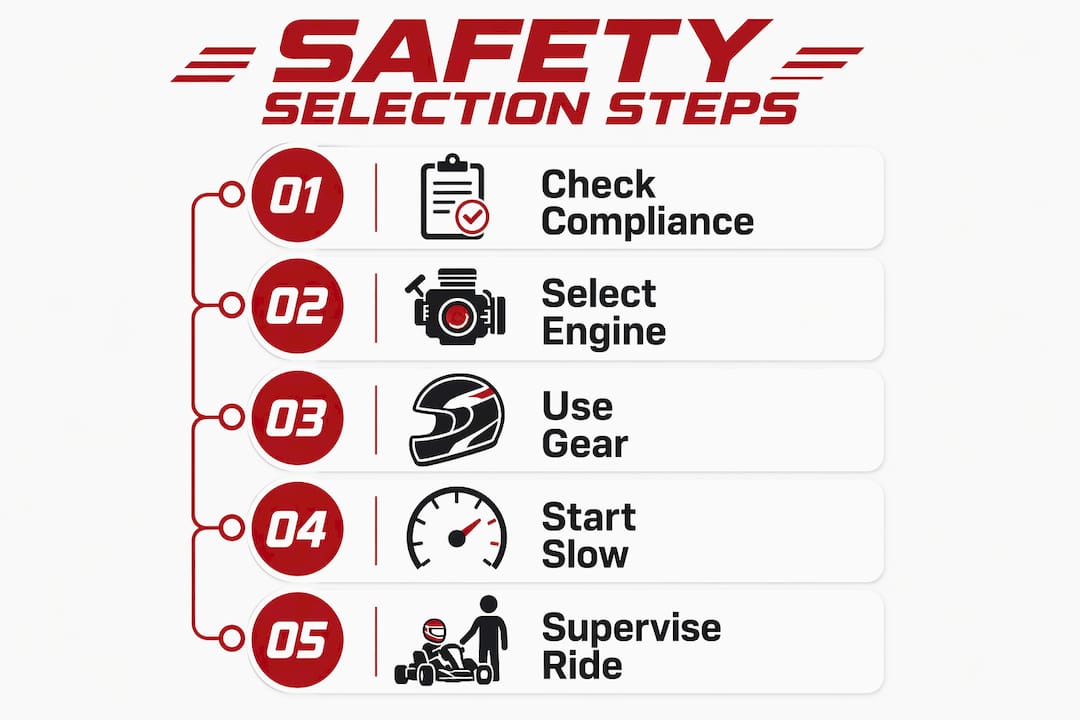
Preparation before the first ride is as important as the vehicle itself. Follow these steps in order to avoid the most common and costly mistakes parents make.
- Search the CPSC recall database. Enter the brand name and model number at cpsc.gov. If the vehicle appears in any active recall or stop-use notice, do not buy it regardless of the price.
- Read the owner’s manual cover to cover. A missing manual is a federal compliance violation and a practical safety gap. If no manual is included, contact the manufacturer before the vehicle leaves the box.
- Verify the speed limiter in person. Set the governor to its lowest setting and test it in a controlled space before your child ever sits on the seat.
- Buy certified gear before the vehicle arrives. A DOT-certified helmet, ASTM-rated goggles, gloves, and over-the-ankle boots should be sized and fitted to your child in advance.
- Choose the right terrain for the first ride. Flat, open grass or a gravel lot with no obstacles is the right starting environment. Trails, hills, and wooded paths come later, after your child has demonstrated basic control.
Beyond the checklist, consider your state’s legal requirements. State laws vary widely, with some permitting ATV riding as young as age 10 with adult supervision and a safety certificate. Knowing your jurisdiction’s rules protects you legally and reinforces the safety culture you are building at home. The youth ATV guide from Gokartsusa covers compliance considerations worth reviewing alongside your state’s specific regulations.
How can you teach and supervise kids to ride safely?
Rider education is the layer of protection that no vehicle feature can replace. The ATV Safety Institute offers certified training courses specifically designed for young riders, covering throttle control, braking, turning, and emergency stops in a structured environment. Enrolling your child before the first unsupervised ride is the single highest-return investment you can make in their safety.
Supervision rules should be non-negotiable in the early months of riding:
- Always ride during daylight hours on familiar, obstacle-free terrain
- Maintain visual contact with your child throughout every session
- Set a hard rule: no passengers on single-rider youth ATVs, ever
- Require full gear on every ride, including short practice sessions in the backyard
- Conduct a pre-ride check of tires, brakes, and fuel or battery level before each outing
Skill development works best when it is gradual and deliberate. Start your child on flat ground at the governor’s lowest speed setting. Add gentle turns after two or three sessions. Introduce mild inclines only after your child can stop confidently and steer predictably. Rushing this progression is the most common parental mistake in youth powersports. The kids’ ATV riding guide from Gokartsusa walks through this progression in detail, with session-by-session milestones worth following.
Pro Tip: A layered safety approach combining a vetted, compliant vehicle with certified gear, formal training, and active supervision is the only method that consistently reduces injury risk. No single element works alone.
Regular maintenance keeps the safety equation intact over time. Check brake pads, tire pressure, and all fluid levels monthly. Inspect the speed limiter setting before each ride to confirm it has not been tampered with. Teach your child to report any unusual sounds or handling changes immediately rather than riding through them.
Key takeaways
Selecting a safe kid-friendly powersports vehicle requires verifying federal compliance, matching engine size and speed controls to your child’s age, and combining certified gear with formal rider training before the first ride.
| Point | Details |
|---|---|
| Compliance check first | Search the CPSC recall database for every model before purchase to rule out federally non-compliant vehicles. |
| Speed governors over CC size | A governor set to 5 to 10 mph is a more reliable safety control than engine displacement alone. |
| Gear before the vehicle | Buy a DOT-certified helmet and full protective gear sized to your child before the vehicle arrives. |
| Formal training matters | Enroll your child in an ATV Safety Institute course before any unsupervised riding begins. |
| Layered protection wins | Combining a compliant vehicle, certified gear, training, and active supervision is the only approach that consistently reduces injury risk. |
Why I think parents are shopping for youth powersports backwards
Most parents I talk with start their search by asking, “What’s the most popular kids’ ATV right now?” That question puts marketing before safety, and it is the wrong starting point. The right first question is, “Does this vehicle have an active CPSC recall, and can I verify its compliance documentation?” The adventure comes second. The paperwork comes first.
I have seen families buy a vehicle because it looked rugged and came with a low price tag, only to discover weeks later that the model was on a stop-use list. The thrill of that purchase evaporated fast. The vehicles that deliver lasting freedom and adventure are the ones that were vetted before they left the retailer’s warehouse, not the ones that looked good in a product photo.
The other misconception I encounter constantly is that engine size equals safety. A 50cc machine with no speed limiter is not safer than a 110cc machine with a governor locked at 8 mph. Parents who understand that distinction shop smarter and their kids ride safer. Trust the compliance documentation, trust the governor settings, and trust the training process. The trail will still be there once your child is genuinely ready for it.
— Mario
Ride with confidence: find the right vehicle at Gokartsusa
At Gokartsusa, we believe every young rider deserves a machine that was built with their safety in mind from the ground up. Our catalog includes vehicles that meet federal compliance standards and come equipped with the parental controls that make a real difference on the trail.

The Mini Sport Kids ATV with 110cc Gas Engine is one of our most trusted options for parents who want parental remote start and kill switch capability built right in. It pairs a manageable engine size with real safety controls, so you stay in command while your child builds confidence. Browse our full selection of entry-level kids’ ATVs and reach out to our team for guidance on the safest fit for your child’s age, size, and skill level. We are your pit crew from the first click to the first ride.
FAQ
What age is appropriate for a kid’s first ATV?
The American Academy of Pediatrics discourages ATV riding for children 16 and under due to cognitive and motor skill demands, but some states permit supervised riding as young as age 10 with a safety certificate. Always check your state’s specific laws before purchasing.
How do I verify a youth ATV is federally compliant?
Search the CPSC recall database at cpsc.gov using the brand and model name, and confirm the vehicle ships with lights, reflectors, a parking brake, compliance labeling, and an owner’s manual. Any missing element is a federal violation and a reason to walk away.
Are speed governors more important than engine size?
Speed governors set to beginner-appropriate limits, such as 5 to 7.5 mph for younger riders, provide more practical safety control than engine displacement alone. A well-governed 110cc ATV is safer for a beginner than an ungoverned 50cc machine.
What protective gear does my child need before riding?
A DOT-certified helmet, ASTM-rated eye protection, gloves, and over-the-ankle boots are the minimum required before any ride. Gear should be purchased and fitted before the vehicle arrives, not after.
Do I need to enroll my child in a safety course?
Formal training through the ATV Safety Institute teaches throttle control, braking, and emergency stops in a structured environment, skills that no amount of backyard practice fully replicates. Completing a certified course before unsupervised riding is the single highest-return safety investment you can make.