




TL;DR:
- Frame material is the structural foundation that influences a vehicle’s durability, weight, and corrosion resistance for recreational vehicles and outdoor equipment. Selecting the appropriate material requires understanding trade-offs between steel, aluminum, composites, and plastics based on usage, environment, and budget. Proper maintenance and surface treatments can significantly extend the lifespan of the chosen frame, ensuring safety and long-term performance.
Frame material is the core structural substance that forms the skeleton of recreational vehicles, go-karts, ATVs, and outdoor equipment, directly determining how much punishment a machine can take before it fails. The right choice affects weight, ride quality, corrosion resistance, and how long your vehicle stays trail-ready. Steel, aluminum, carbon fiber, and reinforced plastics each bring a different set of trade-offs to the table. Understanding those trade-offs before you buy is the difference between a machine that lasts a season and one that lasts a decade.
What is frame material and why does it matter for your ride?
Frame material refers to the specific substance used to construct the load-bearing skeleton of a vehicle or piece of outdoor equipment. That skeleton supports every other component, absorbs impact forces, and holds the geometry that makes a go-kart handle predictably or an ATV track straight under load. The structural integrity of a frame depends on material selection matching the required strength, corrosion resistance, and cost constraints of the application.
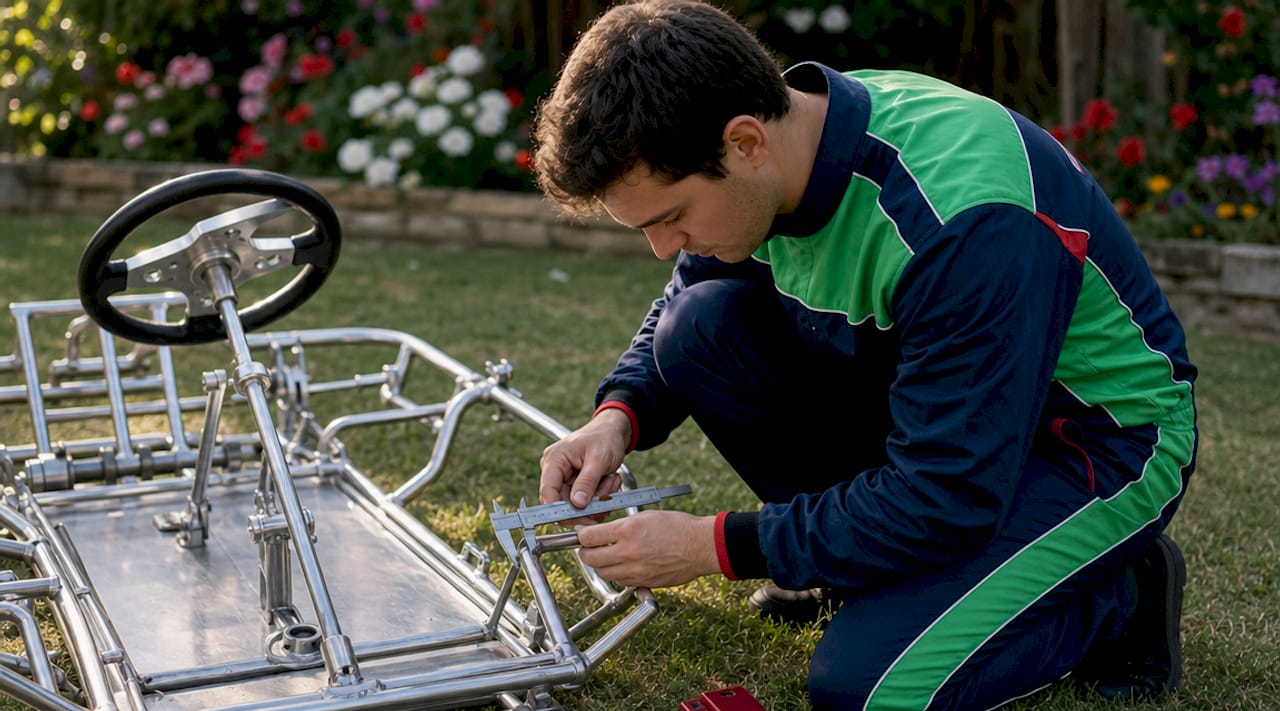
For recreational vehicles, the stakes are real. A frame that flexes too much under cornering reduces control. One that corrodes after a wet season becomes a safety liability. One that weighs too much robs a small engine of performance. Material choice is not a cosmetic decision. It is an engineering one, and getting it right starts with knowing what your options actually are.
Named entities matter here. Steel grades like A36 and A572, aluminum alloys like 6061, and composites like carbon fiber are not interchangeable. Each has a specific mechanical profile. Knowing which profile fits your use case is the foundation of a smart purchase.
Common types of frame materials used in recreational vehicles and go-karts
The frame material options you will encounter across go-karts, ATVs, and outdoor equipment fall into three broad categories: metals, composites, and engineered plastics. Each category contains specific grades and alloys that perform very differently from one another.
Metals: steel and aluminum dominate
Steel is the most widely used frame material in entry-level and mid-range recreational vehicles. Structural steel grades like A36 and A572 offer high tensile strength at low cost, making them the default choice for go-kart chassis that need to absorb repeated impacts without cracking. Stainless steel grades 304 and 316 add corrosion resistance for equipment exposed to moisture or salt. The trade-off is weight. Steel frames are heavier than aluminum, which matters when you are trying to keep a youth go-kart light and maneuverable.
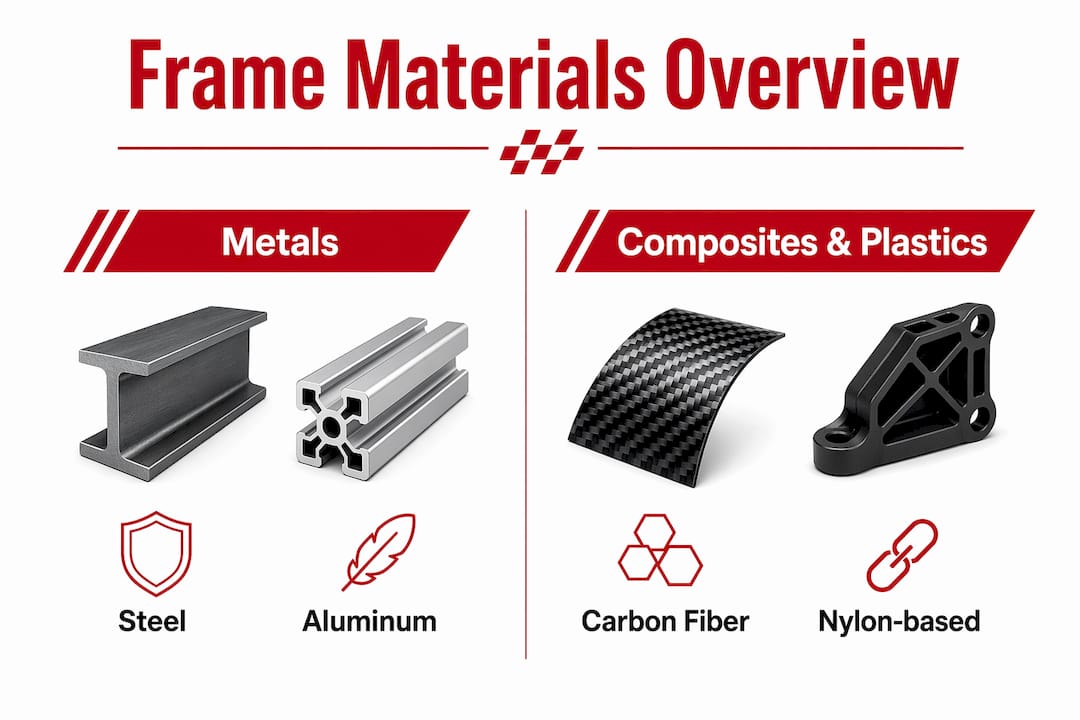
Aluminum alloys 3003, 5052, and 6061 are the primary alternatives. Aluminum 6061 is especially popular because it pairs well with anodizing and powder coating, which significantly extend corrosion resistance. Aluminum frames weigh roughly one-third less than comparable steel frames, which translates directly to faster acceleration and easier handling for smaller riders. The cost is higher than mild steel, and aluminum requires more precise welding techniques.
Composites and engineered plastics
Carbon fiber delivers the highest strength-to-weight ratio of any common frame material, making it the preferred choice for performance-critical applications where every gram counts. Carbon fiber frames are woven from carbon filaments embedded in a resin matrix, producing a structure that is both extremely stiff and extremely light. The downside is cost. Carbon fiber frames carry a significant price premium over steel or aluminum, and impact damage can be harder to detect and repair.
Nylon-based materials like TR-90 and reinforced plastics appear in specific components rather than full frames, particularly in youth vehicles where flexibility and impact absorption are priorities. These materials resist cracking under sudden loads and are naturally corrosion-proof. Surface treatments like powder coating and anodizing extend the life of metal frames considerably, and they are worth factoring into any material comparison.
| Material | Strength | Weight | Corrosion resistance | Relative cost |
|---|---|---|---|---|
| Mild steel (A36/A572) | High | Heavy | Low without coating | Low |
| Aluminum 6061 | Medium-high | Light | Good with anodizing | Medium |
| Stainless steel 304/316 | High | Heavy | Excellent | Medium-high |
| Carbon fiber | Very high | Very light | Excellent | High |
| Reinforced nylon/plastic | Medium | Very light | Excellent | Low-medium |
How to compare frame materials based on quality and durability
Comparing frame materials requires looking at specific mechanical properties rather than general impressions. The four properties that matter most for recreational vehicles and outdoor equipment are tensile strength, corrosion resistance, fatigue strength, and weight.
Tensile strength measures how much pulling force a material can withstand before it breaks. For go-kart frames that flex under cornering loads, higher tensile strength means the chassis holds its geometry longer. Fatigue strength is equally important. It measures how well a material resists cracking after repeated stress cycles. Steel generally outperforms aluminum in fatigue resistance, which is why steel frames are common in high-impact applications like off-road go-karts.
Corrosion resistance determines how long a frame survives outdoor exposure. Titanium frames are extremely corrosion-resistant and also hypoallergenic, which matters for close-contact components. For most recreational vehicles, aluminum 6061 with a quality anodized finish provides excellent corrosion resistance at a fraction of titanium’s cost. Steel frames without protective coatings will rust, so powder coating is not optional for outdoor use. It is a requirement.
Pro Tip: When evaluating a go-kart or ATV frame, ask specifically about the alloy grade, not just the material type. A36 steel and A992 steel have meaningfully different strength and weld characteristics, and the difference matters for long-term durability.
Weight affects performance directly. A lighter frame lets a smaller engine deliver more speed and makes a vehicle easier for younger riders to control. The frame material comparison between steel and aluminum often comes down to this trade-off: steel costs less and resists fatigue better, while aluminum saves weight and resists corrosion better without coatings.
Choosing the best frame material for your needs and budget
The best frame material for your situation depends on four factors: the type of vehicle, how and where you will use it, how much you weigh or how much load the frame must carry, and your budget. None of these factors works in isolation.
For youth go-karts used on flat tracks or driveways, aluminum frames are the smart pick. They are light enough for small riders to handle confidently, resist rust from rain exposure, and hold up well under the moderate loads a child-sized vehicle generates. For adult off-road go-karts or ATVs that will take hard hits on rough terrain, steel frames with powder coating offer better fatigue resistance and impact absorption at a lower price point.
Environmental conditions shape the decision significantly. Vehicles stored outdoors in humid climates or near coastal areas need frames with strong corrosion resistance. Aluminum 6061 with anodizing or stainless steel 304 are the right choices for those conditions. Mild steel frames in those environments will require diligent maintenance to avoid rust, and even then, they will not last as long.
- Flat track or recreational use: Aluminum 6061 or mild steel with powder coating
- Off-road or high-impact use: Steel A36 or A572 with protective coating
- Coastal or high-humidity environments: Aluminum 6061 with anodizing or stainless steel 304/316
- Performance or weight-sensitive builds: Carbon fiber where budget allows
- Youth vehicles with moderate use: Reinforced nylon components combined with aluminum frames
Budget is a real constraint. Material selection is always a compromise between strength, corrosion resistance, and cost, and over-specifying a material adds expense without adding proportional benefit. A carbon fiber frame on a backyard go-kart is overkill. A mild steel frame on a vehicle that will sit outside year-round in a rainy climate is under-specified. Match the material to the actual use case.
Pro Tip: Do not buy based on material type alone. Ask for the specific alloy grade and surface treatment. A go-kart advertised as having an “aluminum frame” could use 3003 or 6061, and those two alloys have very different strength profiles for demanding use.
Maintenance and durability tips to maximize frame lifespan
The right material choice only delivers its full potential if you maintain it correctly. Regular cleaning, inspection, and protective coatings are the three pillars of frame longevity regardless of what the frame is made from.
- Clean after every outdoor session. Mud, salt, and moisture accelerate corrosion on steel and degrade coatings on aluminum. Rinse the frame with fresh water and dry it thoroughly before storage.
- Inspect welds and joints every season. Cracks most often start at weld points where stress concentrates. Look for discoloration, hairline fractures, or any visible separation between the weld bead and the base metal.
- Reapply protective coatings when worn. Powder coating chips over time, especially on off-road vehicles. Touch up bare metal spots immediately with a rust-inhibiting primer before corrosion takes hold.
- Store vehicles off the ground in dry conditions. Ground contact traps moisture against the frame. Use a stand or rack, and cover the vehicle if it will sit unused for more than a few weeks.
- Watch for flex or alignment changes. A frame that suddenly feels looser in corners or shows visible bending has likely experienced fatigue damage. That is a repair situation, not a maintenance one.
Carbon fiber frames require a different approach. They do not rust, but impact damage can create internal delamination that is invisible on the surface. Inspect carbon fiber frames carefully after any hard collision, and consult a specialist before riding a frame that has taken a significant hit.
Key takeaways
The best frame material matches the specific demands of your vehicle, environment, and budget rather than defaulting to the most expensive or most popular option.
| Point | Details |
|---|---|
| Material defines performance | Frame material determines strength, weight, corrosion resistance, and fatigue life for your vehicle. |
| Steel vs. aluminum trade-off | Steel offers better fatigue resistance and lower cost; aluminum saves weight and resists corrosion without coatings. |
| Alloy grade matters | Ask for specific grades like A36, A572, or 6061 rather than accepting general material labels. |
| Surface treatments extend life | Powder coating and anodizing are not optional extras. They are what make metal frames last outdoors. |
| Match material to use case | Off-road and high-impact use favors steel; youth vehicles and coastal environments favor aluminum 6061. |
What I have learned from years of watching riders choose the wrong frame
The most common mistake I see is buyers fixating on price per pound of metal without thinking about where the vehicle will actually live. A steel-framed go-kart stored in a dry garage in Arizona will outlast an aluminum frame that never gets cleaned in a Florida backyard. Material properties matter, but so does the environment and the owner’s commitment to maintenance.
The second mistake is treating “aluminum” or “steel” as a complete answer. Buyers consistently underestimate how much alloy grade changes real-world performance. I have seen aluminum frames that bent under moderate loads because the manufacturer used 3003 instead of 6061. The spec sheet said aluminum. The performance said otherwise.
There is also a growing conversation worth paying attention to around sustainability. Life cycle assessments of frame materials now look at embodied carbon from extraction through disposal, not just recycled content. Aluminum scores well here because it is highly recyclable. That is a long-term value argument, not just an environmental one.
My honest recommendation: buy the frame material that fits your terrain and climate first, your budget second, and your weight preferences third. In that order. A heavier steel frame that survives five years of hard use beats a lighter aluminum frame that corrodes in two.
— Mario
Find your next adventure with Gokartsusa
At Gokartsusa, we know that a great ride starts with a well-built frame. Every vehicle in our lineup is selected with durability, safety, and real-world performance in mind, so you spend more time on the trail and less time in the shop.
Whether you are shopping for a young rider ready for their first ATV or looking for a go-kart that can handle serious outdoor use, our catalog has options built with quality frame materials to match. The Mini Sport Kids ATV with 110cc Gas Engine is a strong example: engineered for safety, sized for youth riders, and built to take the kind of punishment that comes with real outdoor adventure. Explore our full selection at GokartsUSA.biz and find the ride that fits your family and your terrain.
FAQ
What is frame material in a go-kart or ATV?
Frame material is the specific substance used to build the structural skeleton of a go-kart or ATV, with steel and aluminum being the most common choices. The material determines the vehicle’s strength, weight, and resistance to corrosion and impact.
Which frame material is the most durable for outdoor use?
Steel grades like A36 and A572 offer the highest fatigue resistance for off-road and high-impact use, while aluminum 6061 with anodizing provides the best corrosion resistance for outdoor and coastal environments. The most durable choice depends on your specific terrain and climate.
Is aluminum or steel better for a youth go-kart frame?
Aluminum is generally the better choice for youth go-karts because it is lighter, easier for small riders to handle, and resists rust without heavy maintenance. Aluminum 6061 with a powder-coated or anodized finish delivers reliable performance for recreational use.
How does surface treatment affect frame material durability?
Powder coating and anodizing significantly extend the lifespan of metal frames by creating a protective barrier against moisture and corrosion. Without these treatments, even high-quality steel frames will rust when exposed to outdoor conditions.
What are the signs that a frame material is failing?
Visible cracks at weld points, unexpected flex during cornering, rust penetrating through coatings, and alignment changes that appear without a collision are all signs of frame material fatigue or damage. Address these immediately rather than continuing to ride on a compromised frame.