




TL;DR:
- Proper storage protects go-karts from corrosion, damage, and performance deterioration.
- Indoor, climate-controlled spaces with good airflow are ideal for long-term storage.
- Regular inspections, cleaning, and correct preparatory steps ensure a ready-to-ride kart each season.
A go-kart sitting in a damp corner of an unventilated shed for three months is not just resting; it is quietly deteriorating. Corroded fuel lines, flat-spotted tires, a dead battery, and rust creeping across the frame are all avoidable outcomes, yet they happen to riders who underestimate how much proper storage matters. We have seen it too many times. The good news is that protecting your investment requires no special expertise, only the right knowledge and a little commitment. This guide covers proven storage techniques, the tools you need, common mistakes to avoid, and maintenance tips that keep your kart ready to rip every single time you pull it out.
Table of Contents
- Choosing the right storage location for your go-kart
- Essential tools and accessories for proper storage
- Step-by-step: How to prepare your go-kart for storage
- Common mistakes and troubleshooting tips
- The overlooked link between storage and go-kart performance
- Upgrade your go-kart experience with GoKarts USA®
- Frequently asked questions
Key Takeaways
| Point | Details |
|---|---|
| Smart location choice | Store your go-kart indoors in a clean, dry space to prevent damage and extend its life. |
| Use quality accessories | Invest in proper covers, stands, and battery tenders to protect your investment. |
| Follow a set routine | Prepare your go-kart for storage with stepwise cleaning, maintenance, and protection steps. |
| Periodic checks matter | Inspect your go-kart during storage to spot issues before they become bigger problems. |
| Avoid common mistakes | Steer clear of shortcuts that can cause costly wear, such as leaving fluids or exposing the kart to weather. |
Choosing the right storage location for your go-kart
After understanding why storage matters, your first move is finding the right space. Not every garage or shed is equal, and picking the wrong environment can cause more damage than riding itself. Think of your storage location as your kart’s off-season pit lane: it needs to be clean, stable, and secure.
Indoor vs. outdoor: what’s actually at stake
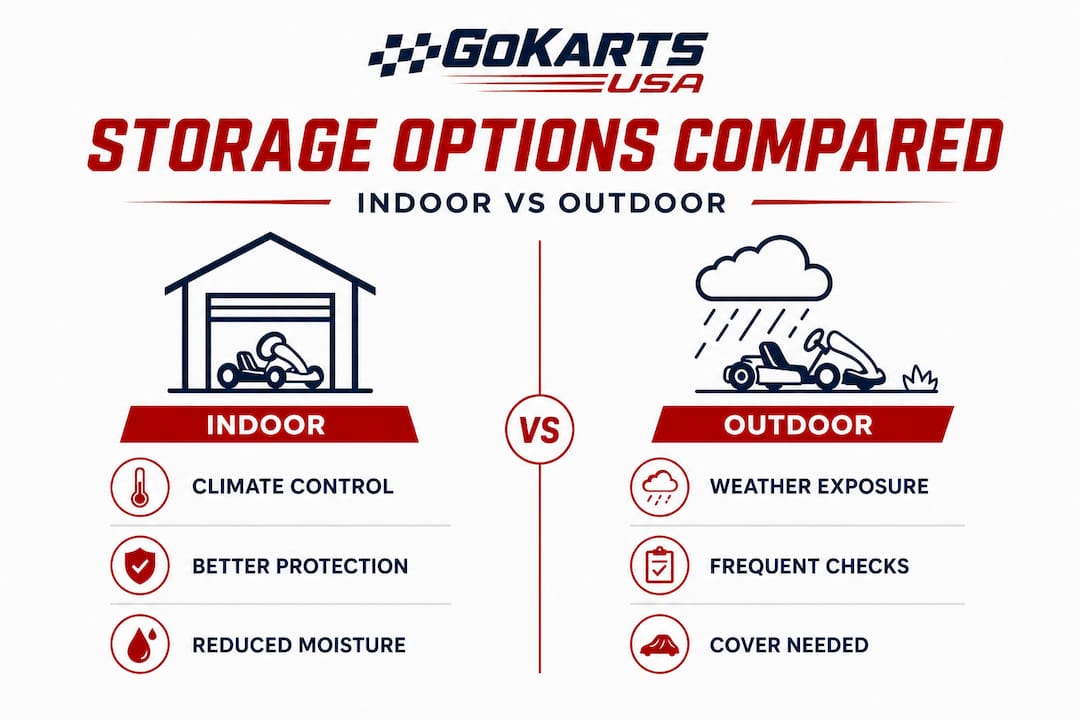
Indoor storage is almost always the better choice. A climate-controlled garage, a sealed workshop, or even a well-built shed can shield your kart from the biggest threats: moisture, temperature swings, UV exposure, and pests. Outdoor storage under a simple tarp leaves your kart exposed to rain pooling, condensation cycles, and direct sunlight that cracks rubber and fades plastics. Reviewing go-kart buying workflow advice confirms that where you store your kart directly shapes how long it performs at a high level.
Key environmental requirements
Temperature consistency matters more than most people realize. Extreme heat causes rubber seals to dry out and crack, while freezing temperatures can expand fluids and stress metal components. Aim for a storage space that stays between 40°F and 75°F year-round. Humidity is equally critical; relative humidity above 60% accelerates rust and promotes mold growth on fabric parts and wiring insulation. According to optimal storage environments guidance, keeping your kart in a dry, shaded, well-ventilated area is the single most effective way to prevent long-term deterioration.
| Storage environment | Pros | Cons |
|---|---|---|
| Climate-controlled garage | Best temperature and humidity control, secure | Space may be limited, can cost more |
| Standard garage or shed | Affordable, accessible, good weather protection | Humidity and pests may still be issues |
| Commercial storage facility | High security, climate options available | Monthly cost, limited accessibility |
| Outdoor with cover | Low cost, zero setup | Highest exposure risk, frequent checks needed |
Site selection checklist
Before committing to a space, run through these essentials:
- No standing water or active roof leaks present
- Adequate airflow or ventilation points
- Lockable door or secure entry for theft prevention
- Flat, stable floor to prevent the kart from rolling or settling unevenly
- Distance from chemicals, fertilizers, or fuel sources that release corrosive fumes
- Enough clearance to move around the kart for periodic checks
Pro Tip: Even in a well-sealed garage, adding a small box fan or opening a vent periodically reduces moisture buildup significantly. Stagnant air is almost as damaging as direct moisture exposure; good airflow keeps condensation from settling on your frame and engine components.
Essential tools and accessories for proper storage
With your space selected, next comes assembling the right gear for storage success. Having the correct accessories in place before you park the kart saves you from discovering problems when the riding season returns.
The core kit every owner needs
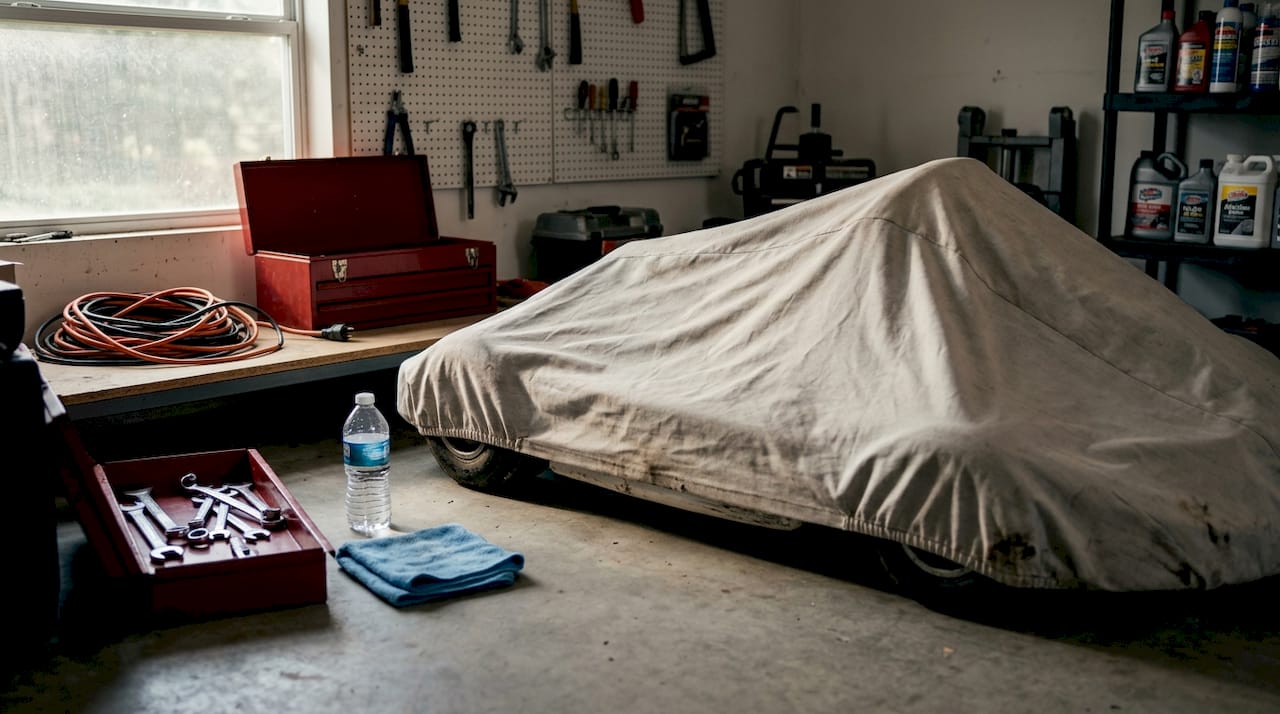
A high-quality, breathable go-kart cover is non-negotiable. Waterproof covers that trap moisture underneath can actually make corrosion worse; breathable covers let humidity escape while blocking dust and debris. Tire chocks keep the kart stationary on flat surfaces, preventing unintended movement and reducing tire sidewall stress. A quality battery tender, sometimes called a trickle charger, keeps your battery at optimal charge without overcharging it. Reviewing go-kart maintenance essentials confirms that a battery tender alone can extend battery life by two to three seasons compared to simply leaving the battery disconnected.
A kart stand is another worthwhile investment. Lifting the tires off the ground eliminates flat spotting, which happens when tires develop a slight deformation from carrying the kart’s weight in one position for weeks. Flat spots can cause vibration on the track that is genuinely hard to diagnose if you don’t know they developed during storage. Exploring your go-kart parts overview is a smart way to identify specific components that may need protective accessories based on your kart’s model and age.
| Accessory | Basic version | Advanced version |
|---|---|---|
| Cover | Waterproof tarp | Breathable, fitted kart cover |
| Battery care | Disconnect terminals | Smart battery tender with auto shut-off |
| Tire protection | Flat on ground, deflate slightly | Kart stand to lift tires fully off floor |
| Frame protection | Wipe with dry cloth | Apply corrosion-inhibiting spray or wax |
| Fuel management | Drain tank manually | Add fuel stabilizer before draining |
Optional extras for enthusiast-level storage
- Desiccant packs placed inside the cover to absorb moisture
- Silicone spray for rubber seals, hoses, and gaskets to prevent cracking
- Cable lubricant for throttle and brake lines to prevent stiffness
- Foam padding for frame contact points when using a kart stand
- A security cable or wheel lock as an additional theft deterrent
Browsing top go-kart accessories can help you find products that pair perfectly with your specific kart model, and if you’re thinking about upgrading go-kart performance before or after storage, those upgrades are much easier to install when the kart is already stripped down for maintenance.
Pro Tip: A sealed plastic bin kept near your kart makes a smart multipurpose storage solution. Keep your battery tender, lubricants, spare spark plug, and cover inside it. When it’s time to prepare for storage or pull your kart out, everything is in one place, and nothing grows legs over the winter.
Step-by-step: How to prepare your go-kart for storage
Once you have your gear, it’s time to take the correct steps to ready your go-kart for storage. Sequence matters here. Doing things out of order, like applying a cover before cleaning, traps dirt and moisture against surfaces that then deteriorate quietly all season long.
The preparation process
-
Wash the kart thoroughly. Use a mild soap and water, getting into the frame tubes, around the engine, and under wheel wells. Dirt left on metal surfaces holds moisture and accelerates rust formation. Dry everything completely before moving to the next step.
-
Inspect and tighten all fasteners. Vibration from riding loosens bolts and nuts over time. A post-ride inspection routine, as described in post-operation inspection guidance, is essential before storage because loose fasteners left unaddressed can cause frame stress or part failure during the next ride.
-
Drain or stabilize the fuel. For storage lasting more than 30 days, old fuel breaks down and leaves varnish deposits inside the carburetor and fuel lines. Either drain the tank completely and run the engine until it dies from fuel starvation, or add a quality fuel stabilizer to a full tank and run the engine for five minutes to circulate it. Refer to broader vehicle storage tips for additional guidance on fuel system care applicable across vehicle types.
-
Change the oil if it’s due. Used oil contains combustion byproducts and acids that corrode engine internals during long storage. Fresh oil gives your engine a clean environment to sit in all off-season.
-
Prepare the battery. Remove it from the kart if possible and store it in a cool, dry place connected to a battery tender. If removal is not practical, at minimum disconnect the negative terminal. A battery left connected and uncharged can sulfate permanently within a single winter.
-
Adjust tire pressure. Inflate tires to the upper end of the recommended range before storage, as tires lose a small amount of pressure naturally over weeks. Alternatively, use a kart stand to lift them completely off the ground. Review your go-kart maintenance essentials reference for model-specific pressure recommendations.
-
Apply protective coatings. Spray exposed metal surfaces with a light corrosion inhibitor. Treat rubber components with a silicone-based product to prevent cracking.
-
Cover and position the kart. Place it on the stand or chocks, drape the breathable cover over it, and make sure it is secured from wind if storing in a partially open space.
Safety warning: When draining fuel or working with any flammable fluids, do so in a ventilated area away from open flames, sparks, or running pilot lights. Fuel vapors are invisible and can ignite from a surprising distance. Keep a fire extinguisher accessible any time you are handling fuel or lubricants.
Common mistakes and troubleshooting tips
Proper technique reduces risk, but it’s critical to know what can go wrong and how to tackle it before problems become expensive repairs.
The mistakes that hurt riders most
- Skipping the pre-storage clean. Dirt, mud, and racing debris left on the kart create a moisture-retaining layer that promotes rust and corrosion on frame welds and engine casings.
- Ignoring fluid changes. Old coolant, oil, and brake fluid all degrade over time. Degraded brake fluid absorbs moisture and loses effectiveness; old coolant becomes acidic and corrodes aluminum components.
- Using the wrong cover. A non-breathable plastic tarp traps condensation. You may pull the kart out after winter and find more rust than if you had used no cover at all.
- Leaving tires flat on concrete. Flat spots from months of static weight can be felt as rhythmic vibration during your first laps back. In severe cases, the tire damage is permanent.
- Not checking periodically. Storage is not a set-and-forget situation. Pests can chew through wiring; a small leak you didn’t notice can worsen considerably over months.
Troubleshooting what you find
If your battery is dead, start with a slow charge rather than a jump. Jumping a sulfated battery can damage the charging system. If it does not hold a charge after a full cycle, it likely needs replacement. Review the troubleshooting guide for a structured diagnostic process. The full troubleshooting repair guide covers fuel system clogs, ignition issues, and carburetor problems that are all common after improper storage.
If the engine cranks but won’t fire, suspect old fuel or a gummed carburetor jet. A carburetor cleaning kit and fresh fuel resolve most of these cases quickly. Surface rust on the frame is manageable with a wire brush and rust-converting primer, but deep pitting in structural welds should be evaluated by a professional.
Pro Tip: Set a calendar reminder to check your stored kart every three to four weeks. A five-minute walk-around, a quick tire pressure gauge check, and a visual inspection of the battery tender indicator light take almost no time but can catch developing problems before they become serious repairs.
The overlooked link between storage and go-kart performance
Here’s a perspective we hold firmly at GoKarts USA®: most riders think of storage as a passive pause in their season. Park it, cover it, forget it until spring. We’d challenge that assumption directly. Storage is not a break from maintaining your kart’s performance; it is one of the most active phases of it.
Consider what happens inside an engine sitting in poorly managed conditions. Moisture migrates past gaskets. Carbon deposits harden on cylinder walls from old oil. Carburetor passages clog with varnish from degraded fuel. When you pull that kart out and push it hard on the track, every one of those unseen issues creates friction, inefficiency, and wear that cuts into your lap times and component lifespan simultaneously.
We have heard from riders who were baffled by sluggish throttle response and inconsistent power after winter, only to discover the culprit was fuel left sitting for four months without stabilizer. A single season of poor storage can set back your engine’s condition by the equivalent of many hard riding hours. Good storage preserves the gains you’ve already made in tuning and go-kart performance improvements, rather than quietly eroding them.
There’s also the resale angle, which riders rarely consider until they’re ready to upgrade. A well-documented storage history, including clean oil changes, proper battery maintenance, and rust-free frame condition, can add real dollars to your kart’s value. Buyers at every level notice the difference between a kart that has been cared for and one that has simply survived. Think of proper storage as part of your performance regimen, not separate from it.
Upgrade your go-kart experience with GoKarts USA®
If this guide has you fired up about protecting your kart and getting the most from every season, we’re ready to help you take the next step. At GoKarts USA®, we carry a wide selection of parts, accessories, and vehicles designed for riders who take their investment seriously.

Whether you’re searching for the right components to complete your storage kit, looking at go-kart footpegs and replacement parts to refresh your ride before the season, or eyeing something new like the powerful TrailMaster Taurus 200GX, we have options for every rider and every budget. Families looking to get younger riders started will find excellent kids go-kart options built with safety and fun in mind. Our team is your pit crew, ready to help you find exactly what you need to ride hard, store smart, and keep the adventure rolling.
Frequently asked questions
What is the best way to prevent rust when storing a go-kart?
Keep the go-kart dry, thoroughly cleaned, and protected with a breathable weather-resistant cover; applying a light corrosion-inhibiting spray to exposed metal surfaces before storage adds an important extra layer of protection, as outlined in optimal storage environment guidance.
Should I drain the fuel from my go-kart before long-term storage?
Yes, draining the fuel or adding a fuel stabilizer and running the engine for several minutes prevents the varnish buildup and fuel system clogs that are among the most common issues found after improper storage.
How can I keep my go-kart’s battery from dying in storage?
Disconnect the battery or connect it to a smart battery tender set to maintain mode; this prevents sulfation and keeps the battery ready for the next ride, a practice backed by go-kart maintenance essentials recommendations.
Can I store my go-kart outside?
You can store your kart outdoors if indoor space is unavailable, but it requires a robust breathable cover, regular checks for weather or pest damage, and extra attention to moisture management, as storage environment guidance makes clear that outdoor conditions significantly raise the risk of corrosion and mechanical deterioration.
What should I do if my stored go-kart won’t start?
Check fluid levels, battery charge state, and tire pressure first, then work through a step-by-step repair guide before contacting a professional; most post-storage starting issues trace back to fuel degradation or a discharged battery and are fixable at home.
Recommended
- Go-Kart Maintenance Essentials: Keep Your Kart in Top Shape – GoKarts USA®
- Go-Kart Safety Explained: A Parent’s Guide to Confident Driving – GoKarts USA®
- Top Go-Kart Safety Features for Worry-Free Family Fun – GoKarts USA®
- Safe go-kart features for kids: 7 must-haves in 2026 – GoKarts USA®
- Ultimate Guide to Vehicle Paint Protection in Miami: Keep Your Car Looking New
- How to Maintain Car: Complete Guide for Vehicle Care – CarJourney Blog