




TL;DR:
- Tires are the only contact point between a vehicle and the ground, determining handling, braking, and acceleration. Proper selection and maintenance of tire grip, pressure, temperature, and tread design greatly enhance vehicle performance and safety. Investing in quality tires and routine care yields more real-world improvements than engine modifications alone.
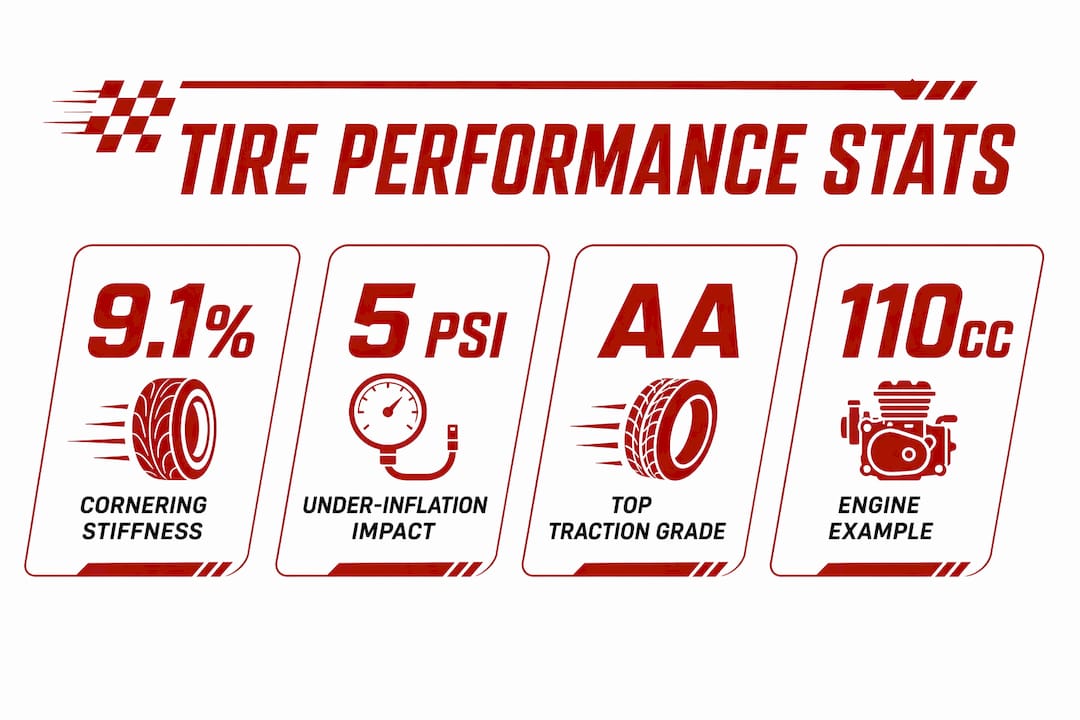
Tires are the sole contact point between your vehicle and the ground, making them the single most critical factor in how your machine handles, brakes, and accelerates. The role of tires in performance goes far beyond rubber and tread. Grip level, sidewall stiffness, compound hardness, and tread design all combine to define your vehicle’s true performance ceiling. Whether you ride a go-kart, ATV, or mini bike, understanding tire dynamics separates riders who push limits safely from those who get caught off guard. Only 15% of tires achieve the highest “AA” traction grade under Ultra High Performance standards. That gap in quality has real consequences on the trail or track.
How do tires affect handling and vehicle dynamics?
Sidewall stiffness and rubber compound define the handling limits of any vehicle. These two factors govern how much force transfers to the ground during cornering, braking, and acceleration. A softer compound grips better at lower speeds but wears faster. A stiffer sidewall gives sharper steering response but can feel unforgiving on rough terrain.
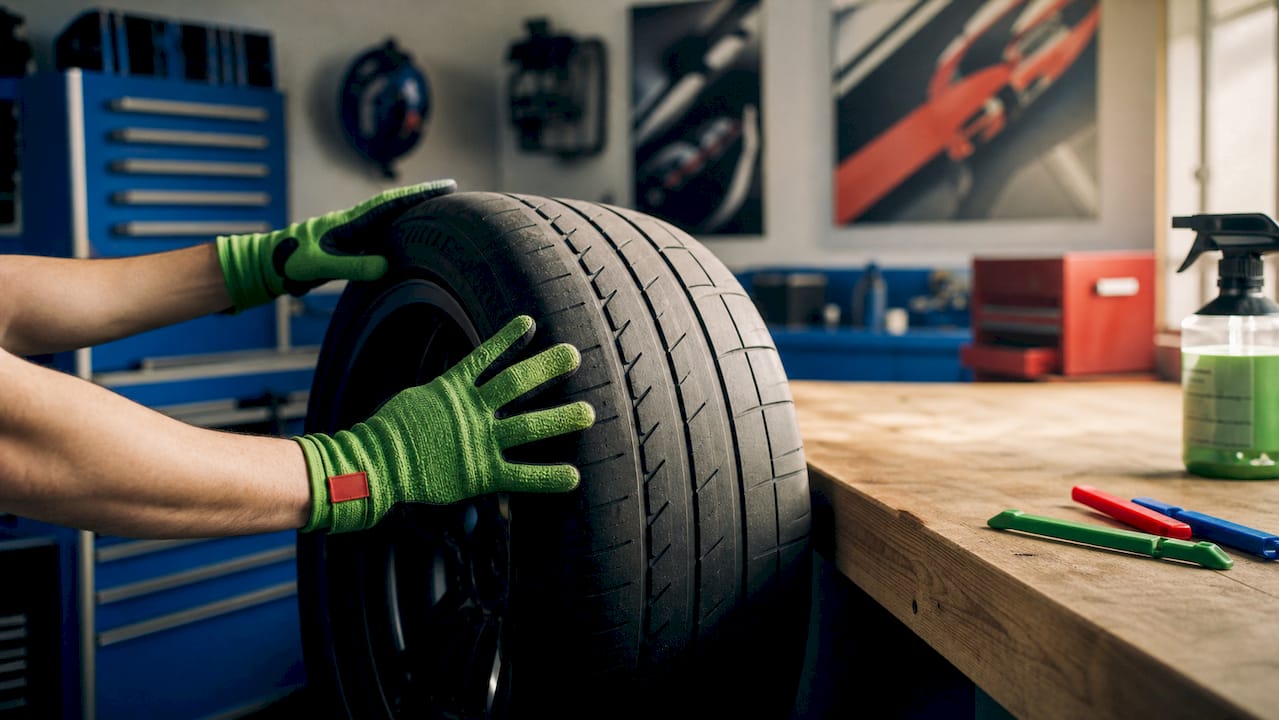
The contact patch is the small footprint of rubber actually touching the ground at any moment. Managing its size and shape is critical for balanced handling, especially at speed. A wider contact patch spreads load more evenly, improving stability. A narrow patch concentrates pressure, which can sharpen turn-in but reduce overall grip.
Research from SAE Mobilus shows cornering stiffness runs 9.1% higher in controlled indoor testing compared to outdoor evaluations. Longitudinal slip stiffness runs 30–50% higher indoors. This means real-world grip is always lower than lab numbers suggest, so choosing a tire with strong outdoor performance data matters more than spec sheets alone.
Grip, traction grade, and compound choice
Traction grade measures a tire’s ability to stop on wet pavement. The grades run from AA down through A, B, and C. Most riders never check this number, but it directly predicts how your vehicle behaves in an emergency stop or a sudden rain shower.
Rubber compound hardness also shapes how tires affect speed. Soft compounds heat up quickly and deliver peak grip fast. Hard compounds last longer but need more warm-up time before they reach full traction. For powersports riders who mix trail riding with pavement runs, a medium compound often delivers the best balance of grip and durability.
Pro Tip: Check the traction grade on any tire before buying. A tire rated “A” instead of “AA” can mean a measurable difference in stopping distance, especially on wet or loose surfaces.
| Tire Type | Compound | Best Use | Trade-off |
|---|---|---|---|
| Ultra High Performance | Soft | Track, dry pavement | Wears faster |
| All-Season | Medium | Mixed terrain, year-round | Moderate grip |
| Off-Road Knobby | Hard | Dirt, mud, gravel | Less pavement grip |
| Touring | Hard | Long-distance road | Reduced cornering feel |
What impact do tire pressure and temperature have on performance?
Tire pressure is the most overlooked performance variable in powersports. Under-inflation by just 5 PSI reduces steering precision and increases heat buildup inside the tire. Heat is the enemy of grip and longevity. A tire running hot from low pressure degrades faster and loses predictability exactly when you need it most.
Over-inflation is equally damaging in a different way. Too much pressure reduces the contact patch, making the tire feel skittish and reducing traction on uneven surfaces. The sweet spot is always the manufacturer’s recommended range, adjusted slightly for load and terrain.
Temperature affects tire behavior just as much as pressure does. Performance tires lose rigidity and grip below 45°F, which is why seasonal tire selection matters for powersports riders in northern states. A summer compound that grips perfectly in July becomes a liability on a cold October morning.
Here is a practical pressure and temperature management routine for competitive riders:
- Check tire pressure cold, before every ride. Pressure rises as tires heat up, so a cold reading gives you the true baseline.
- Add 1–2 PSI for highway or high-speed runs where heat buildup is greater.
- Drop 1–2 PSI for soft terrain like sand or mud to increase the contact patch and improve traction.
- Switch to a cold-weather compound when temperatures consistently drop below 45°F.
- Inspect sidewalls for cracking or bulging after any ride in extreme heat or cold.
Pro Tip: Invest in a quality digital tire gauge and keep it in your gear bag. Analog gauges drift over time and can give readings that are off by 3–5 PSI, which is enough to change how your vehicle handles.
How do tread patterns influence terrain adaptability?
Tread pattern is the most visible tire performance factor, and it carries real trade-offs that every rider needs to understand before choosing a tire. High-void tread designs improve off-road traction by channeling mud and debris away from the contact patch. The same design increases road noise and reduces ride comfort on pavement. There is no universal tread pattern that wins everywhere.
Directional tread patterns are designed to rotate in one specific direction. They excel at channeling water away from the contact patch, which improves wet traction and reduces hydroplaning risk. Asymmetric patterns split the tire into two zones: a stiffer outer edge for cornering and a softer inner section for wet grip. Both designs reflect how tread design trade-offs require riders to match their tire to their primary terrain.
Tire construction layers also shape the ride. A tire with multiple compound layers can deliver a softer center for comfort and a harder shoulder for cornering stability. Sidewall thickness affects how much the tire flexes over roots, rocks, and ruts. Thicker sidewalls resist punctures but transmit more vibration to the rider.
- Knobby off-road tread: Maximum dirt and mud grip, loud on pavement, fast wear on hard surfaces
- Directional street tread: Strong wet performance, quiet ride, limited off-road capability
- Asymmetric performance tread: Balanced dry and wet grip, excellent cornering, higher cost
- All-terrain tread: Moderate grip across surfaces, acceptable noise, good durability
Choosing the right tread for your riding style is one of the most direct ways to improve off-road terrain adaptability without changing any other component on your vehicle.
How have tire engineering advances redefined performance?
Modern tires deliver repeatable cornering and braking far beyond what engine power alone can achieve. A horsepower upgrade means nothing if your tires cannot transfer that power to the ground without spinning or sliding. Tire engineering has advanced faster than most riders realize, and the gap between a quality tire and a budget option is wider today than it was a decade ago.
Since the early 2000s, tire manufacturers have developed multi-layer silica compounds that stay pliable across a wider temperature range. Silica-based compounds grip better in wet conditions and wear more evenly than older carbon-black formulas. Sidewall construction has also evolved, with aramid fiber reinforcement replacing older nylon belts in many performance applications.
- Silica compound technology: Wider operating temperature range, better wet grip, lower rolling resistance
- Aramid fiber sidewalls: Lighter than steel belts, stronger than nylon, improved puncture resistance
- Variable tread depth zones: Outer edges wear slower to maintain cornering grip as the tire ages
- Heat-dissipating tread channels: Reduce operating temperature at sustained high speeds
These advances mean that tire quality investment delivers more measurable performance gain per dollar than most engine modifications. A rider on a mid-power vehicle with premium tires will consistently outperform a higher-power vehicle on budget rubber in real-world conditions.
Pro Tip: Before spending money on engine upgrades, assess your current tires. If they are more than three years old or show uneven wear, a tire replacement will likely deliver a bigger performance improvement than any mechanical modification.
Key takeaways
Tires define vehicle performance through grip, compound, pressure, and tread design, making tire selection and maintenance the highest-return investment for any powersports rider.
| Point | Details |
|---|---|
| Traction grade matters | Only 15% of tires reach “AA” grade; choose the highest grade your budget allows. |
| Pressure precision is critical | A 5 PSI deviation reduces steering precision and accelerates heat damage. |
| Temperature sets performance limits | Performance compounds lose grip below 45°F; match your tire to the season. |
| Tread pattern defines terrain fit | High-void treads win off-road but sacrifice pavement comfort and noise levels. |
| Tire upgrades beat horsepower gains | Modern compound and sidewall tech deliver more real-world performance than engine mods. |
What i’ve learned after years of watching riders overlook their tires
Most riders obsess over horsepower numbers and suspension setups while their tires sit at the wrong pressure and age past their prime. I have watched competitive riders spend hundreds of dollars on engine work and then wonder why their lap times barely moved. The answer was almost always sitting right at ground level.
The biggest mistake I see consistently is treating tires as a commodity. Riders buy the cheapest option available, run them at whatever pressure they came with from the factory, and never check them again until something goes wrong. That approach works until it doesn’t, and when it stops working, it usually happens at the worst possible moment.
Aggressive launches are another tire killer that riders underestimate. Jackrabbit starts reduce tire lifespan by up to 25% on high-performance compounds. That is a significant cost for a habit that also slows your overall lap time compared to a smooth, controlled launch.
My honest recommendation is to treat your tires as the performance foundation of your vehicle. Check pressure before every ride. Match your compound to the season and terrain. Replace tires on schedule, not just when they look worn. The riders who do this consistently are the ones who ride faster, safer, and longer without unexpected failures. Tire maintenance is not glamorous, but it is the most reliable performance upgrade available to any rider.
— Mario
Ride smarter with the right vehicle from Gokartsusa
Every performance principle in this article applies from the first ride. That is why starting young riders on the right vehicle matters as much as the tires underneath it.

The Mini Sport Kids ATV 110cc from Gokartsusa combines a gas-powered 110cc engine with parental remote start and kill switch controls, giving families both the thrill of real powersports performance and the safety net every parent needs. The vehicle’s tire and chassis setup is designed to deliver stable, predictable handling for young riders learning the fundamentals. Gokartsusa stocks a full range of powersports vehicles built for reliability, adventure, and the kind of freedom that keeps riders coming back. Explore the full lineup and find the right fit for your family’s next ride.
FAQ
What is the role of tires in vehicle performance?
Tires are the sole contact point between a vehicle and the ground, transmitting all acceleration, braking, and cornering forces. Their compound, tread design, and sidewall stiffness directly set the handling and safety limits of any vehicle.
How does tire pressure affect handling and safety?
Under-inflation by just 5 PSI reduces steering precision and increases internal heat buildup, degrading both performance and tire lifespan. Always check pressure cold before each ride and follow manufacturer specifications.
At what temperature do performance tires lose grip?
Summer and ultra high performance compounds lose rigidity and grip below 45°F. Riders in colder climates should switch to a cold-weather or all-season compound when temperatures drop consistently below that threshold.
Do tires matter more than horsepower for performance?
Modern tire engineering delivers more measurable real-world performance improvement than most engine upgrades. A quality tire transfers power to the ground more efficiently, making compound and tread selection a higher-return investment than horsepower increases alone.
How do tread patterns affect off-road versus on-road performance?
High-void knobby treads maximize off-road traction by clearing mud and debris but increase road noise and reduce comfort on pavement. Directional and asymmetric patterns prioritize wet and dry road grip with less off-road capability.