




TL;DR:
- Essential powersports accessories include protective gear, trail reliability tools, and emergency supplies essential for safe riding on any trail. The must-have items range from DOT-certified helmets and purpose-built boots to recovery gear, emergency kits, and utility tools, forming a foundational safety system. Regular maintenance and correct gear selection significantly improve rider safety, survival, and overall trail experience.
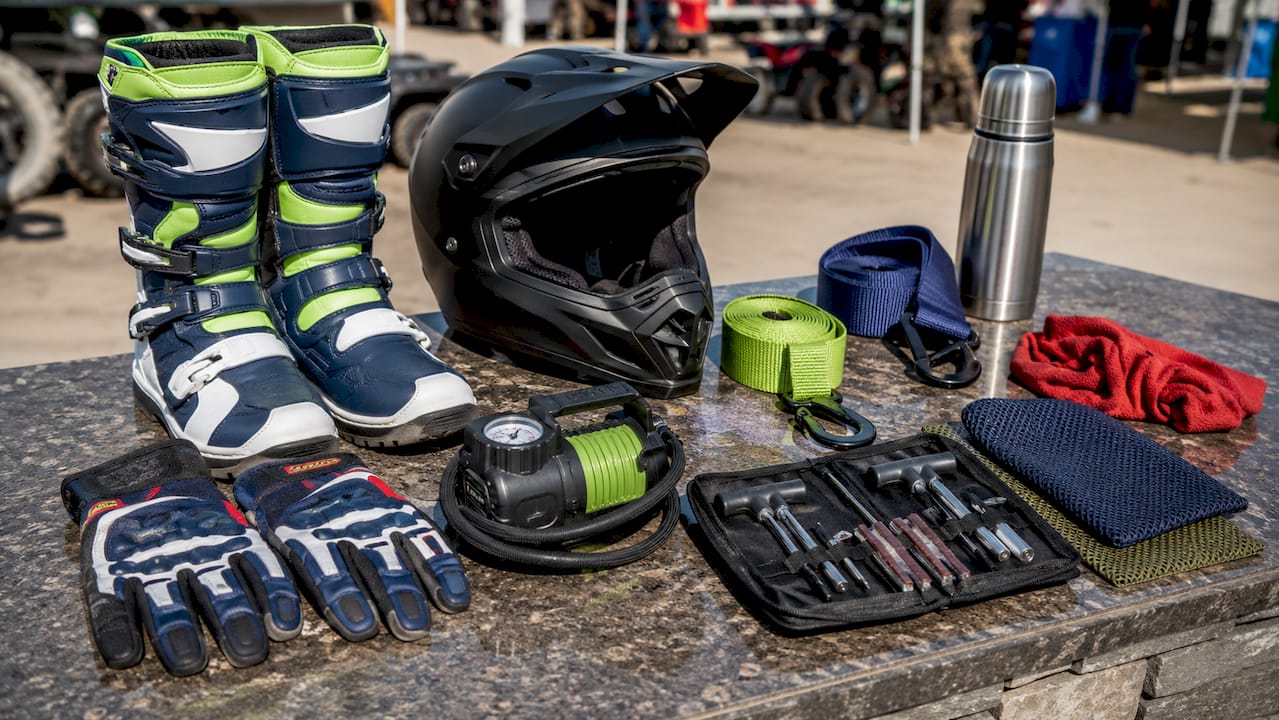
Essential powersports accessories are the critical gear and tools that protect riders, keep machines running, and prepare you for the unexpected on any trail. The industry groups these items into three core buckets: impact and abrasion protection, functional trail reliability items, and emergency survival supplies. Whether you ride a 110cc ATV, a dirt bike, or a go-kart, the right gear separates a great ride from a dangerous one. This guide covers the must-have powersports gear every recreational rider should own, with pricing, comparisons, and practical advice built in.
1. What are essential powersports accessories?
Essential powersports accessories are the protective gear, functional trail tools, and emergency supplies that every ATV, dirt bike, and go-kart rider needs before leaving the driveway. The term “powersports accessories” is the recognized industry label covering everything from DOT-certified helmets to winches and first aid kits. These are not optional upgrades. They are the foundation of safe, reliable riding. Skipping even one category puts you at real risk, whether that means a head injury on a rocky trail or a flat tire three miles from the trailhead with no repair kit in sight.
2. DOT-certified helmet
The helmet is the non-negotiable starting point for any powersports safety setup. Full-face motocross-style helmets provide chin and jaw protection that open-face designs simply cannot match. Research shows ATV helmet use reduces traumatic brain injury risk by about 69%. That number means one thing clearly: a quality helmet is the single highest-return investment you can make as a rider. Budget between $150 and $200 for a reliable DOT-certified full-face helmet, based on hobbyist pricing guidance from The Dirt Riders Way.
Pro Tip: Look for helmets with MIPS (Multi-directional Impact Protection System) technology if your budget allows. MIPS adds rotational impact protection that standard DOT certification alone does not require.
3. Impact-resistant off-road goggles
Off-road goggles must be purpose-built for impact resistance and fog prevention, with sealed foam to block dust and debris. Standard sunglasses fail on both counts. They do not seal against roost, and they fog under exertion. For riders who wear prescription glasses, OTG (Over-The-Glasses) capable goggles are the answer. Alpinestars Vision OTG goggles, for example, use a polyflex frame and RAM-AIR ventilation technology to allow prescription glasses use without fogging or seal compromise. Expect to spend $30 to $150 for quality off-road goggles.
4. Purpose-built riding boots
Purpose-built boots prevent ankle injuries through stability and protection that sneakers and work boots cannot provide. The ankle is one of the most commonly injured body parts in ATV and dirt bike crashes, and standard footwear collapses under lateral impact. Motocross boots are constructed with reinforced ankle cuffs, shin plates, and oil-resistant soles. Pricing runs $150 to $200 for a solid entry-level pair. This is one category where cutting corners has direct physical consequences, so treat boots as a safety item, not a style choice.
5. Protective gloves
Riding gloves do three jobs at once: they improve grip on handlebars, absorb vibration over long rides, and protect your knuckles in a fall. Bare hands on ATV grips for two hours will leave you fatigued and sore. Quality off-road gloves use reinforced knuckle guards and padded palms to handle both trail debris and impact. Budget $25 to $100 depending on material and protection level. For beginners building out their powersports gear for beginners kit, gloves are often the most affordable safety upgrade with immediate payoff in comfort and control.
6. Body armor and protective guards
Body armor covers the chest, back, knees, elbows, and neck. Each piece addresses a specific injury zone. Chest protectors guard your ribs and sternum against roost and handlebar impact. Knee and elbow guards protect joints during falls. Neck protectors, like the Leatt brace system, reduce cervical spine compression in rollovers. You do not need to buy everything at once. Start with a chest protector and knee guards, then add pieces as your ride frequency increases. Pricing for individual armor pieces runs $30 to $150, with neck protectors reaching $200 for premium options.
7. Winch and tow straps for vehicle recovery
A winch is the single most useful functional accessory for ATV and UTV riders who go off-road regularly. Getting stuck in mud, sand, or a ravine without recovery gear means waiting for another rider to find you. A 2,500 to 3,000 lb. electric winch handles most recreational ATV recovery situations. Tow straps are the lower-cost alternative and weigh almost nothing in your storage bag. Pair a tow strap with a tree saver strap and a D-ring shackle, and you have a recovery system that fits in a small pouch. For trail riders, this combination is among the best powersports accessories for reliability on remote routes.
8. Mini air compressor and tire repair kit
A flat tire on the trail is not a question of if. It is a question of when. A portable 12V air compressor and a plug-style tire repair kit together weigh under three pounds and fit in any storage compartment. The repair process takes under ten minutes once you have practiced it at home. A practical UTV emergency kit foundation always includes an air compressor and tire repair kit alongside jumper cables, ratchet tie-downs, and tow straps. These items keep you moving instead of stranded.
Pro Tip: Practice plugging a tire at home before you need to do it on the trail. The first time should not be under pressure, three miles from the trailhead.
9. LED light bar
An LED light bar transforms your ATV or UTV into a capable low-light machine. Trails that are perfectly manageable at noon become genuinely dangerous after sunset without supplemental lighting. A 20-inch curved LED bar mounted to the front rack delivers a wide flood beam that stock headlights cannot match. Prices range from $40 for basic bars to $200 for waterproof, high-lumen units from brands like Rigid Industries or Baja Designs. If you ride during hunting season, early mornings, or late evenings, an LED bar is not a luxury. It is a visibility tool that directly affects your safety.
10. GPS navigation unit
A GPS unit designed for off-road use does what your phone cannot: it works without cell service, survives vibration and weather, and displays topographic trail maps. Garmin’s GPSMAP 66i and the Garmin inReach Mini are two widely used options among trail riders. The inReach Mini adds two-way satellite messaging, which means you can call for help even in areas with zero cell coverage. For riders exploring new terrain or riding solo, a dedicated GPS unit is one of the most overlooked items in the popular powersports items category. Your phone is a backup, not a primary navigation tool.
11. Emergency first aid kit
A powersports-specific first aid kit goes beyond the standard drugstore box. Advanced kits include a tourniquet, gauze rolls, a SAM splint, and an emergency blanket alongside the basics. These items address the injuries most likely to occur off-road: lacerations, fractures, and exposure. Emergency kits are only useful if they are easy to access and regularly checked for missing or expired items. A kit buried under gear in your cargo box does nothing in a real emergency. Mount it where you can reach it in under ten seconds.
Pro Tip: Set a calendar reminder every three months to open your kit and replace anything used, expired, or missing. This one habit separates a functional kit from a false sense of security.
12. Zip ties, duct tape, and WD-40
These three items are the most useful emergency-kit supplies for solving common trail problems. A loose fender, a broken bracket, a sticky throttle cable: all three can be addressed with zip ties, duct tape, and a shot of WD-40. Riders consistently underestimate the value of these utilitarian tools over dramatic gear. A $5 roll of duct tape has ended more trail emergencies than a $200 recovery board. Pack a dozen heavy-duty zip ties, a half-roll of duct tape, and a travel-size WD-40 in every vehicle you ride. They weigh almost nothing and solve an outsized number of problems.
Key takeaways
The most effective powersports safety setup combines DOT-certified head protection, purpose-built footwear, functional trail recovery tools, and a regularly maintained emergency kit.
| Point | Details |
|---|---|
| Helmet is the foundation | A DOT-certified full-face helmet reduces traumatic brain injury risk by about 69% and costs $150 to $200. |
| Boots are non-negotiable | Purpose-built riding boots prevent ankle injuries that sneakers and work boots cannot protect against. |
| Recovery gear saves rides | A tow strap, mini air compressor, and tire plug kit together weigh under five pounds and prevent most trail strandings. |
| Emergency kits need maintenance | Check your kit every three months and replace expired or missing items to keep it functional when it matters. |
| Small tools solve big problems | Zip ties, duct tape, and WD-40 resolve more trail emergencies than any single high-cost accessory. |
Why I always start with the helmet and work outward from there
I have watched riders spend $400 on a light bar and show up to the trail in sneakers and a bicycle helmet. That spending order is backwards. The helmet and boots are the two items that directly determine whether a crash sends you home sore or sends you to a trauma center. Everything else, the winch, the GPS, the LED bar, adds capability and convenience. Those two items add survival margin.
The gear I see neglected most often is boots. Riders accept that helmets matter, but they rationalize footwear. “I’m just doing a short trail.” “These are heavy work boots, they’re fine.” They are not fine. Riding boots provide ankle stability that no other footwear replicates, and ankle fractures are among the most common ATV injuries precisely because riders skip this step.
My other strong opinion: treat your emergency kit as a living system, not a one-time purchase. The regular kit review process is neglected by almost every rider I know, including experienced ones. A tourniquet that has been sitting in a hot cargo box for two years may not perform the way you expect. Check it. Replace it. The kit you maintain is the only kit that actually works.
For beginners, my advice is to build your gear in this order: helmet, goggles, boots, gloves, then body armor, then trail recovery tools. Get the safety layer right before you spend money on performance upgrades. The ATV safety checklist we put together at Gokartsusa walks through this exact sequence if you want a structured starting point.
— Mario
Gear up with confidence at Gokartsusa
At Gokartsusa, we stock the vehicles and accessories that match the way real riders ride. Whether you are outfitting a first-time young rider or upgrading your own trail setup, our catalog covers the gear that matters. The Mini Sport Kids ATV with 110cc Gas Engine comes with a parental remote start and kill switch, making it one of the most family-ready machines we carry. Browse our full selection of ATVs, go-karts, and accessories at GokartsUSA.biz and find the right fit for your next adventure. We are your pit crew, your trail guides, and your fellow riders, all in one place.
FAQ
What are powersports accessories?
Powersports accessories are the protective gear, functional tools, and emergency supplies used with ATVs, dirt bikes, go-karts, and UTVs. The category covers everything from DOT-certified helmets and riding boots to winches, GPS units, and first aid kits.
What safety gear do ATV beginners need first?
Start with a DOT-certified full-face helmet, impact-resistant goggles, purpose-built riding boots, and gloves. These four items address the highest-risk injury zones and form the foundation of any beginner safety setup.
How much does essential ATV safety gear cost?
A complete basic safety kit runs approximately $405 to $850, covering a helmet ($150 to $200), boots ($150 to $200), gloves ($25 to $100), goggles ($30 to $150), and body armor ($50 to $200), based on hobbyist pricing ranges.
What should be in a powersports emergency kit?
A solid kit includes jumper cables, a mini air compressor, a tire repair kit, tow straps, ratchet tie-downs, zip ties, duct tape, and a first aid pack with a tourniquet, gauze, SAM splint, and emergency blanket.
How often should I check my trail emergency kit?
Check your kit every three months and replace any missing, used, or expired items. Kits that are not regularly reviewed often fail during real emergencies due to missing supplies.