




TL;DR:
- Four-stroke engines complete one power cycle in four distinct strokes, offering better fuel efficiency, lower emissions, and longer engine life. They provide smooth, predictable torque with broad low-to-mid RPM power, making them ideal for recreational vehicles, and their dedicated lubrication system enhances durability through easier maintenance. Overall, four-strokes deliver reliability, efficiency, and longer-lasting performance in outdoor and recreational equipment.
A four-stroke engine is an internal combustion engine that completes one power cycle across four distinct strokes: intake, compression, power, and exhaust. This mechanical separation is the core reason enthusiasts and outdoor equipment users consistently choose four-stroke technology over simpler alternatives. The controlled combustion process delivers better fuel economy, cleaner exhaust, and a longer engine lifespan. If you’re shopping for a go-kart, ATV, or mini bike and wondering why choose a four-stroke engine, the answer starts with how each stroke does exactly one job and does it well.
How does the four-stroke cycle improve fuel efficiency and emissions?
The four-stroke cycle, also called the Otto cycle, separates every phase of combustion so that fresh air and fuel enter the cylinder cleanly, compress fully, ignite completely, and exit without overlap. That separation is the key. Two-stroke engines complete a power cycle in a single crankshaft revolution, which means intake and exhaust events overlap and unburned fuel escapes with the exhaust gases. Four-strokes eliminate that waste almost entirely.
Complete combustion reduces wasted fuel and lowers unburned hydrocarbon emissions, which is why four-stroke engines meet modern emissions regulations more easily than two-stroke designs. For recreational riders, that means less fuel cost per ride and fewer fumes at the trail or track. The environmental benefit is real and measurable, not just a marketing claim.
The dedicated oil system amplifies this advantage. Four-strokes circulate oil separately through a sump rather than mixing it with fuel, so combustion gases stay cleaner and the exhaust carries far fewer oil-based pollutants. Two-stroke engines burn oil with every power stroke, leaving deposits inside the combustion chamber and producing the characteristic blue smoke you may have noticed on older dirt bikes or chainsaws.
Here is what the four-stroke cycle delivers at each step:
- Intake stroke: The piston moves down, pulling a precise air-fuel mixture into the cylinder through the intake valve.
- Compression stroke: The piston moves up, compressing the mixture for a more powerful and efficient ignition.
- Power stroke: The spark plug fires, the expanding gases push the piston down hard, and this is the only stroke generating actual thrust.
- Exhaust stroke: The piston moves up again, pushing spent gases out through the exhaust valve before the cycle repeats.
Pro Tip: Keep your air filter clean on any four-stroke engine. A clogged filter disrupts the precise air-fuel ratio the intake stroke depends on, reducing efficiency and increasing fuel consumption. Products like AEM air filter cleaner make routine filter maintenance fast and affordable.
What performance traits make four-stroke engines ideal for recreational vehicles?
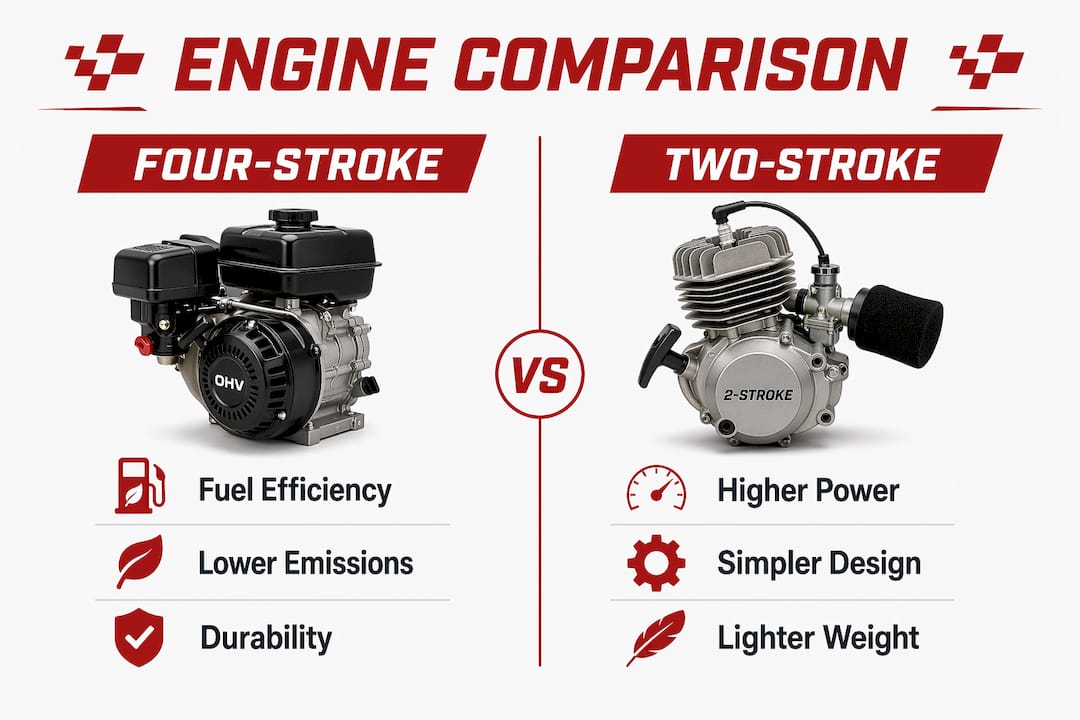
Four-stroke engine performance for recreational use comes down to one word: predictability. The power stroke fires once every two crankshaft revolutions, which creates a smooth, steady torque curve rather than the sharp, aggressive power bursts a two-stroke produces. For a rider on an ATV or go-kart, that smoothness translates directly into confidence and control.
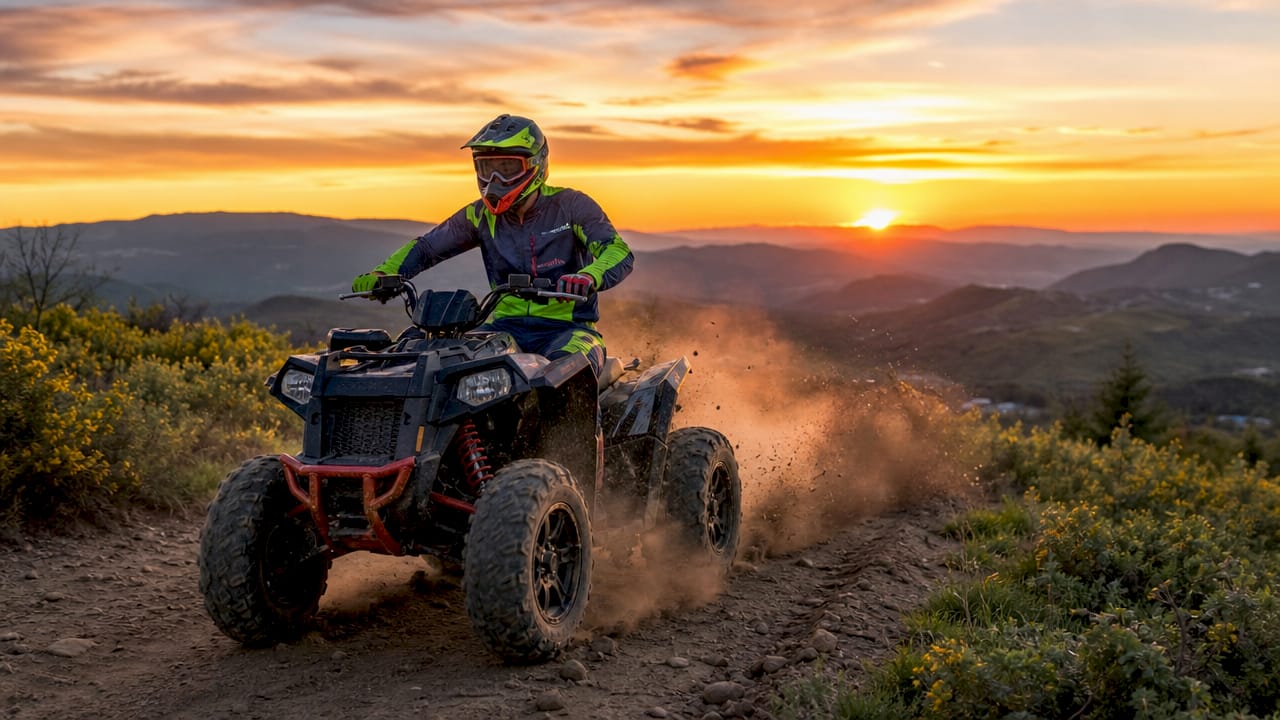
Four-stroke engines also produce stronger low-to-mid RPM torque, which is exactly where recreational riders spend most of their time. You don’t need to rev the engine into a narrow power band to get useful thrust. The throttle responds progressively, so beginners and younger riders can manage speed without feeling overwhelmed. Smoother throttle response enhances controllability in recreational vehicles, and that controllability is what separates a fun ride from a dangerous one.
Here are the four performance characteristics that matter most for recreational and outdoor equipment use:
- Broad torque range. Four-stroke engines deliver usable power from low RPMs, making them practical for trail riding, yard work, and casual go-karting without constant gear changes or high-rev operation.
- Smooth power delivery. Because combustion events are spaced across two full crankshaft revolutions, the engine runs with less vibration and a more stable feel under load.
- Quieter operation. Four-strokes align with reliability and economy for recreational equipment, and their controlled combustion events produce noticeably less noise than two-strokes at equivalent power levels.
- Sustained performance. Four-stroke engines handle extended operation without the power fade or overheating issues that can affect two-strokes during long rides or continuous use.
The camshaft and valve train that make four-strokes more mechanically complex than two-strokes are also what give them these performance advantages. This mechanical complexity underpins smoother operation and longer engine life, which is a trade-off most recreational riders are happy to accept.
Why does the dedicated lubrication system improve engine durability?
The lubrication system is where four-stroke engines earn their reputation for longevity. Oil sits in a dedicated sump at the bottom of the engine and circulates through the crankshaft, camshaft, and valve train via a pump or splash system. It never touches the combustion chamber during normal operation. This means the oil does its job, lubricating metal surfaces under load, without being consumed or contaminated by combustion gases.
Two-stroke engines mix oil directly with fuel, so every power stroke burns some of that oil. Over time, this leaves carbon deposits on the piston crown, cylinder walls, and exhaust port. Those deposits increase friction, reduce compression, and shorten engine life. Four-stroke oil circulates separately, reducing wear and keeping the combustion chamber clean, which is why a well-maintained four-stroke engine can last tens of thousands of miles in recreational use.
Maintenance for a four-stroke lubrication system is straightforward once you understand what it needs:
- Oil changes on schedule. Fresh oil maintains viscosity and removes metal particles before they cause abrasive wear. Most small four-stroke engines used in ATVs and go-karts need an oil change every 25 to 50 hours of operation.
- Oil level checks before every ride. Low oil causes rapid wear on bearings and the camshaft. A 30-second check before you ride protects hundreds of dollars in engine components.
- Valve clearance adjustments. The valve train in a four-stroke engine requires periodic clearance checks. Tight valves burn and lose their seal; loose valves cause noise and power loss.
Pro Tip: Use the oil viscosity grade specified in your engine’s owner manual, not whatever is on sale. The wrong viscosity reduces film strength at operating temperature, and that gap in protection is where premature wear begins.
How do four-stroke and two-stroke engines compare for outdoor equipment?
The four-stroke vs two-stroke debate is one of the most common questions in the powersports world, and the answer depends entirely on what you value. Two-strokes are lighter, simpler, and fire a power stroke every revolution, giving them a higher power-to-weight ratio at peak RPM. Four-strokes win on nearly every other metric that matters for sustained recreational use.
| Feature | Four-stroke engine | Two-stroke engine |
|---|---|---|
| Fuel efficiency | Higher, less fuel wasted per cycle | Lower, unburned fuel exits with exhaust |
| Emissions | Significantly lower hydrocarbons | Higher unburned hydrocarbons and oil smoke |
| Power delivery | Smooth, broad torque curve | Sharp, narrow power band at high RPM |
| Noise level | Quieter at equivalent power output | Louder, higher-pitched exhaust note |
| Engine durability | Longer lifespan with proper maintenance | Shorter lifespan, more frequent rebuilds |
| Maintenance complexity | Oil changes and valve adjustments | Simpler but more frequent top-end rebuilds |
| Regulatory compliance | Meets modern emissions standards easily | Increasingly restricted in many regions |
Four-strokes win on predictability, economy, and durability rather than raw power per crank revolution. For a parent buying a kids’ ATV, a hobbyist running a go-kart on weekends, or an outdoor enthusiast using a trail bike, those qualities matter far more than peak horsepower. The misconception that four-strokes are underpowered compared to two-strokes comes from comparing peak RPM numbers. In real-world recreational riding, the four-stroke’s usable torque range makes it feel stronger and more responsive in the conditions you actually encounter.
You can explore the full range of powersports vehicle types to understand how engine choice affects each category differently.
Key takeaways
Four-stroke engines are the right choice for recreational vehicles because their mechanical design delivers cleaner combustion, smoother power, and longer engine life than any two-stroke alternative at equivalent displacement.
| Point | Details |
|---|---|
| Cleaner combustion cycle | Separate strokes eliminate fuel overlap, reducing emissions and improving fuel economy. |
| Smooth, predictable torque | Power fires once per two revolutions, giving riders progressive throttle control. |
| Dedicated lubrication | Oil circulates in a sump rather than burning with fuel, extending engine lifespan significantly. |
| Maintenance is manageable | Regular oil changes and valve checks are all it takes to protect long-term reliability. |
| Better for sustained use | Quieter operation and broad torque range make four-strokes ideal for extended recreational rides. |
What I’ve learned after years of watching riders choose their engines
I’ve seen a lot of enthusiasts walk into the powersports world convinced that more power strokes per revolution means more fun. Two-strokes have a certain raw appeal, and I get it. That high-pitched scream and instant hit of power feel exciting on paper. But after watching riders of all ages and skill levels actually use their machines over months and seasons, the four-stroke wins every time for real-world enjoyment.
The riders who stick with the hobby long-term almost always end up on four-strokes. The reason is simple: reliability removes friction from the experience. When your ATV starts on the first pull, runs smoothly for two hours on the trail, and doesn’t need a top-end rebuild after every season, you ride more. You spend less time wrenching and more time riding. That’s the actual value of four-stroke engine advantages, and no spec sheet captures it.
One thing I’d push back on is the idea that four-strokes are harder to maintain. Yes, they have a valve train. But valve adjustments on a small 110cc or 125cc engine take less than an hour with basic tools, and they’re needed only once or twice a year under normal use. Compare that to the piston and ring replacements a two-stroke demands, and the four-stroke is clearly the lower-effort choice over any 12-month period.
My recommendation for anyone buying their first recreational vehicle, or buying one for a child, is to start with a four-stroke without hesitation. The practical guide to four-stroke engines at Gokartsusa covers the mechanics in more detail if you want to go deeper before you buy.
— Mario
Explore four-stroke powered vehicles at Gokartsusa
Ready to put these advantages to work on the trail or track? Gokartsusa carries a strong lineup of recreational vehicles built around reliable four-stroke power, and one of our favorites for new riders is the Mini Sport Kids ATV with a 110cc four-stroke engine. It features parental remote start and kill switch controls, making it a genuinely safe first machine for younger enthusiasts who want real adventure without the risk of a two-stroke’s unpredictable power delivery.

The 110cc four-stroke engine on this ATV delivers smooth, manageable torque that builds rider confidence from the very first session. Gokartsusa backs every vehicle with dedicated customer support, so you’re never figuring it out alone. Browse the full selection and find the right four-stroke powered machine for your family’s next adventure.
FAQ
What is a four-stroke engine?
A four-stroke engine is an internal combustion engine that completes one power cycle across four piston strokes: intake, compression, power, and exhaust. This design separates each phase of combustion for better efficiency and cleaner operation.
Why choose a four-stroke engine over a two-stroke?
Four-stroke engines offer better fuel economy, lower emissions, smoother torque delivery, and longer engine life than two-strokes. For recreational vehicles and outdoor equipment, those advantages outweigh the two-stroke’s lighter weight and higher peak power-to-weight ratio.
How often does a four-stroke engine need an oil change?
Most small four-stroke engines used in ATVs, go-karts, and mini bikes need an oil change every 25 to 50 hours of operation. Regular oil changes are the single most important maintenance task for protecting engine longevity.
Are four-stroke engines good for kids’ ATVs?
Four-stroke engines are the preferred choice for kids’ ATVs because their smooth, progressive power delivery is easier to control than a two-stroke’s sharp power bursts. The quieter operation and lower emissions are additional benefits for younger riders and their families.
Do four-stroke engines require more maintenance than two-strokes?
Four-stroke engines require oil changes and periodic valve adjustments, but they generally need fewer major rebuilds than two-strokes. Over a full riding season, total maintenance time and cost favor the four-stroke for most recreational users.