



TL;DR:
- Mastering powersports industry terminology enables buyers and riders to communicate confidently and make safer, more informed decisions.
- Understanding vehicle classes, component names, slang, and dealer language helps prevent costly errors and enhances the ownership experience.
Industry terminology in powersports defines the specialized vocabulary used by riders, dealers, and manufacturers to describe vehicles, components, riding culture, and dealership operations. Whether you are a first-time buyer, a parent shopping for your child’s first ATV, or an enthusiast who wants to hold their own at the dealership, knowing this language changes everything. It separates confident buyers from confused ones, and it keeps riders safer on the trail. This guide covers the core vocabulary across motorcycles, ATVs, UTVs, electric models, and dealer systems so you can walk into any conversation ready.
What is industry terminology in powersports?
Industry terminology in powersports is the shared technical and cultural language that connects riders, mechanics, dealers, and manufacturers. It covers three broad categories: vehicle and component terms, rider slang and culture, and dealer or business language. Mastering all three gives you a complete picture of how the powersports world operates, from the showroom floor to the trail.
The powersports category itself includes motorcycles, dirt bikes, ATVs, UTVs, go-karts, mini bikes, scooters, and electric off-road vehicles. Each segment carries its own vocabulary, and terms often overlap or conflict across segments. A beginner who understands powersports vehicle types before shopping is far less likely to buy the wrong machine or order the wrong part.
What are the essential powersports vehicle terms beginners must know?
Every powersports conversation starts with vehicle classification. A dirt bike is a lightweight, off-road motorcycle built for unpaved terrain. An ADV (adventure bike) is a dual-sport machine designed for both pavement and trail riding. A scooter uses an automatic transmission and step-through frame, while a moped is a low-powered scooter that legally qualifies for different licensing in most states. An ATV (all-terrain vehicle) is a four-wheeled, single-rider off-road machine. A UTV (utility task vehicle), sometimes called a side-by-side, seats two or more riders in a cab-style frame and is built for work or group recreation.
Beyond vehicle types, component vocabulary matters just as much. Here are the terms that come up most often for beginners:
- Engine displacement (cc): Cubic centimeters measure engine size. A 110cc ATV is appropriate for children; a 450cc dirt bike is built for experienced adult riders.
- Suspension: The system of springs and shock absorbers that absorbs trail impacts. Longer suspension travel means more capability on rough terrain.
- Fairings: Plastic or fiberglass body panels on motorcycles that reduce wind drag and protect mechanical components.
- Handlebars: The steering control bar. Width, rise, and bend angle all affect rider comfort and control.
- Homologation: The certification process that confirms a vehicle meets EPA and EEC standards for safety, emissions, and noise. International buyers must verify homologation status to avoid registration problems.
For electric powersports vehicles, two battery terms cause the most confusion. Amp-hours (Ah) measure how long a battery delivers current, but watt-hours predict range more accurately because they account for both voltage and capacity. A 15Ah battery at 48 volts delivers 720Wh, which is a very different performance story than a 15Ah battery at 24 volts. Always ask for the Wh rating when comparing electric ATVs or mini bikes.
Navigation terms matter for ADV and off-road riders too. A track is a precise GPS trace of an actual route someone rode. A route is a list of waypoints that a GPS device calculates a path between, which can misdirect riders onto roads or terrain that were never intended. Experienced riders always share tracks, not routes, for off-road adventures.
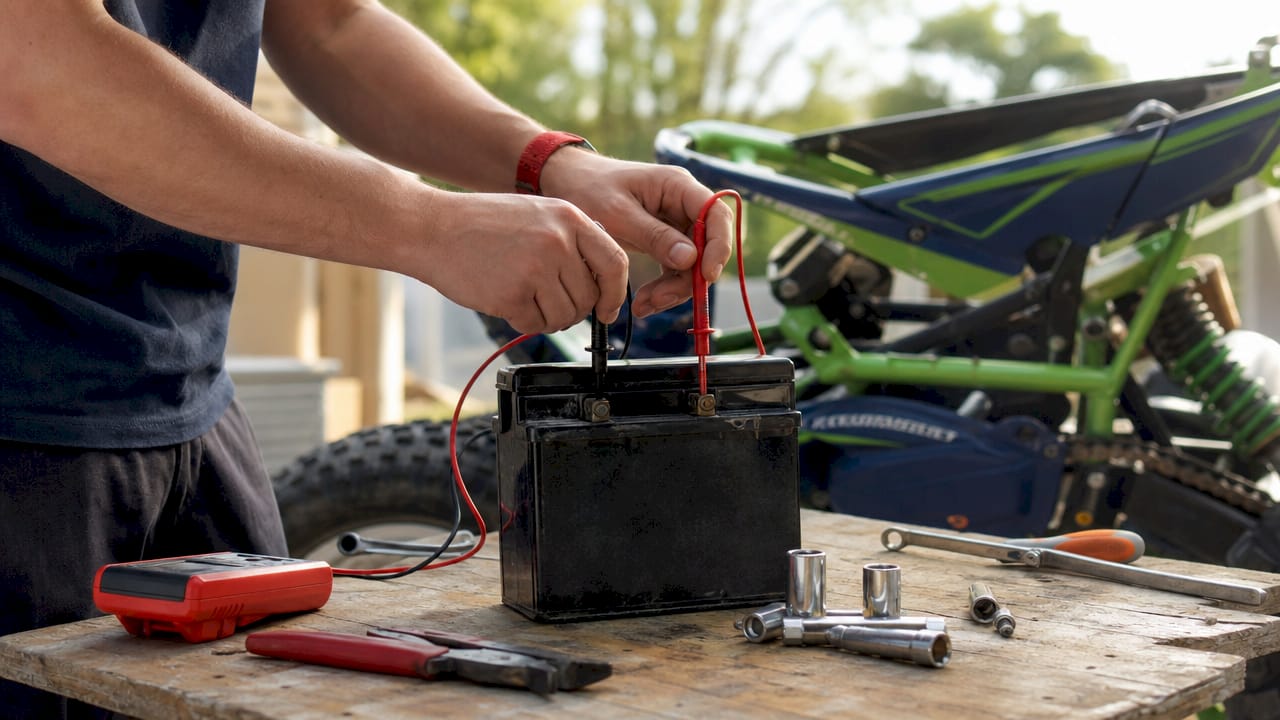
Pro Tip: When comparing two electric powersports vehicles, multiply voltage by amp-hours to get watt-hours. That single number tells you more about real-world range than any marketing claim.
How do powersports parts names vary across manufacturers?
Parts naming in powersports is not standardized across original equipment manufacturers (OEMs), and that inconsistency costs buyers real money. The motorcycle fairing market exceeded $1.8 billion in 2023, yet a significant share of replacement part orders result in returns because buyers used the wrong name for the part they needed. The same physical panel on a motorcycle can be called a side fairing, a side cowling, or a middle cowl depending on the brand and model year.
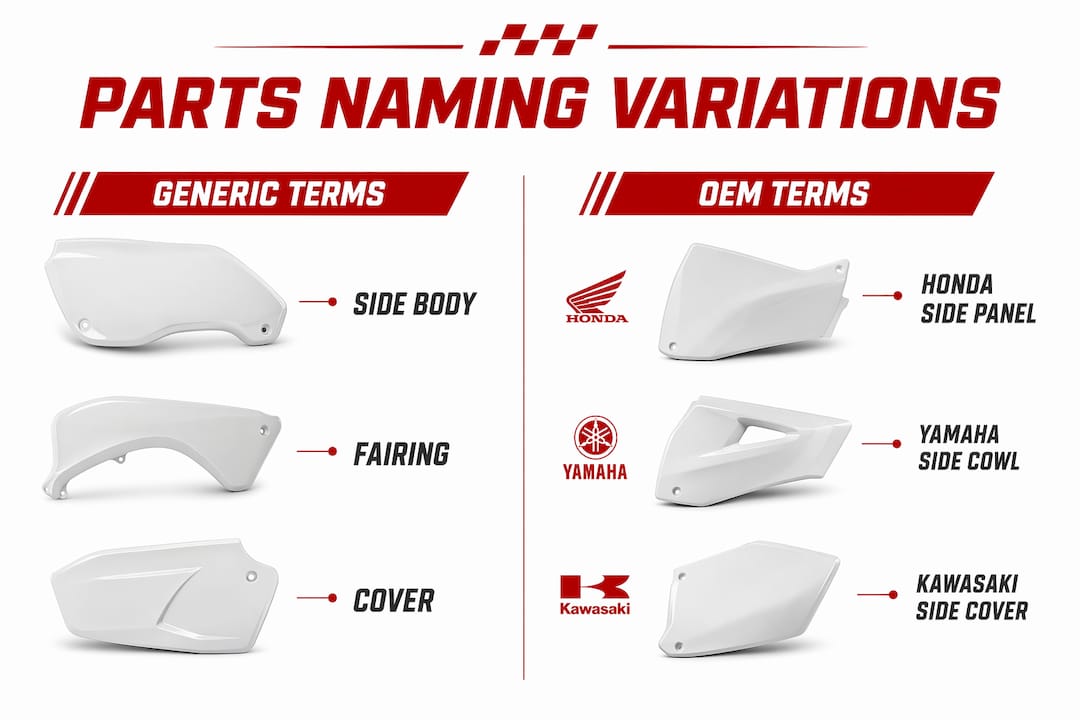
The table below shows how three common component names shift across OEM terminology:
| Generic term | Honda terminology | Yamaha terminology | Kawasaki terminology |
|---|---|---|---|
| Side body panel | Side cowl | Side fairing | Side cover |
| Front nose piece | Upper cowl | Front fairing | Upper fairing |
| Rear tail section | Rear cowl | Rear fairing | Tail cover |
This is not a minor detail. Naming inconsistencies across OEMs mean that searching “side cowl” on a Yamaha parts site may return zero results even though the part exists under a different label. The fix is straightforward: always verify parts using your vehicle’s VIN and the manufacturer’s official parts diagram. The VIN ties your specific machine to an exact parts catalog, eliminating guesswork entirely.
Understanding go-kart and powersports part naming conventions before you shop prevents the frustration of ordering a part that looks right but fits nothing on your machine.
Pro Tip: Before ordering any replacement part, pull up the OEM parts diagram for your exact model year using your VIN. Screenshot the diagram and part number, then order by part number only. Never order by description alone.
What are common rider slang and cultural terms in powersports?
Rider slang is not just casual language. It carries safety philosophy, community identity, and real practical meaning. Terms like “squid” and “ATGATT” reflect the community’s deep focus on rider competence and protective gear. Understanding them helps newcomers integrate into riding groups and, more importantly, make smarter safety decisions.
Here are the most important slang terms and cultural phrases you will encounter:
- ATGATT: “All The Gear, All The Time.” This phrase is the powersports community’s shorthand for always wearing a helmet, jacket, gloves, boots, and riding pants regardless of trip length or weather.
- Squid: A rider who prioritizes speed and style over safety gear and skill. The term is a warning label, not a compliment.
- Brain bucket: Slang for a helmet. Often used affectionately, but it reinforces the message that head protection is non-negotiable.
- Two-up: Riding with a passenger. A bike ridden two-up needs adjusted suspension preload and tire pressure to handle the added weight safely.
- Biker vs. motorcyclist: The distinction between “biker” and “motorcyclist” matters socially. “Biker” typically signals deep lifestyle immersion, often associated with cruiser culture. “Motorcyclist” is a broader, more neutral term that includes sport, touring, and adventure riders. Using the wrong label in the wrong crowd can mark you as an outsider immediately.
- Stoppie: A front-wheel braking maneuver that lifts the rear wheel. Impressive to watch, dangerous to attempt without training.
- Highside / Lowside: Two types of motorcycle crashes. A lowside is when the bike slides out from under you toward the inside of a turn. A highside is when the rear wheel regains traction suddenly and throws the rider over the top. Highsides are far more dangerous.
Slang terms in powersports communicate both practical safety concepts and social identity, reflecting the community’s values at a level that formal manuals never capture. Learning this vocabulary is how you earn respect and stay safe at the same time.
How does dealer jargon affect the powersports buying experience?
Dealership language in powersports is its own dialect, and it differs significantly from automotive retail. Powersports dealer management systems use specialized terminology including “major units,” “floor plans,” and “accessory management” to handle the unique complexity of selling seasonal, multi-category inventory. Knowing these terms puts you in a stronger position during any sales or service conversation.
Here are the key dealer terms every buyer should recognize:
- Major units: The primary vehicles on a dealer’s floor, such as motorcycles, ATVs, and UTVs, as opposed to parts, accessories, or apparel. When a dealer talks about “moving major units,” they mean selling complete vehicles.
- Floor plan: The financing arrangement a dealer uses to fund their vehicle inventory. Dealers pay interest on floor-planned units, which creates pressure to sell older stock. Asking how long a unit has been on the floor can open negotiation opportunities.
- OEM integration: The direct connection between a dealer’s management software and the manufacturer’s parts and pricing database. Dealers with strong OEM integration can look up exact part availability and pricing in real time, which speeds up service appointments.
- PDI (Pre-Delivery Inspection): The mechanical check a dealer performs before handing a vehicle to a buyer. Always ask for the PDI checklist. If a dealer cannot produce one, that is a red flag.
- Demo unit: A vehicle that has been ridden by staff or customers for evaluation purposes. Demo units are sold at a discount but may have wear that affects warranty terms.
Dealer software platforms built for powersports translate this industry terminology into operational efficiency, which is why powersports dealerships function differently from car lots. The seasonal nature of the business, the variety of vehicle categories, and the complexity of parts management all require a specialized vocabulary that automotive retail simply does not have.
Pro Tip: Ask your dealer specifically whether a vehicle has been PDI’d and request the completed checklist in writing. This single document confirms the machine was inspected before delivery and protects you if issues arise within the first few weeks.
Key takeaways
Mastering industry terminology in powersports gives buyers, parents, and enthusiasts the vocabulary to make safer purchases, avoid costly parts errors, and communicate confidently with dealers and fellow riders.
| Point | Details |
|---|---|
| Vehicle classification matters | Knowing the difference between an ATV, UTV, and dirt bike prevents buying the wrong machine for your intended use. |
| Battery ratings require context | Always compare electric vehicles by watt-hours, not amp-hours alone, for an accurate range estimate. |
| OEM parts names vary widely | Use your VIN and the manufacturer’s parts diagram to order by part number, not description. |
| Rider slang carries safety meaning | Terms like ATGATT and squid reflect community values and real protective gear philosophy. |
| Dealer jargon affects negotiation | Understanding floor plans and PDI gives buyers leverage and protection during the purchase process. |
Why terminology was the first thing I learned, and the last thing I expected to matter
I remember the first time I walked into a powersports dealership without knowing the language. I asked for “the plastic piece on the side of the bike” and watched the parts guy’s expression go completely blank. He asked me three follow-up questions I could not answer, and I left empty-handed. That experience cost me two trips and a week of waiting for a part I could have ordered correctly the first time.
What surprised me most was how quickly the vocabulary unlocked everything else. Once I understood the difference between a cowl and a fairing, between a track and a route, between a floor-planned unit and a demo, conversations with dealers became productive instead of frustrating. I stopped feeling like an outsider at group rides because I understood what people were actually talking about when they debated suspension setup or gear philosophy.
My honest advice to any parent or beginner: do not wait until you are standing at the parts counter to learn this language. Spend thirty minutes with a resource like the off-road terms guide before you ever set foot in a dealership. The confidence it gives you is real, and it protects your wallet just as much as your safety gear protects your body.
— Mario
Start your powersports adventure with confidence at Gokartsusa
At Gokartsusa, we believe every rider deserves to start their adventure on the right machine, with the right knowledge behind them. For families and beginners, the Mini Sport Kids ATV 110cc is one of our most trusted starter vehicles, built with a parental remote start and kill switch so adults stay in control while kids build confidence. It puts the terminology you just learned into practice: 110cc displacement, adjustable suspension, and a frame sized for young riders.
We also offer resources to help parents select kid-friendly powersports vehicles safely, so the buying decision feels as good as the first ride. Freedom starts with knowing what you are buying. We are here to make sure you do.
FAQ
What does “cc” mean in powersports vehicles?
CC stands for cubic centimeters and measures engine displacement, which indicates engine size and power output. A higher cc rating generally means more power, so a 110cc ATV suits children while a 450cc dirt bike is built for experienced adult riders.
What is the difference between an ATV and a UTV?
An ATV is a single-rider, four-wheeled off-road vehicle controlled with handlebars, while a UTV (also called a side-by-side) seats two or more riders in a cab-style frame with a steering wheel. UTVs are built for group recreation and utility work; ATVs prioritize agility and solo riding.
Why do powersports parts have different names across brands?
OEM naming is not standardized, so the same physical component can be called a side cowl, side fairing, or side cover depending on the manufacturer. Always verify parts using your VIN and the official OEM parts diagram to order by part number and avoid returns.
What does ATGATT mean in the riding community?
ATGATT stands for “All The Gear, All The Time” and is the powersports community’s core safety philosophy. It means wearing a helmet, jacket, gloves, boots, and riding pants on every ride, regardless of distance or conditions.
What is a PDI at a powersports dealership?
A PDI, or Pre-Delivery Inspection, is the mechanical check a dealer performs on a vehicle before handing it to the buyer. Requesting the completed PDI checklist in writing confirms the machine was properly inspected and gives you documentation if mechanical issues appear shortly after purchase.