




TL;DR:
- Accessories in powersports enhance rider safety, vehicle performance, and ride experience through certified and compatible gear. Proper selection, including safety certifications and electrical planning, prevents safety and reliability issues while expanding vehicle capabilities. Updating gear regularly and prioritizing fit and standards ensures maximum protection and performance on every ride.
Accessories in powersports are defined as specialized equipment and upgrades that improve rider safety, vehicle performance, and overall recreational experience across ATVs, UTVs, and motorcycles. The industry term “powersports aftermarket gear” covers everything from DOT-certified helmets to suspension kits and snorkel systems. Understanding the role of accessories in powersports means recognizing that these products are not cosmetic add-ons. They are functional tools governed by safety standards, compatibility requirements, and real-world performance demands. Whether you ride trails, dunes, or dirt tracks, the right gear changes what your vehicle can do and how safely you can do it.
How safety accessories reduce risk and protect riders
Safety accessories are the most regulated and most consequential category in powersports gear. A helmet is not just a helmet. U.S. street riding requires DOT labeling under FMVSS No. 218, which mandates impact attenuation, penetration resistance, and retention system testing. ECE certification alone does not meet U.S. street-legal requirements. That distinction matters because a helmet that passes European tests may still fail American regulatory standards.
The FMVSS 218 standard exists because helmet protection mechanisms require validation through penetration, impact, and retention tests. Each test targets a specific failure mode. Penetration tests check whether sharp objects breach the shell. Impact tests measure how well the liner absorbs force. Retention tests confirm the chin strap holds the helmet in place during a crash. A helmet that fails any one of these tests offers incomplete protection, regardless of how it looks or what the marketing says.
Beyond helmets, the full picture of protective gear includes:
- CE-rated armor for shoulders, elbows, knees, and back, rated under EN 13634 and EN 13595 standards
- Purpose-built boots with lateral crush protection and abrasion resistance, not standard work boots or sneakers
- Gloves with knuckle reinforcement and palm sliders to protect against road rash and impact
- Riding jackets and pants with integrated armor pockets and abrasion-resistant textiles
Proper fit and retention directly affect injury outcomes. Loose armor shifts during a crash and leaves critical areas exposed. Footwear without lateral crush protection fails when a vehicle rolls onto a foot. The ATGATT philosophy, short for “All The Gear, All The Time,” addresses both presence and quality of gear. Wearing cheap, poorly fitted gear is not meaningfully safer than wearing none at all.
Pro Tip: When buying a helmet, check for both the DOT sticker and a SNELL or ECE 22.06 rating. Dual certification means the helmet passed two independent test protocols, giving you a stronger safety baseline.
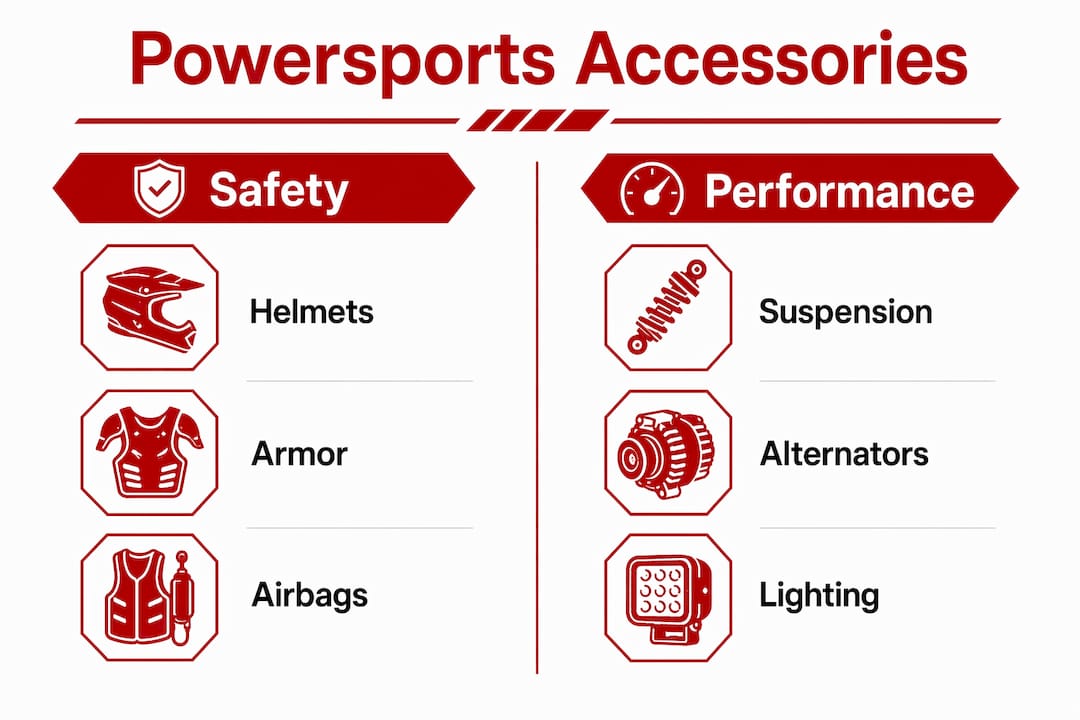
Advanced airbag vest systems, such as those from Alpinestars and Dainese, now offer electronic deployment triggered by crash sensors. These systems add a layer of protection that standard armor cannot replicate. They represent the direction safety gear is heading in 2026.
What performance accessories actually improve on your vehicle
Performance accessories fall into three practical categories: mechanical, electrical, and tire and suspension. Upgrades like suspension kits, exhaust systems, and performance tires improve control, handling, and power delivery beyond factory specifications. Each upgrade targets a specific limitation in the stock build.
The most common performance upgrades riders install, in order of impact, are:
- Suspension kits (lift kits, upgraded shocks): increase ground clearance and absorb terrain impact more effectively
- Performance exhaust systems: reduce back pressure and improve throttle response on ATVs and motorcycles
- Performance tires: match tread pattern and compound to terrain type, from hard-pack dirt to deep mud
- Air intake upgrades: increase airflow to the engine, supporting better combustion and power output
- Alternator upgrade kits: increase electrical output to support added accessories without draining the battery
The electrical category deserves special attention. Polaris RZR alternator kits increase power generation capacity, solving the factory charging limits that cause voltage drops under heavy accessory loads. Adding LED light bars, GPS units, winches, and audio systems to a stock electrical system without upgrading the alternator creates reliability problems. The factory alternator was not designed for that load.
| Accessory Type | Primary Benefit | Common Example |
|---|---|---|
| Suspension kit | Improved terrain handling | Fox Racing shocks |
| Performance exhaust | Better throttle response | FMF Racing pipe |
| Alternator upgrade | Stable voltage under load | Polaris RZR kit |
| Performance tires | Terrain-specific traction | Maxxis Bighorn |
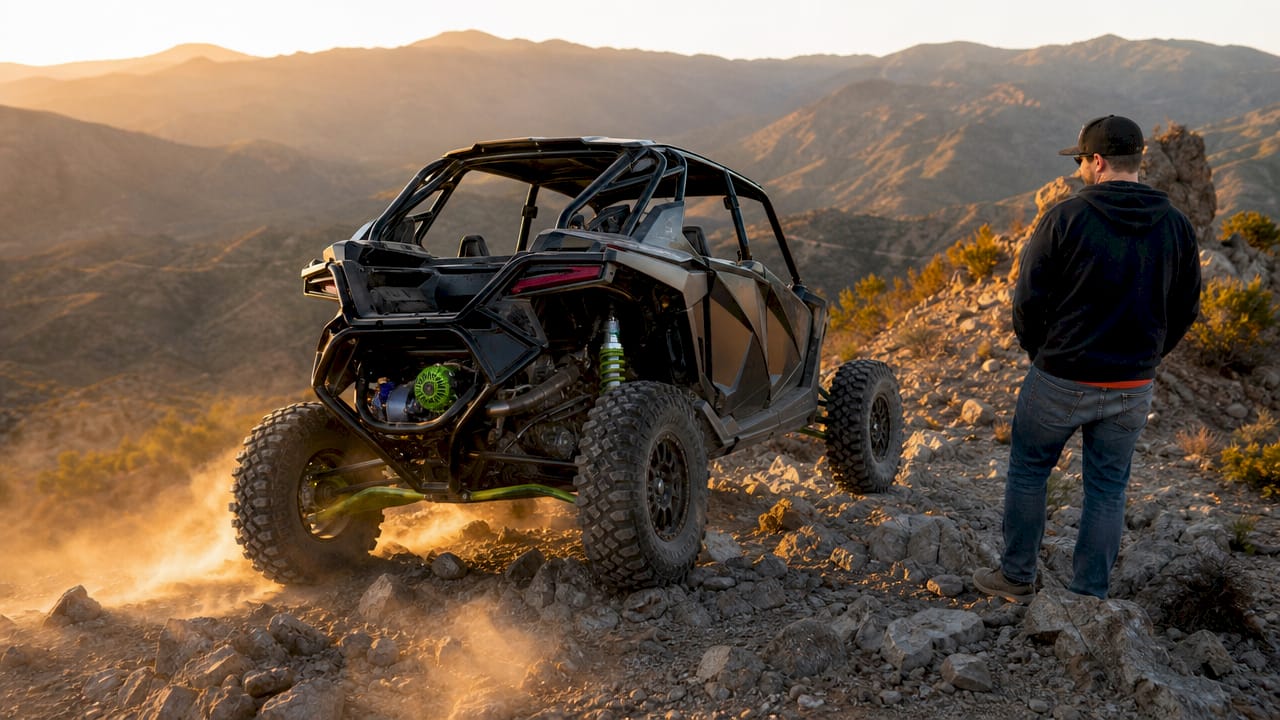
Pro Tip: Before adding electrical accessories, calculate your total amp draw. Add up the wattage of every device you plan to run, divide by your system voltage (usually 12V), and compare that number to your alternator’s output rating. If you are close to the limit, upgrade the alternator first.
Electrical system planning requires early decisions. Waiting until accessories fail or batteries drain repeatedly is the expensive way to learn this lesson. Riders who plan their electrical load before purchasing accessories avoid the reliability trade-offs that catch others off guard.
Comfort and utility accessories that make rides better
Comfort accessories reduce fatigue and extend how long you can ride safely. Fatigue is not just uncomfortable. It degrades reaction time and decision-making, which increases crash risk on technical terrain.
Lock-on grips use a dual-clamp mechanical attachment to the handlebar, eliminating grip slip in wet or muddy conditions. ODI Ruffian Lock-On Grips are a widely used example in the trail riding community. Standard glued grips rotate under hard braking or in deep water crossings. Lock-on grips do not. That difference in control directly reduces hand fatigue and improves steering precision over long rides.
Utility accessories address terrain-specific challenges that stock vehicles were not built to handle:
- Snorkel kits raise the air intake to handlebar height on ATVs or above the cab roofline on UTVs, preventing engine damage during water crossings by protecting both the engine and CVT belt system
- LED light bars extend riding hours into low-light conditions with far greater output than stock lighting
- Ergonomic seats with gel inserts or contoured foam reduce pressure points on long trail rides
- Cargo racks and storage bags add carrying capacity for tools, water, and recovery gear without affecting vehicle balance
- Windshields and hand guards block wind, debris, and cold air, reducing rider fatigue on open terrain
Each of these accessories solves a specific problem. A snorkel kit does not make your ATV faster. It makes your ATV reliable in an environment where a stock machine would fail. That is the utility category’s core value: expanding what your vehicle can do without compromising what it already does well.
Lighting upgrades deserve particular attention for family riders. Stock lighting on youth ATVs and entry-level machines is often minimal. Adding LED pods or a light bar to a kids’ ATV improves visibility for the rider and makes the vehicle more visible to others. That is a safety benefit, not just a comfort one.
How to choose the right powersports accessories
Choosing accessories based on compatibility is the single most important selection principle. Accessories with poor ergonomic, electrical, or airflow compatibility can negate their intended benefits or create new reliability problems. A suspension lift kit designed for one model year may not fit the next. An exhaust system built for a 450cc engine will not perform correctly on a 250cc machine.
Regulatory compliance is non-negotiable for safety gear. DOT and FMVSS 218 certification for helmets, CE ratings for armor, and purpose-built construction for boots are minimum standards, not premium features. Buying uncertified gear to save money trades real protection for the appearance of protection.
| Factor | Quality Gear | Budget Gear |
|---|---|---|
| Safety certification | DOT, CE, SNELL certified | Often uncertified or self-certified |
| Fit and retention | Tested retention systems | Inconsistent sizing, loose fit |
| Durability | Abrasion-resistant materials | Lower-grade textiles |
| Long-term value | Lasts multiple seasons | Frequent replacement needed |
Balancing aesthetics with function is a real consideration, not a shallow one. Riders who choose gear they actually want to wear are more likely to wear it consistently. The ATGATT philosophy only works if the gear gets put on every ride. Choosing gear that fits your style within certified options is a practical strategy, not a compromise.
New versus used accessories is a straightforward call for safety gear. Helmets should always be purchased new. A used helmet may have sustained an impact that is invisible externally but has compromised the liner’s ability to absorb force. For performance and utility accessories, used gear in good condition is a reasonable option when compatibility is confirmed.
Key Takeaways
Accessories in powersports directly determine rider safety, vehicle capability, and ride quality when chosen with compatibility and certification in mind.
| Point | Details |
|---|---|
| Safety gear requires certification | DOT and FMVSS 218 compliance is mandatory for U.S. street helmets, not optional. |
| Fit determines protection | Loose or improperly sized gear shifts during a crash and fails to protect. |
| Electrical planning prevents failures | Calculate total amp draw before adding accessories to avoid voltage drops. |
| Utility accessories expand capability | Snorkel kits and lock-on grips solve terrain-specific problems stock vehicles cannot handle. |
| Compatibility is the first filter | Model-specific fit for suspension, exhaust, and electrical upgrades prevents performance loss. |
What I have learned after years of watching riders gear up wrong
The most common mistake I see is riders treating safety gear as a one-time purchase rather than a system that needs to be updated. A helmet bought five years ago may still look fine. But helmet liner materials degrade over time, and certification standards improve. NHTSA’s updates to FMVSS 218 test protocols reflect real advances in understanding how head injuries occur. Gear that met the standard in 2019 may not reflect what the standard tests for in 2026.
The second mistake is underestimating electrical load. Riders add a winch, then a light bar, then a GPS, then a sound system, and never once check whether the alternator can handle the combined draw. The Polaris RZR alternator kit example is not a niche case. It represents a pattern across UTVs and ATVs where factory electrical systems were not built for the accessory loads modern riders expect. Planning that load before purchasing accessories saves money and prevents failures in the field.
My honest view on the aesthetics question is this: style matters because it drives compliance. A rider who loves their gear wears it every ride. A rider who bought the cheapest certified option and hates how it looks leaves it in the truck. The safety gear you actually wear is always better than the gear you do not. Buy certified first, then find the version you want to wear.
The accessory market moves fast. Airbag vests, improved lock-on grip designs, and smarter LED systems are all better in 2026 than they were three years ago. Riders who treat their gear as a living kit and update it as technology improves get more protection and more performance from every ride.
— Mario
Gear up with Gokartsusa for your next adventure
Gokartsusa carries powersports vehicles and accessories built for riders who take both fun and safety seriously. From entry-level youth ATVs to trail-ready machines for adults, the catalog is built around the idea that the right vehicle with the right gear delivers the best experience.
For families getting started, the Mini Sport Kids ATV with 110cc gas engine includes parental remote start and kill switch controls, making it one of the safest entry points for young riders. Pair it with a DOT-certified youth helmet and proper riding boots, and you have a complete, safe setup for family trail days. Browse the full selection at Gokartsusa and find essential ATV accessories that match your riding style and terrain.
FAQ
What does DOT certification mean on a motorcycle helmet?
DOT certification means the helmet meets FMVSS No. 218 standards, which require passing impact attenuation, penetration, and retention tests. It is the minimum legal requirement for street riding in the United States.
Do accessories really improve powersports safety, or are they just marketing?
Certified safety accessories provide measurable, tested protection. Helmets, CE-rated armor, and purpose-built boots each address specific injury mechanisms validated by standardized testing protocols.
What is the ATGATT philosophy in powersports?
ATGATT stands for “All The Gear, All The Time.” It means wearing full certified protective gear on every ride, not just on long trips or high-speed runs, because most accidents happen close to home and at moderate speeds.
Why do I need an alternator upgrade for my UTV?
Adding electrical accessories like winches, light bars, and GPS units increases amp draw beyond what factory alternators were designed to supply. An alternator upgrade prevents voltage drops, battery drain, and accessory failure under heavy electrical loads.
What is a snorkel kit and when do I need one?
A snorkel kit raises your ATV or UTV air intake to handlebar height or above the cab roofline, protecting the engine and CVT belt system from water damage during creek crossings or wet terrain riding.