




TL;DR:
- Parents should choose certified safety gear that fits properly and is comfortable enough for children to wear consistently. Properly fitting helmets, car seats, and pads significantly enhance safety during recreational activities and transportation. Adding visibility accessories like lights and reflective vests can further reduce accident risks in low-light conditions.
The best safety gear for kids is defined as certified protective equipment that fits correctly, meets current regulatory standards, and gets worn consistently during recreational activities. The American Academy of Pediatrics and ASTM International set the benchmarks parents should look for when choosing children’s safety equipment. Gear that fails on fit or comfort gets left behind, and gear left behind protects no one. This guide covers helmets, car seats, pads, and visibility accessories so you can make confident, informed choices for your child.
1. Best safety gear for kids starts with the right helmet
A helmet is the single most critical piece of protective gear for kids. The U.S. Consumer Product Safety Commission (CPSC) certifies helmets for different age groups, and the label on the box tells you exactly what you are buying. CPSC 1+ helmets provide extra rear-head coverage designed for children under 5, while CPSC 5+ helmets suit kids whose head circumference exceeds 53 cm. Choosing the wrong category leaves real gaps in protection.
Fit matters as much as certification. Most quality helmets use dial-adjust systems that let you tighten or loosen the fit without removing the helmet. Dial-adjust systems can be tricky to operate while a child is moving, so practice the adjustment at home before heading outside. Magnetic buckles are a practical upgrade for younger kids who struggle with traditional clasps.
MIPS technology is worth understanding before you shop. MIPS is an internal cage that rotates slightly on impact to reduce rotational force on the brain. It is rare in toddler-sized helmets and typically adds cost, but it represents a meaningful safety advancement for older children riding bikes, scooters, or eBikes. If your child is 6 or older and rides regularly, prioritize a MIPS-equipped helmet.
- Bike and scooter riding: Look for CPSC-certified multi-sport helmets with a round profile.
- Skateboarding: Choose a dual-certified helmet (CPSC and ASTM F1492) with a lower rear profile.
- eBike riding: Select helmets rated for higher-speed impact, often labeled for Class 1 or Class 2 eBikes.
- Toddlers: Prioritize CPSC 1+ certification, a lightweight shell, and a chin strap with a magnetic buckle.
Pro Tip: Place two fingers between the chin strap and your child’s chin. If more than two fingers fit, the strap is too loose and the helmet will not protect correctly in a fall.
2. Car seats and boosters: protection that grows with your child
Car seats are the most regulated category of children’s safety equipment, and the rules have real consequences. Children under 13 should always ride in the back seat, and booster seats are recommended until the vehicle seat belt fits properly across the shoulder and lap, typically between ages 8 and 12. Moving a child to a booster too early is one of the most common and preventable mistakes parents make.
Rear-facing is the safest position for infants and toddlers. The 2026 AAP guidelines recommend keeping children rear-facing as long as the seat’s weight and height limits allow, rather than switching at a specific birthday. Multi-stage convertible seats extend the value of a single purchase. Multi-mode car seats support children from as little as 4 lb up to 120 lb and include side-impact protection technology that covers from head to hips.
Anti-rebound bars and load legs are two features that significantly reduce crash forces. An anti-rebound bar contacts the vehicle seat to limit how far a rear-facing seat rotates in a frontal crash. A load leg presses against the vehicle floor to absorb energy. Both features are worth prioritizing when comparing seats.
| Feature | Why it matters |
|---|---|
| Side-impact protection | Shields head and hips in side collisions |
| Anti-rebound bar | Limits seat rotation in frontal crashes |
| Load leg | Absorbs crash energy through the vehicle floor |
| Tether anchor | Reduces forward head movement in forward-facing mode |
| Extended rear-facing weight limit | Keeps child in the safest position longer |
Pro Tip: After installing a car seat, grab it at the base and try to move it side to side and front to back. It should not shift more than one inch in any direction. If it does, reinstall it.
3. Protective pads and gloves for active kids
Knee pads, elbow pads, and wrist guards form the core of protective gear for kids who skate, scooter, or ride. The choice between hard-shell and soft flexible pads is not just about protection level. Hard-shell pads offer superior impact defense but are bulkier and less comfortable, which means kids resist wearing them. Softer, flexible pads improve compliance because children forget they have them on.
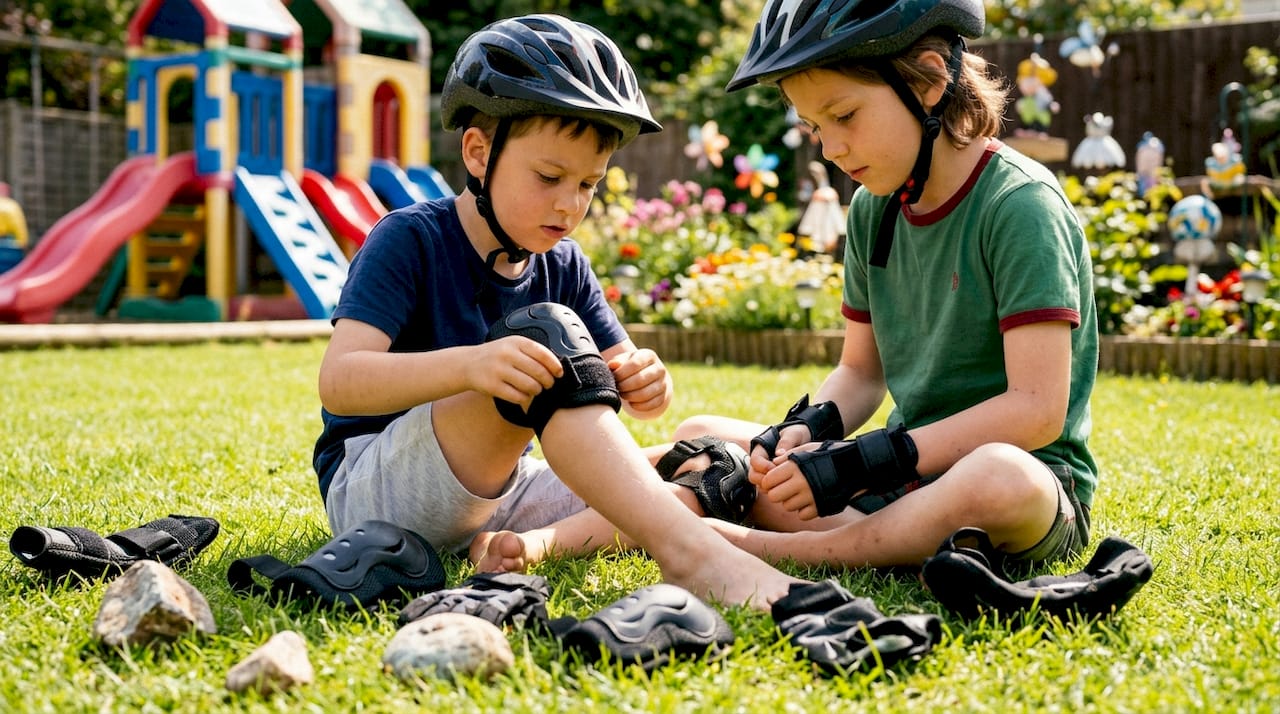
Wrist guards deserve special attention for scooter and skateboard riders. When a child falls forward, the instinct is to catch themselves with outstretched hands. Wrist fractures are among the most common injuries in these activities, and a properly fitted wrist guard absorbs and distributes that impact force. Look for guards with a rigid splint on both the palm and back of the hand.
Sizing is where most parents go wrong with pads. Pads that are too large slide out of position during a fall and offer no real protection. Measure your child’s knee and elbow circumference before buying, and check the manufacturer’s size chart rather than guessing by age. ASTM-certified pads list the standard on the label, which is your confirmation that the product has been tested.
- Knee pads: Measure mid-kneecap circumference; look for a non-slip inner lining.
- Elbow pads: Should cover the point of the elbow fully without restricting arm bend.
- Wrist guards: Must include a rigid splint; check that the velcro straps hold securely after 10 minutes of wear.
- Gloves: Useful for go-kart and mini bike riding; look for padded palms and grip texture.
Pro Tip: Let your child pick the color or design of their pads. Kids who feel ownership over their gear are far more likely to wear it without a fight.
4. Visibility gear and additional safety accessories
Visibility is a protection layer that parents often overlook. A child riding a bike or scooter at dusk is nearly invisible to drivers without reflective or light-based gear. LED helmet lights, reflective vests, and adhesive visibility stickers are low-cost additions that make a measurable difference in how early a driver can spot your child. Clip-on LED lights attach to helmets, handlebars, or backpacks in seconds.
Reflective vests sized for children are available in bright safety orange and yellow, the same colors used in road construction for maximum contrast. For kids riding go-karts or mini bikes on tracks or open land, a vest adds a visible layer that complements a full helmet. Pair it with a flag mounted to the vehicle for off-road visibility.
Home safety accessories round out the picture for parents of toddlers. Removing environmental hazards is more effective than relying on babyproofing gadgets alone, some of which introduce new risks like choking on small parts. Gate hardware, outlet covers, and cabinet locks from ASTM-certified brands provide reliable protection. Foam corner guards and door pinch protectors are useful, but only when they carry a recognized safety certification.
- LED helmet lights: Clip-on or integrated; look for at least 30 lumens for dusk visibility.
- Reflective vests: Sized for children; ANSI Class 1 or higher for road-adjacent riding.
- Safety flags: 6-foot whip flags for go-karts and ATVs to increase visibility on trails.
- ASTM-certified home safety products: Gate hardware, outlet covers, and cabinet locks from established brands.
Key Takeaways
The most reliable children’s safety equipment combines current CPSC or ASTM certification, a correct fit verified by measurement, and enough comfort that your child will wear it every single time.
| Point | Details |
|---|---|
| Certification is non-negotiable | Always check for CPSC or ASTM labels before purchasing any helmet or pad. |
| Fit determines real protection | Measure your child’s head and limbs; never size by age alone. |
| Comfort drives compliance | Softer, lighter gear gets worn consistently, which matters more than maximum rigidity. |
| Car seat transitions need patience | Keep children rear-facing as long as the seat’s limits allow, not just until a birthday. |
| Visibility saves lives | Add LED lights and reflective vests for any riding done near dusk or in open terrain. |
What I’ve learned after years of watching parents gear up their kids
Parents tend to make one of two mistakes. They either buy the most expensive gear on the market and assume price equals protection, or they grab whatever is on sale without checking a single certification label. Neither approach works. Consumer Reports 2026 top picks evaluate safety gear based on real crash tests and usability, not marketing claims. That is the standard worth following.
The fit conversation is the one I keep coming back to. I have seen kids wearing helmets that sit two inches too high on their foreheads because a parent bought for “room to grow.” That helmet will fly off in a fall. Gear that does not fit is not safety gear. It is a false sense of security, and that is more dangerous than no gear at all.
My honest opinion on pads: buy the softer option first. A child who wears flexible knee pads every single ride gets more protection over a season than a child who refuses to wear hard-shell pads after the first uncomfortable afternoon. Choosing protective pads always involves a trade-off between impact protection and your child’s willingness to wear them. Lean toward compliance, then upgrade the protection level as your child gets older and more accepting of gear.
One more thing: gear is not a substitute for supervision. The best helmet in the world does not replace a parent watching a child learn to ride. Use quality gear and stay present. That combination is what actually keeps kids safe.
— Mario
Gear up for adventure with Gokartsusa
At Gokartsusa, we know that the thrill of riding starts with confidence, and confidence starts with the right protection. Our lineup of youth powersports vehicles is built with safety and fun in mind, from the Sport Kart Kids Gas Go Kart designed for riders ages 8 and up, to the Mini Sport Kids ATV with parental remote start and kill switch for total peace of mind.
Every vehicle in our catalog pairs with the safety gear principles covered in this guide. We recommend pairing any youth powersports purchase with a CPSC-certified helmet, wrist guards, and a reflective vest. Our team is here to help you find the right fit for your child’s age, size, and riding style. Visit Gokartsusa and let us be your pit crew for a safe, unforgettable riding season.
FAQ
What helmet certification do kids need for bike riding?
Kids need a CPSC-certified helmet for bike riding. Children under 5 should use a CPSC 1+ helmet for extra rear-head coverage, while older kids with larger head sizes need a CPSC 5+ model.
When should a child move from a car seat to a booster?
Children should stay in a harnessed car seat as long as the seat’s weight and height limits allow, then transition to a booster seat until the vehicle seat belt fits correctly across the shoulder and lap, typically between ages 8 and 12.
Are hard-shell or soft pads better for kids?
Soft, flexible pads are the better choice for most children because they are more comfortable and get worn consistently. Hard-shell pads offer stronger impact protection but are often abandoned due to discomfort.
What safety gear do kids need for go-kart riding?
Kids riding go-karts need a full-face or open-face CPSC-certified helmet, gloves with padded palms, and a reflective vest or safety flag for visibility. Reviewing a go-kart safety checklist before the first ride is strongly recommended.
How do I know if a safety product is genuinely certified?
Look for the CPSC, ASTM, or ANSI certification label printed directly on the product or its packaging. Avoid products that only claim compliance in marketing copy without a visible, verifiable certification mark.