




TL;DR:
- Two-stroke engines fire every revolution, providing higher power and lighter weight for short-term performance. Four-stroke engines fire every other revolution, offering better fuel efficiency, lower emissions, and longer maintenance intervals. The choice depends on the rider’s needs, with two-strokes favored for power and agility and four-strokes for reliability and environmental compliance.
The difference between two-stroke and four-stroke engines is defined by how many piston strokes and crankshaft revolutions each engine needs to complete one power cycle. A two-stroke engine fires every revolution, completing its cycle in a single crankshaft revolution and two piston strokes. A four-stroke engine requires two full crankshaft revolutions and four piston strokes before firing again. That mechanical gap shapes everything: power delivery, fuel economy, maintenance frequency, and which vehicle each engine belongs in. If you are shopping for a go-kart, mini bike, ATV, or dirt bike, understanding this distinction saves you money and frustration before you ever turn a key.
What is the difference between two-stroke and four-stroke engines?
The simplest way to understand the two engine types is to walk through their cycles step by step.
A four-stroke engine completes four distinct strokes per power cycle. First, the intake stroke pulls an air-fuel mixture into the cylinder as the piston moves down. Second, the compression stroke pushes the piston back up, compressing that mixture. Third, the power stroke fires the spark plug, igniting the compressed mixture and driving the piston down with force. Fourth, the exhaust stroke pushes spent gases out of the cylinder. Four-strokes separate intake and exhaust fully, which allows more complete combustion and cleaner emissions.
A two-stroke engine compresses all four events into just two piston strokes. On the upstroke, the piston compresses the fuel-air mixture above while simultaneously drawing a fresh charge into the crankcase below. On the downstroke, combustion drives the piston down, and ports in the cylinder wall open to expel exhaust and admit the fresh charge simultaneously. Two-strokes control intake and exhaust through ports in the cylinder walls, not valves. That means no camshafts, no rocker arms, and no valvetrain at all.
The lubrication method also differs sharply. Four-stroke engines carry a dedicated oil sump and pump that circulates oil separately from fuel. Two-stroke engines use a total-loss lubrication system: oil is mixed directly into the fuel and burned during combustion. Two-stroke total-loss lubrication produces the characteristic blue-tinged exhaust smoke you see on older dirt bikes and chainsaws.
Pro Tip: If you are ever unsure which engine type a vehicle uses, look at the fuel cap. A two-stroke requires a fuel-oil mixture; a four-stroke takes straight gasoline and has a separate oil fill port.
How do performance and efficiency compare between the two engine types?
Power delivery is where the two engine types feel most different to the rider.
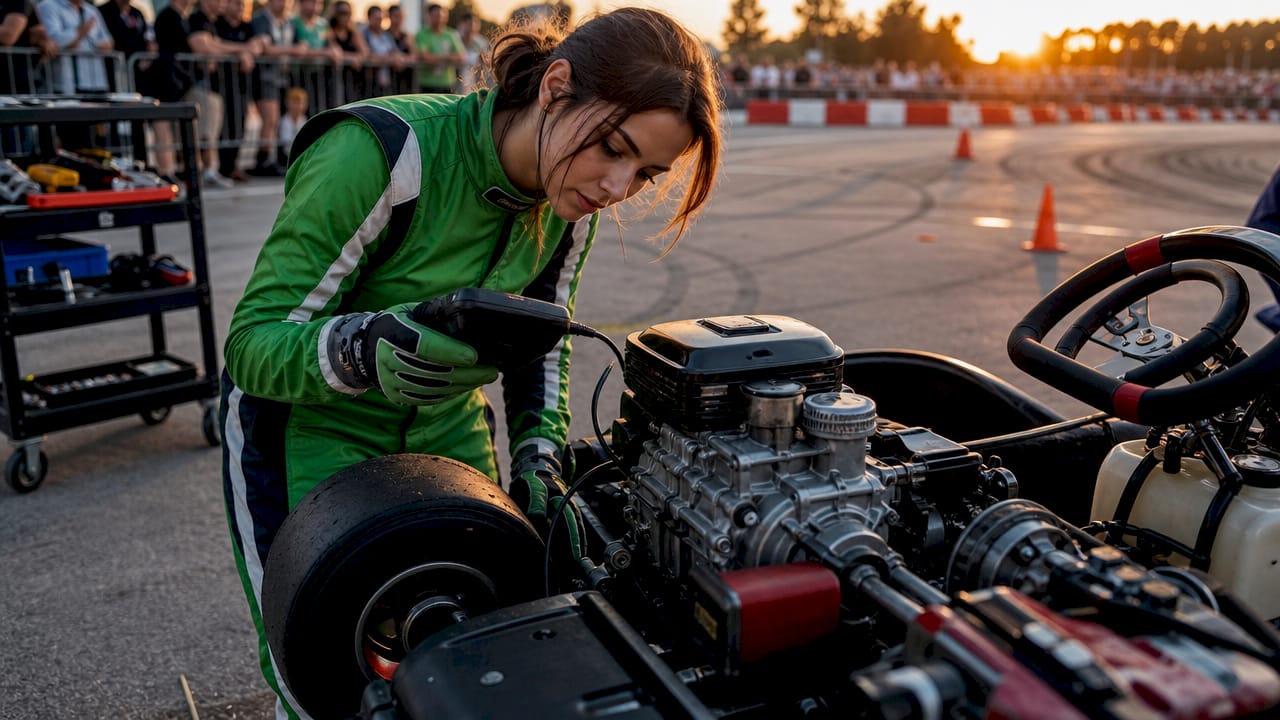
A two-stroke engine delivers power every crankshaft revolution, giving it a higher power-to-weight ratio and snappier throttle response. That quality makes two-strokes feel electric off the line. A four-stroke fires once every other revolution, producing smoother, steadier torque that is easier to manage at sustained speeds.
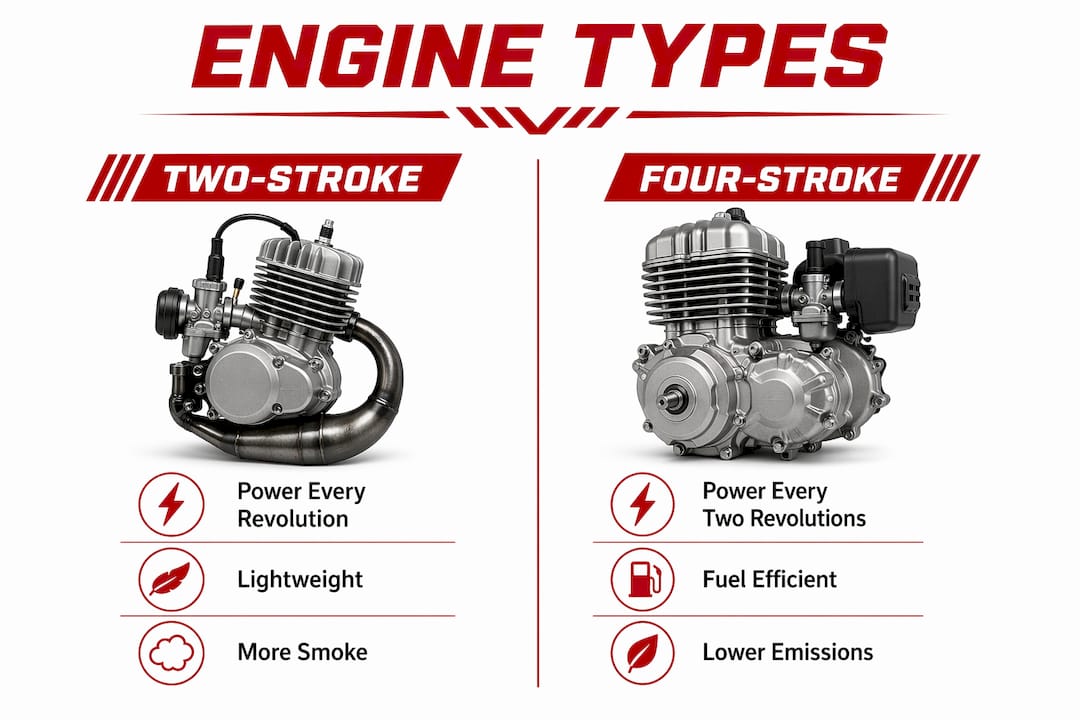
Fuel efficiency tells a different story. Four-stroke engines offer 25–30 mpg fuel economy and significantly better emission profiles than two-stroke engines. That gap exists because of scavenging loss. When a two-stroke opens its exhaust and intake ports at the same time, some unburned fuel escapes with the exhaust gases. Scavenging loss reduces fuel efficiency in two-strokes and contributes to higher hydrocarbon emissions. Four-strokes avoid this entirely because their intake and exhaust events never overlap.
Here is a quick side-by-side view of the core performance traits:
| Feature | Two-stroke engine | Four-stroke engine |
|---|---|---|
| Power cycle | 1 crankshaft revolution | 2 crankshaft revolutions |
| Power delivery | Every revolution | Every other revolution |
| Power-to-weight ratio | Higher | Lower |
| Fuel economy | Lower | Higher (25–30 mpg typical) |
| Emissions | Higher hydrocarbons | Cleaner, lower emissions |
| Engine weight | Lighter | Heavier |
| Throttle response | Snappy, aggressive | Smooth, progressive |
The practical takeaway: two-strokes win on raw punch and weight savings. Four-strokes win on efficiency, smoothness, and emissions compliance. Neither is universally better. The right choice depends entirely on what you are riding and where.
What are the maintenance and longevity differences?
Maintenance is where many buyers get surprised after the purchase.
Two-stroke engines are mechanically simpler because they have no valvetrain. Fewer parts means fewer things to adjust or replace. However, two-stroke engines require more frequent top-end maintenance, particularly piston rings, because the lubrication method and operating stresses wear components faster. If you run the wrong fuel-oil ratio, or use low-quality oil, you can score the cylinder walls within a single ride.
Four-stroke engines carry more components: camshafts, valves, rocker arms, and a separate oil system. That complexity means maintenance is less frequent but more involved when it does come due. Four-stroke engines have longer service intervals and typically longer overall lifespans than two-strokes running under similar conditions. A well-maintained four-stroke go-kart or ATV engine can deliver years of reliable weekend use without a top-end rebuild.
Cost is a real factor too. Four-stroke engines cost 10–20% more upfront than comparable two-strokes. Over time, however, lower fuel costs and less frequent rebuilds often offset that gap for riders who use their vehicles regularly. You can learn more about keeping your powersports vehicle in top shape with this practical maintenance guide from Gokartsusa.
Key maintenance differences to keep in mind:
- Two-strokes need the correct fuel-oil mix every single fill-up. Getting it wrong causes immediate damage.
- Four-strokes need regular oil changes on a set interval, just like a car.
- Two-stroke top-end rebuilds (piston, rings, cylinder) happen more often and are relatively affordable.
- Four-stroke valve adjustments and timing checks require more mechanical knowledge or a shop visit.
- Proper oil choice in two-strokes critically affects engine longevity. Use manufacturer-specified two-stroke oil, not automotive motor oil.
Pro Tip: For two-stroke engines, pre-mix your fuel in a dedicated container with a measured ratio. Never eyeball it. Most recreational two-strokes call for a 32:1 or 50:1 fuel-to-oil ratio, but always confirm with your owner’s manual.
Which engine type fits which recreational vehicle best?
Matching the engine to the activity is the most practical question a buyer can ask.
Two-stroke engines are favored for chainsaws, dirt bikes, and snowmobiles where a high power-to-weight ratio matters more than fuel economy or emissions. A lightweight two-stroke dirt bike accelerates hard and handles tight trails with agility that a heavier four-stroke struggles to match. For competitive motocross or trail riding where raw punch counts, two-strokes still hold a loyal following.
Four-stroke engines dominate motorcycles, UTVs, cars, and most modern go-karts because reliability and efficiency matter more over longer rides. A four-stroke go-kart or ATV delivers smooth, predictable power that is easier for younger or less experienced riders to manage. That predictability is a genuine safety advantage in residential areas, campgrounds, and family-oriented riding environments.
Sound and vibration also matter. Two-stroke engines run louder and with a higher-pitched exhaust note. Four-strokes are quieter and produce less vibration at idle. If you ride in noise-sensitive areas, near neighborhoods, or on private property with close neighbors, a four-stroke is the considerate choice and often the legally required one.
Here is a quick application guide:
- Dirt bikes and motocross: Two-stroke for lightweight aggression; four-stroke for sustained trail riding.
- Go-karts: Four-stroke engines dominate recreational and youth karts for smooth, safe power delivery.
- Mini bikes: Both engine types are available. Two-strokes offer more punch; four-strokes offer more reliability.
- ATVs and UTVs: Four-stroke is the standard for utility and recreational use.
- Chainsaws and handheld tools: Two-stroke remains the industry standard due to weight and power density.
For buyers choosing a go-kart for family fun, a four-stroke engine is almost always the right call. It starts reliably, runs cleanly, and does not demand the precise fuel mixing that two-strokes require.
Key Takeaways
The core difference between two-stroke and four-stroke engines determines not just power output, but also fuel costs, maintenance demands, and which recreational vehicle each engine suits best.
| Point | Details |
|---|---|
| Cycle length defines everything | Two-strokes fire every revolution; four-strokes fire every other revolution, shaping all performance traits. |
| Four-strokes win on efficiency | Four-stroke engines deliver 25–30 mpg and cleaner emissions due to separated intake and exhaust events. |
| Two-strokes need more top-end care | Piston rings and cylinder wear faster in two-strokes; correct fuel-oil ratio is non-negotiable. |
| Match engine to application | Two-strokes suit lightweight, high-power tools; four-strokes suit recreational vehicles needing reliability. |
| Upfront cost vs. long-term cost | Four-strokes cost 10–20% more upfront but typically last longer with lower fuel and rebuild costs. |
My honest read on the two-stroke vs four-stroke debate
I have spent years around powersports vehicles, and the engine debate comes up constantly. Here is what I have actually found: most buyers overthink the two-stroke vs four-stroke question when the answer is usually obvious once you name your use case.
If you are buying a vehicle for a child or a beginner, a four-stroke is the right engine every single time. The smooth power delivery, the forgiving throttle response, and the straightforward maintenance make it the safer and smarter choice. You do not want a new rider managing a snappy two-stroke power band on their first season out.
Where I think conventional wisdom gets it wrong is in dismissing two-strokes as outdated. For experienced riders who want a lightweight machine with serious punch, a well-maintained two-stroke is still a thrill. The key word is “well-maintained.” I have seen two-stroke engines destroyed in a single season by riders who ignored the fuel-oil ratio or used cheap oil. The engine is not forgiving of neglect.
The environmental trend is real and worth acknowledging. Emissions regulations in many states are tightening, and two-stroke engines face more scrutiny every year. If you ride on public land or in regulated areas, check local rules before you buy. A four-stroke is almost always the safer bet for long-term compliance.
My practical advice: read the four-stroke engine guide from Gokartsusa if you are leaning toward a recreational kart or ATV. And if raw power and weight savings are your priority, go in with eyes open about the maintenance commitment a two-stroke demands.
— Mario
Gokartsusa has both engine types ready to ride
Choosing the right engine is only half the decision. Finding the right vehicle to put it in is where the real fun begins.

At Gokartsusa, we carry recreational vehicles powered by both engine types, so you can match your choice to your riding style. The Sport Kart Kids Gas Go Kart runs a smooth 2.5hp four-stroke engine, built for riders ages 8 and up who want reliable, clean power on the track or trail. For riders who want that two-stroke punch in a lightweight package, the V2 BMX Style Gas Powered Mini Bike delivers a 49cc two-stroke engine with the aggressive acceleration that experienced riders love. We also carry the Gas Powered Mini Bike with a 3.5hp four-stroke for riders ages 12 and up who prioritize efficiency and ease of use. Whatever engine type fits your adventure, Gokartsusa has the vehicle to back it up.
FAQ
What is the main difference between two-stroke and four-stroke engines?
A two-stroke engine completes its power cycle in one crankshaft revolution and two piston strokes. A four-stroke engine requires two crankshaft revolutions and four piston strokes before firing again.
Are two-stroke engines harder to maintain?
Two-stroke engines require more frequent top-end maintenance, particularly piston rings, and demand a precise fuel-oil mixture every fill-up. Four-stroke engines have longer service intervals but more complex maintenance when service is due.
Which engine type is better for go-karts?
Four-stroke engines are the standard for recreational go-karts because they deliver smooth, predictable power, cleaner emissions, and easier maintenance. They are especially well-suited for younger or beginner riders.
Why do two-stroke engines produce more smoke?
Two-stroke engines use a total-loss lubrication system where oil is mixed into the fuel and burned during combustion. That burning oil produces the characteristic exhaust smoke associated with two-stroke engines.
Are four-stroke engines more fuel-efficient than two-stroke engines?
Four-stroke engines are significantly more fuel-efficient. They avoid scavenging loss, a problem where two-strokes lose unburned fuel through overlapping intake and exhaust events, and they typically deliver 25–30 mpg in recreational applications.