




The single most important mini bike tire size check is that the tire’s rim diameter number exactly matches your wheel. Everything else, from width to tread to PSI, tunes to that one non-negotiable fit. Beyond that, you’re checking section width and aspect ratio, load capacity or ply rating, tread pattern for your terrain, and cold tire pressure. Sidewalls speak in formats like 4.00-4, 145/70-6, or 10x2.125-4, and once you can read them, you’ll never guess at a replacement again.
TL;DR:
- The rim diameter must match exactly; a difference of even a quarter-inch can prevent a tire from seating properly.
- Most common sizes include 4.00-4, 145/70-6, and 19x7.00-8, with each suited for specific mini bike types and load ratings.
- Tread patterns should be matched to riding surfaces: slicks for pavement, all-terrain for mixed-use, and knobby for off-road trails.
- Higher ply ratings like 4PR or 6PR are recommended for motorized mini bikes, especially those with larger engines or frequent off-road use.
- Always verify rim width compatibility, check load ratings, and confirm the tire’s construction type (tubed or tubeless) before purchasing.
Table of Contents
- How to Read Mini Bike Tire Sidewall Markings
- Common Mini Bike Tire Sizes and What They Fit
- Choosing Tires by Surface and Use
- Tire Pressure, Load Index, and Ply Ratings
- Rim and Tire Compatibility and Mounting Pitfalls
- Maintenance and Replacement: When to Swap Tires
- Confirming Fitment on GokartsUSA Product Pages
- A Few Owner Mistakes We See Over and Over
- Where to Buy Replacement Tires and Parts
- Sources
- FAQ
How to Read Mini Bike Tire Sidewall Markings
Every mini bike tire size on the market fits into one of two labeling styles, and once you know the pattern, the numbers stop looking like a secret code.
Imperial-style markings (4.00-4, 10x2.125-4) list section width first, sometimes a second number for width variation, then rim diameter last. In 4.00-4, that’s a 4.00-inch-wide tire on a 4-inch rim. In 10x2.125-4, it’s a 10-inch overall diameter, 2.125-inch width, on a 4-inch rim.
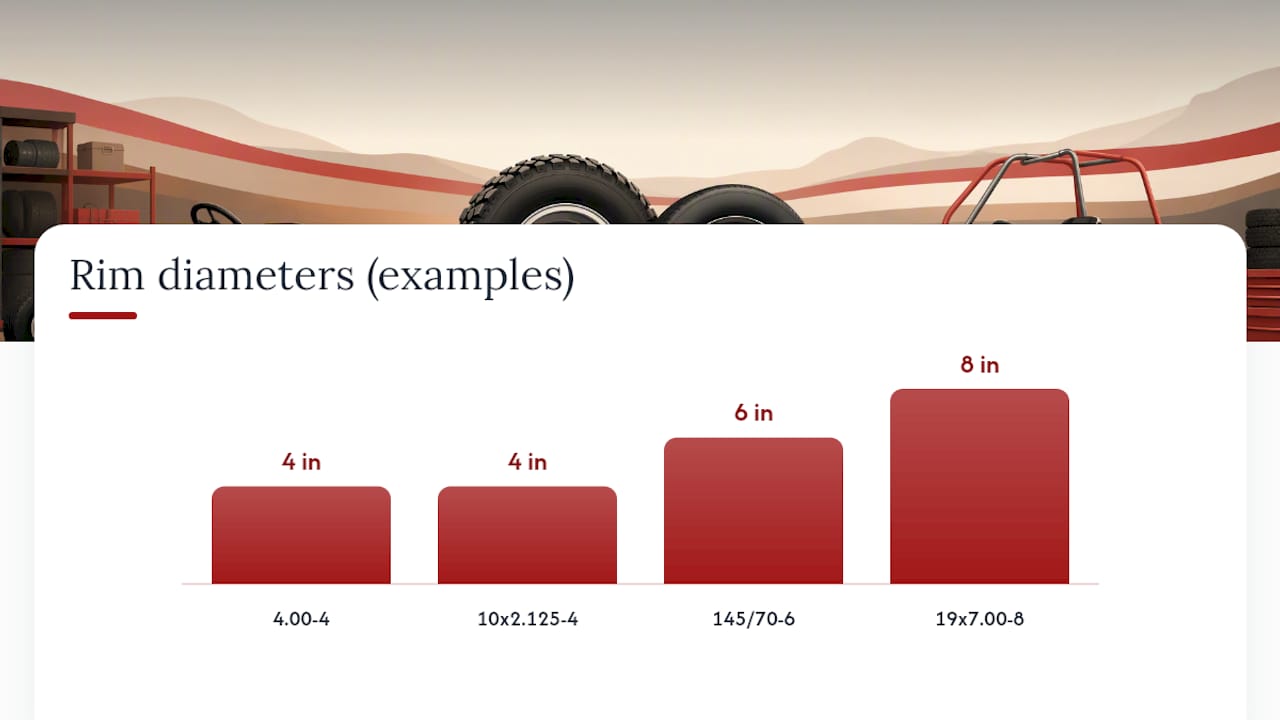
Metric-style markings (145/70-6) work differently: 145 is section width in millimeters, 70 is the aspect ratio (height as a percent of width), and 6 is rim diameter in inches, according to Alibaba’s mini bike wheel and tire buying guide.
That last number, in either format, is the one you cannot round or approximate:
- 4.00-4: 4-inch rim, common on small kid’s mini bikes and go-kart-style frames.
- 145/70-6: 6-inch rim, a frequent fit on pocket bikes and compact mini bikes.
- 10x2.125-4: 4-inch rim, often paired with hub-motor electric mini bikes.
- 19x7.00-8: 8-inch rim, standard on Baja-style off-road mini bikes.
Rim width matters too, even when it’s not printed on the tire. A tire rated for a 2.15 to 2.50-inch rim mounted on a wider or narrower rim risks bead slip, uneven wear, or a vibration you’ll feel through the handlebars at speed.
Common Mini Bike Tire Sizes and What They Fit
Most riders only ever deal with a handful of sizes, and knowing which one belongs on which style of machine saves a lot of guessing at the parts counter.
- 4.00-4: kid’s ride-on mini bikes and small go-kart-adjacent frames, almost always tubed.
- 4.10/3.50-4: a slightly taller, more aggressive version of the 4.00-4 footprint, popular for light off-road use.
- 145/70-6: compact adult mini bikes and pocket bikes, typically tubeless-ready but often sold tubed.
- 10x2.125-4: electric mini bikes and hub-motor builds.
- 16x8-7: mid-size ATV-style mini bikes needing more sidewall cushion.
- 19x7.00-8: the workhorse size for Baja-style gas mini bikes, widely available in knobby and V-tread patterns.
If a listing looks close but not identical to your old tire, measure your rim diameter with a tape measure before you buy. A quarter-inch difference in the last number is the difference between a tire that seats and one that never will.
Choosing Tires by Surface and Use
Tread and compound decide how your mini bike feels under you far more than horsepower does. Match the tire to where you actually ride, not where you wish you rode.
- Street or slick patterns work best on pavement, driveways, and cul-de-sacs where grip on smooth, dry surfaces matters more than mud clearance. They wear faster on gravel and offer little bite in loose dirt.
- All-terrain tread splits the difference, handling packed trails, lawns, and light gravel without the buzz a slick makes on asphalt. This is the right default for mixed-use riders who don’t have one dedicated surface.
- Knobby patterns dig into loose dirt, sand, and mud, the kind of tread you’ll find on 19x7.00-8 off-road mini bike tires built for trail riding. They’re louder and grabber on pavement, which is the trade-off for that bite.
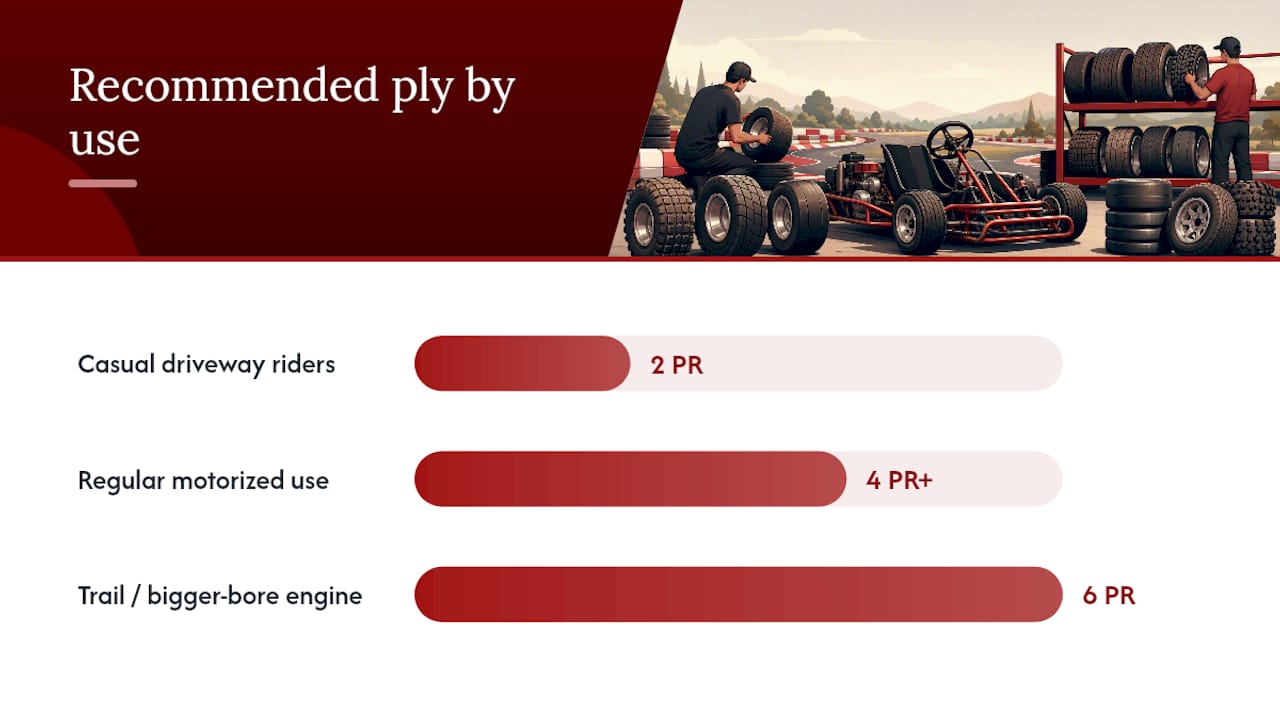
Compound hardness follows the same logic: softer rubber grips better but wears faster, harder rubber survives longer but sacrifices traction in loose conditions. Ply rating adds another layer. Casual driveway riders can get by on 2PR, but anyone running a motorized mini bike regularly should look for 4PR or higher, since lighter-duty 2PR tires are built for pull-behind lawn equipment, not sustained throttle, and can delaminate under real speed. Trail riders and anyone running a bigger-bore engine should push toward 6PR for peace of mind.
Pro Tip: If you split time between pavement and trail, buy the all-terrain tread first. It’s the one compromise that rarely feels like one.
Tire Pressure, Load Index, and Ply Ratings
Most low-speed recreational mini bikes run happiest between 15 and 22 PSI cold, while heavier setups carrying an adult rider and gear often need the higher end of that range or slightly more, depending on the tire’s rated max. Always check the sidewall or product page for the specific number rather than guessing.
Load capacity is simple math once you know the inputs. Add your body weight to your gear and any cargo, then compare it against the tire’s listed max load, which every legitimate vendor publishes on the product page. Riders pushing toward the upper end of their mini bike’s weight limit should size up rather than trust a tire that’s just barely rated for them.
- Underinflation shows up as sluggish handling, excess heat buildup, and a tire that squirms under acceleration.
- Overinflation feels harsh over bumps and wears the center of the tread faster than the edges.
- Ply rating (2PR, 4PR, 6PR) tells you how many reinforcing layers are in the tire. Higher numbers mean tougher sidewalls that resist punctures and heat, not necessarily a taller or wider tire.
For anything with a motor, 4PR is the practical floor.
Rim and Tire Compatibility and Mounting Pitfalls
Rim diameter has to match the tire’s final number exactly. There’s no such thing as “close enough” here. Rim width is more forgiving, but only within the range the tire manufacturer specifies, usually a spread of a half-inch to an inch.
- Confirm rim width against the tire’s rated range before you ever break the old bead loose.
- Use the correct tube size for tubed setups. A tube built for a smaller tire stretches thin and fails fast.
- Seat the bead evenly on both sides before inflating past a few PSI, and never stand over a tire while airing it up.
- After mounting, spin the wheel and check for wobble, listen for hissing at the bead line, and recheck torque on any axle hardware you removed.
Whether you need a tube depends on the wheel. Vendors typically state clearly whether a given SKU is tubeless-rated or requires a tube, and running tubeless on a wheel not designed for it is a common source of slow leaks. One documented case involved a rider who mounted a rim-width-mismatched tire with an underrated load capacity, which caused sidewall delamination. Switching to a properly rated 4.10/3.50-4 4PR all-terrain tire at the correct cold PSI eliminated the vibration entirely, according to the same buying guide.
Maintenance and Replacement: When to Swap Tires
Tires don’t fail without warning. They tell you first, if you’re looking.
- Cracked sidewalls, bulges, or exposed cord mean the tire’s structural integrity is gone. Stop riding and replace it before the next trip out.
- Tread depth below a safe margin reduces grip fast, especially in wet grass or loose dirt.
- Delamination, where rubber separates from the carcass, usually shows up as a lump or a thumping sound at speed and demands immediate replacement.
- Replacement cadence varies by use: casual driveway riders might get a couple of seasons, while frequent off-road or competitive riders should inspect every few outings and expect to replace tires more often.
A quick pre-ride check (spin the wheel, look for bulges, thump the tread with a knuckle) catches most problems early. If you find cord exposure or a soft spot that won’t hold air after reseating the bead, that’s a swap, not a patch. Anything involving the axle, bearings, or hub should go to a mechanic rather than a driveway fix.
Confirming Fitment on GokartsUSA Product Pages
- Check the exact tire size listed under a model like the Gas Powered Mini Bike before ordering a replacement.
- Compare rim diameter first, then width and load rating, against whatever you’re considering as a swap.
- Contact support directly if a listing seems ambiguous. Model-specific fitment questions get answered faster than guessing does.
- New riders sizing up their first machine should also read our beginner’s guide to mini bikes for context beyond tires alone.
A Few Owner Mistakes We See Over and Over
The most common mistake isn’t buying the wrong size. It’s buying a tire that looks like the old one without checking the numbers, especially load rating and ply, which don’t always show up in a product photo.
Before you check out, run three quick confirmations: measure your rim diameter directly, confirm the load rating against your actual rider and gear weight, and check the recommended cold PSI on the listing. When a spec sheet is unclear or a size seems to have multiple variants, contacting the seller directly beats guessing every time.
— Mario
Where to Buy Replacement Tires and Parts
Once you know your rim diameter, width, and load requirements, shopping gets a lot faster. GokartsUSA lists tire size and rim specs directly on every mini bike model page, so you’re never ordering blind or cross-referencing three tabs to confirm fitment.
Start with the model page that matches what you already own, like the Gas Powered Mini Bike, Automatic 3.5hp 4-Stroke, where tire and rim specs are listed alongside the full build. If you’re outfitting a kid’s machine instead, the Demon Kids Gas Dirt Bike with 10-inch wheels shows how wheel size scales down for smaller riders. Free shipping and seasonal promotions apply across the catalog, so replacing a worn tire doesn’t have to mean paying extra just to get it to your door. If a listing doesn’t spell out load rating or rim width clearly enough for your build, reach out to support with your model name and current tire markings, and confirm fitment before you check out.
Sources
- 19x7.00-8 Off-Road Mini Bike Tires (Set of 2) – Monster Scooter Parts
- 19x7.00-8 Tire with QD112 Knobby Tread for Baja Mini Bikes MB165 & MB200, ATVs, & Go Karts - WE Manufacturing
FAQ
What size are 145/70-6 mini bike tires?
A 145/70-6 tire has a 145mm section width, a 70% aspect ratio (height relative to width), and fits a 6-inch rim. It’s a common metric-style size on compact adult mini bikes and pocket bikes.
What is the best tire for a mini bike?
There’s no single best tire since it depends on terrain: slicks for pavement, all-terrain for mixed use, and knobby patterns like the 19x7.00-8 for dirt trails. Match tread to your riding surface first, then confirm the rim diameter matches your wheel before buying.
What size wheel is best for a mini bike?
It depends on the bike’s design, not personal preference. Common diameters range from 4 to 8 inches, with smaller kid’s models often running 4-inch rims and off-road Baja-style bikes typically running 8-inch rims. Check your current wheel’s stamped diameter or your model’s product page on GokartsUSA to confirm.
How fast is 200cc on a mini bike?
Top speed depends heavily on gearing, tire size, and the specific frame, so there’s no single number that applies to every 200cc mini bike. Tire diameter does affect actual road speed versus what the speedometer reads, since a larger tire covers more ground per wheel rotation.
How do I know if my mini bike tire is tubed or tubeless?
Check the product listing or sidewall stamping, since vendors typically state construction type clearly for each SKU. Many mini bike wheels are built for tubed tires even when a tubeless version of the same size exists, so don’t assume compatibility without confirming.