




A go-kart roll cage earns its weight once speed, terrain, or a passenger enters the equation: karts running faster than casual backyard pace, off-trail builds, or any kart carrying a second rider need one, while low-speed kiddie karts on flat pavement usually don’t. The real decision comes down to speed, terrain, track rules, and whether you’re buying a pre-built caged kart or fabricating your own. Keep reading for the materials, sizing, and build steps that make the difference between a cage that protects and one that just adds weight.
TL;DR:
- A moderate-thickness AISI 1020 steel tube with proper triangulation is optimal for most recreational go-kart cages, offering a good balance of strength, weight, and cost.
- Proper sizing, mock-up in PVC, and triangulation are more critical than material thickness or tube grade to ensure effective protection and handling.
- Bolt-on kits are quick and practical for recreational builders, while welded cages are more suitable for high-stress or racing applications with the right tools and skills.
- Most race or off-road tracks require a roll cage paired with a seatbelt, especially once a kart exceeds backyard speeds or carries a passenger, and regular inspections are necessary for safety.
- Pre-built caged karts are usually more cost-effective and faster to obtain than custom fabrication, but DIY builds offer full control if you have the skills and time.
Table of Contents
- What Types of Go-Kart Roll Cages Exist?
- Which Tubing and Steel Grade Should You Use?
- How Do You Measure and Design a Cage That Fits?
- Bolt-On, Welded, or Hybrid: Which Build Method Fits You?
- Are Roll Cages Legal, and What Do Track Rules Require?
- Should You Buy a Pre-Built Kart or Build Your Own Cage?
- How Do You Keep a Roll Cage Safe Over Time?
- What Mario Has Learned Building and Selling Kart Cages
- What Actually Matters When You’re Deciding on a Cage
- Ready to Buy a Caged Kart or the Parts to Build One?
- Sources
- FAQ
What Types of Go-Kart Roll Cages Exist?
Not every kart needs the same level of protection, and matching the cage type to your actual use case saves weight, money, and headaches. Four basic categories cover almost every recreational and racing build on the road today.
- Bolt-on roll bar: A single hoop behind the seat, bolted to the existing frame. Good for light off-road karts and casual trail riders who want basic rollover protection without a full fabrication project.
- Partial cage: Adds side and rear protection with a few connecting tubes, common on mid-power recreational karts that see rough terrain but don’t need full enclosure.
- Full cage: Wraps around the driver on all sides, tying into the frame at multiple points. This is the standard for racing go-karts and higher-speed off-road builds where rollover risk is real.
- Padded cab-style cage: A full or partial cage wrapped in impact foam, typically found on youth and family karts where the goal is cushioning against bumps rather than surviving a racing-speed rollover.
Every added tube raises the center of gravity slightly and adds rotating mass the frame has to support, so bigger isn’t automatically better. A flat, fenced backyard kart running under 15 mph genuinely doesn’t need a cage. Once you’re hitting off-road trails, carrying a passenger, or pushing past entry-level speeds, go-kart frame materials and cage design both start to matter a lot more.
Which Tubing and Steel Grade Should You Use?
Material choice separates a cage that survives an impact from one that cracks at the weld, making it crucial to understand why AAA frictions and standards matter in chassis and design considerations. The two tubing manufacturing methods you’ll run into are DOM (drawn over mandrel) and ERW (electric resistance welded), and the difference matters more than most first-time builders realize.
DOM tubing is seamless and cold-drawn for tighter tolerances, which makes it the preferred choice for competitive or high-stress builds because it resists seam splitting under extreme load better than seamed ERW tubing, according to senior design engineering guidance from Lamar University. ERW tubing costs less and works fine for lighter recreational applications where the cage mainly guards against tip-overs rather than high-speed impacts.
FEA finding: A numerical finite element analysis study comparing AISI 4130, 1018, and 1020 steel across multiple pipe thicknesses found that AISI 1020 at roughly 1.4 mm thickness delivered the best balance of strength, weight, and cost for go-kart roll cages, outperforming the pricier 4130 alloy in cost-adjusted terms.
Practical tubing guidance for recreational and racing builds:
- Recreational cages: tubing sized approximately around 1 inch outer diameter with moderate wall thickness common in mild steel (AISI 1018 or 1020).
- Racing or high-stress cages: use seamless DOM tubing with moderate wall thicknesses recommended by engineering studies for strength and weight balance.
- Alloy steel (AISI 4130): Justified mainly for serious competition builds where weight savings matter and a certified welder can handle the post-weld heat treatment it typically requires.
- Material traceability: Ask for mill certifications when a track or sanctioning body requires proof of material grade, especially for sanctioned racing.
How Do You Measure and Design a Cage That Fits?
Sizing a cage wrong is the single most common mistake DIY builders make, and it usually shows up as either a helmet-scraping ceiling or a cage so oversized it throws off handling. Start from the driver, not the frame.
- Sit in the kart wearing your race helmet and measure vertical clearance from the top of the helmet to where the top hoop would sit. Leave at least 2 inches of headroom.
- Check diagonal clearance from shoulder height to the side hoops. You want enough room to move without touching structural tubing.
- Mark the mounting points on the existing frame rails where the cage legs will land, keeping them over reinforced sections rather than thin sheet metal.
- Plan triangulation before cutting a single tube. Diagonal braces running from the top hoop down to the frame convert a simple rectangle into a rigid truss.
- Double check tolerances against your original measurements before any tack welding begins.
Square or rectangular cage layouts flex more than triangulated ones under load, which is why FEA analysis on roll-cage design consistently favors X-bracing and diagonal gussets at high-impact zones like the rear hoop and side intrusion points. A cage without triangulation can absorb an impact by bending rather than distributing the load, which defeats the purpose.
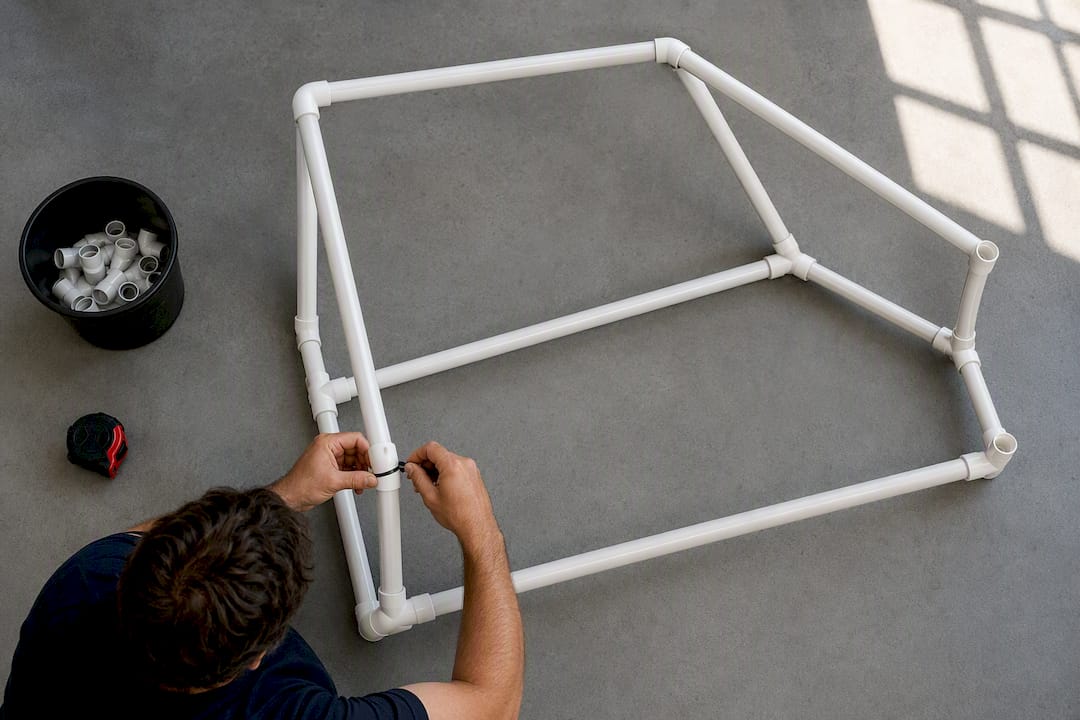
Pro Tip: Mock up your cage design in PVC pipe and zip ties before cutting any steel. It takes an afternoon, costs about $20, and catches clearance mistakes that are expensive to fix once metal tubing is tacked in place.
Bolt-On, Welded, or Hybrid: Which Build Method Fits You?
Your fabrication route depends on tools, welding skill, and how much of the process you want to do yourself. Here’s how each approach actually plays out in a home garage.
Bolt-on kits are the fastest path to a functional cage. Mounting plates bolt to existing frame points, and the whole install can happen in an afternoon.
- Position mounting plates over reinforced frame sections, never on thin sheet metal alone.
- Use Grade 5 or better bolts (5/16-inch is a common size for kart-scale mounting plates), always paired with flat washers against the tubing and lock washers or nyloc nuts to resist loosening from engine vibration.
- Torque fasteners to spec and recheck after the first few sessions, since new hardware seats in and can loosen.
Welded cages take more time but produce a stiffer, more permanent structure.
- Mock up the full cage in PVC or scrap tubing first.
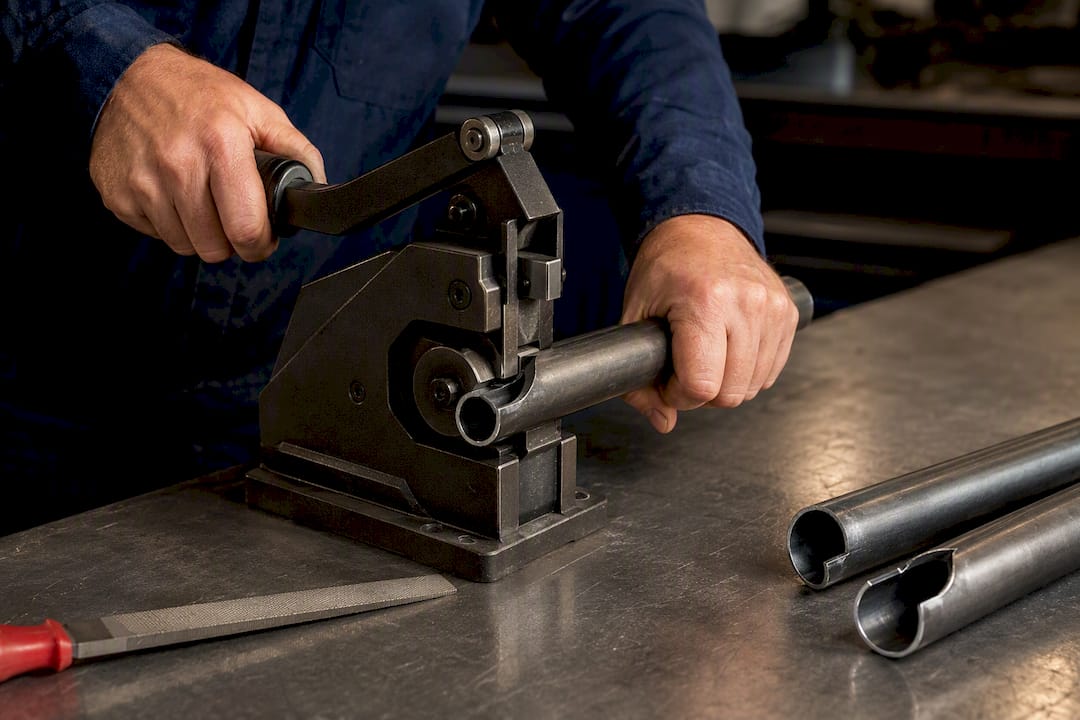
- Notch and fit each tube joint precisely before any tacking. A poor notch fit forces filler metal to bridge gaps, weakening the joint.
- Tack weld the whole assembly, then step back and recheck every clearance measurement.
- Finish with full welds only after the tack-welded structure passes inspection.
- Prime and paint or powder-coat for corrosion protection, especially on karts that see rain or trailer storage.
Bending tubing around a die, rather than cutting and welding multiple short sections, produces a stronger continuous member with fewer weak points. Builders commonly pack tubing with sand before bending to prevent the tube from collapsing or kinking at the bend radius, a trick pulled straight from DIY kart forums.
Pro Tip: Buy or borrow a tubing notcher before you start welding. A clean notch cuts your weld time roughly in half and produces a joint that’s actually stronger than a gap-filled one.
Are Roll Cages Legal, and What Do Track Rules Require?
Roll cages themselves aren’t restricted or illegal anywhere in the United States. What’s regulated is where and how you can run a go-kart, and many tracks tie rollover protection directly to seatbelt use. Illinois administrative racing rules, for example, specify that any go-kart equipped with seat belts must also carry a rollover protection system, and the same rule sets out separate safety equipment standards for indoor kiddie karts.
That pairing (seatbelts plus roll cage) is the pattern to check before you race anywhere. Wearing a harness without rollover protection above it can actually make a crash worse by holding you in place during a flip. If your local track or sanctioning body’s rulebook doesn’t spell this out explicitly, call and ask before race day.
Speed is the other trigger. Most recreational guidance points to a cage becoming worth it once a kart is running consistently faster than casual walking-pace backyard speeds, especially off pavement.
Before every session, run through this quick check:
- Inspect welds for hairline cracks, especially near mounting points and bends.
- Retorque every fastener on bolt-on cages.
- Check padding for compression, tears, or UV degradation.
- Retire and rebuild any cage section that’s taken a hard impact, even if it looks fine. Steel can develop invisible stress fractures after a hit.
Should You Buy a Pre-Built Kart or Build Your Own Cage?
The honest answer depends on your budget, timeline, and how much you enjoy fabrication work as much as it depends on cost. A bolt-on kit typically runs a few hundred dollars in parts and takes a weekend. A full custom-welded cage in DOM tubing costs more once you add material certification, welding consumables, and finishing. It can eat several weekends if you’re learning as you go.
- Buy pre-built: Best if you want to ride now, don’t own welding equipment, or want a manufacturer-tested structure with known specs.
- Bolt-on kit: The practical middle ground for most recreational builders with basic tools and mechanical confidence.
- Custom weld: Worth it for racing-spec builds, unusual frame geometry, or when you already have welding skill and want full control over tube placement.
Run through this before committing: Do you have welding equipment and the skill to use it safely? Is there a certified welder nearby if not? What’s your actual timeline? Hidden costs like professional inspection, corrosion coating, and material certification add up fast on custom builds.
How Do You Keep a Roll Cage Safe Over Time?
A cage is only as good as its last inspection. Build this into your routine, not just your pre-race checklist.
- Before every ride: Check fastener torque, look for surface rust starting at weld seams, and inspect padding for wear.
- Monthly: Wipe down and re-coat any bare steel showing surface oxidation before it becomes structural pitting.
- After any impact: Have a certified welder inspect affected joints, even for a minor tip-over. Micro-cracks in a weld heat-affected zone don’t always show visually.
- When in doubt, retire it. A cracked or bent cage member should be replaced, not straightened and reused.
What Mario Has Learned Building and Selling Kart Cages
Mock up everything in PVC before you touch steel. It’s cheap, forgiving, and catches clearance problems before they cost you material. When bending tube, pack it with sand first. Skip that step and you’ll fight kinks all day.
Buy tubing from a certified local supplier when you can. You’ll save on shipping and get a material test report if a track ever asks for one. The beginner mistake I see most is skipping the triple-check on critical dimensions. A five-minute recheck before tacking beats an hour of grinding out a bad weld.
What Actually Matters When You’re Deciding on a Cage
The conventional advice treats roll cages as a binary: you either need one or you don’t. That’s not how the engineering or the track rules actually work. Speed, terrain, and passenger load sit on a spectrum, and the FEA research on material choice backs up a more nuanced take: a moderate-thickness AISI 1020 tube with smart triangulation beats an oversized, over-engineered cage almost every time, both in cost and in real crash performance.
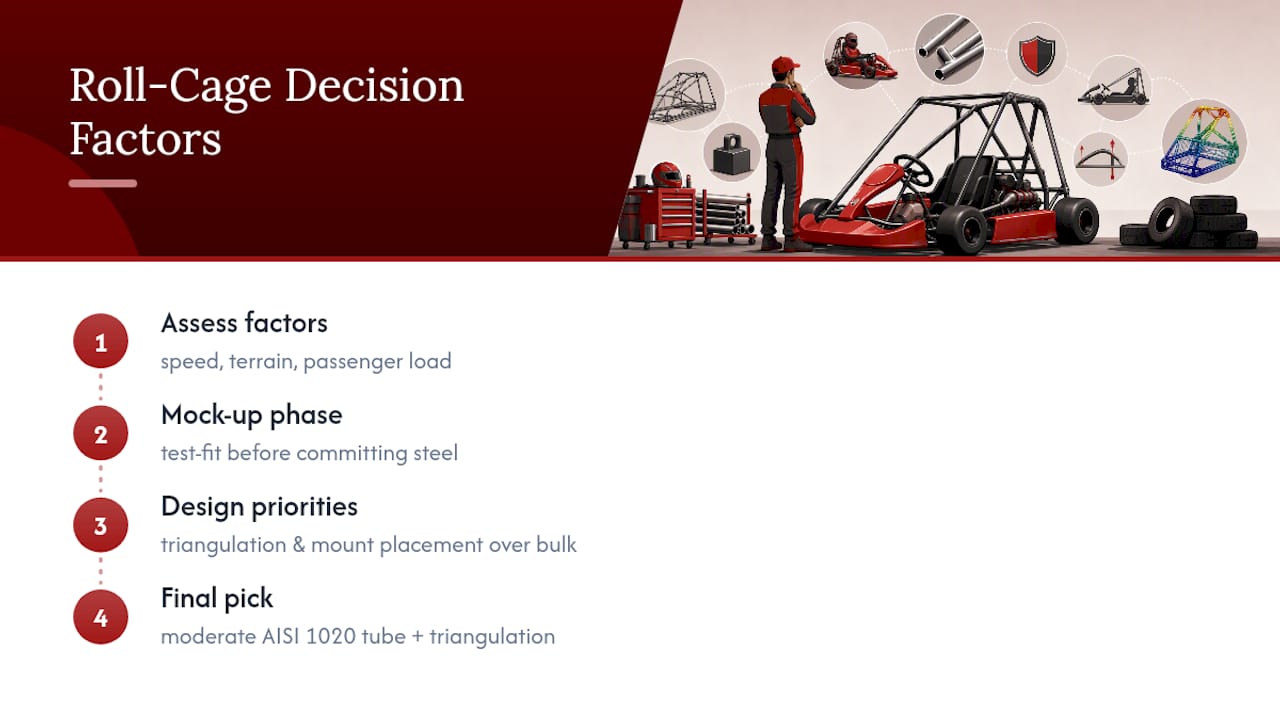
Where I think most first-time builders go wrong is skipping the mock-up phase because it feels like wasted time. It isn’t. Every experienced fabricator I’ve read on DIY forums and in engineering write-ups says the same thing in different words: test-fit before you commit steel. That single habit prevents more failed builds than any amount of extra tubing thickness.
If you’re weighing this for your own kart, prioritize triangulation and mounting-point placement over sheer material bulk. A well-braced, properly sized cage in mid-grade steel will outperform a heavy, poorly designed one built from premium alloy.
— Mario
Ready to Buy a Caged Kart or the Parts to Build One?
If fabrication isn’t your weekend project, you can find ready-to-ride models with built-in safety structures alongside the frame and safety parts DIY builders need to finish a custom cage right.

Browsing models with reinforced frames and rider protection built in? The Sport Kart Kids Gas Go Kart is a solid starting point for younger riders who need a properly sized safety structure from day one. Parents weighing harness types alongside cage protection should also check our youth kart seat belt guide before choosing a model. If you’re custom-building, browse our full parts catalog for cage-compatible frame components and mounting hardware.
Head to the Gokartsusa homepage to compare current models, check compatibility with your existing frame, or reach out to our support team with your build questions before you order.
Sources
Cross-reference the FEA materials study, Illinois racing rules, Lamar University’s build guidance, and tube sizing research from the IJNTR chassis study.
- Numerical study on strength optimization of Go-Kart roll-cage using different materials and pipe thickness
- Ill. Admin. Code tit. 56, § 6000.305 - Racing Go-Karts | LII
- Is Go-Karting Safe for Children? A Go Kart Safety Guide! — Greenworks
- Go kart or go home — senior design project (practitioner guidance) — Lamar University
FAQ
Is a Roll Cage Illegal to Install or Race With?
No, roll cages aren’t illegal anywhere in the United States, and most tracks encourage or require them. Some jurisdictions, including Illinois, specifically require rollover protection on any kart equipped with seat belts, so check your local track’s rulebook before race day.
Is It Cheaper to Buy or Build a Go-Kart With a Cage?
Buying a pre-built caged kart is usually cheaper and faster than a custom weld once you factor in tooling, welding consumables, and material certification. A bolt-on kit sits in the middle, offering meaningful protection without full fabrication costs. Gokartsusa’s pre-built models come with safety structures already engineered in, which skips the design and welding phase entirely.
At What Speed Do You Need a Roll Cage?
There’s no single legal speed threshold nationwide, but most safety guidance treats a cage as necessary once a kart consistently exceeds casual backyard pace, especially off pavement or with a passenger aboard. Racing karts and off-road builds should always include one regardless of top speed, since rollover risk comes from terrain and cornering forces as much as raw speed.
What Are Good Go-Karts for Kids With a Cage?
Youth go-karts typically pair harness-style seatbelts with padded roll cages and speed-limited engines, with many models setting a minimum rider height around 48 inches, according to manufacturer safety guidance. Many youth go-kart models are built around this same safety-first approach, balancing protection with a lower center of gravity so the cage doesn’t compromise handling for smaller riders.