




A youth kart seat belt is a specialized five-point racing harness built specifically for the smaller body size, lighter weight, and racing speeds of young kart drivers. Unlike a standard car seat belt, this harness wraps over both shoulders, across the lap, and through the crotch with a single sub belt, holding a young racer firmly in the seat during a crash or sudden stop. Every credible youth racing rulebook in the US requires either an SFI 16.1 or SFI 16.2 rated harness. Here is what you need to know before your child ever straps in:
- Five-point design: two shoulder straps, two lap belt ends, and one crotch (sub) strap
- Two main buckle types: latch and link, and camlock
- Key safety additions: anti-submarining crotch straps, latch guards, padded shoulder straps
- Proper fit means the harness sits across bony structures, not soft tissue
- SFI certification dates expire, typically after a limited period from manufacture
Table of Contents
- What types of youth kart seat belts are available?
- Trusted brands for youth kart harnesses in the US
- How to get the fit right every single time
- Beyond the harness: the full youth karting safety picture
- Maintenance and when to replace a youth harness
- Certified vs. generic youth kart harnesses
- How kart design affects which harness you need
- Gokartsusa has the youth powersports gear your family needs
- Key Takeaways
What types of youth kart seat belts are available?
The two buckle systems you will encounter most often are latch and link and camlock, and each has a distinct feel on the track. A latch and link system uses a pivoting “Duckbill” hammer that snaps down over a central link, locking all belt ends simultaneously. It is durable, simple to operate, and widely accepted at youth karting events across the country. Camlock buckles allow a faster one-handed release by rotating a lever roughly 45 degrees, which appeals to tracks where quick exit matters.
Beyond the buckle, a few design details separate a good harness from a great one:
- Anti-submarining crotch strap: prevents the lap belt from riding up into the abdomen during a frontal impact
- Latch guard: a small shield over the buckle that blocks accidental release mid-race
- Padded shoulder straps: reduce pressure on narrow young shoulders and help keep straps in position
- Pull-up lap belt style: lets an adult tighten the belt from outside the kart, which many tracks and parents prefer
- Adjustable range: quality youth harnesses adjust over a range suitable for most young drivers
The SFI 16.2 specification was created specifically for youth harnesses used in Jr. Dragster and Quarter Midget competition, replacing the older SFI 16.1 standard that youth and adult harnesses once shared. Both ratings remain valid depending on the rulebook at your child’s track.
Trusted brands for youth kart harnesses in the US
Three brands dominate the youth racing harness market in the United States: Crow Safety Gear, G-Force, and Ultra Shield. All three offer SFI-certified harnesses shipped directly from US manufacturing facilities or warehouses, which matters because harnesses are date-sensitive products.
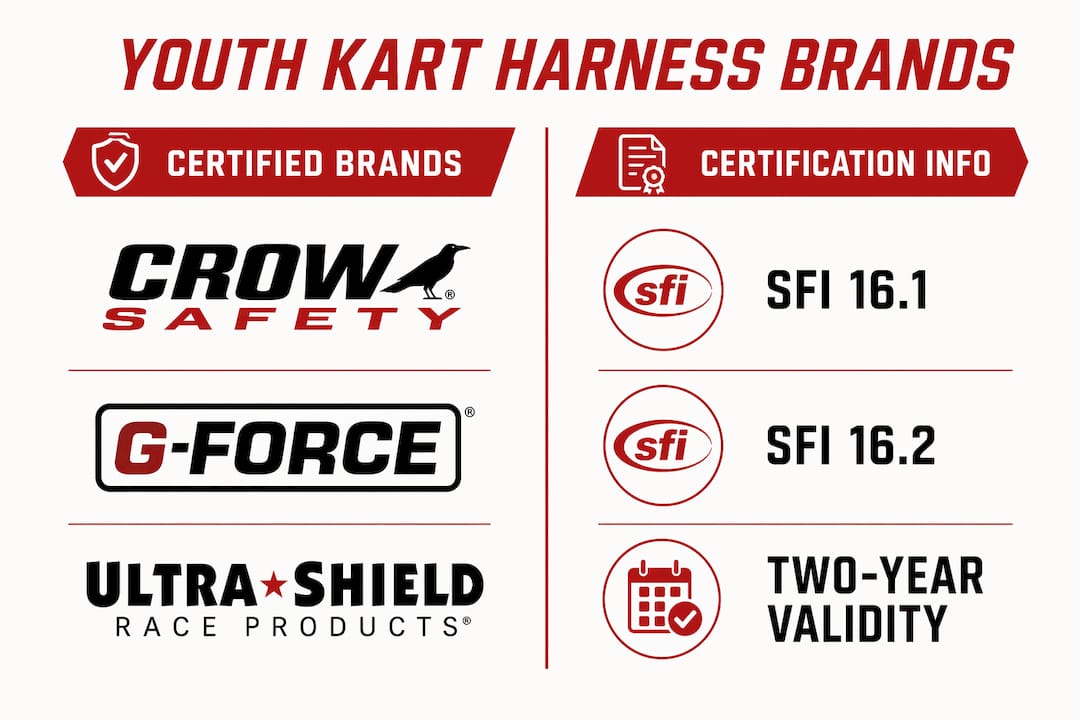
| Brand | Certification | Buckle Type | Lap Belt Style | Notable Feature |
|---|---|---|---|---|
| Crow Safety Gear | SFI 16.1 / 16.2 | Latch & Link | Pull-up or Pull-down | Wide color range; Quarter Midget and Jr. Dragster specific models |
| G-Force | SFI 16.2 | Camlock / Latch & Link | Pull-up | 1¾" webbing; lightweight aluminum cam buckle |
| Ultra Shield | SFI 16.1 | Latch & Link | Pull-up or Pull-down | Made in Texas, USA; latch guard included; 1¾" webbing |
Ultra Shield’s junior harness displays an SFI 16.1 expiration tag, indicating the certification’s two-year validity period on current stock, ensuring maximum usable life from the purchase date.
How to get the fit right every single time
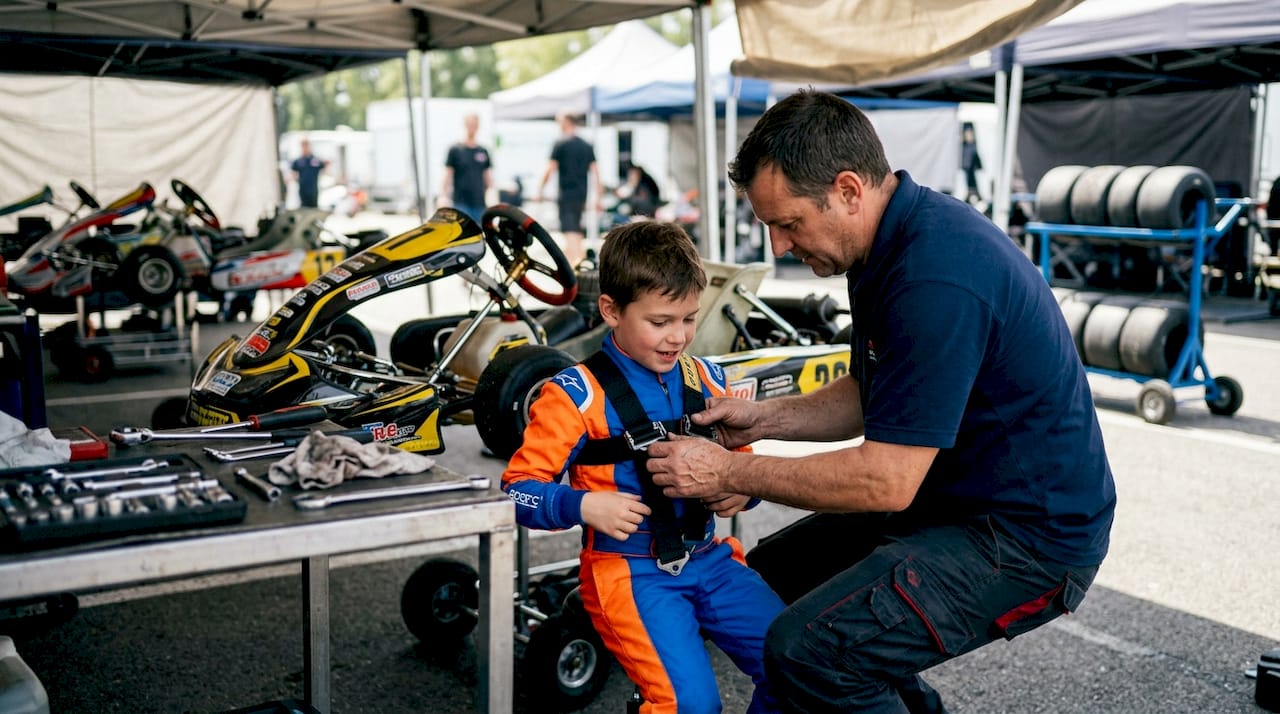
The harness only protects your child if it sits correctly on the body. NHTSA guidelines are clear: straps must lie snugly across bony structures, specifically the shoulder, rib cage, and pelvis, because those areas absorb crash forces far better than soft tissue. Placing a shoulder strap under the arm or behind the back dramatically increases the risk of severe internal injury.
- Shoulder straps: run across the top of each shoulder, not the neck
- Lap belt: rests across the hip bones, not the stomach
- Crotch strap: pulled snug between the legs before the buckle is latched
- No slack: you should not be able to pinch more than an inch of webbing after tightening
Mounting the harness to a roll cage or a dedicated harness bar is equally critical. Attaching belts to a seat or any non-structural point risks harness failure when impact loads hit. Always follow the manufacturer’s mounting instructions.
Pro Tip: Before every session, have your child sit in the kart and buckle up, then tighten each strap individually while they sit upright. A pull-up lap belt lets you do the final tighten from outside the kart, which is the safest approach for younger drivers who cannot self-adjust.
Beyond the harness: the full youth karting safety picture
A certified harness is one piece of a larger youth karting safety system. No single product compensates for gaps elsewhere in the setup. Pair the harness with a Snell or FIA-certified helmet sized correctly for your child’s head, and add a rib protector, because kart chassis transmit vibration and impact forces directly to the torso. Kids’ helmet options from trusted safety gear suppliers give you a solid starting point for that part of the kit, including comprehensive choices at Kids’ Helmets – The Beam.
Kart frame integrity matters just as much. A bent or cracked frame changes how crash energy travels through the vehicle, which affects how well the harness performs. Check the frame, seat mounts, and all hardware before each race day.
Maintenance and when to replace a youth harness
Racing harness webbing degrades with time even when it looks perfectly fine. SFI-rated youth harnesses must be replaced once their certification date expires, regardless of physical condition. That window is typically about two years from the manufacture date. Check the SFI tag sewn into the harness: it shows the expiration month and year clearly.
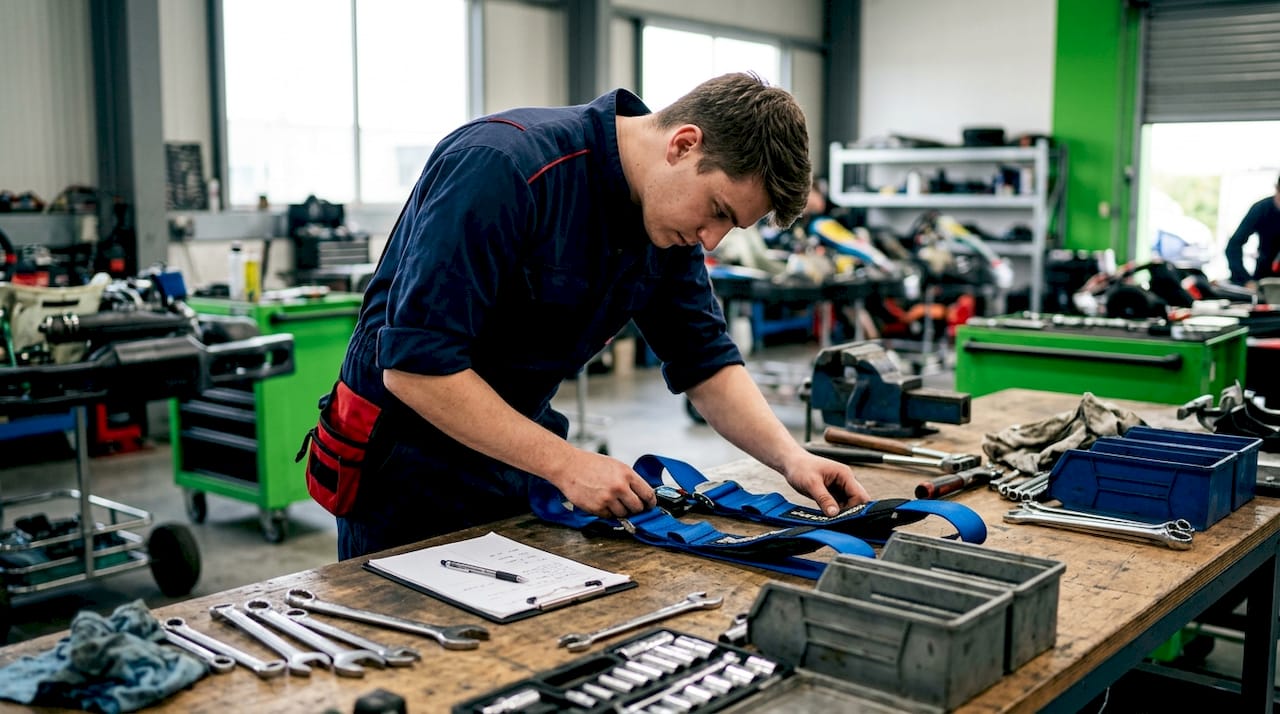
Between races, inspect the webbing for fraying, fading, or any cuts. Check all hardware ends for cracks or deformation. Store the harness away from direct sunlight and chemicals, both of which accelerate webbing breakdown.
Certified vs. generic youth kart harnesses
Generic harnesses sold without SFI tags are not permitted at sanctioned youth karting events, and the reason goes beyond rulebook compliance. A certified harness is load-tested to specific force thresholds matched to youth body mass and racing speeds. A generic strap has no verified performance standard. The cost difference between a certified and uncertified harness is modest; the protection difference is not.
How kart design affects which harness you need
Open-wheel sprint karts, Jr. Dragsters, and Quarter Midgets each have different chassis geometries, seat positions, and roll cage configurations. A harness designed for a Jr. Dragster with a full roll cage mounts differently than one for a sprint kart with a simple harness bar. Always confirm that the harness mounting style (wrap-around or bolt-in) matches your kart’s frame before purchasing. Check your track’s rulebook too, since some series specify SFI 16.1 while others require 16.2.
Gokartsusa has the youth powersports gear your family needs
When your young racer is ready for the real thing, Gokartsusa is where American families come to gear up with confidence. We carry youth-ready powersports vehicles built with safety and performance in mind, from our Sport Kart for ages 8 and up to a full lineup of mini bikes and ATVs designed for young riders who are ready to push their limits responsibly.

We ship nationwide from US-based facilities, and our team knows these vehicles the way a pit crew knows race day. Browse our youth vehicle lineup at Gokartsusa and find the right ride for your child’s next adventure.
Key Takeaways
A youth kart seat belt is a five-point SFI-certified racing harness that must fit correctly across bony structures and be replaced when its certification date expires.
| Point | Details |
|---|---|
| SFI certification is required | Youth racing rulebooks require SFI 16.1 or SFI 16.2 rated harnesses; uncertified straps are not permitted. |
| Two main buckle systems | Latch and link uses a Duckbill locking mechanism; camlock allows faster one-handed release with a 45-degree lever. |
| Correct fit protects bony structures | Straps must run across the shoulder, rib cage, and pelvis per NHTSA guidance, never under the arm or across soft tissue. |
| Harnesses expire after about two years from the manufacture date; SFI-rated webbing degrades with time and must be replaced when the certification tag date passes, regardless of physical condition. | |
| Gokartsusa for youth powersports | Gokartsusa carries youth-ready karts and powersports vehicles built for safety-conscious families across the US. |