




TL;DR:
- Preparing thoroughly with mechanical checks, physical fitness, and mental visualization enhances safety and performance on track. Consistently logging sessions and using smooth inputs lead to faster lap times and better control. Proper safety gear and knowledge of track rules help prevent accidents and ensure a confident racing experience.
What every driver needs before hitting the track
Solid go-kart track day preparation comes down to four things: a mechanically sound kart, a body that’s ready for the physical demands, a focused mind, and a habit of logging what you learn. Nail all four and your track day goes from stressful to genuinely thrilling. Skip any one of them and you’re gambling with your safety and your lap times.
Here’s your quick-start checklist before we dig into each area:
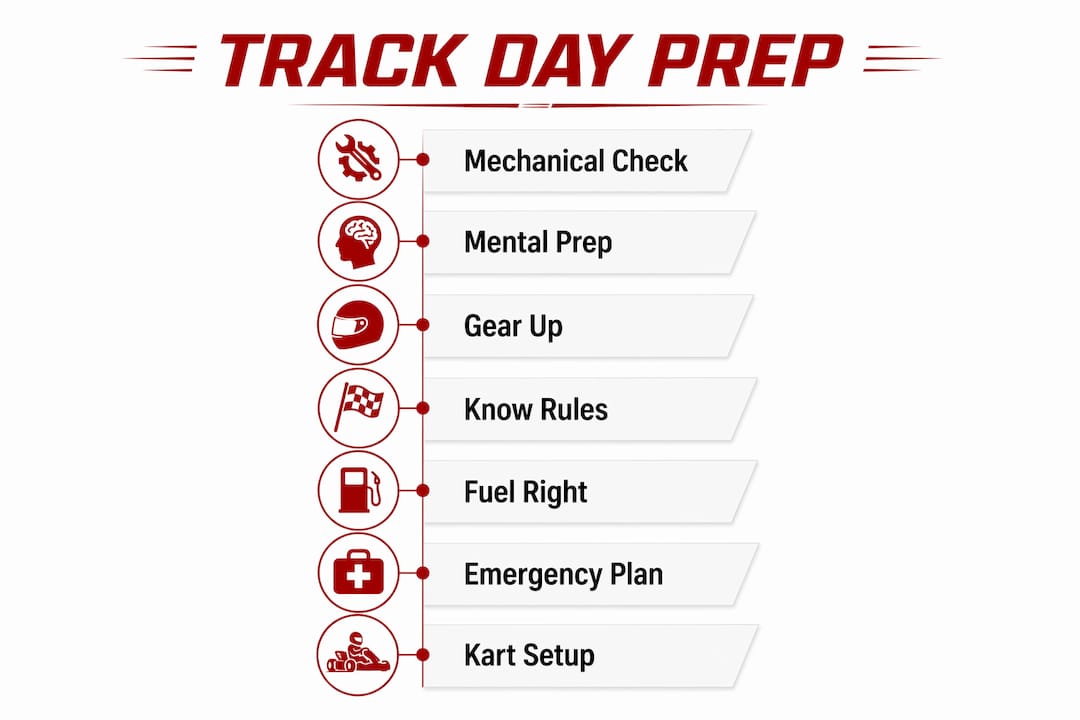
- Inspect throttle, brakes, chain, tires, and chassis fasteners
- Set tire pressure to a pressure range appropriate for your track surface
- Eat a light, balanced meal 2–3 hours before driving
- Hydrate the day before and keep sipping water up to an hour out
- Visualize your racing lines and braking points the night before
- Use smooth, deliberate inputs on the wheel and pedals
- Keep a session logbook and review it after every outing
Table of Contents
- ## 1. Run a thorough pre-session mechanical inspection
- ## 2. Get your body ready for the physical demands of karting
- ## 3. Mental preparation makes the difference on track
- ## 4. Smooth inputs are faster than aggressive ones
- ## 5. Keep a session logbook to improve every time
- ## 6. Gear up with the right safety equipment
- ## 7. Know the track rules and respect the etiquette
- ## 8. Fuel your body right on track day
- ## 9. Know what to do in an emergency
- ## 10. Set up your kart properly before you arrive
- Key Takeaways
## 1. Run a thorough pre-session mechanical inspection
A kart that fails mid-session doesn’t just cost you lap time. It can put you and other drivers at risk. A pre-session inspection done consistently is the single best insurance policy you have.
Work through these checkpoints every time:
- Throttle and brake cables: Pull the throttle to full and release it. It should snap back instantly. Check brake cables for fraying or kinks.
- Chain tension and lubrication: A chain that’s too loose slaps and skips; too tight and it binds the engine. Adjust tension, then apply chain lube.
- Tire pressure: Set to 10–13 PSI depending on track surface and temperature. Low pressure overheats the rubber; high pressure kills grip and accelerates inside-edge wear.
- Chassis fasteners: Every bolt, hub, and axle set-screw needs to be snug. One loose fastener can cascade into a serious handling problem.
- Steering components: Turn lock-to-lock and feel for binding or excessive play. Lubricate bearings if needed.
- Brake system: Check brake fluid levels and pad wear. Clean the rotor and pads with brake cleaner. Add shims or replace pads if wear is visible.
- Fuel preparation: Mix fuel correctly, fill to the right level, and confirm the fuel cap seals tight. Inspect the fuel line for cracks.
- Wipe the kart down: A clean kart makes leaks, cracks, and loose parts far easier to spot.
Pro Tip: Print a physical checklist and clip it to your toolbox. Memory lapses are the most common reason a step gets skipped, and a missed step is how mechanical issues develop into race-ending failures.
## 2. Get your body ready for the physical demands of karting
Karting looks relaxed from the outside. On track, it’s a full-body workout. Sustained G-forces in corners load your neck, shoulders, and core hard, and poor posture accelerates fatigue faster than almost anything else. A driver who slumps in the seat by lap ten loses feel for the kart and starts making errors.
- Hydrate early: Start drinking water the day before your session, not just the morning of. Dehydration sneaks up on you under a helmet in the sun.
- Eat smart: A light, balanced meal with lean protein and complex carbs, eaten 2–3 hours before driving, keeps energy steady without the sluggishness that comes from a heavy plate.
- Avoid greasy food: Heavy or fried food right before a session causes discomfort and mental fog exactly when you need clarity.
- Build core strength: Planks, dead bugs, and seated rows translate directly to better posture and more control during long stints.
- Stretch before you strap in: Focus on your neck, wrists, and forearms. These are the muscles that take the most punishment in a kart.
## 3. Mental preparation makes the difference on track
Racing educators consistently point to mental readiness as the most overlooked part of preparation. You can have a perfectly tuned kart and still lose ground to a driver who’s mentally sharper. Visualization is the tool that closes that gap.
Here’s a simple pre-track visualization routine:
- Find a quiet space the evening before your session.
- Close your eyes and picture the track layout from the driver’s seat.
- Walk through each corner: your entry point, where you brake, where you hit the apex, and how you accelerate out.
- Mentally rehearse an overtaking move and a moment where you defend your position.
- Replay the lap two or three times until it feels familiar.
Anxiety on race day is normal. Deep breathing exercises, four counts in and four counts out, calm the nervous system quickly. Some drivers prefer a few minutes of quiet meditation; others use music to get into the right headspace. Try both and see what sharpens your focus.
Pro Tip: Make mental prep a non-negotiable part of your pre-track routine, not something you do only when you’re nervous. Drivers who rehearse mentally before every session build lap consistency faster than those who rely on physical practice alone.
## 4. Smooth inputs are faster than aggressive ones
New drivers almost always make the same mistake: they fight the kart. Jerky steering, stabbing the brakes, and mashing the throttle all upset the kart’s balance and scrub speed. The fastest drivers look almost lazy because their inputs are so controlled.
- Brake in a straight line: Always complete your braking before you turn in. Braking mid-corner shifts weight unpredictably and can spin the kart.
- Commit to your line early: Pick your entry point and turn in smoothly. Late, sharp corrections bleed momentum.
- Roll onto the throttle: On corner exit, apply power progressively as the kart straightens. Too early and you push wide; too late and you leave time on the table.
- Grip the wheel firmly but not rigidly: A death grip tires your arms and dulls your feel for what the tires are doing.
Pro Tip: Practice throttle and brake modulation in a parking lot before your first track session. Smooth, progressive inputs become muscle memory quickly, and that muscle memory pays off the moment you’re on a live track.
## 5. Keep a session logbook to improve every time
A logbook is what separates a hobbyist who plateaus from one who keeps getting faster. After each session, spend ten minutes writing down what you noticed. Over time, those notes become a performance database specific to your kart and your driving style.
Record these details after every outing:
- Tire pressures used and how the kart felt at those settings
- Gear ratio and any handling changes you noticed
- Track conditions: temperature, surface grip, weather
- Any unusual noises, vibrations, or handling shifts
- What you’d adjust before the next session and why
Digital tools like a notes app or a simple spreadsheet work fine. A small notebook in your gear bag works just as well. The format matters less than the habit. Drivers who track their setup data over multiple sessions consistently find the adjustments that unlock faster lap times.
## 6. Gear up with the right safety equipment
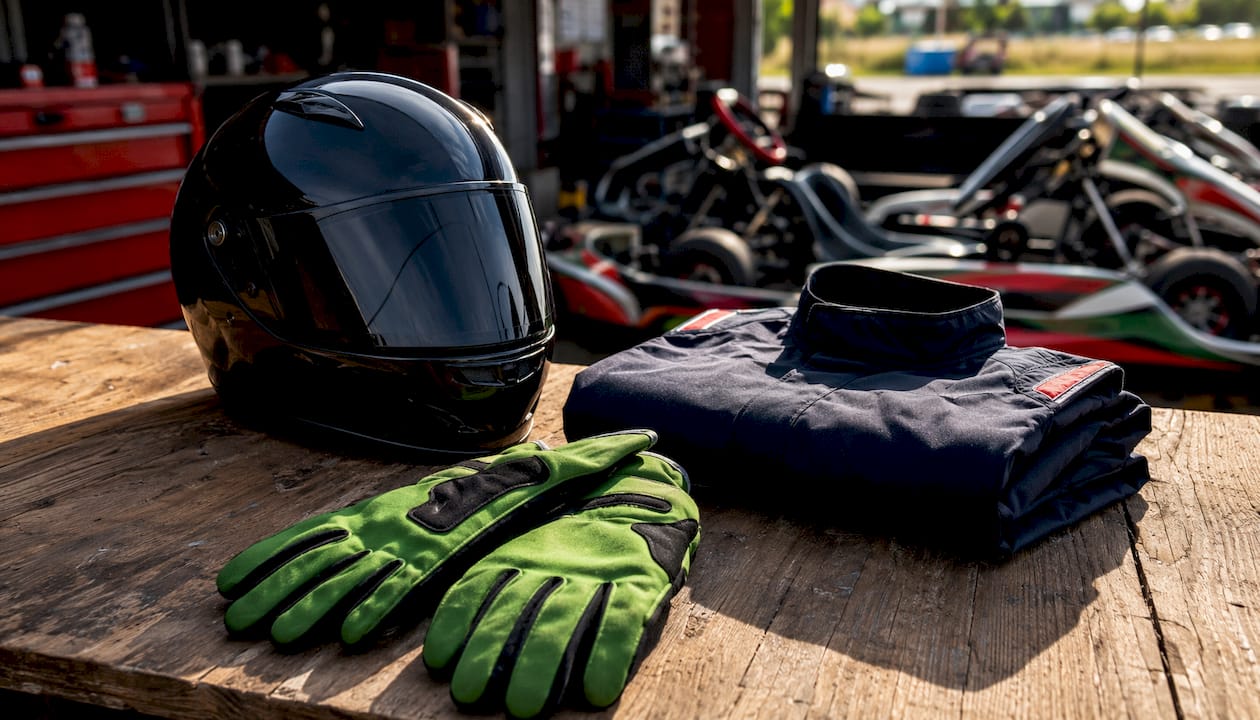
Safety gear isn’t optional and it isn’t just about compliance. The right equipment gives you confidence, and confidence makes you a better driver. Every piece needs to fit correctly and be in good condition before you strap in.
Your go-kart safety checklist should include:
- Helmet: Snug fit around cheeks and forehead. A loose helmet shifts in high-G corners and blocks your vision at the worst possible moment.
- Racing gloves: Protect your hands from blisters and improve grip on a vibrating wheel.
- Racing suit or long pants and jacket: Protects skin from debris and wind burn. For longer sessions, ventilated suits are worth the investment.
- Closed-toe shoes: Thin-soled sneakers or racing shoes give the best pedal feel. Open-toe footwear is a safety hazard and prohibited at most tracks.
- Neck brace or collar: Reduces neck fatigue and provides protection in an impact.
Check kids’ safety gear requirements separately if you’re bringing younger drivers. Fit standards for youth helmets and suits differ from adult sizing.
## 7. Know the track rules and respect the etiquette
Every track runs on a flag system and a set of conduct rules. Ignoring either gets you black-flagged or, worse, causes a collision. Before your first session, learn the flag signals: green means go, yellow means caution and no passing, red means stop immediately, blue means a faster driver is approaching, and checkered means the session is over.
Track etiquette matters just as much as the rules. Don’t block drivers who are clearly faster. Leave room when being lapped. Avoid aggressive moves in the first corner of a session. The karting community is tight-knit and welcoming, and drivers who race clean earn respect fast.
## 8. Fuel your body right on track day
Race day nutrition works exactly like fueling your kart. The wrong input and your performance suffers. The right input and you stay sharp for every lap.
Eat a balanced meal with lean protein and complex carbs two to three hours before your session. Grilled chicken and rice is a reliable choice. Bananas and energy bars make good pit-stop snacks because they digest quickly and sustain energy without a crash. Avoid anything heavy, fried, or high in sugar right before you drive.
Keep water within reach throughout the day. Electrolyte drinks help during longer sessions when you’re sweating under a suit and helmet. Dehydration degrades reaction time before you even notice you’re thirsty.
## 9. Know what to do in an emergency
Every driver should know the basics before they get on track. If your kart loses brakes, steer toward the outside of the track and use the barriers to slow down gradually. If you spin, stay in the kart unless it’s on fire. A stationary kart is far safer than a driver standing on a live track.
Know where the first aid station is before your session starts. Most tracks have marshals positioned around the circuit. If you see an incident, slow down immediately and follow marshal instructions. Carry a basic first aid kit in your gear bag: bandages, antiseptic wipes, and blister pads cover the most common track day injuries.
## 10. Set up your kart properly before you arrive
The best time to address kart setup is the day before your track day, not in the paddock with twenty minutes to spare. Start with a full maintenance check at home where you have time and tools.
Adjust tire pressure based on the track surface and expected temperature. Set chain tension and verify sprocket alignment. Check carburetor settings if weather conditions have changed significantly since your last session. Weight distribution affects handling balance, so confirm your seat position and any ballast placement before you load the kart.
Arriving with a kart that’s already dialed in means your track time goes toward learning and improving, not troubleshooting.
Ready to put all of this into practice? Gokartsusa carries the Sport Kart Kids Gas Go Kart and a full lineup of recreational karts built for exactly this kind of adventure. Whether it’s your first track day or your fiftieth, we’re here as your pit crew.

Key Takeaways
Effective go-kart track day preparation requires mechanical inspection, physical readiness, mental visualization, and consistent session logging to maximize safety and performance.
| Point | Details |
|---|---|
| Mechanical inspection first | Check throttle, brakes, chain, tire pressure (10–13 PSI, based on surface/temperature), and all fasteners before every session. |
| Physical and nutritional readiness | Eat a light meal 2–3 hours before driving and hydrate starting the day before. |
| Mental visualization | Rehearse racing lines, braking points, and overtaking moves the night before your session. |
| Smooth inputs win laps | Brake in a straight line, commit to your line early, and roll onto the throttle progressively. |
| Log every session | Record tire pressures, gear ratios, track conditions, and handling notes to improve over time. |