




Most new mini bikes in the U.S. run across a broad price range, with family-friendly gas models commonly found in a mid-tier price band. Entry-level bikes start at more affordable prices, mid-range models cluster in a moderate price zone, and premium builds with bigger engines can be significantly more expensive. Budget for shipping, assembly, and safety gear on top of that sticker number.
TL;DR:
- Entry-level mini bikes cost between $200 and $350, featuring basic 40cc to 49cc engines suitable for children or light yard use.
- Mid-range models, priced from $350 to $1,000, typically include 3 to 4 horsepower engines, hydraulic brakes, and adjustable suspension for family riding.
- Premium bikes, costing $750 to $2,000, have larger engines, heavier-duty frames, and advanced features designed for adult riders and greater durability.
- Additional costs such as shipping, assembly, safety gear, and initial maintenance often add $100 to $300 to the listed price.
- Buying used can save money upfront but risks include lack of warranty and unknown maintenance history, while new bikes come with predictable performance and support.
Table of Contents
- How Much Do Mini Bikes Cost Across Price Tiers?
- What Factors Push Mini Bike Prices Up or Down?
- Should You Buy a New or Used Mini Bike?
- What’s the Real Out-the-Door Cost of a Mini Bike?
- When Are Mini Bike Prices Lowest?
- Why Trust This Mini Bike Pricing Guide?
- What This Guide Gets Right That Most Price Lists Miss
- Which GoKarts USA Mini Bike Fits Your Budget?
- Sources
How Much Do Mini Bikes Cost Across Price Tiers?
Mini bike pricing breaks down into three clear tiers, and knowing which one fits your riding goals saves you from overspending on features you won’t use or underspending on a bike that won’t hold up.
Entry-level ($200 to $350). These are your basic 40cc to 49cc gas bikes, built for short rides around the yard or a quiet dirt lot. According to Cost Insider’s mini bike pricing breakdown, new entry models typically start near $200 and climb to $350 depending on the retailer and included accessories. Expect a smaller fuel tank, basic drum brakes, and a frame designed for lighter riders, usually kids or smaller teens.
Mid-range ($350 to $1,000). This tier is where most family buyers land, and for good reason. The MotoTec 49cc gas mini bike sold through Electric Ride Co. typically lists between $379 and $579, putting it squarely in this bracket. You’ll find similar pricing on the FRP GMB100 at Target, which lands in the $320 to $700 range for a 99cc, 4-stroke engine with hydraulic brakes and shock absorbers. Walmart’s version of the same GMB100 model shows comparable pricing between $379 and $699, confirming that mid-tier gas bikes hold fairly consistent value across major retailers.
Premium ($750 to $2,000). Bigger displacement, sturdier suspension, and adult-rated weight capacities push prices here. These bikes typically run 100cc or larger, with upgraded shocks, disc brakes, and frames built for riders up to 220 pounds or more.
A few concrete examples of what separates the tiers:
- Entry bikes: single-speed transmission, basic seat padding, smaller wheels (usually under 10 inches)
- Mid-range bikes: 3 to 4 horsepower engines, hydraulic disc brakes, adjustable suspension forks
- Premium bikes: larger engines (100cc+), heavier-duty frames, higher speed governors, and extended warranty options
If you’re weighing whether a mini bike even fits your family’s needs before you get into pricing specifics, our breakdown on why mini bikes work for family fun walks through who each tier actually suits.
What Factors Push Mini Bike Prices Up or Down?
Six or seven variables drive most of the price swing between a $250 bike and a $1,800 one, and understanding them helps you spend money where it actually improves the ride.
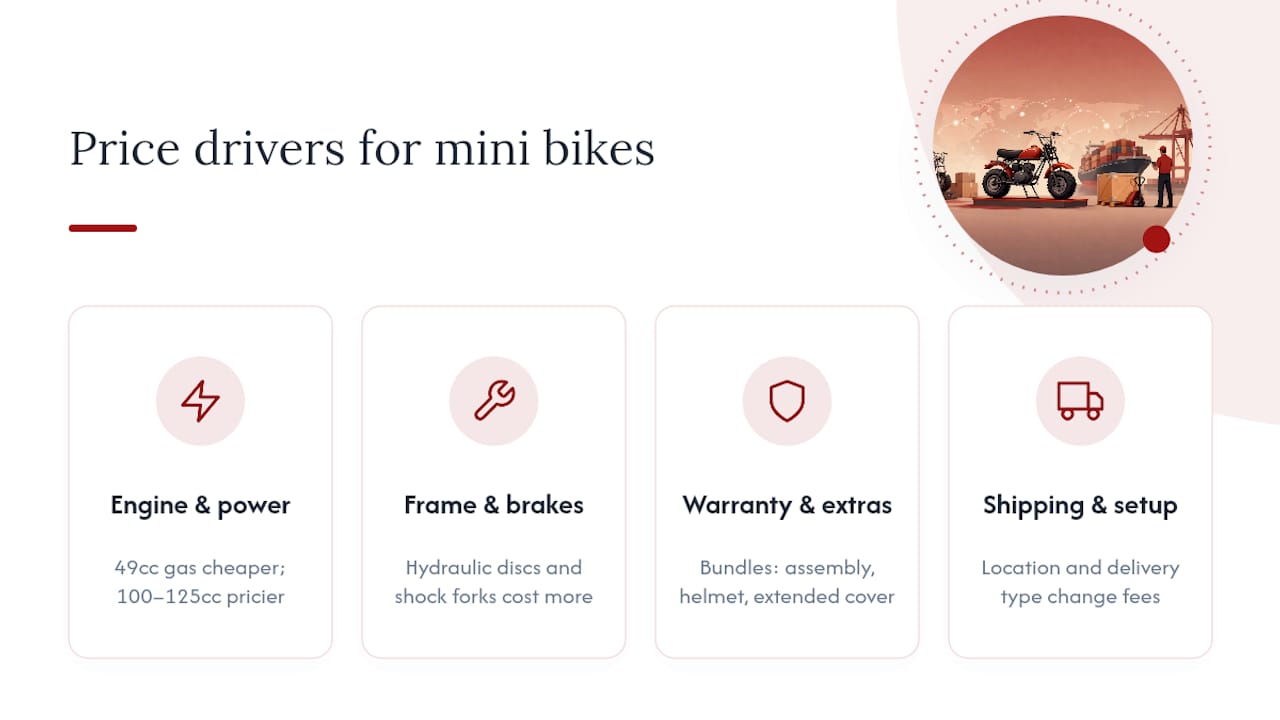
Engine size and power source matter most. Gas-powered mini bikes with 49cc engines sit at the affordable end, while 100cc to 125cc engines cost more but deliver real trail capability. Electric mini bikes often carry a higher upfront price than comparable gas models but shift costs later, since you’re trading gas and oil changes for eventual battery replacement.
Frame, suspension, and brakes separate cheap bikes from durable ones. Hydraulic disc brakes and shock-absorbing forks, standard on the GMB100 line, cost more to manufacture than basic drum brakes and rigid forks, but they hold up far better under regular use.
Warranty and included extras add value that doesn’t always show on the price tag. Some sellers bundle assembly, a helmet, or extended coverage into the checkout price; others charge those as line items after the sale.
Shipping and setup fees frequently surprise first-time buyers. Tractor Supply’s mini bike category and similar large retailers list variable shipping costs that depend on your location and whether you choose curbside delivery or in-store pickup.
Pro Tip: Before you buy, ask the seller directly whether the listed price includes assembly. A bike that looks $100 cheaper on one site can end up costing more once you add a mandatory setup fee at checkout.
Should You Buy a New or Used Mini Bike?
A used bike means no manufacturer warranty, unknown maintenance history, and the risk of buying someone else’s mechanical headache. A new bike costs more upfront but comes with predictable performance, a warranty window, and (often) free shipping or bundled accessories during seasonal promotions.
U.S. buyers commonly source mini bikes through three channels: specialist powersports retailers, big-box chains like Target and Walmart, and online marketplaces such as Facebook Marketplace or Craigslist for used units. Specialist retailers tend to offer stronger post-purchase parts support than general marketplaces, which matters once you need a replacement chain or spark plug.
Before buying used, run through this checklist:
- Start the engine cold and listen for knocking or excessive smoke.
- Check the frame and welds for cracks, rust, or prior repairs.
- Test the brakes at low speed before committing to a test ride.
- Ask for maintenance records or at least a verbal history of use.
- Compare the asking price against current new-model pricing to confirm you’re actually saving money.
What’s the Real Out-the-Door Cost of a Mini Bike?
Sticker price is rarely the final number. Add shipping, assembly, safety gear, and a little maintenance buffer, and your real budget often runs $100 to $300 higher than the listed price.
Line items that commonly show up at checkout or shortly after include:
- Shipping fees, which vary by distance and carrier and sometimes run into hundreds of dollars for larger bikes
- Assembly service, if you’d rather not build it yourself
- A DOT-approved helmet and basic protective gear (gloves, boots, knee pads)
- Sales tax, which varies by state
- First tune-up supplies: oil, spark plugs, or a tire pump
Buyers consistently underestimate these add-ons. Cost Insider’s guide notes that shipping and assembly alone can add anywhere from a few dozen dollars to a few hundred, depending on seller policy and how far the bike has to travel.
A mid-range bike’s total cost often increases above the sticker price once shipping, assembly, and safety gear are factored in. Electric models trade lower routine maintenance for an eventual battery replacement bill, while gas bikes need annual oil changes and periodic spark plug swaps. For a full rundown on what ongoing upkeep looks like, check our mini bike maintenance guide.
When Are Mini Bike Prices Lowest?
Timing your purchase and stacking small savings can shave real money off the final bill without settling for a lower-quality bike.
- Watch for spring and end-of-summer clearance sales, when retailers move inventory before new model years arrive.
- Look for bundle deals that throw in a helmet, basic toolkit, or free assembly instead of just a lower sticker price.
- Compare shipping costs against local pickup. In-store pickup at a specialist retailer often beats freight shipping on heavier bikes.
- If financing is offered, run the math on total cost over the loan term. A $600 bike financed at a high rate can end up costing more than a $750 bike paid outright.
Why Trust This Mini Bike Pricing Guide?
This guide draws on real U.S. retail listings, current market pricing across gas and electric models, and hands-on product knowledge from a retailer that sells mini bikes, go-karts, and youth powersports vehicles daily.
GoKarts USA has built its catalog around affordability and safety for families shopping for recreational vehicles, backing product listings with detailed specs, financing options, and seasonal promotions designed for price-sensitive buyers.
If you want to go deeper before you buy, our step-by-step mini bike setup guide walks through what assembly actually involves, and our maintenance breakdown covers what ongoing ownership costs look like once the bike is in your garage.
What This Guide Gets Right That Most Price Lists Miss
Most mini bike pricing content stops at the sticker number, and that’s the biggest disservice done to parents trying to budget honestly. The research here backs up something simple: the gap between advertised price and real out-the-door cost is where most buyers get caught off guard, not in the model comparison itself.
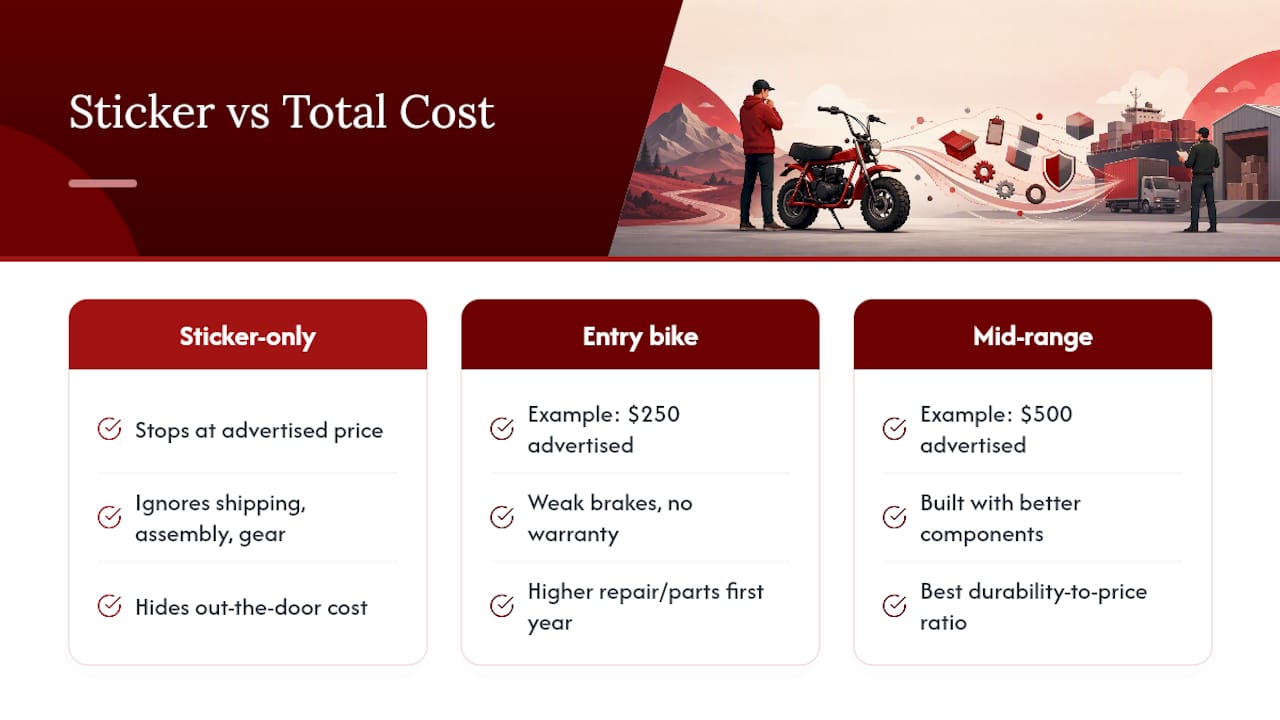
Conventional advice tends to push people toward the cheapest bike that meets a basic spec sheet. That’s backwards. A $250 entry bike with weak brakes and no warranty can cost you more in repairs and replaced parts within a year than a $500 mid-range model built with better components from the start. The mid-range tier consistently offers the best ratio of durability to price, and that’s where most families should start looking.
If you take one thing from this guide, prioritize total cost over sticker price. Add shipping, assembly, and gear into your mental math before you fall in love with a listing, and you’ll avoid the sticker shock that catches so many first-time buyers off guard at checkout.
— Mario
Which GoKarts USA Mini Bike Fits Your Budget?
Whatever tier you’re shopping in, Gokartsusa carries mini bikes built for the price range you’ve already settled on, not a one-size-fits-most catalog that forces you to overspend for features you don’t need.
If you’re working with a tighter budget, the V2 BMX Style Gas Powered Mini Bike delivers a 49cc engine at an entry-friendly price point. For riders ready to step up, the Gas Powered Mini Bike with a 3.5hp 4-stroke automatic engine sits comfortably in the mid-range tier and suits riders 12 and up who want more power without jumping to premium pricing. Gokartsusa runs seasonal promotions, including free shipping and bundled accessories like helmets, so check current offers before checkout. Assembly guidance is included with every order, and financing is available for buyers who’d rather spread the cost. Browse the current lineup and find the model that matches your budget and your rider’s age today.