




A pit bike is the right call for kids, backyard riders, and budget-first beginners; a dirt bike is the right call for anyone tackling real trails, longer rides, or riding with a group. The gap comes down to wheel size, suspension travel, and engine displacement. Pit bikes run smaller and cheaper. Dirt bikes run bigger, tougher, and more capable off-road. The quick comparison below breaks down exactly where those differences show up.
TL;DR:
- A dirt bike’s larger wheels and longer suspension travel make it better suited for trail riding and long-distance off-road use than a pit bike.
- Pit bikes typically feature smaller engines, lower ground clearance, and simplified frames, limiting their effectiveness on rough terrain compared to dirt bikes.
- Buying the wrong bike category can lead to safety issues, especially if adults use stock pit bikes off-road without modifications or proper safety gear.
- Used trail bikes with documented maintenance can be more cost-effective long-term than new pit bikes, which often require additional upgrades to handle off-road conditions.
- For beginners or kids, matching the bike size and features to their current riding ability and intended use is essential to ensure safety and enjoyment.
Table of Contents
- Pit Bike vs Dirt Bike: Quick Comparison
- What Really Separates a Pit Bike from a Dirt Bike
- Which Bike Fits Which Rider
- Safety, Fit, and Adult Modifications
- What It Actually Costs to Own Each One
- How to Actually Choose: A Step-by-Step Buying Guide
- Who’s Behind This Guide
- Where This Information Comes From
- The Real Question Isn’t Pit Bike or Dirt Bike. It’s Honesty About Use.
- Finding the Right Bike Without the Guesswork
- Sources
Pit Bike vs Dirt Bike: Quick Comparison
Before you fall down a rabbit hole of engine specs and suspension geometry, look at the numbers side by side. This is a cheat sheet for parents standing in the driveway trying to figure out what actually fits their kid, their budget, and their backyard.
| Feature | Pit Bike | Dirt Bike |
|---|---|---|
| Seat height | Low, often kid-friendly | Taller, built for adult leg length |
| Wheel size | Small, roughly 12" rear / 14" front or smaller | Larger, roughly 18" rear / 21" front |
| Engine range | About 50cc to 150cc | Roughly 125cc to 450cc and up |
| Suspension travel | Around 3 to 5 inches | Around 9 to 11 inches |
| Frame style | Compact, lighter build | Larger, built to absorb trail impact |
| Price (new) | Often under $3,000 | Commonly $3,000 to $5,000+ |
| Best for | Kids, backyards, casual beginners | Trails, groups, sustained off-road riding |
The takeaway row matters more than any single spec: if the riding happens in a yard or a driveway, a pit bike does the job for less money. If the riding happens on trails with roots, ruts, and real distance, a dirt bike’s bigger wheels and longer suspension travel aren’t optional extras. They’re the difference between a fun afternoon and a bike that gets stuck, or worse, tosses its rider.
Multiple vendor guides land on the same buyer logic here: pit bikes suit affordability, backyard fun, and kids, while dirt bikes suit sustained trail riding, higher speeds, and rougher terrain. That single sentence answers most of what shows up in a “which is faster, pit bike or dirt bike” search, too. Bigger engines and taller gearing mean dirt bikes win on top speed and sustained power almost every time.
What Really Separates a Pit Bike from a Dirt Bike
The spec sheet only tells half the story. What matters is how these differences actually feel on the ground, because a “small difference” in wheel diameter or suspension travel changes the entire riding experience.
Engine layout and displacement. Pit bikes typically use horizontal engines, mounted low and tucked under the frame, ranging from about 50cc up to 150cc. Full-size dirt bikes almost always run vertical engines with far more displacement, from 125cc up past 450cc. That layout difference isn’t cosmetic. Horizontal engines keep the center of gravity low, which helps a small bike feel stable at low speeds, but they also tend to run smaller oil capacities and cool less efficiently under sustained load. A pit bike ridden hard for an hour straight heats up faster than a dirt bike built for exactly that kind of punishment.
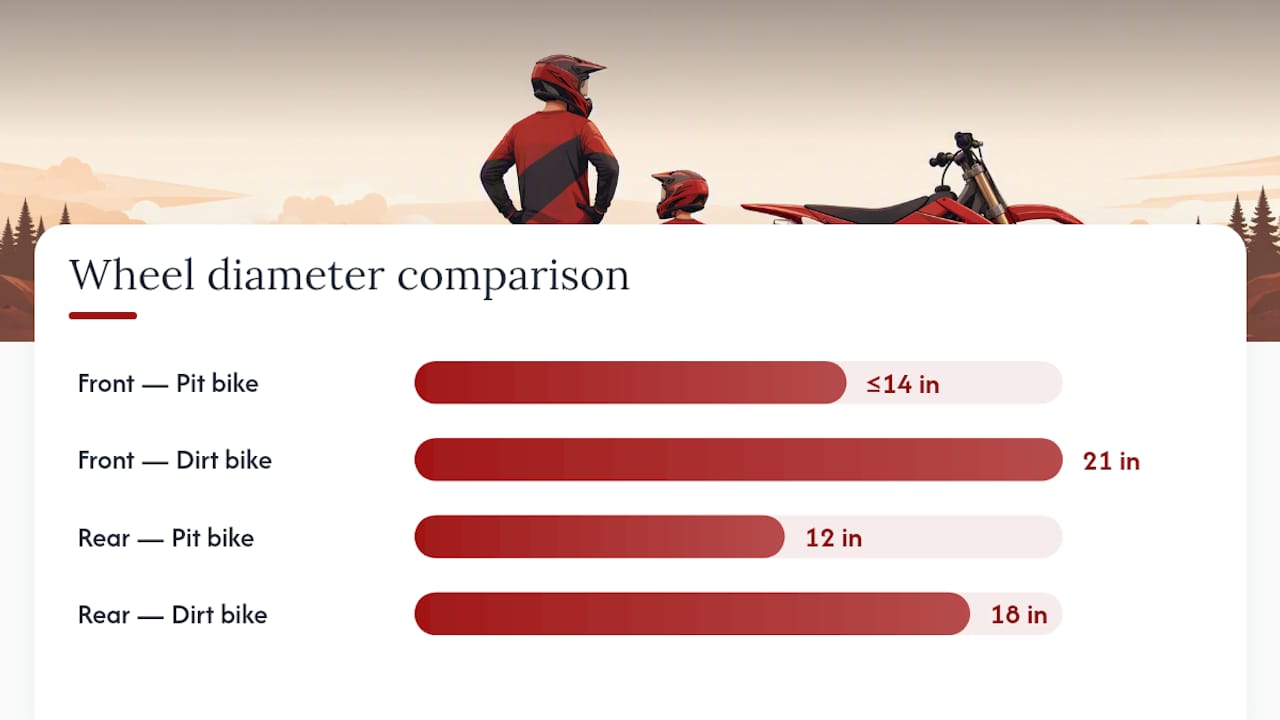
Wheels and tires. This is where the difference between pit bike and dirt bike shows up most dramatically on rough ground. Pit bikes commonly run small wheels, often 12 inches in the rear and 14 inches or smaller up front. Dirt bikes run roughly 18 inches rear and 21 inches front. Small wheels don’t roll over obstacles. They fall into them. A root, a rock, or a rut that a dirt bike’s big front wheel simply climbs over will catch a pit bike’s small wheel and stop it dead, often throwing the rider forward. Larger wheels also carry momentum better, which is part of why dirt bikes track straighter and feel more stable at speed.
Frame and build quality. Pit bike frames tend to be lighter, simpler builds, fine for backyard laps but not engineered for repeated hard landings. Dirt bike frames use heavier construction designed to flex and absorb impact without cracking, which matters enormously once you’re jumping or riding rough trail for hours at a time.
Suspension travel. Here’s where the numbers get dramatic.
By the Numbers: Full-size trail bikes typically offer 9 to 11 inches of suspension travel, while pit bikes usually max out around 3 to 5 inches. That’s less than half.
That gap translates directly into rider fatigue. Every bump a pit bike hits travels straight into the rider’s spine and wrists because there’s so little suspension to soak it up. A dirt bike’s longer travel absorbs the same bump and lets the rider keep moving without getting hammered.
Brakes and gearing. Pit bikes gear for tight, low-speed maneuvering, which makes sense for a backyard track or a driveway. Dirt bikes gear for a mix of low-end torque to climb hills and higher-end pull to cover ground fast, built around trail use rather than yard use.
Endurance factors. A few things separate a bike built for 20 minutes of fun from a bike built for a full day on the trail:
- Fuel tank size: dirt bikes carry more range for longer rides
- Oil capacity: dirt bikes hold more oil, which manages heat better over sustained riding
- Cooling: dirt bike engines are designed to handle hours of continuous load; pit bike engines are not
- Suspension components: dirt bikes use higher-quality shocks rated for repeated hard impacts
None of this means a pit bike is a lesser machine. It means the two are built for different jobs, and buying the wrong one for your intended use is where most regret starts.
Which Bike Fits Which Rider
-
The child or young teen learning to ride. A pit bike’s low seat height, light weight, and small proportions fit a kid’s body in a way a full-size dirt bike simply can’t. Lower power output also means a gentler learning curve, which is exactly what a first-time rider needs.
-
The adult hobbyist chasing backyard fun. A pit bike works here, but usually only with modifications. Riding it stock, on hard trail terrain, for hours at a time is asking a bike built for one thing to do another. For quick laps around a yard or a private track, it’s a genuinely fun, low-cost way to ride.
-
The weekend trail rider or group rider. This is a full-size dirt bike’s territory, full stop. Longer suspension travel, bigger wheels, and more displacement mean the bike can keep pace with a group and handle unpredictable terrain without falling apart or falling into every rut on the trail.
-
The budget buyer torn between a new pit bike and a used trail bike. Think carefully here. A brand-new pit bike is the cheaper sticker price, but a well-maintained used Japanese trail bike can be the smarter long-term buy if serious trail riding is the goal. Cheap and new isn’t always cheap in the long run.
Historically, pit bikes started as utility bikes used in motocross pits before evolving into their own recreational and competitive category, which explains why they still feel more like backyard toys than trail machines. It’s worth thinking about this in terms of what some riders call Type 1 fun versus Type 2 fun: a pit bike delivers easy, immediate fun, while a dirt bike often demands more skill and effort but pays it back with a bigger sense of accomplishment on tough terrain.
Safety, Fit, and Adult Modifications
Here’s the risk nobody puts on the box: an adult riding a stock pit bike off-road. Small wheels and low ground clearance mean obstacles that a dirt bike rolls over will catch a pit bike’s wheel and stop it cold, which can throw a rider forward violently. Add a cramped rider triangle, where an adult’s knees sit bent far tighter than the bike was designed for, and you’ve got a real injury risk, particularly to the knees, on anything beyond smooth, flat ground.
Adult-mini riding is a real and growing culture, but it only works safely with deliberate builds, not casual tweaks. If you’re putting an adult on a pit bike regularly, these modifications matter:
- Taller seat foam to open up leg room and reduce knee strain
- Handlebar risers to correct reach and reduce wrist and shoulder fatigue
- A reinforced steel cradle frame to handle adult rider weight without cracking
- Threadlocker like Loctite on critical bolts, since small-bike vibration loosens hardware fast
Pro Tip: Never take a stock, unmodified mini onto a real trail ride. It wasn’t built for it, and the small wheels will find every root and rut on the path.
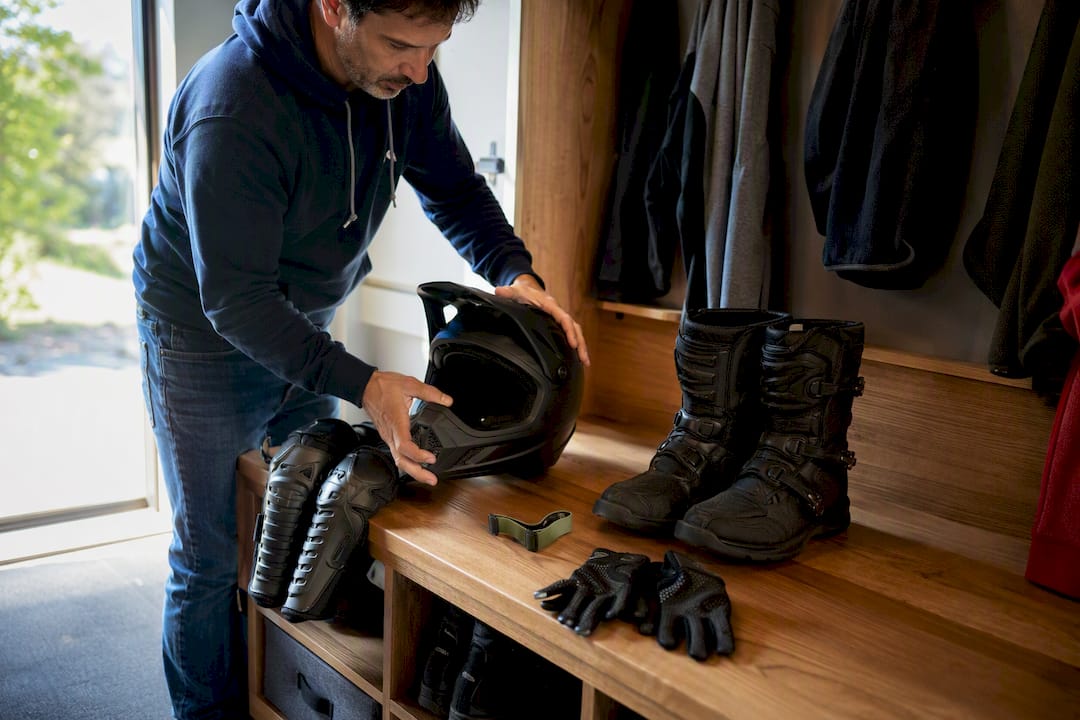
Full-face helmets, knee guards, and boots designed for off-road riding aren’t optional extras on either bike type. They’re the baseline for anyone getting on two wheels off pavement, especially growing riders whose seat height needs regular reassessment.
What It Actually Costs to Own Each One
Sticker price only tells part of the story. New pit bikes commonly sell for under $3,000, while full-size trail bikes usually start around $3,000 to $5,000 new and climb from there depending on class and displacement. That gap looks decisive until you factor in maintenance.
Pit bikes generally have simpler maintenance needs and lower parts costs, which makes sense given their smaller engines and fewer moving parts under load. Dirt bikes carry more complex upkeep, larger oil capacities, suspension servicing, and valve adjustments that add up over a season of real trail riding.
If you’re shopping used, run through this checklist before handing over cash:
- Run a compression test to check engine health before buying
- Inspect the frame closely for hairline cracks near welds and stress points
- Check kickstarter condition and confirm it engages smoothly every time
- Wiggle the wheels to test for bearing play or looseness in the hubs
- Ask for service history, and walk away if there isn’t any
A cheap new pit bike can end up costing more over time than a well-maintained used trail bike, especially if the trail bike has documented service records.
How to Actually Choose: A Step-by-Step Buying Guide
Work through this in order, and don’t skip steps just because a bike looks good in photos.
- Nail down intended use first. Backyard laps and short rides point toward a pit bike. Trail riding, group rides, or racing point toward a dirt bike. Everything else follows from this decision.
- Match the bike to the rider’s actual body. Seat height, leg reach, and weight all matter here. A bike that’s too tall or too small creates real safety issues, not just discomfort.
- Factor in total ownership cost, not just sticker price. Add up expected maintenance, parts availability, and how long you expect the rider to use this exact bike before outgrowing it.
Before buying anything, especially used, take it for a real test ride and run through this:
- Stand the bike up and check how it balances at a stop
- Test tight, low-speed turning for stability
- Listen to the idle for anything rough or inconsistent
- Run through every gear and confirm smooth, clean shifts
- Squeeze the brakes and check for firm, responsive feel
- Bounce the suspension and feel for smooth compression and rebound
- Check wheel tracking by riding a straight line, hands light on the bars
- Ask about tank range to confirm it matches your riding plans
Pro Tip: If the seller won’t let you test ride it, or the bike won’t start on the first few tries, that’s a red flag worth walking away from.
Frame cracks, sloppy bearing play, and a missing service history should all stop a purchase cold, no matter how good the price looks.
Who’s Behind This Guide
This comparison comes from Mario at Gokartsusa, where the team spends every day fielding questions from parents and first-time riders trying to figure out exactly this decision. Getting it right matters, because the wrong bike doesn’t just disappoint. It can put a rider in a genuinely dangerous spot on terrain the bike was never built to handle.
The most common mistake buyers make isn’t picking the wrong brand. It’s picking the wrong category entirely, buying a pit bike for a job that needed a dirt bike, or over-spending on a trail bike for a rider who just wants to putter around the backyard.
If you’re still working through fit questions, the seat height chart and test-ride checklist walks parents through sizing a growing rider correctly. For a broader primer on where pit bikes fit into the hobbyist world, the beginner’s guide to pit bikes covers first-ride safety basics. And for readers comparing an entry-level trail machine directly against a mini, the 125cc large-frame dirt bike page shows what a step-up option actually looks like on paper.
Where This Information Comes From
The comparisons in this guide draw on a handful of sources that get the mechanics and buyer logic right, without the fluff:
- The Dirt Riders Way breaks down engine layout, wheel size, and suspension travel in plain terms.
- Bosuer’s side-by-side comparison covers pricing and spec ranges across both categories.
- Apollo’s pit bike guide lays out clear buyer-use recommendations for beginners and kids.
- Valtinsue’s ownership comparison digs into maintenance costs and long-term upkeep differences.
- Techgaged’s coverage of Chinese e-motorcycle brands is worth a look if you’re considering an electric mini as part of the budget conversation.
The Real Question Isn’t Pit Bike or Dirt Bike. It’s Honesty About Use.
Most of the advice floating around treats this like a technical spec battle, bigger displacement wins, more suspension travel wins, case closed. That misses the point entirely. The right bike is the one that matches how someone will actually ride, not how they imagine riding on their best day.
Parents get this wrong most often by buying up, assuming a bigger bike means more value or a longer runway before their kid outgrows it. A kid who’s genuinely a beginner does better, and stays safer, on a bike sized for right now. Adults get it wrong in the other direction, buying a cheap pit bike expecting trail performance and getting a bike that stops dead in the first root it meets.
If you take one thing from this guide, prioritize honest use over aspirational use. Buy for the riding you’ll actually do this season, not the riding you picture yourself doing eventually. The used-versus-new tradeoff deserves more attention than it gets, too: a well-maintained used trail bike often beats a brand-new mini for anyone serious about trails.
— Mario
Finding the Right Bike Without the Guesswork
Gokartsusa exists for exactly the moment you’re in right now: standing between a pit bike and a dirt bike, trying to match a real rider to a real bike instead of a marketing photo. The catalog covers both ends of that decision, from kid-friendly minis to larger dirt bikes built for riders ready to graduate off the backyard track, all with clear specs upfront so you’re not guessing at seat height or engine size from a stock photo.
For a first bike that fits a young or beginner rider without overshooting their skill level, the gas-powered mini bike built for ages 12 and up is one of the most requested starting points on the site. Parents looking for something even smaller and slower to ease a younger rider into dirt biking should look at the kids’ gas dirt bike with 10 inch wheels, built specifically for riders age 8 and up. Check current availability and specs on either page, and reach out to the team with fit questions before you buy. That’s what we’re here for.
Sources
- What should I buy Pit Bike or Dirt Bike? - The Dirt Riders Way
- Pit Bike vs Dirt Bike: A Side-by-Side Comparison - Bosuer
- What Is a Pit Bike? How Is It Different from Dirt Bikes? - APOLLO
- Pit Bike vs. Dirt Bike: Which Model is best for you? - VALTINSU