




A rental session costs $30 to $60 and a solid first-year owner setup runs $1,600 to $7,000. A full club season lands between $3,000 and $10,000, and a serious national campaign can climb into the tens of thousands. Running costs almost always outpace what you paid for the kart itself, and your class choice and track frequency swing these numbers more than anything else.
TL;DR:
- Owner setup costs typically range from $1,600 to $7,000, with used equipment often saving money compared to new packages; budget it accordingly.
- A single race weekend generally costs between $200 and $900, with expenses increasing significantly when including team support or repairs.
- Travel, lodging, and spare parts are frequent hidden costs that can add hundreds of dollars per event, especially for regional or national competitions.
- Regular engine rebuilds based on hours run can cost $400 to $1,000 each season, making engine maintenance a key variable in overall expenses.
- Starting with rental sessions and used gear, joining a club, and choosing a budget-friendly class like LO206 can help control costs for first-time racers.
Table of Contents
- What Do Kart Racing Costs Look Like by Tier?
- What Will You Spend to Get Started?
- How Much Does a Race Weekend Really Cost?
- What Hidden Costs Catch Racers by Surprise?
- How Do You Keep Kart Racing Costs Under Control?
- Where Should You Look for Trustworthy Numbers?
- Ready to Turn Your Budget Into a Kart?
- Sources
What Do Kart Racing Costs Look Like by Tier?
Not every racer needs the same bank account, and that’s the good news. Kart racing splits into five natural tiers, and knowing which one you’re aiming for turns a vague budget worry into a real number you can plan around.
Rental / arrive & drive. This is the cheapest way to feel what a kart can do. Many U.S. tracks charge roughly $35 to $40 for a 15-minute walk-in session, with bundles and memberships dropping the per-session price further. A season of occasional rental outings might cost $200 to $800 total, no ownership required.
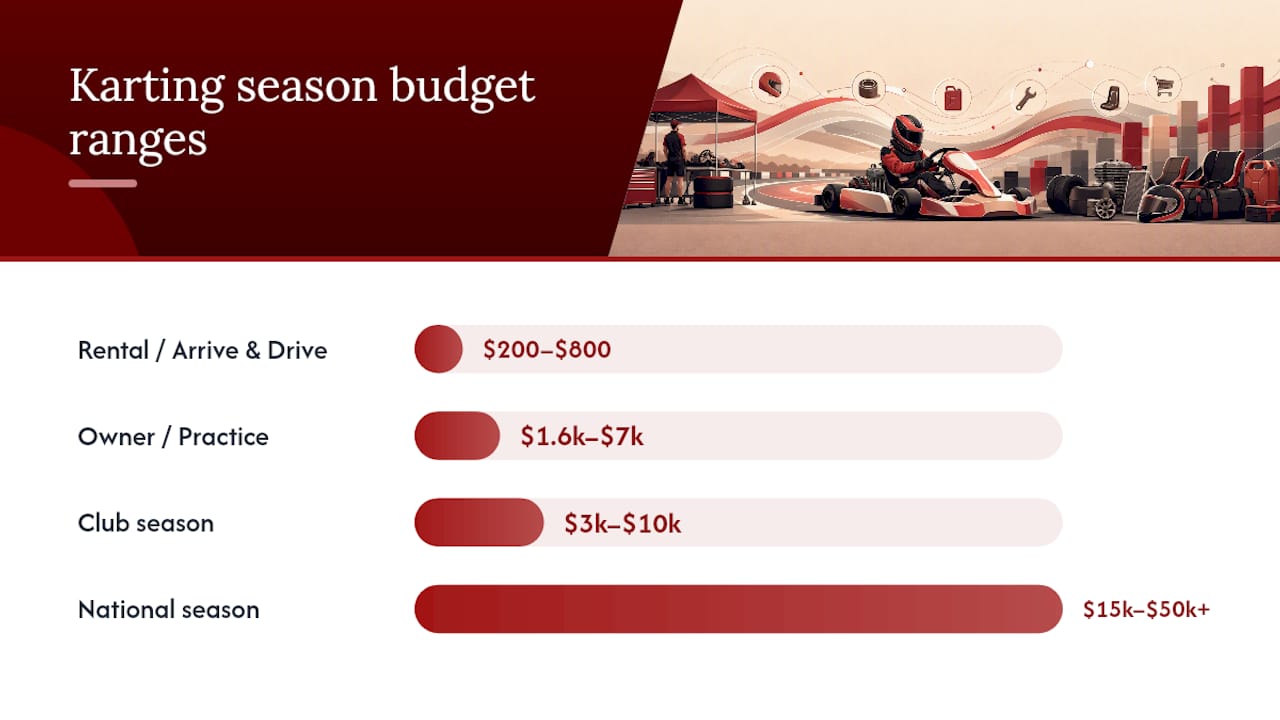
Owner/practice. This is where most enthusiasts land after a few rental visits confirm they’re hooked. First-year ownership, including kart, safety gear, and modest track time, typically runs $1,600 to $7,000, with a well-bought used setup landing closer to $2,500 to $6,000 according to several 2026 cost breakdowns.
Club season. Once you’re racing points events at a home track, expect a full season, including entries, tires, and consumables, to fall in the $3,000 to $10,000 range.
National season. Regional or national-caliber competition adds travel, coaching, and heavier equipment turnover. Budgets here commonly start around $15,000 and climb past $50,000 depending on the team support and testing schedule.
International/professional. At this level you’re paying for factory-backed engine programs, full-time mechanics, and cross-country or overseas travel. Costs here are largely sponsor or team-driven and fall outside what a self-funded weekend racer needs to plan for.
Here’s what actually moves you between these tiers:
- Class choice. Budget-friendly classes like LO206 keep engine costs predictable, while 100cc classes such as KA100 or Rotax demand more frequent rebuilds and pricier parts, pushing first-year totals toward $7,000 to $12,000.
- Frequency. Racing every other weekend costs roughly double what a once-a-month schedule does, purely through tires, fuel, and entry fees.
- Age and division. Youth classes generally run smaller engines and lighter karts, which trims tire wear and fuel costs compared to adult divisions.
- Travel radius. A driveable local series costs a fraction of what a multi-state national tour demands in fuel, hotels, and time off work.
What Will You Spend to Get Started?
Startup costs are the one-time purchases that get you from spectator to racer, and they’re where smart shopping saves the most money. Buy used where it’s safe to do so, buy new where safety is non-negotiable.
Safety gear tops that non-negotiable list. A Snell-rated helmet, race suit, gloves, and neck protection together run $150 to $600 depending on whether you buy entry-level or race-team quality. Used gear is common at swap meets, but helmets should always be bought new or with verified impact history, since you can’t inspect internal damage.
The kart itself is the biggest variable. A used, race-ready chassis with engine can cost a few thousand dollars, while new packages from a dealer often start higher but come with warranty coverage and confidence that nothing was bent in a prior crash. Our first-year pricing breakdown covers this in more detail if you want dollar-specific model comparisons.
| Item | Used/Budget | New/Mid-Range |
|---|---|---|
| Helmet, suit, gloves, neck brace | $150–$300 | $300–$600 |
| Kart chassis with engine | $1,600–$3,000 | $2,500–$3,000 |
| Tires (first set) | $150–$250 | $150–$250 |
| Trolley or basic transport rack | $150–$200 | $150–$400 |
| Basic tool kit and stand | $100–$250 | $150–$300 |
| Licensing and insurance | $50–$200 | $100–$300 |
| Track membership or day fees | $60–$150/month | $150–$300/month |
A conservative first-year total, buying smart and used where reasonable, lands around $1,600 to $3,000. A mid-range first-year total, mixing new safety gear with a used chassis and regular track time, sits closer to $4,500 to $7,000.
One more thing worth knowing before you hand over cash: private-party kart sales rarely come with any guarantee, so a pre-buy inspection matters more than it does for a car. Dealer purchases typically include some assurance the engine hasn’t been over-revved into oblivion, plus you’ll owe sales tax depending on your state, something a private sale often skips (legally or not). Our beginner checklist walks through what to inspect before buying used.
How Much Does a Race Weekend Really Cost?
A typical owner-run race weekend costs $200 to $900, and that range is wide because tire wear, entry fees, and fuel scale with how competitive the class is. Hiring a mechanic or joining a team program pushes the same weekend toward $700 to $2,200 or more, since you’re paying for expertise and setup time, not just parts.
Break down a mid-range weekend and the arithmetic gets simple fast:
- Entry fee: $75–$150
- Fresh tire set: $150–$250
- Fuel and oil: $30–$60
- Consumables (chain lube, sprockets, plugs): $20–$50
- Food, gate fees, and local travel: $50–$150
- Minor contact or setup damage: $0–$100 (budget for it even when it doesn’t happen)
Add those up and a realistic mid-range weekend runs $325 to $760. Multiply that across an 8 to 10 event season and you’re looking at several thousand dollars, which lines up closely with the club-season totals covered earlier.
Engine rebuilds are the number that quietly wrecks a season budget. Running hours matter more than calendar time. A 100cc or Rotax engine pushed hard across a full season can need a rebuild well before the season ends, and that single line item can add $400 to $1,000 depending on what’s worn. Racers who track hours and schedule rebuilds proactively avoid the worst version of this surprise, which is a blown engine on a race morning with no backup plan.
What Hidden Costs Catch Racers by Surprise?
The numbers above cover the obvious stuff. What trips up first-year racers is everything adjacent to the track itself.
- Travel and lodging. A regional race two states away can add $150 to $400 per weekend once you factor gas, a hotel, and meals for the crew.
- Team or mechanic fees. Hiring setup help for a single weekend can run $150 to $500, and full-season team support runs far higher.
- Crash and setup damage. Bent axles, cracked nerf bars, and scraped bodywork are routine, not rare. Budget $50 to $300 per season just for this.
- Registration and sanctioning fees. Club membership, transponder rental, and series sanctioning fees can add $100 to $400 annually on top of race entries.
- Spares you didn’t know you needed. Sprockets, chains, and spare jets rarely show up in a beginner’s shopping list, but they’re the parts that end a race day early when missing.
Pro Tip: Keep a simple hour log for your engine from day one, track hours run, not just races attended. Most rebuild surprises happen because nobody was counting, not because the engine failed without warning.
How Do You Keep Kart Racing Costs Under Control?
Cutting costs in this sport isn’t about doing less, it’s about spending on the right things in the right order. Here’s how experienced racers actually sequence their spending:
- Start with rental sessions. Confirm you love wheel-to-wheel racing before spending a dollar on ownership. This alone prevents the most expensive mistake in the sport: buying gear for a hobby you try once.
- Buy a used chassis from a known seller. A well-maintained used kart, inspected properly, performs nearly identically to new for a beginner’s skill level.
- Join a club instead of going independent. Clubs often unlock discounted track time, shared trailer space, and mentorship that shortens your learning curve.
- Choose a budget-friendly class like LO206. Sealed, spec engines mean predictable costs and no arms race in engine tuning.
- Split trailer and travel costs with another racer. Two people splitting fuel and lodging on a travel weekend cuts that line item roughly in half.
- Schedule testing with a purpose, not random laps. A focused ten-lap session working one corner beats an unstructured hour that burns tires and fuel without data to show for it.
- Invest in coaching once your equipment is sorted. A few hours with a coach after your setup is dialed in produces more improvement per dollar than another new part.
For families weighing the buy-versus-rent decision early, our guide on what makes go-karts affordable walks through this exact tradeoff in more depth.
Where Should You Look for Trustworthy Numbers?
Every range in this guide traces back to actual pricing pages and cost breakdowns, not guesswork, and that matters because kart racing budgets get repeated online without anyone checking the source. Gokartsusa’s own first-year price guide and beginner checklist track closely with the industry figures cited throughout this article, which tells you the numbers here aren’t outliers dressed up to sell karts. Our product catalog, seasonal promotions, and ongoing blog guides exist specifically to help first-year buyers avoid overpaying for gear they’ll outgrow in a season.
— Mario
Ready to Turn Your Budget Into a Kart?
Once you know your number, the next step is picking a kart that won’t blow past it. Some online retailers offer lineups built for the entry-level tier this guide covers: real racing and recreational karts priced for a first-year budget, not a professional team’s.

Our catalog includes gas-powered options like the Sport Kart kids go-kart, a straightforward entry point for younger drivers who are ready to move past rental sessions. Seasonal promotions, free shipping offers, and financing options make it easier to spread that first-year cost out instead of paying it all at once, and complimentary accessories on select models can offset some of the safety-gear spending covered earlier in this guide. If you’ve read this far and landed on the owner tier, browse the current lineup and see which model fits your budget and your driver’s age before the next race season fills your calendar.
Sources
- Go Kart Racing Start-Up Costs: Price Guide for U.S. Buyers 2026 – Cost Insider
- Professional Karting Costs Explained – KartSim
- How Much Does it Cost to Race Karts – Word Racing