




Yes, an ATV or UTV can handle snow riding, but only within limits. Stick to packed trails, not deep powder, and treat traction, layered clothing, and verified trail conditions as non-negotiable. A winch and a fully charged battery aren’t optional accessories out there. They’re what gets you home.
TL;DR:
- ATVs perform best on packed trails with proper tires or chains, but struggle in deep snow or on untracked powder, risking high-centering.
- Cold weather depletes battery capacity rapidly, so keeping batteries charged, installing winter-grade oils, and ensuring coolant integrity is essential for reliability.
- Traction is reduced on all snow surfaces, requiring slow, smooth throttle inputs and careful route choices to prevent sliding and loss of control.
- Always verify trail conditions and ice thickness through official reports before riding, and avoid crossing uncertain ice with a loaded ATV or UTV.
- Carry recovery gear such as a shovel, traction boards, and a winch, and stay calm and cautious if becoming stuck or facing dangerous conditions.
Table of Contents
- What Snow Riding ATV Gear Keeps You Warm and Safe
- Vehicle Prep and Winter Upgrades Before You Ride
- Riding Techniques for Snow, Ice, and Mixed Terrain
- Trail Rules and Ice Safety You Can’t Skip
- Recovery Gear and What to Do When You’re Stuck
- Why Snow Riding Safety Matters
- Gear Up for Winter Trails at GokartsUSA
- Sources
- FAQ
What Snow Riding ATV Gear Keeps You Warm and Safe
Cold doesn’t care how tough your machine is. It cares about your layering system, and getting that wrong is how a fun ride turns into a rescue story.
Start with a moisture-wicking base layer, add an insulating mid-layer of fleece or wool, then seal it with a waterproof, breathable shell. Cotton has no business in this system. It holds moisture against your skin and speeds up heat loss.
Your hands and face take the worst of the windchill at speed. Insulated gloves under handlebar mitts, heated grips if your machine supports them, and anti-fog goggles are the difference between sharp reflexes and numb, fumbling ones.
- Insulated, waterproof gloves paired with handlebar mitts for wind blocking
- Heated grips to keep fingers responsive on the throttle and brake
- Anti-fog goggles rated for cold weather, not summer dust
- Reflective outerwear and auxiliary lights, since winter daylight runs short
- Helmet with a full face shield to cut wind exposure
Keep spare headlamp batteries in an inside pocket. Cold drains them fast, and the National Weather Service notes the same cold that kills battery life raises your hypothermia risk. Shivering that won’t stop, confusion, or slurred speech means it’s time to head back, not push another mile.
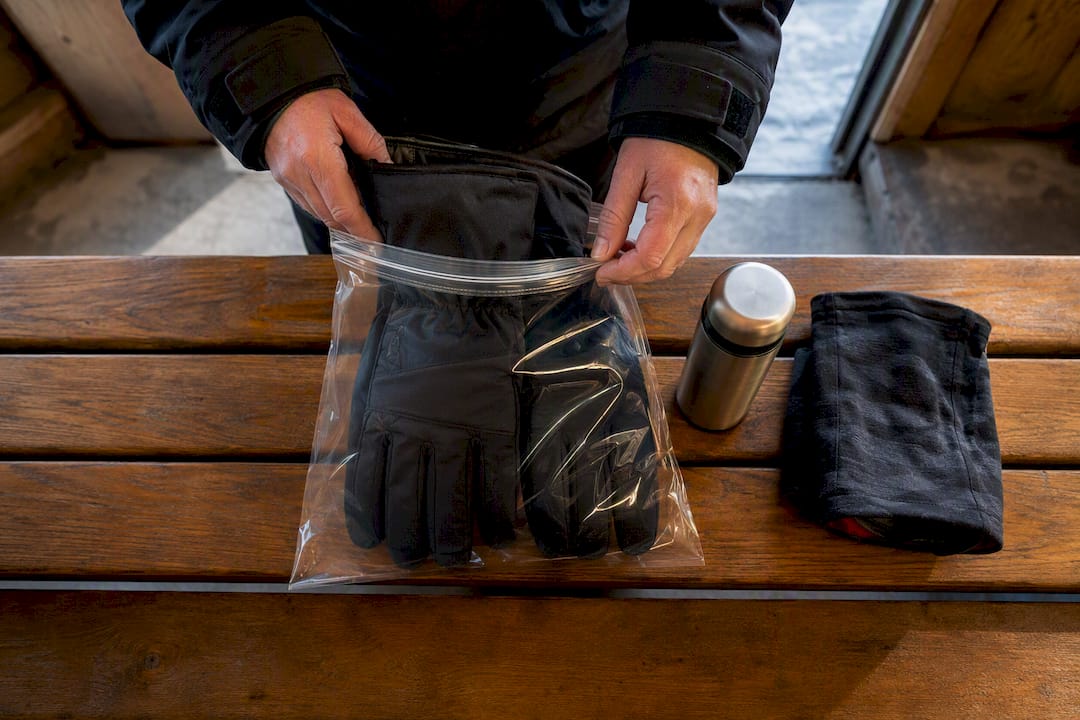
Pro Tip: Pack an extra pair of dry gloves in a sealed bag. Wet gloves after a fall are one of the fastest ways to lose feeling in your hands.
Vehicle Prep and Winter Upgrades Before You Ride
Your machine needs its own version of a parka. Cold punishes batteries, thickens fluids, and turns marginal traction into none at all.
- Test and charge the battery. Cold cuts battery capacity hard, so a unit that cranked fine in October can leave you stranded in January. Carry a jump-start pack or keep a maintainer on it between rides.
- Switch to winter-grade oil and add fuel stabilizer. Thinner oil flows better at low temperatures, and stabilizer keeps fuel from breaking down during cold storage.
- Check coolant on liquid-cooled engines. A weak coolant mix can freeze and crack a block, which is an expensive lesson to skip.
- Inspect your winch and tow points. A functioning winch is often the only way off an icy grade or out of a hidden drift.
For traction, the ATV snow tires vs chains debate comes down to your terrain. Aggressive snow tires work fine on packed trails; chains or studs add serious bite on ice but wear faster and are restricted on some public roads. Track kits turn your rig into something closer to a snowmobile in deep snow, though they’re heavier and often need manufacturer approval before installation.
- Snow tires: good all-around grip, legal almost everywhere
- Chains or studs: best for ice, check local road rules first
- Track kits: strongest in deep powder, added weight and cost
Round out your prep with fresh headlamp bulbs and a spare set of batteries. Short winter days mean you’ll likely be riding in fading light more often than you’d plan for.
Riding Techniques for Snow, Ice, and Mixed Terrain
Treat every surface like it has less grip than it looks like it has. That single assumption prevents most winter wipeouts.
Smooth throttle inputs and early, gradual braking replace the punchier moves you’d use on dirt in summer. Sudden steering correction on snow tends to send the rear end sliding before you can catch it.
Cornering works best slow. Scrub your speed before the turn, then hold a light, steady throttle through the arc. Braking mid-corner on a slick surface is one of the fastest ways to lose the front end.
Climbs reward momentum, not power spikes. Carry a steady pace into the hill rather than gunning it partway up, where wheelspin can stall your progress completely. Descents are the opposite: go straight down the fall line, keep your speed low, and avoid grabbing the brakes hard, which can lock a wheel and start a slide.
Reading the surface matters as much as controlling the throttle. Glazed, polished sections where other riders have packed the snow down are far slicker than fresh powder next to them. Windblown drifts can hide ruts, rocks, or fallen branches underneath a smooth-looking surface.
- Assume reduced traction on every surface, not just visible ice
- Slow before corners, hold steady throttle through them
- Keep steady momentum on climbs, go straight and slow on descents
- Watch for polished, glazed tracks and windblown drifts hiding obstacles
Pro Tip: If a section of trail looks glassy or unusually smooth compared to the snow around it, assume it’s ice underneath and change your line before committing.
If a stretch of trail looks wrong, whether from wind exposure, standing water, or a line of broken branches, changing your route or turning around beats finding out the hard way.
Trail Rules and Ice Safety You Can’t Skip
Before you load up, check your state DNR or forest service pages and call your local snowmobile or ATV club’s trail hotline. Conditions shift fast, and club and county reports are usually more current than a printed map. Rules vary by jurisdiction, and some trails require a minimum groomed depth before opening to ATVs at all.
Many winter trail systems are snowmobile-only, and running an ATV on a restricted trail can get the whole system closed to everyone. That’s not a risk worth taking for one ride.
Ice deserves its own conservative rule: if you don’t know the thickness, don’t cross it. Unlike a person on foot, a loaded ATV or UTV needs far more ice thickness to stay safe, and there’s no visible warning sign that guarantees you’re clear.
- Confirm trail status and permitted vehicle types before you leave home
- Never cross ice without confirmed, current thickness readings
- Yield right-of-way to snowmobiles on shared multi-use trails
- Slow down and give a wide berth when passing other riders on narrow sections
Recovery Gear and What to Do When You’re Stuck
Getting stuck in snow isn’t a matter of if, it’s when. What matters is having the right kit and staying calm about the process.
Pack a shovel, traction boards, a tow strap, a working winch, a multi-tool, a headlamp, a first-aid kit, fire-starting tools, and a charged power bank. That list covers most winter breakdowns without turning your rack into a moving hardware store.
- Stop and assess before you spin the wheels further into the snow.
- Clear packed snow from under the skid plates and wheel wells, since buildup there can lift the machine and cause high-centering.
- Place traction boards or logs under the drive wheels.
- Rock the machine gently forward and back rather than gunning the throttle.
- If you need the winch, anchor to a solid point, use a tree saver strap, keep bystanders clear of the cable, and spool it slowly.
Pro Tip: Conserve your phone and headlamp battery in freezing temperatures by keeping them in an inside jacket pocket, not a saddlebag exposed to the wind.
If the cold turns dangerous, walking out or calling for help beats staying with a stuck machine. The CDC’s hypothermia guidance is worth reading before the season starts, not after you’re already shivering.
Why Snow Riding Safety Matters
Winter riding rewards preparation over bravado, and that’s the philosophy behind everything Gokartsusa covers in its ATV safety guides and riding technique breakdowns. We’ve built our catalog around riders who want dependable machines and straight answers, not hype.
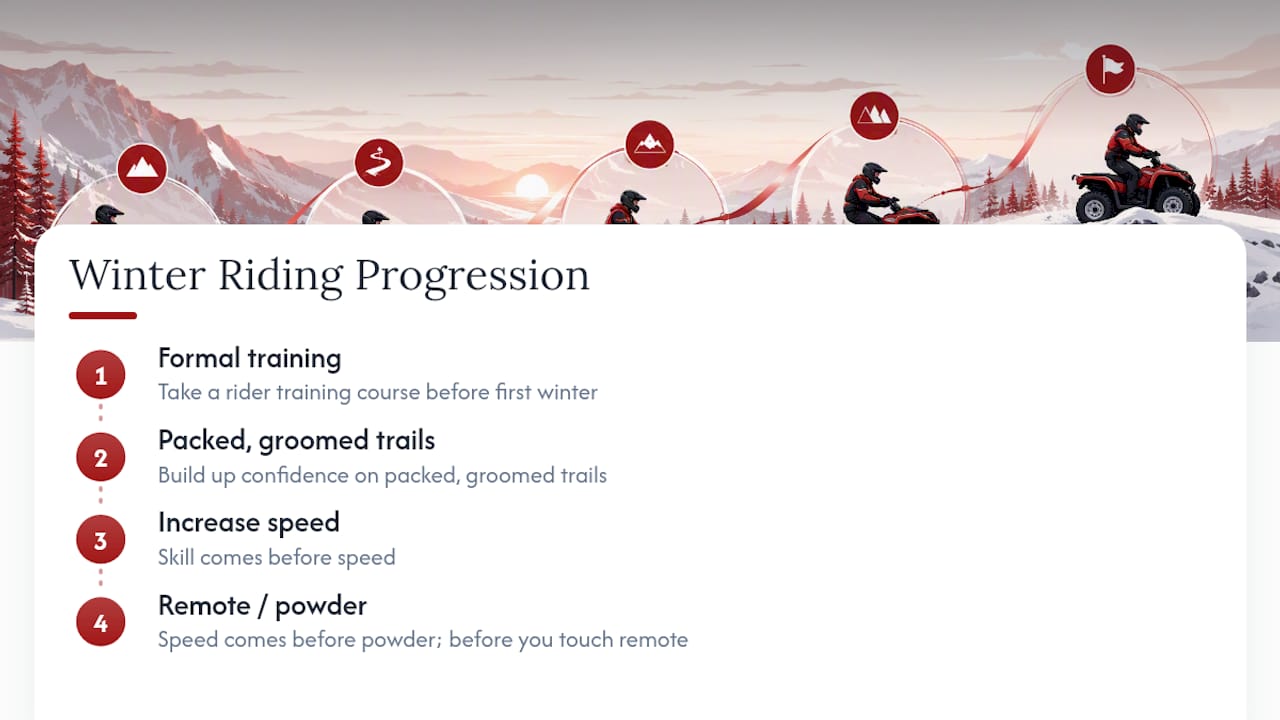
Our honest recommendation, backed by every credible ATV safety course out there: take a formal rider training course before your first winter season, then build up confidence on packed, groomed trails before you touch anything remote. Skill comes before speed, and speed comes before powder.
— Mario
Gear Up for Winter Trails at GokartsUSA
Cold-weather riding gear, including winches, accessories, and family-friendly off-road vehicles, is available to make packed-trail winter riding safer from the start.

If you’re outfitting a young rider, the Mini Sport Kids ATV comes with a parental remote start and kill switch, a real advantage when supervising a beginner on unfamiliar snow. For families weighing a smaller off-road option for packed trails, the gas-powered off-road kart is worth a look too. Winch installs and cold-weather accessory fitment can get technical, so if you’re not confident under the hood, reach out to our support team before you start swapping parts yourself. Browse the current lineup and get your rig winter-ready before the next storm rolls in.
Sources
- Hit The Trails Year-Round - Winter ATV Riding - OFATV
- Winter Snowmobile/ATV Rec. Trail System - Douglas County, WI
- Winter safety — National Weather Service
- Atvsafety
- Hypothermia — Centers for Disease Control and Prevention
FAQ
Do ATVs Do Well in Snow?
ATVs handle packed, groomed snow well when fitted with proper tires or chains, but they struggle in deep or unpacked powder where smaller machines can become high-centered.
What Is the Best ATV for Snow?
The best setup pairs a mid-size or larger ATV or UTV with aggressive snow tires or a track kit, plus a working winch for recovery on ungroomed terrain.
How Much Snow Can an ATV Handle?
Most ATVs manage groomed trails fine, but snow deeper than several inches becomes difficult for smaller machines without track conversions.
Can You Drive a 4-Wheeler on Ice?
You can ride on ice only when thickness is confirmed and appropriate for a loaded vehicle. Unknown or unverified ice should always be avoided, since there’s no reliable visual way to judge its strength.