




TL;DR:
- Choosing the right RV depends on your towing capacity, travel habits, budget, and living space needs.
- Motorized RVs offer convenience, while towable units provide cost savings if you already own a suitable vehicle.
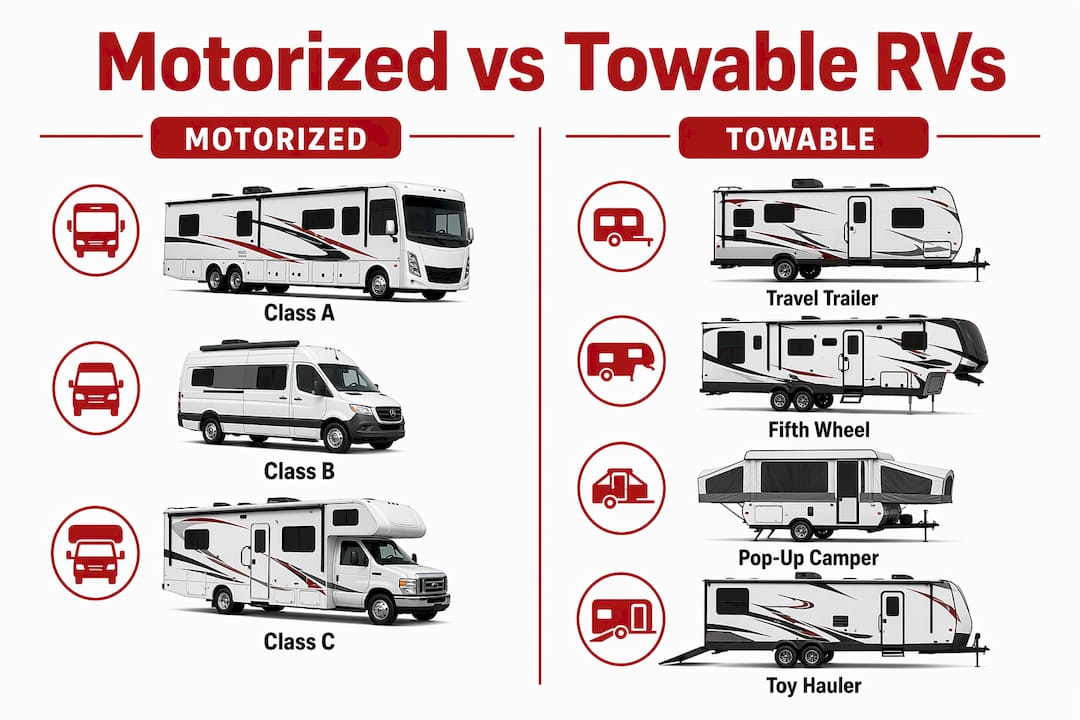
Recreational vehicle types explained means understanding the two master categories of RVs: motorized units (Class A, B, and C motorhomes) and towable units (travel trailers, fifth wheels, toy haulers, and pop-up campers). The RVIA recognizes that “class” applies strictly to motorized vehicles, while “type” covers both motorized and towable categories. Getting this distinction right from the start saves you from a costly mismatch between the rig you buy and the adventures you actually take.
What are the main motorized RV classes and their features?
Motorized RVs divide into three classes based on chassis size and driving experience. Each class targets a different kind of traveler, and the differences go well beyond length.
Class A motorhomes are the largest and most recognizable units on the highway. They range from 26 to 45 feet and deliver fuel economy of 6–10 MPG. That low fuel economy matters on a cross-country trip. Class A rigs are built on bus or commercial truck chassis, which means wide turning radii, strict height clearances, and real planning required for every fuel stop. The payoff is living space that rivals a small apartment, with full kitchens, king beds, and slide-out rooms.
Class B motorhomes are campervans built on standard van chassis. They measure 17–24 feet and achieve 15–25 MPG, the best fuel efficiency of any motorized RV class. That efficiency makes them the top pick for solo travelers and couples who want to cover serious ground without draining their budget at every pump. You can park a Class B in a standard parking space, which opens up urban stops and state parks that larger rigs cannot reach.
Class C motorhomes sit between the two. They run 20–33 feet and return 8–15 MPG. The signature feature is the over-cab bunk, which adds sleeping capacity without stretching the overall length. Class C units ride on truck or van cutaway chassis, making them more approachable to drive than a Class A while still offering a full bathroom and kitchen.
| Class | Length | Fuel Economy | Sleeping Capacity |
|---|---|---|---|
| Class A | 26–45 ft | 6–10 MPG | 4–8 people |
| Class B | 17–24 ft | 15–25 MPG | 2–4 people |
| Class C | 20–33 ft | 8–15 MPG | 4–6 people |
Pro Tip: Before committing to a Class A, drive one through a busy campground or urban area. The turning radius alone changes how many destinations stay on your list.
What types of towable RVs exist and how do their features vary?
Towable RVs carry no engine. You supply the power with your own truck, SUV, or crossover. That separation of vehicle and living space is the core advantage of the towable category.
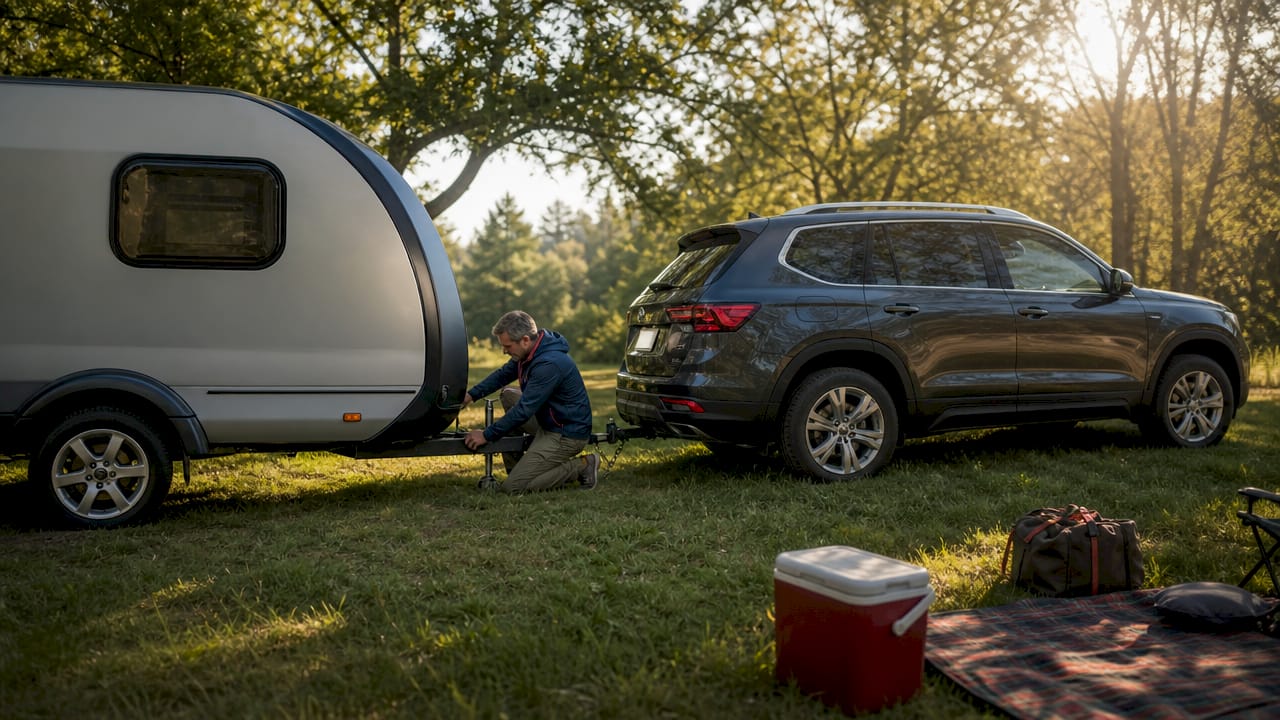
Travel trailers are the most popular towable type in America. They connect to a standard ball hitch and span 13–40 feet in length. Entry-level models start around $15,000, while mid-range units run $35,000–$65,000. That price range makes travel trailers the most accessible entry point into RV ownership. Once you unhitch at your campsite, your tow vehicle is free for day trips, grocery runs, and local exploring.
Fifth wheels require a specialized kingpin hitch mounted in the bed of a pickup truck. They reach up to 57 feet and offer the most residential living space of any towable type. The raised front section creates a split-level floor plan, often placing the master bedroom above the hitch point. Fifth wheels suit full-timers and extended-stay campers who prioritize space over quick setup.
Toy haulers are travel trailers or fifth wheels with a rear garage section. That garage carries ATVs, dirt bikes, go-karts, or other powersports gear. Toy haulers are the best choice for riders who want their adventure vehicles at every campsite.
Pop-up campers fold flat for towing and expand at camp. They weigh far less than hard-sided trailers, making them compatible with smaller vehicles. The trade-off is less insulation and weather protection.
| Type | Length Range | Tow Vehicle Needed | Best For |
|---|---|---|---|
| Travel trailer | 13–40 ft | SUV or half-ton truck | Families, first-timers |
| Fifth wheel | 17–57 ft | Full-size pickup (bed hitch) | Full-timers, extended stays |
| Toy hauler | 24–42 ft | Half-ton or heavy-duty truck | Powersports enthusiasts |
| Pop-up camper | 8–16 ft (folded) | Midsize SUV or crossover | Budget campers, light travelers |
Key factors to confirm before buying any towable:
- Your tow vehicle’s rated towing capacity
- The trailer’s loaded Gross Vehicle Weight Rating (GVWR)
- Hitch class and receiver size compatibility
- Tongue weight limits for your vehicle’s rear axle
Pro Tip: Check your tow vehicle’s owner manual for its actual towing capacity, not the sticker on the lot. Manufacturers rate towing under specific conditions that may not match your setup.
How to decide between motorized and towable RVs
The right choice depends on four primary factors: towing capacity, travel frequency, budget, and desired living space. Each factor points in a different direction depending on your situation.
Motorized RVs win on convenience for frequent movers. You hitch nothing. You drive straight from your driveway to your campsite. That simplicity adds up fast when you move every day or two on a long road trip. The downside is that your only vehicle is also your home. Running to the store means packing up or leaving someone behind.
Towable RVs win on cost and flexibility if you already own a capable tow vehicle. You avoid buying a second motorized unit, and your daily driver stays available after setup. The RVIA notes that new buyers often underestimate how much the tow vehicle choice shapes the total cost of ownership. If your current vehicle cannot handle the trailer you want, you may need to upgrade it. That upgrade can erase the savings you expected from going towable.
Here is a numbered list of decision factors and their real impacts:
- Travel frequency. Move daily or every other day? Motorized saves time. Stay put for a week at a time? Towable gives you a free vehicle at camp.
- Budget. Towable entry costs are lower, but tow vehicle upgrades can close the gap fast.
- Driving comfort. Class B and C units drive more like large vans. Class A requires dedicated practice.
- Living space needs. Full-timers need fifth wheel or Class A space. Weekend warriors do fine in a Class B or travel trailer.
- Parking and storage. Longer rigs limit campsite options and home storage. Shorter units open more doors.
New buyers frequently fall into what the industry calls the “Goldilocks” problem: they buy the largest Class A they can afford, then use it far less than planned because driving it feels stressful. Matching rig size to your actual driving comfort level matters as much as matching it to your wish list.
Pro Tip: Rent the exact class you are considering for a full weekend before signing any purchase agreement. One real trip reveals more than a hundred hours of online research.
What are the common challenges for new RV buyers?
Driving a large motorhome is a skill, not just an upgrade from driving a car. Class A units require planning for bridge clearances, low-hanging branches, wind resistance on open highways, and fuel stops with enough pull-through space. Ignoring these realities leads to damaged rigs and shortened trips.
Weight management is the top safety issue for towable buyers. Exceeding the GVWR of your trailer or your tow vehicle’s rated capacity affects braking distance, tire wear, and frame stress. Always weigh your loaded trailer at a truck stop scale before your first trip. That single step catches overloading before it becomes a roadside emergency.
Renting before buying is the single most effective way to avoid buyer’s remorse. A weekend in a Class C reveals whether the over-cab bunk works for your family or just looks good in photos. A night in a Class B shows whether the compact layout feels cozy or cramped.
RV buyer checklist before purchase:
- Confirm tow vehicle GVWR and towing capacity in writing
- Rent the exact class or type for at least one weekend
- Inspect slide-out mechanisms and roof seals in person
- Verify campsite size limits at your most-used destinations
- Budget for insurance, storage, and maintenance beyond the purchase price
Pro Tip: Ask the dealer to walk you through a full systems check on any unit you are seriously considering. Water pump, electrical hookups, slide-outs, and propane lines all deserve a live test before you drive off the lot.
Key takeaways
Matching your RV type to your actual travel habits and towing reality is the single most important decision in the buying process.
| Point | Details |
|---|---|
| Know the class vs. type distinction | “Class” applies only to motorized RVs; “type” covers both motorized and towable categories. |
| Fuel economy varies widely | Class B returns 15–25 MPG; Class A returns only 6–10 MPG, which shapes long-trip costs significantly. |
| Towing capacity is non-negotiable | Always verify your tow vehicle’s GVWR before selecting any towable RV to avoid safety risks. |
| Rent before you buy | A weekend rental of your target class reveals real preferences that online research cannot match. |
| Cost goes beyond the sticker | Tow vehicle upgrades, insurance, storage, and fuel all factor into the true cost of ownership. |
Why most buyers get this wrong the first time
Most people walk into an RV dealership with a dream in mind and leave with a rig that fits the dream but not the driveway. I have seen it happen more times than I can count. A couple imagines weekend getaways in a massive Class A, then parks it after three trips because backing it into their campsite felt like parallel parking a city bus.
The honest truth is that the best RV is the one you actually use. A Class B campervan that you take out every other weekend beats a Class A that sits in storage eleven months a year. Freedom on the road comes from confidence behind the wheel, not from square footage.
My strongest advice: start smaller than you think you need. You can always upgrade. You cannot easily undo a $150,000 purchase that turns out to be too stressful to drive. Rent a Class C for a long weekend, then rent a Class B the next month. The one you miss after you return the keys is the one worth buying.
Tow vehicle compatibility deserves the same honesty. If your current truck cannot handle the fifth wheel you want, factor in the full cost of upgrading before you compare it to a motorized option. Sometimes the motorized route is genuinely cheaper once you run the real numbers. Choosing an outdoor vehicle for your family is always a balance between what excites you and what works in real life.
— Mario
More ways to fuel your outdoor adventure
RVing gets you to the campsite. What you do when you get there is where the real fun starts. Gokartsusa carries a full lineup of powersports vehicles built for riders who want more from every outdoor trip.

A gas off-road go-kart pairs perfectly with a toy hauler setup, giving kids and adults a thrilling way to explore trails and open terrain right from camp. For teens and adults who want two wheels, the gas powered mini bike delivers 3.5hp of 4-stroke power and automatic transmission for easy riding. Gokartsusa ships nationwide with free shipping on select orders, so your next adventure vehicle is never far away. Browse the full catalog at GokartsUSA.biz and find the ride that matches your outdoor lifestyle.
FAQ
What is the difference between RV class and RV type?
“Class” refers only to motorized RVs (Class A, B, and C), while “type” covers both motorized and towable categories. The RVIA uses this distinction to classify the full range of recreational vehicles.
What are camper vans in RV classification?
Camper vans are Class B motorhomes built on standard van chassis. They measure 17–24 feet and return 15–25 MPG, making them the most fuel-efficient motorized RV option.
How do I know if my vehicle can tow a travel trailer?
Check your tow vehicle’s owner manual for its rated towing capacity, then compare it to the loaded GVWR of the trailer. Exceeding either rating creates braking and safety risks.
What is the most affordable towable RV type?
Travel trailers are the most affordable entry point, with entry-level models starting around $15,000. They connect to a standard ball hitch and work with most half-ton trucks and larger SUVs.
Should I rent an RV before buying one?
Yes. Renting the exact class or type you plan to buy for at least one weekend reveals real driving and living preferences. The RVIA recommends this practice to reduce buyer’s remorse and ensure the right fit.