




TL;DR:
- Choosing the right outdoor vehicle depends on matching terrain, rider age, and safety needs before comparing brands.
- Proper vehicle selection involves understanding terrain conditions, payload capacity, and rider safety features to ensure reliable performance.
Selecting an outdoor vehicle means matching a machine’s capabilities to your terrain, your riders, and your safety requirements before you spend a dollar. The right recreational vehicle, whether a go-kart, ATV, mini bike, or full-size 4x4, delivers freedom and reliability on every trail. Get it wrong and you face breakdowns, safety risks, and a machine that sits unused in the garage. Knowing how to select an outdoor vehicle starts with three honest questions: Where will you ride? Who will ride it? What does the vehicle actually need to handle? Answer those first, and every other decision falls into place.
What terrain and activity considerations should guide your vehicle choice?
Matching vehicle capabilities to terrain is the single most critical step in choosing an outdoor vehicle. A rig that handles summer forest roads with ease may be completely underbuilt for rocky climbs or snow passes. Terrain dictates everything from suspension travel to tire width to drivetrain type.
Different surfaces demand different features. Mud and soft ground require aggressive tread tires and high ground clearance. Sand driving demands selectable 4x4 low-range and specialized sand-driving modes, since AWD crossovers fall short on remote beaches where true 4x4 trucks are the safer choice. Rocky terrain calls for skid plates, locking differentials, and short overhangs. Snow and forest trails reward vehicles with good approach angles and reliable all-season traction.
Activity type shapes your requirements just as much as terrain does. Towing a trailer to a campsite requires a rated tow capacity and a stable wheelbase. Hauling gear for a family of four means you need real cargo space, not just a back seat. Passenger-carrying activities demand roll protection and secure seating for every rider. Understanding off-road capability basics before you shop saves you from buying a vehicle that looks capable but underdelivers in the field.
| Terrain type | Ground clearance | Drivetrain | Key feature |
|---|---|---|---|
| Forest trails | Moderate (8–10 in) | AWD or 4WD | All-season tires |
| Sand and beaches | High (10+ in) | Selectable 4x4 low | Sand mode or paddle tires |
| Rocky climbs | High (10+ in) | 4x4 with lockers | Skid plates, short overhang |
| Snow and mud | Moderate to high | 4WD with low range | Aggressive tread, traction control |
| Paved or gravel roads | Standard | AWD | Comfort suspension |
Pro Tip: Map your three most common riding locations before you shop. If two of three involve soft surfaces or steep grades, prioritize a true 4x4 drivetrain over a comfort-tuned AWD crossover.
Which vehicle performance factors matter most for safety and reliability?
[Low-end torque outperforms raw horsepower](https://www.whatcar.com/best/4x4s-for off-roading/n26188) for off-road and recreational vehicle performance. Torque at low RPM keeps a vehicle moving steadily over rocks and roots without wheel spin or stalling. High horsepower numbers look impressive on a spec sheet but mean little when you need slow, controlled power on a technical trail.
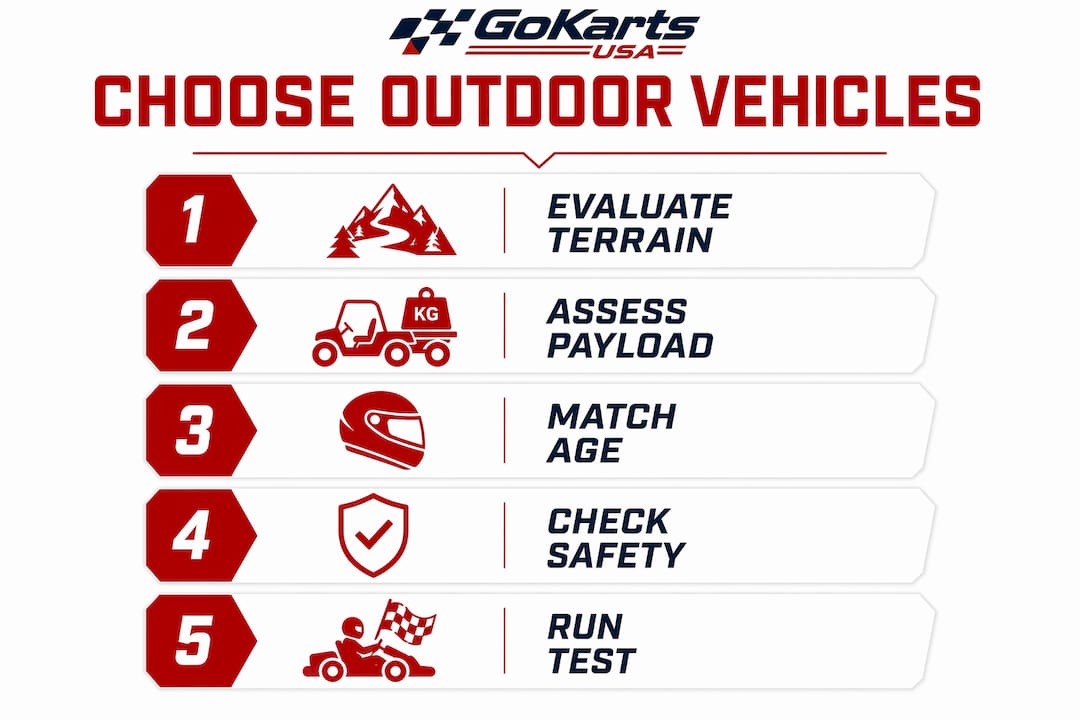
Payload capacity is the most underestimated spec in outdoor vehicle selection. Payload headroom should include a 15–20% buffer above your expected load weight. Overloading compresses suspension, accelerates tire wear, and strains axles. That buffer protects your vehicle and keeps your family safe when the gear pile grows on a longer trip.
Electric vehicles have entered the outdoor recreation space with real capability. High-performance electric adventure vehicles now exceed 400 miles of range per charge on Max Pack battery configurations. That range makes them viable for remote trips where gas stations are hours away. The tradeoff is charging infrastructure, which remains limited on backcountry routes.
Key performance criteria to assess before buying:
- Torque rating at low RPM: Look for strong low-end pull, not just peak horsepower.
- Payload capacity: Calculate your gear weight plus all passengers, then add the 15–20% buffer.
- Ground clearance: Minimum 8 inches for light trails; 10 or more for serious off-road use.
- Fuel or charge range: Match range to your longest planned trip without resupply.
- Suspension travel: More travel absorbs bigger impacts and protects riders on rough ground.
Pro Tip: Load the vehicle with your full gear setup and drive it on terrain similar to your planned trips before you commit to buying. A fully loaded test drive reveals load distribution problems and suspension limits that a stock dealership test drive never will.
How to match outdoor vehicles with user age and family needs?
Age appropriateness is a non-negotiable factor in outdoor vehicle selection. A vehicle sized and powered for an adult creates real danger in the hands of a child. The right fit means the rider can reach all controls comfortably, the speed range matches their skill level, and safety features are built in rather than bolted on as an afterthought.
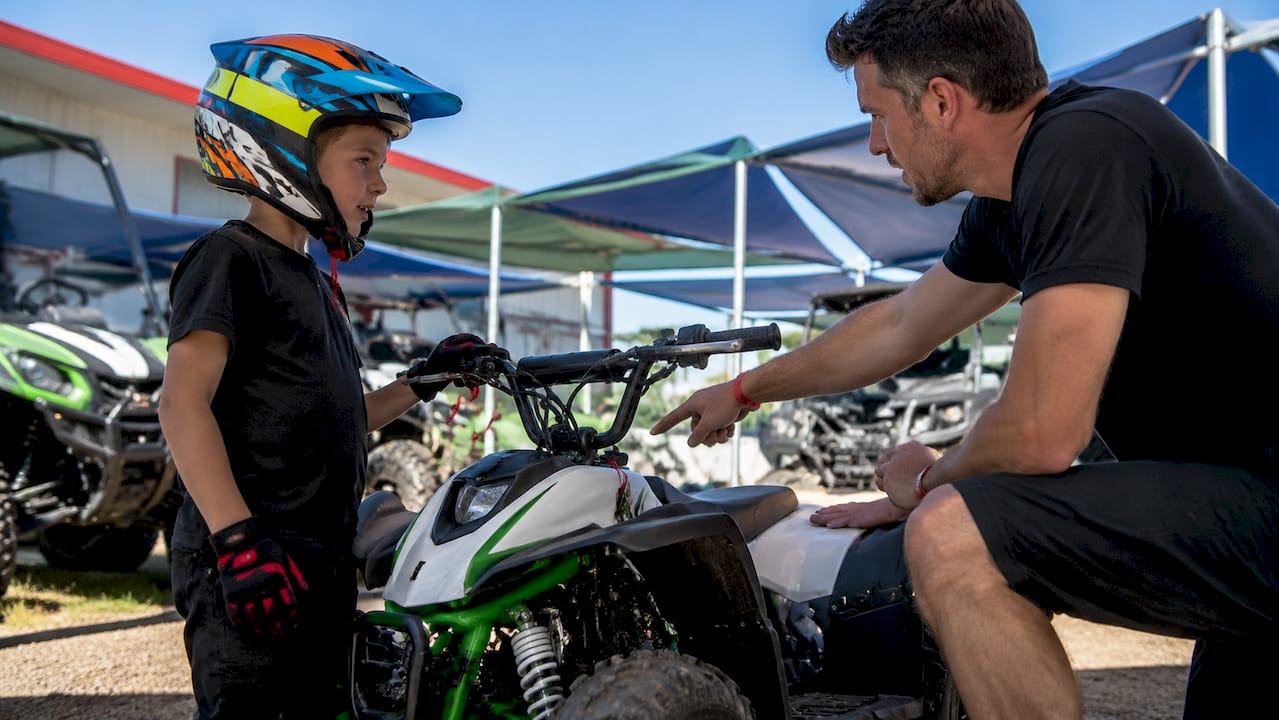
Off-road buyers often struggle to balance ruggedness with daily usability, and families face that tension most directly. A vehicle that works for weekend trail riding but also needs to handle school pickups requires a very different spec than a dedicated trail machine. Clarifying that distinction early prevents expensive regrets. Gokartsusa offers models across the full age range, from youth go-karts to adult ATVs, each built with the right power and safety features for its intended rider.
For families, the best outdoor vehicle options by age group look like this:
- Ages 6–10: Low-powered go-karts and youth ATVs with speed limiters, automatic transmissions, and parental remote kill switches. The Mini Sport Kids ATV with its parental remote start and kill feature is a strong example of this category done right.
- Ages 8–12: Gas-powered off-road karts with 2.5hp engines and roll protection, like the Sport Kart for kids, give older children real trail capability with built-in safety margins.
- Ages 12–16: Automatic mini bikes and 40cc dirt bikes with 10-inch wheels and beginner-friendly power delivery. The Demon Kids Gas Dirt Bike fits this range well.
- Adults: Full-size ATVs, side-by-sides, and 4x4 trucks with the payload, torque, and safety tech to handle serious terrain.
Safety gear is mandatory at every age level. Helmets, gloves, and protective clothing reduce injury severity dramatically. Gokartsusa’s safety gear guide covers the full kit your family needs before the first ride.
What practical tools and checklists help you pick the right vehicle?
A spec matrix cuts through the noise of outdoor vehicle comparison. The method works by listing your minimum acceptable values for each key spec, then eliminating any vehicle that falls short. Avoid choosing based on brand badges; focus on the specific use case and environment instead. A spec matrix makes that discipline automatic.
Build your personal needs profile first. Answer these four questions honestly:
- What is the hardest terrain you will realistically ride in the next 12 months?
- How many riders or passengers will the vehicle carry at one time?
- What is the maximum trip duration between fuel or charge stops?
- Will this vehicle serve one rider type or multiple ages and skill levels?
Once you have those answers, build your minimum spec matrix:
| Spec category | Your minimum requirement | Why it matters |
|---|---|---|
| Ground clearance | Based on terrain type | Prevents undercarriage damage |
| Payload capacity | Total rider and gear weight + 15–20% buffer | Protects suspension and tires |
| Towing capacity | Trailer weight if applicable | Safety under load |
| Range per tank or charge | Longest trip leg without resupply | Avoids being stranded |
| Age and size fit | Rider height and weight limits | Controls safety and comfort |
Creating a spec matrix eliminates unsuitable vehicles early and saves hours of comparison shopping. Any vehicle that misses even one of your minimums comes off the list immediately, regardless of price or appearance.
Pro Tip: Run a shakedown test with your full intended load on terrain similar to your planned trips. Suspension sag, brake feel, and steering response all change under real weight. What feels great empty may feel unstable loaded.
Common mistakes to avoid: buying for the most extreme trip you might ever take instead of your typical ride, ignoring payload limits because the vehicle “looks big enough,” and skipping the age-fit check because a child “will grow into it.” Each of these errors creates safety risks that no amount of gear can fully offset. The ATV buying checklist from Gokartsusa walks through every one of these pitfalls in detail.
Key Takeaways
Selecting the right outdoor vehicle requires matching terrain demands, payload capacity, and rider age to specific vehicle specs before comparing prices or brands.
| Point | Details |
|---|---|
| Terrain drives the spec | Identify your hardest terrain first; it determines drivetrain, clearance, and tire requirements. |
| Payload buffer protects the vehicle | Always build a 15–20% weight buffer above your expected load to protect suspension and tires. |
| Age fit is a safety requirement | Match engine size, speed controls, and physical dimensions to the rider’s age and skill level. |
| Spec matrix beats brand shopping | List your minimum specs first and eliminate any vehicle that misses even one requirement. |
| Test loaded, not empty | A shakedown test with full gear on real terrain reveals problems a dealership test drive never shows. |
What I’ve learned from watching families pick the wrong vehicle first
The most common mistake I see is buying for the adventure you imagine instead of the one you actually take. A family pictures themselves conquering rocky mountain passes, so they buy a heavily modified 4x4 with a lift kit and 35-inch tires. Then they spend 90% of their time on gravel forest roads where a stock mid-size truck would have been faster, cheaper, and more comfortable.
Honest trip planning is the unglamorous foundation of every good vehicle choice. Write down your last five outdoor trips. Note the terrain, the distance, and how many people came along. That list tells you more about the right vehicle than any spec sheet or magazine ranking. The right overland platform is the one that handles your real trips, not your fantasy ones.
For families with kids, I’d argue safety features and age-appropriate sizing matter more than any performance spec. A parental remote kill switch on a youth ATV is worth more than an extra 10cc of engine displacement. Speed limiters give parents real control while kids build confidence at a pace that matches their skills. Gokartsusa builds these features into their youth lineup because they understand that the best family ride is one where everyone comes home safely.
The other trap is underestimating payload. People load up a vehicle with camping gear, coolers, and passengers and never check whether the total weight exceeds the rated capacity. Overloading doesn’t just wear out tires faster. It changes how the vehicle handles in ways that can surprise even experienced riders at the worst possible moment.
Buy for your real life. Test it loaded. Fit it to your riders. Everything else is details.
— Mario
Gokartsusa has the right outdoor vehicle for every rider and adventure
Finding the right outdoor vehicle gets a lot easier when the selection is built around real riders and real terrain. Gokartsusa carries go-karts, ATVs, mini bikes, and dirt bikes sized and powered for every age group, from kids aged 6 to adults who want serious trail performance.

Every youth model in the Gokartsusa lineup includes safety features like speed limiters, automatic transmissions, and parental remote controls. The Mini Sport Kids ATV with parental remote start and kill gives parents real peace of mind on the trail. For teens and adults ready for more power, the Gas Powered Mini Bike delivers reliable 3.5hp performance with an automatic transmission that keeps the focus on fun. Browse the full catalog at Gokartsusa and find the vehicle that fits your family’s next adventure.
FAQ
What is the most important factor when choosing an outdoor vehicle?
Terrain type is the most important factor. It determines the minimum ground clearance, drivetrain type, and tire requirements your vehicle needs to perform safely.
How do I know if a vehicle has enough payload capacity?
Add the weight of all riders and gear, then confirm the vehicle’s rated payload exceeds that total by at least 15–20%. That buffer protects suspension and tires under real-world loads.
What outdoor vehicle is best for kids aged 8 and up?
A gas-powered go-kart or youth ATV with a speed limiter, automatic transmission, and parental kill switch is the best starting point. Models like the Sport Kart Kids Gas Go Kart from Gokartsusa are built specifically for this age range.
Is an electric vehicle a good choice for remote outdoor trips?
High-performance electric adventure vehicles now exceed 400 miles of range per charge, making them viable for many remote trips. The main limitation is charging access on backcountry routes where infrastructure is still limited.
How do I avoid buying the wrong outdoor vehicle?
Build a spec matrix with your minimum requirements for ground clearance, payload, range, and rider fit before you shop. Eliminate any vehicle that misses one requirement, regardless of price or brand reputation.