




TL;DR:
- Private RV parks often enforce a 10-year age limit primarily to reduce maintenance and liability risks.
- Owners can improve their chances of acceptance by maintaining their rigs well and submitting photos in advance.
Age limits in recreational vehicles are defined as screening policies used by private RV parks, lenders, and campgrounds to filter vehicles based on model year. The role of age limits in recreational vehicles is not to ban older rigs outright. Instead, these policies act as practical filters for safety, aesthetics, and maintenance risk. The most widely known version is the “10-year rule,” which restricts vehicles older than a decade from certain private parks, particularly for long-term stays. Understanding how these policies actually work gives owners, parents, and new enthusiasts the confidence to plan smarter and ride freer.
How do age limits affect RV owners and their access to parks?
Age limits create real friction for owners, but the impact depends heavily on how and where you plan to use your rig. The two biggest pressure points are financing and park access.
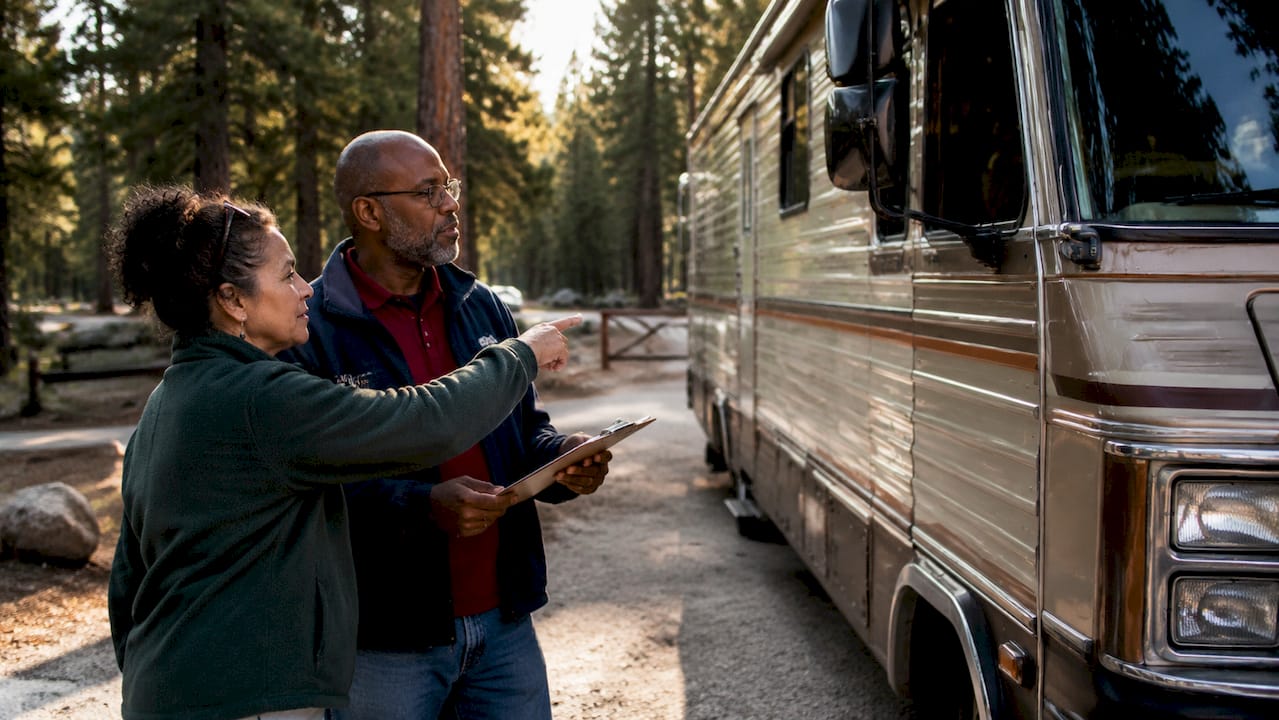
Banks increasingly refuse to finance recreational vehicles older than 10 years. Older rigs make up roughly 40% of used Class A motor homes listed for sale, yet financing options for these vehicles remain scarce. That gap forces buyers to pay cash or seek specialty lenders, which limits who can afford entry into the market.
Private RV parks add a second layer of restriction. Most parks apply the 10-year rule selectively, and the rule targets long-term stays of 30 days or more rather than short weekend camping trips. A family pulling in for a three-night stay rarely faces the same scrutiny as someone seeking a monthly site. That distinction matters enormously for hobbyists and seasonal travelers.
Here is what the impact looks like in practice:
- Financing barriers. Lenders treat a 12-year-old Class A the same way they treat a high-risk loan. Buyers often need 20–30% down or must pay in full.
- Long-term site denials. Premium resorts and lifestyle communities enforce age limits most aggressively for monthly or annual leases.
- Short-term flexibility. Most private campgrounds allow older rigs for weekend or weekly stays without issue.
- Resale value compression. An RV approaching the 10-year mark loses value faster because buyers know financing and park access will shrink.
Pro Tip: If you own a rig approaching 10 years old, call ahead before booking a long-term site. Ask directly whether the park enforces an age policy and whether a photo submission can substitute for an on-site inspection.
Younger buyers feel this squeeze most sharply. Younger demographics lean toward older, affordable rigs but face consistent park access challenges from 10-year rule enforcement. The demographic shift in RV ownership is real, and age policies have not caught up with it yet.
What criteria beyond age determine acceptance at RV parks?
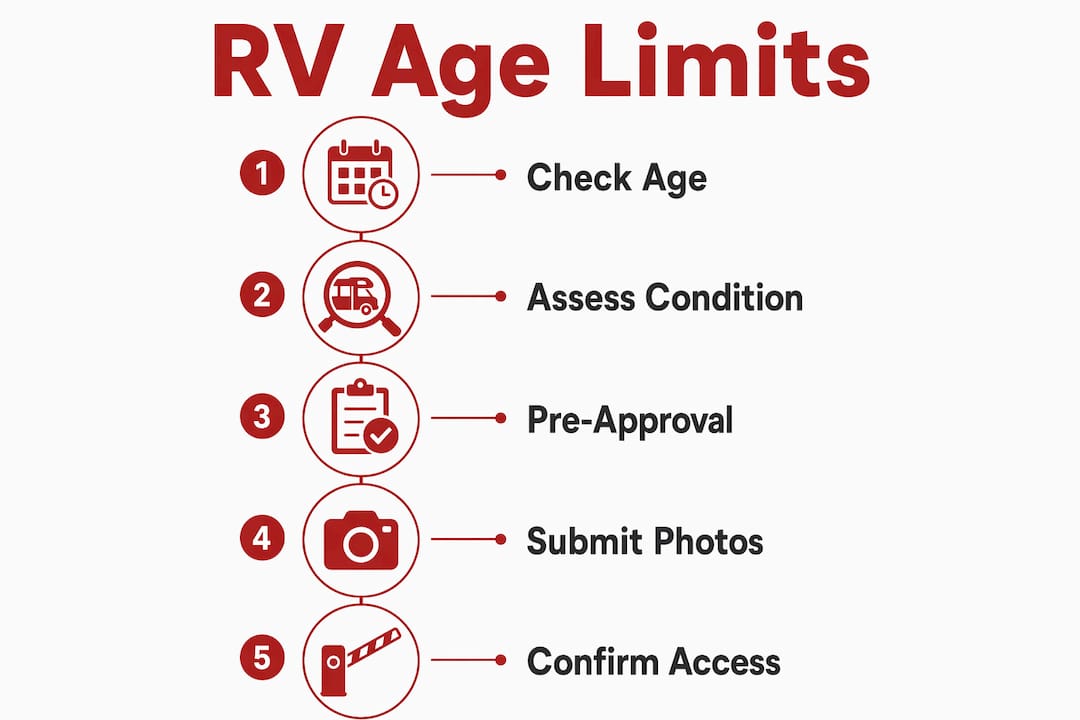
Condition beats age at most parks. A well-maintained 15-year-old rig is preferred over a neglected 5-year-old one by many campground operators. That is not sentiment. It reflects the operational reality that a clean, structurally sound older RV creates fewer problems than a newer one with visible damage, leaks, or deferred maintenance.
Parks use age as a shortcut, not a verdict. The real concerns behind recreational vehicle age policies are abandonment risk, liability, and the visual standard of the property. An older rig that looks sharp and runs clean checks every box a park manager actually cares about.
Here is how parks typically assess a vehicle beyond its model year:
- Exterior condition. No visible rust, rot, or structural damage. Tires must be in good shape and properly inflated.
- Roof and seals. Leaks are the fastest way to get turned away. Parks know a leaking roof signals deferred maintenance throughout.
- Cleanliness. A dirty, cluttered rig signals a long-term headache. Parks screen for this at the gate.
- Mechanical function. Slide-outs, awnings, and leveling systems must work. Non-functional equipment raises red flags.
- Safety features. Smoke detectors, carbon monoxide alarms, and working brake lights are non-negotiable.
Age limits help parks filter guests to reduce abandonment risks and unwanted maintenance burdens. When a long-term tenant abandons a rig, the park bears the legal and financial cost of removal. Age policies reduce that risk by screening out vehicles that are more likely to become liabilities.
Pro Tip: Before arriving at a new park, take 10 to 15 high-quality photos of your rig from every angle, including the roof, tires, and interior. Send them proactively. Parks that see a clean, well-kept older vehicle almost always make exceptions.
Some parks formalize this process. Ecusta RV Park requires prior management approval for vehicles older than 15 years, and that approval is achievable through photo submissions. That policy is a model for how condition-based screening works in practice.
How is technology changing enforcement of RV age limits?
Automated systems are replacing human judgment at the gate. License plate recognition and photo uploads now create automated entry decisions based on age and condition filters, removing the discretion that once allowed a friendly conversation to override a policy.
Automatic Number Plate Recognition (ANPR) cameras read a vehicle’s plate, cross-reference it with registration data, and flag rigs that fall outside the park’s age threshold before the driver even reaches the office. This shift has real consequences for owners of older vehicles.
What this means for enthusiasts navigating these systems:
- Pre-approval is now mandatory, not optional. Automated gates do not negotiate. If your rig is flagged, you may be turned away before speaking to anyone.
- Photo submissions carry more weight. Many parks with automated systems still allow a manual override if you submit photos and receive written approval in advance.
- Brand and model perception matters. A well-known brand like Airstream or Winnebago on an older rig may receive more favorable treatment in manual review than a lesser-known manufacturer.
- Reservation system flags. Some online booking platforms now prompt parks to review older vehicles at the reservation stage, not at arrival.
Emerging automated enforcement via ANPR reduces human flexibility in age limit exceptions. The window for negotiating an exception is shrinking. Owners who act before arrival, not at the gate, have the best chance of success. This trend also connects to broader shifts in the powersports and outdoor recreation industry, where technology is reshaping how access and safety are managed across vehicle categories.
What alternatives exist for owners with age-restricted RVs?
Public lands are the most reliable alternative. National Forests and BLM sites generally do not enforce recreational vehicle age limits. These lands offer dispersed camping with no age screening, no reservation systems, and no gate cameras. The tradeoff is fewer amenities, but for owners with older rigs, the freedom is worth it.
The comparison below shows how different camping options handle age restrictions:
| Camping type | Age limit enforcement | Amenities | Best for |
|---|---|---|---|
| Private premium resort | Strict, often automated | Full hookups, pools, Wi-Fi | Newer rigs, long-term stays |
| Private campground | Moderate, often discretionary | Partial hookups, basic facilities | Short-term stays, negotiable |
| State park | Rare, condition-based | Varies by state | Most rigs, flexible policies |
| National Forest / BLM | None | Minimal to none | Older rigs, boondocking |
Beyond public lands, owners have several practical options:
- Proactive communication. Call the park, explain your rig’s condition, and offer photos before booking. Many parks will approve a well-maintained older vehicle on the spot.
- Focus on short-term stays. The 10-year rule applies most strictly to long-term residency. Weekend and weekly stays face far less scrutiny.
- Boondocking communities. Groups organized around dispersed camping on public land have grown significantly. These communities share location tips and access information freely.
- Negotiate with smaller parks. Independent, family-owned campgrounds apply policies with more flexibility than corporate-managed resorts.
The affordable outdoor vehicles community and the RV world share a common truth: access matters as much as the vehicle itself. Knowing your options keeps the adventure alive regardless of your rig’s model year.
Key Takeaways
Age limits in recreational vehicles function primarily as condition-screening tools, and owners who maintain their rigs well and communicate proactively can navigate most restrictions successfully.
| Point | Details |
|---|---|
| Age limits are not hard bans | The 10-year rule is a private policy, not a law, and applies mainly to long-term stays. |
| Condition outweighs model year | A clean, well-maintained older rig is accepted by most parks over a neglected newer one. |
| Automation is shrinking exceptions | ANPR systems enforce age filters digitally, making pre-approval more critical than ever. |
| Public lands offer a reliable alternative | BLM and National Forest sites do not enforce age limits and welcome all rigs. |
| Proactive photo submissions work | Sending quality photos before arrival is the single most effective way to gain park approval. |
Age limits are more flexible than the rules suggest
I have spent years watching the RV community wrestle with the 10-year rule as if it were federal law. It is not. It is a private business policy, and like most private policies, it bends for owners who show up prepared.
The most common mistake I see is passive acceptance. An owner hears “we have a 10-year rule” and turns around. What they should do is ask the follow-up question: “Can I send you photos for review?” That single question has opened gates for rigs that were 15 and even 20 years old, because the park manager saw a clean, proud vehicle and made a judgment call.
The demographic shift is real and worth watching. Younger buyers are entering the RV market with older, affordable rigs, and that pressure will eventually force parks to rethink rigid age cutoffs. Premium resorts will hold their standards, but the broader campground market will adapt. The parks that adapt first will win the loyalty of a new generation of enthusiasts.
My honest view is that the future of age limit enforcement will be condition-based, not year-based. Automation will get smarter. Photo AI will assess roof condition, tire wear, and exterior cleanliness in seconds. That is actually good news for owners who take care of their rigs. The well-maintained older vehicle will always find a home.
— Mario
Family-ready outdoor vehicles from Gokartsusa
Age-appropriate recreation starts before the campsite. Gokartsusa carries a full lineup of youth-focused powersports vehicles built for safe, thrilling outdoor fun.

The Mini Sport Kids ATV features a 110cc gas engine with a parental remote start and kill switch, giving adults full control while kids build confidence on the trail. For younger riders just getting started, the Sport Kart Kids Gas Go Kart delivers a 2.5hp 4-stroke engine in a package designed for ages 8 and up. Every vehicle in the Gokartsusa lineup is built with safety features and age guidance front and center, because the best family adventures are the ones where everyone comes home smiling.
FAQ
What is the RV 10-year rule?
The 10-year rule is a private policy used by many RV parks to restrict vehicles older than a decade, primarily for long-term stays of 30 days or more. Short-term camping trips are rarely affected by this policy.
Do all RV parks enforce age limits?
No. Age limit enforcement varies widely. Public lands managed by the BLM and National Forest Service do not enforce age limits, and many private campgrounds apply the rule with discretion based on vehicle condition.
Can I get into a park with an older RV?
Yes. Submitting high-quality photos and requesting pre-approval before arrival is the most effective method. Many parks will approve a well-maintained older rig after a visual review.
How do ANPR cameras affect older RV owners?
Automatic Number Plate Recognition cameras flag older vehicles before they reach the gate, removing the chance for a face-to-face conversation. Owners of older rigs should always secure written pre-approval before arriving at parks with automated entry systems.
Does vehicle condition matter more than age?
Condition is the primary factor most campground operators actually care about. A clean, structurally sound older RV is preferred over a neglected newer one by the majority of park managers.