




TL;DR:
- Family powersports include activities like go-karts, ATVs, and watercraft designed for family fun and safety. Choosing suitable vehicles and activities based on age and skill ensures a safe, enjoyable experience for everyone. Proper planning, safety gear, and guided tours help families create lasting outdoor memories.
Family powersports is the recognized industry term for recreational motor vehicle activities shared across age groups, covering go-karts, ATVs, UTVs, dirt bikes, and personal watercraft like Yamaha WaveRunners. The best family powersports ideas combine genuine thrills with age-appropriate safety features, making them ideal for bonding across generations. Brands like Polaris, Can-Am, and Yamaha have built entire vehicle lines around this concept. The result is a growing category of family outdoor activities that rewards preparation, rewards teamwork, and delivers memories that last far longer than a single afternoon.
1. What are the top family powersports ideas for 2026?
The strongest powersports activities for families share three traits: low barriers to entry, adjustable speed or difficulty, and clear safety protocols. Go-karting, ATV riding, UTV side-by-side tours, jet skiing, and guided dirt bike adventures all qualify. Each one scales to different ages and skill levels, which is what separates them from purely adult-focused motorsports.
Go-karting is the most accessible starting point. Tracks like those operated by K1 Speed and Andretti Indoor Karting offer junior karts for children as young as 7, with speed governors that keep things safe. Kids build steering confidence fast, and parents can race alongside them on the same circuit.
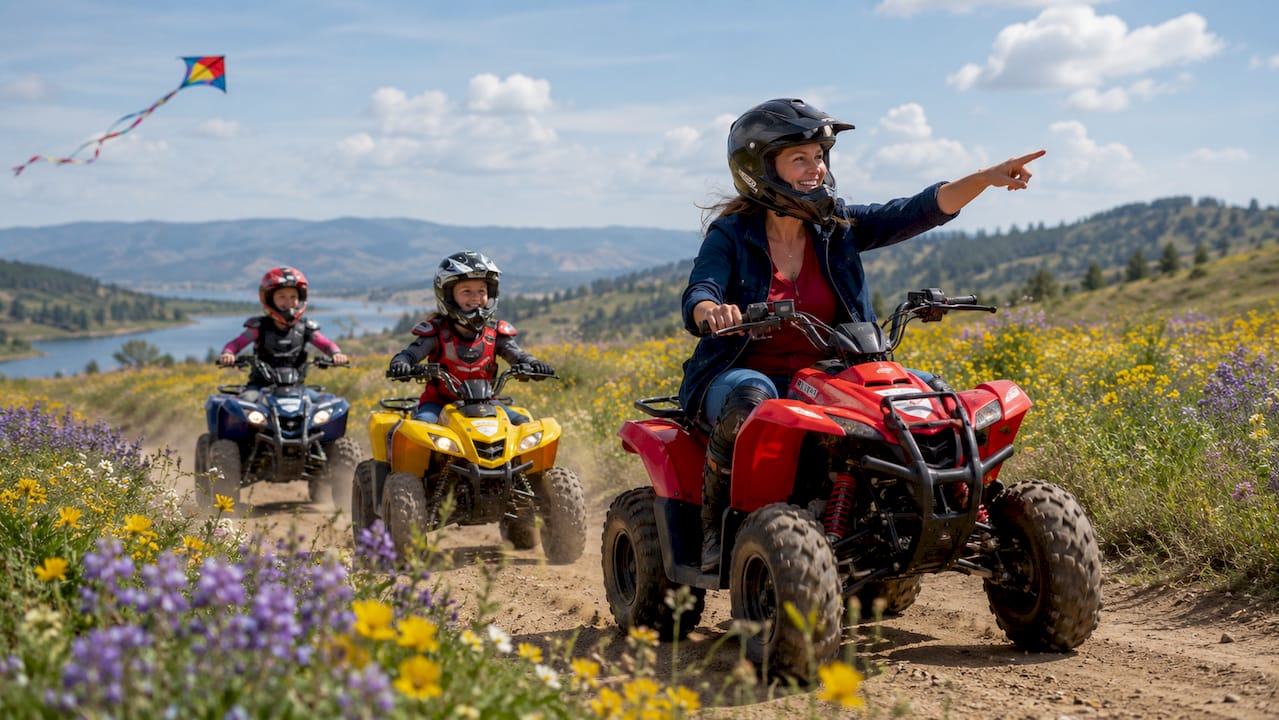
ATV riding opens up outdoor terrain in ways a track cannot. Family-friendly ATV activities range from flat meadow loops for beginners to wooded single-track for experienced riders. The key is matching trail difficulty to the least-experienced rider in your group, not the most confident one.
UTV side-by-side tours are the best option for mixed-age groups where younger children ride as passengers. Polaris RZR and Can-Am Defender models seat 4–6 people, keep everyone strapped in with 3-point belts, and let one adult driver control the entire experience.
Jet skiing and personal watercraft add a water dimension to off-road family outings. Yamaha WaveRunners and Sea-Doo Sparks are widely available at lake and coastal rental operators, with guided tours lasting roughly 1–1.5 hours.
Guided dirt bike adventures are the most skill-intensive option but also among the most rewarding. Providers like Adventure Family Motorsports structure sessions around skill-building over speed, using a Follow-the-Leader riding format that keeps the group together and reduces risk.
Pro Tip: Choose your activity based on the youngest or least-experienced family member. The goal is everyone finishing with a smile, not just the fastest rider.
2. How to choose the best family UTV or ATV for your needs
The right vehicle makes every outing safer and more enjoyable. The wrong one creates frustration, fatigue, and real risk. Families choosing a UTV or ATV should prioritize safety features before horsepower or price.
Four-seat UTVs with 3-point belts and full doors are the gold standard for family use. Speed-limiting drive modes let parents cap the top speed for younger or less-experienced riders. These features are non-negotiable when children are on board.
Wheelbase length matters more than most buyers realize. Long-wheelbase side-by-sides deliver superior stability and passenger comfort on rough terrain, reducing the bounce and motion sickness that can cut a ride short. Short-wheelbase models are nimbler but far less forgiving on uneven ground.
Vehicle capacity is the second major decision point. A 2-seat model works for one parent and one child. A 4-seat or 6-seat model brings the whole family along without splitting the group across multiple vehicles.
| Feature | What to look for | Why it matters |
|---|---|---|
| Seating capacity | 4+ seats | Keeps the whole family together |
| Seat belts | 3-point harness | Reduces ejection risk on rough terrain |
| Doors | Full doors standard | Prevents limbs from leaving the cabin |
| Speed control | Adjustable drive modes | Lets parents limit speed for kids |
| Wheelbase | Long wheelbase preferred | Smoother, more stable ride for passengers |
| Vehicle type | Recreational/utility, not racing | Built for comfort and safety, not lap times |
Polaris Ranger, Can-Am Defender, and Yamaha Viking are the most recommended family UTVs in 2026. All three offer 4-seat or 6-seat configurations with the safety features listed above.
Pro Tip: Rent before you buy. A half-day rental on a Polaris Ranger or Can-Am Defender tells you more about fit and comfort than any spec sheet.
3. How to plan a safe and enjoyable family powersports outing
Good planning is what separates a great day from a frustrating one. The most effective approach is to plan backward from your desired finish time, building in breaks, hydration stops, and buffer time for gear fitting and safety briefings. Fatigue is the leading cause of avoidable incidents on the trail.
Here is a practical planning sequence for a half-day off-road family outing:
- Set your finish time first. Work backward to determine your start time, including drive time to the location.
- Book a guided tour for first-timers. Guided rides adjust pace and route to the least-experienced rider, keeping everyone safe and engaged.
- Confirm age and skill requirements in advance. Many guided ATV experiences require participants to be at least 10 years old with a parental waiver and photo ID.
- Disclose health or developmental considerations. Providers like Adventure Family Motorsports adapt safety drills for children with ADHD, autism, or motor skills challenges when informed in advance.
- Pack hydration and snacks. Water and nutritious food prevent energy crashes that lead to poor decisions on the trail.
- Fit safety gear before departure. Helmets, goggles, gloves, and closed-toe boots should be fitted and checked at home, not rushed at the trailhead.
- Debrief after the ride. Ask every family member what they enjoyed and what felt uncomfortable. That feedback shapes the next outing.
“The goal is confidence, not speed. Families who focus on skill-building from the first ride come back again and again.” — Adventure Family Motorsports
Pro Tip: Schedule your ride for the morning. Temperatures are cooler, trails are less crowded, and kids are at their sharpest before lunch.
4. Comparing family powersports options by age, skill, and adventure level
Not every activity suits every family. The table below maps common powersports options to age ranges, skill levels, and key safety considerations so you can match the right experience to your group.
| Activity | Minimum age | Skill level | Safety gear required | Adventure level |
|---|---|---|---|---|
| Go-karting | 7+ | Beginner | Helmet, neck brace | Low to medium |
| ATV riding | 10+ | Beginner to intermediate | Helmet, goggles, gloves | Medium |
| UTV side-by-side | 4+ (passenger) | Beginner (driver 16+) | Helmet, 3-point belt | Medium to high |
| Jet skiing | 16+ (solo) | Beginner to intermediate | Life jacket | Medium |
| Dirt biking | 10+ | Intermediate to advanced | Full gear set | High |
A few patterns stand out in this comparison. Go-karting and UTV passenger rides are the most inclusive options because they accommodate the youngest children without requiring them to operate a vehicle. Dirt biking demands the most preparation but delivers the highest sense of personal achievement for older kids and teens.
Beginner families benefit most from guided group experiences. Intermediate families can mix guided and independent rides. Advanced families with experienced riders can tackle self-guided trail systems at parks like Hatfield-McCoy Trails in West Virginia or the Ocala National Forest in Florida.
The safety comparison between ATVs and mini bikes is worth reviewing before your first purchase or rental. Both are excellent entry points, but they suit different terrain types and age groups.
Key takeaways
The most successful family powersports outings start with the right vehicle, a clear safety plan, and activities matched to the youngest or least-experienced rider in the group.
| Point | Details |
|---|---|
| Match activity to skill level | Choose based on the least-experienced family member, not the most confident one. |
| Prioritize UTV safety features | Look for 4+ seats, 3-point belts, full doors, and speed-limiting drive modes. |
| Plan backward from finish time | Build in breaks and hydration stops to prevent fatigue-related incidents. |
| Use guided tours for beginners | Guides adjust pace and route difficulty on the fly for mixed-skill groups. |
| Disclose health considerations | Informing providers in advance enables tailored safety training for every rider. |
Why family powersports changed how I think about outdoor time
The first time I watched a 10-year-old navigate a guided ATV trail with zero prior experience, I stopped thinking about powersports as a niche hobby. That kid finished the ride with more confidence than she started with. Her parents were right there, and the whole group came off the trail laughing. That is the real product being sold here. It is not horsepower or top speed.
What most articles miss is the developmental angle. Powersports activities build spatial awareness, risk assessment, and physical coordination in ways that screen time simply cannot replicate. A child who learns to read a trail at age 10 is developing judgment that transfers to driving, sports, and everyday decision-making.
My honest advice: skip the racing-focused vehicles for your first few outings. A Polaris Ranger or a kids’ ATV with a parental remote kill switch gives you the adventure without the anxiety. The thrill is still real. The risk is just managed. That balance is what turns a one-time outing into a family tradition.
Start slow, gear up properly, and let the trail do the work. The memories will follow.
— Mario
Gear up for adventure with Gokartsusa
Gokartsusa carries the vehicles that make these outings possible, from entry-level kids’ ATVs to full-size UTVs built for the whole family. The Mini Sport Kids ATV with 110cc gas engine is one of the most popular choices for parents starting young riders. It features a parental remote start and kill switch, giving adults full control while kids build confidence at their own pace. Gokartsusa backs every purchase with expert guidance and customer support, so you are never figuring it out alone.

Browse the full family-friendly vehicle catalog and find the right fit for your next off-road family outing. Free shipping and seasonal promotions make it easier to get started this year.
FAQ
What age is appropriate for family powersports activities?
Most guided ATV and dirt bike experiences accept riders as young as 10 with a parental waiver. Go-karting and UTV passenger rides accommodate children as young as 4–7, depending on the operator.
What safety gear does my family need for powersports?
Helmets and goggles are required for all riders. Full gear sets including gloves, boots, and protective jackets are recommended for dirt biking and ATV riding at any skill level.
Are guided tours better than independent rides for families?
Guided tours are the better choice for first-time and mixed-skill families. Guides control pace and route difficulty based on the least-experienced rider, which reduces risk and improves enjoyment for everyone.
What is the best UTV for a family of four?
The Polaris Ranger, Can-Am Defender, and Yamaha Viking are the top-rated family UTVs in 2026. All three offer 4-seat or 6-seat configurations with 3-point belts, full doors, and speed-limiting drive modes.
Can kids with special needs participate in powersports activities?
Yes. Providers like Adventure Family Motorsports adapt safety drills and pacing for children with ADHD, autism, or motor skills challenges when families disclose needs in advance.