




TL;DR:
- RVs provide families and individuals with freedom, privacy, and access to remote destinations at a low cost. They are more cost-effective than traditional vacations and promote slow travel that deepens family connections. Matching RV size to actual travel needs, budgeting for ongoing costs, and prioritizing experiences yield the highest satisfaction from RV ownership.
Recreational vehicles, commonly called RVs, are self-contained travel units that combine personal transportation with living quarters for sleeping, cooking, and bathing. The question of why choose recreational vehicles comes down to one core truth: no other travel format gives families and individuals this much freedom at this price point. More than 16.9 million households in the United States own an RV as of 2026. That number reflects a genuine shift in how Americans want to travel, not a passing trend.
What are the primary benefits of choosing recreational vehicles for travel?
RV travel delivers cost savings that traditional vacations simply cannot match. Families save up to 60% compared to flying and booking hotels, while couples typically save around 45%. That gap exists because your lodging, kitchen, and transportation travel with you, eliminating the biggest line items in a vacation budget.
The advantages of recreational vehicles go well beyond cost. Here is what RV travelers consistently report as their top reasons for making the switch:
- Cost control: You cook your own meals, skip baggage fees, and pay campground rates instead of hotel rates.
- Flexibility: You change your route on the fly without penalty fees or rebooking headaches.
- Privacy: Your own bathroom, bedroom, and living space travel with you everywhere.
- Pet friendliness: Your dog comes along without boarding costs or airline restrictions.
- Remote access: You reach national forests, backcountry sites, and coastal spots that hotels never touch.
- Family bonding: Shared road time builds memories that resort pools simply do not.
58% of leisure travelers cite cost control as their primary reason for choosing RV trips. Cost is the entry point, but freedom is what keeps people coming back year after year.
Pro Tip: Plan your first RV trip as a slow trip. Book one destination for four or five nights instead of hopping between three stops. Slow travel lets you actually feel the place rather than just photograph it.

How do different types of recreational vehicles suit various lifestyles?
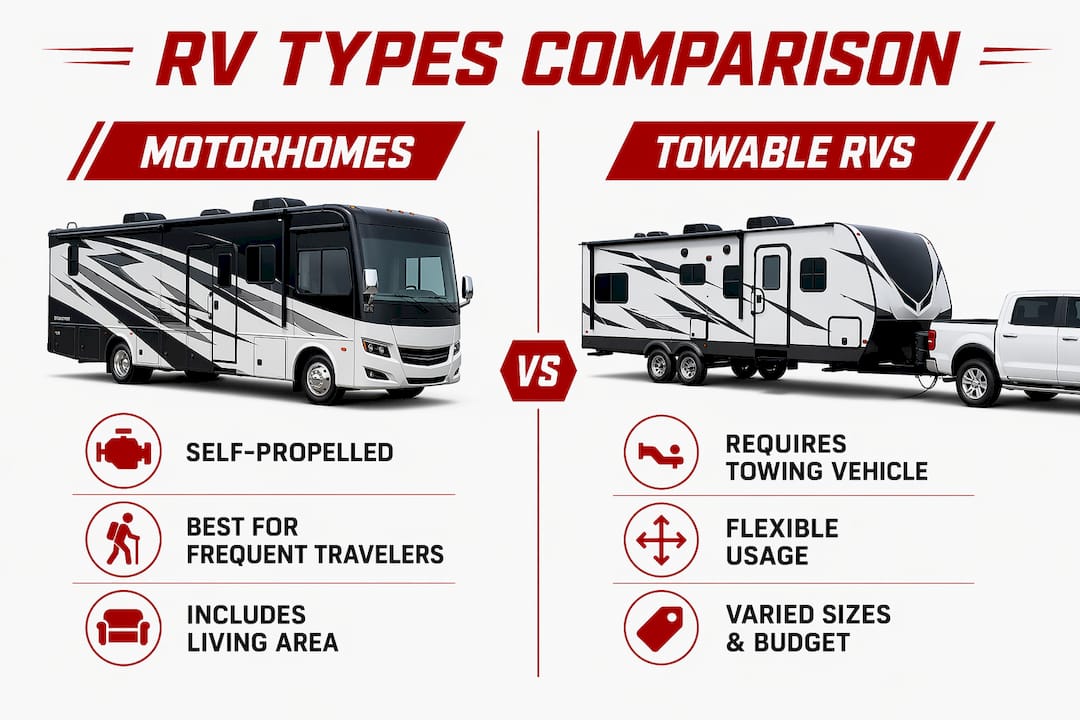
The RV industry divides vehicles into two broad categories: motorhomes and towable RVs. Motorhomes are self-propelled units where the cab and living space share one chassis. Towable RVs, including travel trailers and fifth wheels, require a separate tow vehicle. Choosing between them depends on your towing capacity, storage situation, and how often you plan to travel.
| RV type | Best for | Key advantage | Key limitation |
|---|---|---|---|
| Class A motorhome | Full-time travelers, large families | Maximum living space | High purchase price, low fuel economy |
| Class B camper van | Solo travelers, couples | Easy to drive and park | Limited sleeping and storage space |
| Class C motorhome | Families, weekend warriors | Balance of space and drivability | Moderate cost, still requires parking space |
| Travel trailer | Budget-conscious buyers | Unhitch and use tow vehicle separately | Requires towing experience |
| Fifth wheel | Families with pickup trucks | Stable tow, large living area | Needs a compatible truck bed hitch |
Many national park campgrounds cannot accommodate oversized RVs, so vehicle size directly limits where you can go. A 40-foot Class A motorhome looks impressive in a dealer lot but gets turned away at some of the most scenic sites in the country. Matching your RV to your actual travel habits, not your dream trips, is the single most important buying decision you will make.
Buying an RV that fits realistic travel frequency yields more satisfaction than purchasing a large, underused rig. A smaller unit used 30 weekends a year delivers far more value than a luxury coach that sits in storage for 10 months.
Pro Tip: Before you buy, rent two or three different RV types over separate weekends. Real-world use reveals deal-breakers that a dealer walkthrough never will.
What costs should potential RV buyers and renters consider?
The purchase price is only the beginning. Total RV ownership costs include insurance, registration, maintenance, storage, and depreciation. First-time buyers routinely underestimate these ongoing expenses and feel the pinch within the first year.
Here is a realistic breakdown of what to budget beyond the sticker price:
- Insurance: Annual premiums vary widely by vehicle class and usage, but full-timer policies cost significantly more than weekend-use coverage.
- Storage: If you lack space at home, monthly storage fees add up fast, especially in urban areas.
- Maintenance: Roof seals, tires, slide-out mechanisms, and appliances all require regular attention.
- Depreciation: RVs lose value, particularly in the first few years, so resale planning matters.
- Fuel: Motorhomes average low fuel economy, and fuel costs on a long trip can rival a plane ticket.
Campground fees typically run $30–$100 per night depending on amenities and location. Premium resort campgrounds charge more. That nightly cost is still well below most hotel rates, but it adds up on a two-week trip.
Renting before buying is smart, but rental logistics introduce friction beyond cost. Booking windows, equipment learning curves, and availability gaps frustrate frequent travelers. Ownership removes that friction entirely for families who camp more than six or eight times a year.
How does RV travel improve the overall vacation experience?
RV travel reduces stress by eliminating hotel check-ins, airport security lines, and the constant packing and unpacking that drains traditional vacations. You arrive at your campsite, level the rig, and you are home. That simplicity changes the emotional tone of the entire trip.
The concept of slow travel is where RV vacations truly separate themselves. Slow travel means staying in one area long enough to find the local diner, the hidden trail, and the swimming hole that does not appear on any tourist map. Hotels reward short stays. RVs reward lingering.
The qualitative benefits stack up quickly:
- You wake up to the same view two mornings in a row and actually absorb it.
- You change plans without a cancellation fee when the weather turns perfect somewhere unexpected.
- Kids develop a sense of place rather than a blur of airports and lobbies.
- Pets travel comfortably without the trauma of boarding or cargo holds.
- You cook breakfast outside and call it a vacation activity, not an inconvenience.
The psychological benefit of slow travel promotes a deeper connection to destinations and reduces the anxiety that comes from rigid itineraries. Travelers who embrace this pace consistently report higher trip satisfaction. That is not a small thing when you are investing real money and real time in a family vacation.
Families with young children benefit especially from the outdoor recreation advantages that come with RV-based camping. You are already at the trailhead, the lake, or the open field. The outdoors is not a destination you drive to. It is where you wake up.
Key Takeaways
Recreational vehicles are the most cost-efficient and flexible travel format for families and individuals who prioritize outdoor freedom, privacy, and the ability to reach destinations that traditional travel cannot access.
| Point | Details |
|---|---|
| Cost savings are real | Families save up to 60% compared to flying and booking hotels on equivalent trips. |
| Match RV size to real use | Smaller rigs used frequently deliver more value than oversized units that sit in storage. |
| Budget beyond the sticker price | Insurance, maintenance, storage, and depreciation add significant ongoing costs to ownership. |
| Slow travel is the core benefit | Staying longer in fewer places reduces stress and builds deeper connections to destinations. |
| Campground costs are predictable | Nightly fees of $30–$100 are far below hotel rates and easy to plan around. |
What I have learned from years around recreational vehicles
The most common mistake I see is buying for the fantasy trip. Someone pictures a six-week cross-country adventure and buys a 38-foot motorhome to match that vision. Then real life happens. Work schedules, school calendars, and weekend commitments mean the rig goes out four times a year. At that usage rate, the math never works, and the excitement fades fast.
The buyers who get the most out of RV ownership are the ones who plan honestly. They ask how many weekends they actually camped last year, then buy for that number, not for the trip they hope to take someday. A well-chosen travel trailer used every other weekend beats a luxury motorhome used twice a year on every metric that matters: enjoyment, cost per trip, and resale value.
I also think people undervalue the maintenance side of the equation. An RV is a home and a vehicle at the same time. Both halves need attention. Roof seals fail. Slide-outs need lubrication. Tires age even when the rig sits still. Buyers who treat powersports maintenance as optional end up with expensive surprises. The ones who build a simple maintenance schedule into their ownership routine keep their rigs running for decades.
The mindset shift that changes everything is this: stop thinking about resale value and start thinking about experience value. The trips you take, the mornings you spend outside, and the time you give your family in real outdoor settings are worth more than whatever depreciation curve your accountant draws. Buy the right size, use it often, and take care of it. That is the whole formula.
— Mario
Gokartsusa and the outdoor adventure lifestyle
The RV gets you to the campsite. What happens next is where Gokartsusa comes in.

At Gokartsusa, we outfit families for the full outdoor experience. Our kids’ gas go-karts are built for ages 8 and up, with a 2.5hp 4-stroke engine that handles open fields and dirt paths with ease. For older riders, our gas-powered mini bikes deliver a 3.5hp automatic ride that teens love. Every product ships with safety in mind and is backed by the kind of customer support that keeps families coming back. When the campfire burns low and the kids still have energy, Gokartsusa keeps the adventure going. Browse our full lineup at gokartsusa.biz and find the right ride for your crew.
FAQ
What makes RV travel more affordable than flying and hotels?
RV vacations combine transportation and lodging into one cost, eliminating airfare, hotel rates, and restaurant expenses. Families save up to 60% compared to traditional hotel-and-airfare travel on equivalent trips.
Is buying an RV worth it for occasional campers?
Buying makes the most sense for families who camp six or more times per year. Occasional campers often find that renting covers their needs without the ongoing costs of insurance, storage, and maintenance.
What RV size works best for national park camping?
Smaller rigs, generally under 25 feet, access the widest range of campgrounds, including many national park sites that turn away oversized motorhomes. Matching vehicle size to your target destinations prevents access problems.
How much should I budget for campground fees?
Standard campground fees run $30–$100 per night depending on amenities and location. Premium resort campgrounds charge more, so building a nightly lodging budget into your trip plan keeps costs predictable.
What hidden costs do first-time RV buyers miss most often?
Insurance, storage, roof maintenance, tire replacement, and depreciation are the most commonly overlooked ownership costs. Budgeting for these from day one prevents the financial surprises that discourage new RV owners.