




A utility vehicle class is the regulatory category the federal government assigns to a vehicle, based primarily on Gross Vehicle Weight Rating (GVWR) and, in some cases, its intended vocational use or body type. It is not a marketing term. It is not what the dealer calls the truck. It is a number and a bracket that federal agencies use to decide how a vehicle gets built, registered, insured, and driven.
The Alternative Fuels Data Center groups vehicles into light-duty, medium-duty, and heavy-duty tiers based on GVWR, while 49 CFR Part 523 spells out the legal categories, like work truck and heavy-duty pickup, that ride on top of those weight brackets. The FHWA adds another layer, mapping everyday vehicle types to the categories used in federal transportation policy.
Class determines more than paperwork. It affects:
- Registration category and title/plate type
- Whether a CDL is required to legally drive it
- Emissions and fuel economy standards that apply
- Insurance rating and premium calculations
Pro Tip: Want to know a vehicle’s real class right now? Check the GVWR sticker on the driver’s door jamb, or flip to the specifications page in the owner’s manual. That number is your fastest path to the truth.
Key Takeaways
Vehicle class in the U.S. is set primarily by GVWR under federal rules, not by what a dealer or a badge calls the vehicle.
| Point | Details |
|---|---|
| GVWR sets the class | Federal agencies use Gross Vehicle Weight Rating, not marketing labels, to assign Class 1 through 8. |
| Consumer terms don’t equal legal class | UTVs, ATVs, SUVs, and pickups must be checked against the door placard to confirm their real class. |
| Class drives real costs | Registration type, insurance rating, CDL thresholds, and emissions rules all shift with GVWR class. |
| State rules add another layer | Making an off-road UTV street-legal depends on state equipment and registration requirements, not federal class. |
| Gokartsusa backs up the specs | Gokartsusa lists UTVs and ATVs with detailed specifications so buyers can match class and use-case before purchasing. |
Table of Contents
- How Do Regulators Classify a Vehicle’s Class?
- What Consumer Vehicle Types Count as Utility Vehicles?
- Where Do You Find a Vehicle’s Official Class?
- What Do Vehicles in Each Class Actually Look Like?
- How Do You Confirm Class Before You Buy?
- Frequently Asked Questions
- Sources
How Do Regulators Classify a Vehicle’s Class?
Every formal vehicle class starts with one number: GVWR, the maximum safe operating weight of a vehicle fully loaded with cargo, fluids, and passengers. Federal regulators didn’t pick GVWR by accident. It’s a practical way to sort millions of different vehicle models by what they can actually handle on the road, rather than by brand, body style, or how a dealership chooses to market them.
The AFDC’s weight-based system splits vehicles into three broad tiers, each built from Classes 1 through 8:
| Duty Tier | Class | GVWR Range | Regulatory Notes |
|---|---|---|---|
| Light-duty | 1–2 | Up to 8,500 pounds | Includes most consumer pickups, SUVs, and vans |
| Medium-duty | 3–6 | between about 8,501 and 26,000 pounds | Covers work trucks and vocational vehicles |
| Heavy-duty | 7–8 | roughly 26,000 pounds and above | Truck tractors and heavy vocational vehicles |
That GVWR data comes straight from the Alternative Fuels Data Center, and it’s the backbone every other regulatory definition builds on.
Layered on top of that weight system, 49 CFR Part 523 defines specific legal categories: automobile, work truck, heavy-duty pickup, heavy-duty vocational vehicle, and truck tractor. These categories exist because a 12,000-pound delivery van and a 12,000-pound dump truck chassis need different safety and fuel rules, even though they might land in the same weight class.
The FHWA’s vehicle-type guidance adds a third lens for how vehicles get tracked and monitored on public roads, and it openly acknowledges some overlap. Automatic traffic classifiers sometimes can’t cleanly separate a heavy Class 2 pickup from a light Class 3 box truck. That ambiguity matters if you’re trying to nail down an exact class from a distance instead of reading the placard yourself.
One more wrinkle: manufacturers can seek optional certification for heavy-duty pickups, which can shift how a specific trim or configuration gets treated under federal fuel economy rules, even within the same model line.
What Consumer Vehicle Types Count as Utility Vehicles?
Here’s where things get confusing fast, because the words people use at the dealership rarely match the words regulators use in the Code of Federal Regulations. A few common categories, as described by buyer guides like Hawke’s utility vehicle overview:
- UTV (utility task vehicle or side-by-side): Bucket or bench seats, steering wheel, roll cage, built for trail and work use.
- ATV (all-terrain vehicle): Straddle seating, handlebar steering, generally single-rider or two-up.
- Pickup truck: Open bed cargo hauler, ranges widely in GVWR depending on trim.
- SUV: Enclosed passenger cargo vehicle, often federally treated as a truck regardless of how it’s marketed.
- Van or panel van: Enclosed cargo or passenger box, spans light to medium-duty depending on configuration.
- Low-speed neighborhood vehicle: Street-legal only in limited zones, with speed and equipment restrictions.
Most consumer pickups and SUVs fall into Class 1 or 2, though a heavy-duty pickup with the right axle and suspension package can creep toward Class 3. Vans and cutaway chassis vehicles often span Classes 2 through 4 depending on the box length and payload package. Commercial and vocational trucks, dump bodies, box trucks, service bodies, routinely land in Class 4 through 8.
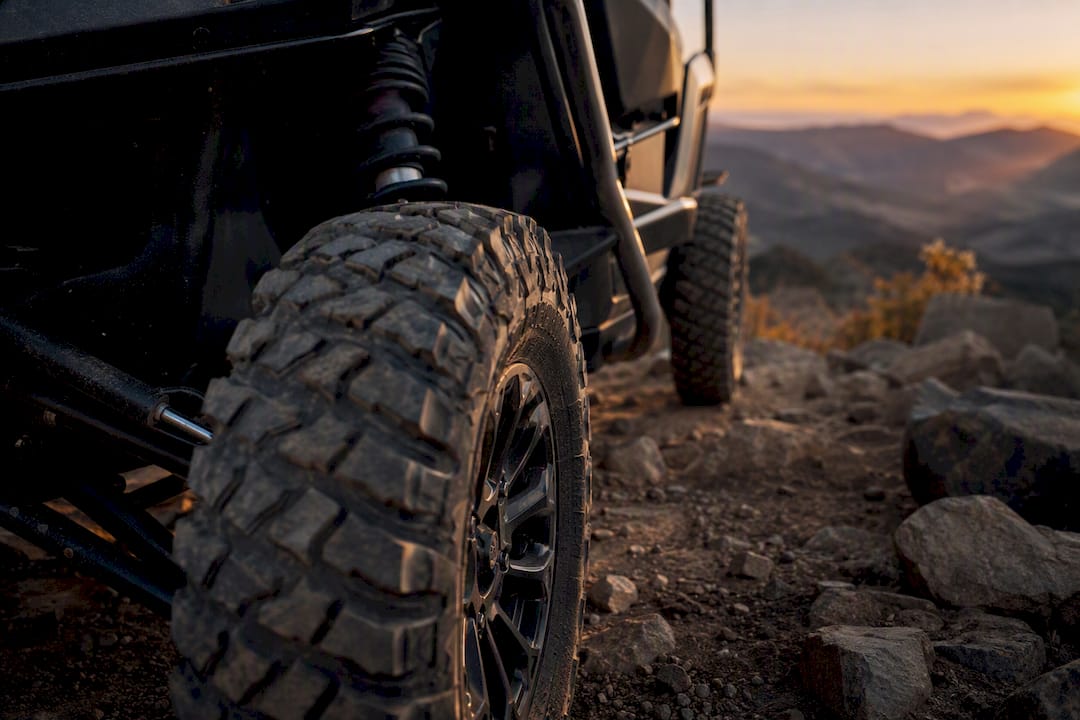
UTVs occupy a different world entirely. They typically start life as off-road-only machines with no GVWR class assignment for street use at all, because they were never built to meet the federal motor vehicle safety standards that apply to on-road vehicles. Making one street-legal is a state-by-state process, not a federal reclassification, according to Wikipedia’s utility vehicle overview. Never assume a consumer label tells you the legal class. Always confirm it against the placard.
Where Do You Find a Vehicle’s Official Class?
Finding your vehicle’s real class takes about five minutes if you know where to look:
- Check the door jamb placard. Open the driver’s door and look at the sticker on the frame; it lists GVWR in pounds, along with front and rear axle ratings.
- Pull the owner’s manual. GVWR and payload specs are typically listed in the specifications or towing section.
- Visit the manufacturer’s spec sheet. Online product pages often list GVWR by trim and configuration.
- Decode the VIN if needed. VIN decoding tools can confirm body style and sometimes weight rating for older or modified vehicles.
That number drives real consequences. Cross a GVWR threshold, and you might trigger CDL licensing requirements, shift into a different insurance rating tier, or change your legal towing and payload limits. Registration categories and title types often follow GVWR brackets too, so a misjudged class can mean the wrong plate or the wrong fee schedule.
States add another layer here. Rules for making an off-road UTV street-legal, lights, mirrors, horn, inspection, vary significantly by state and sit entirely outside federal class definitions, per Wikipedia.
Pro Tip: Buying used or looking at a converted off-road machine? Photograph the GVWR placard, note the VIN and model year, and ask the seller for the manufacturer’s certification label before you hand over payment.
What Do Vehicles in Each Class Actually Look Like?
Numbers on a chart only mean so much until you attach real machines to them.
- Class 1–2 (light-duty vehicles): Compact and full-size pickups, most SUVs, cargo vans; used for daily driving, light towing, and personal hauling.
- Class 3 (lower medium-duty vehicles): Heavy-duty pickups, walk-in delivery vans; common in small business and contractor fleets.
- Class 4–6 (medium-duty vehicles): Box trucks, ambulances, larger delivery vehicles; the backbone of municipal and light commercial fleets.
- Class 7–8 (roughly 26,000 pounds and above): Truck tractors, heavy vocational trucks, dump trucks, and semi-trailers; construction, agriculture, and long-haul freight.
The gray areas show up constantly within a single model line. A pickup truck can ship in a base trim well inside Class 1, then offer an upfit package or dually axle option that pushes the same nameplate into Class 3. That’s precisely why the sticker on the door, not the model name on the tailgate, is what carries legal weight.
Emissions and fuel standards shift by class too. Heavier classes often face different testing and certification requirements, and diesel powertrains common in Class 6 through 8 vehicles carry their own compliance rules that a Class 1 gasoline pickup never touches. That difference shows up in sticker price, maintenance cost, and how a fleet buyer budgets for compliance down the road.
How Do You Confirm Class Before You Buy?
A little diligence at the point of sale saves real headaches later, whether you’re buying a UTV for the trail or a work truck for the crew. Before you sign anything:
- Confirm GVWR directly on the door placard, not from a brochure or listing description.
- Verify the VIN matches the manufacturer’s certification label.
- Ask for a spec sheet showing curb weight and payload capacity.
- Check whether lift kits, added beds, or other modifications changed the factory GVWR.
- Look for emissions or certification labels if the vehicle is meant for on-road use.
Pro Tip: Ask the seller directly whether the vehicle was factory-rated for on-road use, and request photos of the placard along with any state registration history for used units.
Gokartsusa has spent years walking customers through exactly these specs, on UTVs, ATVs, and go-karts alike, and that hands-on product knowledge shapes every checklist item above.
Why This Classification Clarity Actually Matters
Buyers get burned when they assume a dealer’s label equals a legal class. Regulators use GVWR because it’s objective; marketing language isn’t. Knowing the difference protects your registration, your insurance rate, and your ability to legally drive what you bought.
Find the Right Class of Vehicle for Your Needs
Gokartsusa lists UTVs, ATVs, mini bikes, and go-karts with the specification detail you need to match a vehicle to your class and use-case requirements, not just a photo and a price tag. We’re not a federal regulator, and we won’t pretend to be one. But we do sell the machines, and we know their spec sheets cold. If you’re weighing options like the TrailMaster Challenger 200EUX side-by-side or a smaller ride like the Mini Sport Kids ATV, check the product specs against what you’ve learned here about GVWR and intended use. Browse our current lineup and match a vehicle to your real requirements before you buy.
Frequently Asked Questions
Are utility vehicles considered trucks under federal rules? Often, yes. Under 49 CFR Part 523, many SUVs, pickups, and vans get grouped as trucks for regulatory purposes regardless of how they’re sold at retail.
What’s the difference between a UTV and an ATV? A UTV, also called a side-by-side, has bucket seating and a steering wheel. An ATV uses straddle seating and handlebars. Both are typically off-road vehicles that need state-specific modifications to become street-legal.
Can the same pickup truck model fall into different classes? Yes. Trim level, axle configuration, and upfit packages can shift a single model line across GVWR brackets, sometimes from Class 1 all the way to Class 3.
Does utility vehicle classification vary by state? Federal GVWR class stays consistent nationwide, but states set their own rules for registration, street-legal equipment, and UTV usage, so always confirm locally before you register or drive.
Sources
- Alternative Fuels Data Center (AFDC) — vehicle weight classes and categories
- PART 523—VEHICLE CLASSIFICATION (49 CFR)
- FHWA — Vehicle types (Appendix C, Traffic Monitoring Guide)
- Wikipedia — Utility vehicle