




Expect to spend $1,500 to $4,000 on a youth ATV, $4,000 to $8,500 on entry-level recreational or utility models, $8,000 to $15,000 for mid-range sport and utility machines, and $12,000 and up for full-size sport quads or side-by-sides, with premium trims topping $20,000. First-time buyers and families usually come out ahead going new on smaller machines, where warranty and safety features matter most; light commercial buyers often save real money buying used utility models with documented maintenance history.
- Youth: $1,500–$4,000
- Entry recreational/utility: $4,000–$8,500
- Mid-range sport/utility: $8,000–$15,000
- Full-size sport/UTV: $12,000+ (premium trims $20,000+)
Pro Tip: Shop the shoulder seasons. Dealers and retailers like Gokartsusa run spring and fall promotions that bundle free shipping or a complimentary helmet, which can shave hundreds off your out-the-door total without you negotiating a single dollar off the sticker.
Key Takeaways
ATV prices in 2026 span roughly $1,500 for youth models to $20,000 and beyond for premium sport and side-by-side trims, and matching engine size to rider skill matters more than chasing the biggest machine your budget allows.
| Point | Details |
|---|---|
| Youth models are the entry point | Prices start around $1,899 for basic quads and mini bikes suited to learning riders. |
| Mid-range sits $8,000 to $15,000 | This band covers most serious recreational and light commercial utility buyers. |
| Used values drop fast | Used utility ATVs depreciate significantly within a few years, making them a strong value play. |
| Budget 10 to 15 percent above sticker | Tax, registration, delivery, and first-year maintenance add real cost beyond the MSRP. |
| Gokartsusa fits the youth and entry bands | Products like the Mini Sport Kids ATV 110cc and Gas Offroad Kart match these price ranges with safety features built in. |
Table of Contents
- How Much Do ATVs Cost by Category?
- What Actually Drives ATV Price Up or Down?
- How Much Should You Budget Beyond the Sticker Price?
- How Do You Get the Best Price for Your Situation?
- What I’d Tell a Friend Shopping for an ATV
- Ready-to-Buy Options That Fit These Budget Bands
- Sources
How Much Do ATVs Cost by Category?
The honest answer depends on what “ATV” means to you, because the category spans a $1,899 kids’ quad and a $20,000 sport machine, and manufacturer sticker prices tell most of the story before fees enter the picture.
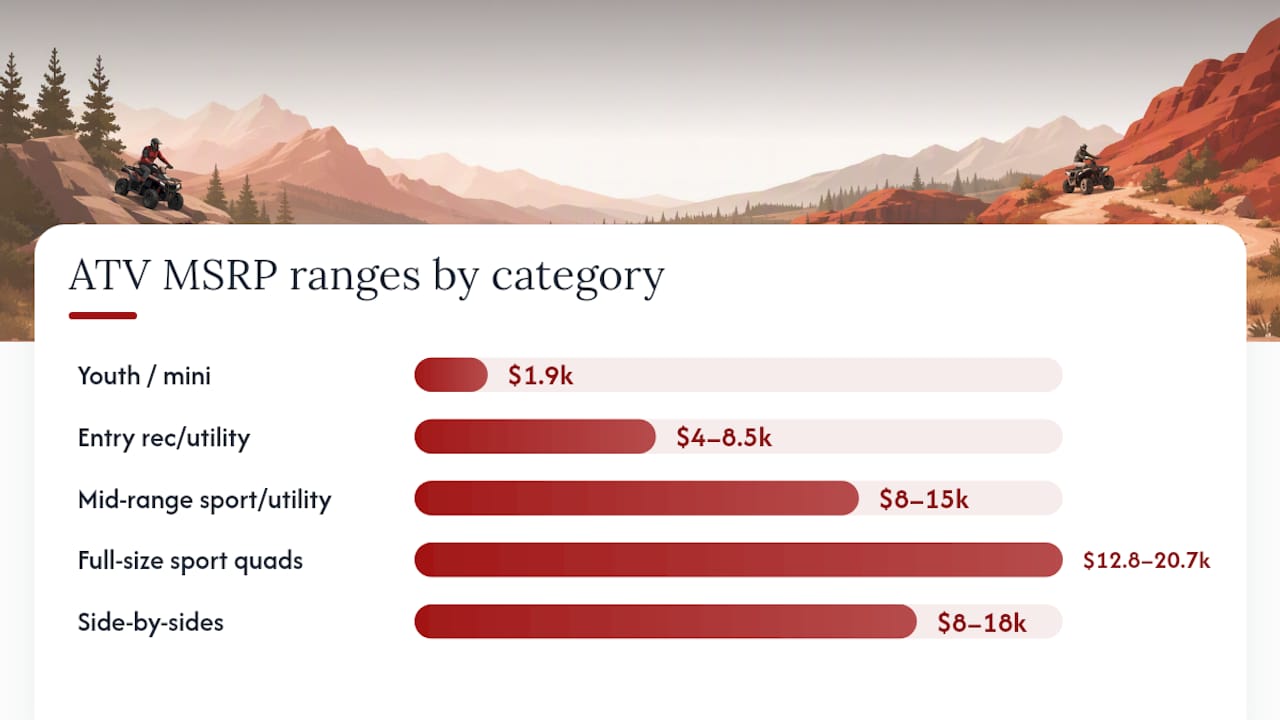
Youth and mini models start the lowest. Yamaha lists youth-focused ATVs and mini bikes beginning around $1,899, a price point built for kids learning fundamentals rather than chasing top speed. This is the band where safety features, not horsepower, should drive your decision.
Entry-level recreational and utility ATVs run roughly $4,000 to $8,500. Honda’s FourTrax Rancher line starts near $6,299, while other Honda utility and entry models land between $3,500 and $9,800 depending on trim. Polaris enters this territory too, with base ATV models starting around $6,999.
Mid-range sport and utility ATVs climb into the $8,000 to $15,000 window as engine size, four-wheel drive, and electronic assists get added. This is where a lot of serious recreational riders and light commercial buyers (think ranch work or property maintenance) end up shopping.
Full-size sport quads and side-by-sides start above $12,000 and climb fast. Can-Am’s Outlander lineup spans $12,799 to $20,749 depending on trim and package, and Polaris side-by-sides start over $11,000 before options. Side-by-side buyers broadly should expect base prices between $8,000 and $18,000, according to Cost Insider’s breakdown, before taxes and delivery pile on.
Used pricing tells a different story. J.D. Power’s ATV valuation tool tracks book values and dealer pricing programs that reveal how fast these machines depreciate, and a well-maintained three-year-old utility quad can be priced significantly lower than its original MSRP. That gap is exactly why used shopping makes sense for buyers who want capability without the premium of a fresh model year. Regional inventory varies too, with dealer listing sites showing meaningful differences in availability and asking price from state to state, so cross-check what’s actually sitting on lots near you before locking in a target number.
What Actually Drives ATV Price Up or Down?
Three factors move the needle more than anything else on the spec sheet, and understanding them lets you spend on what matters and skip what doesn’t.
- Engine displacement (cc). A 110cc youth engine costs a fraction of a 850cc sport engine, and the jump isn’t linear. Bigger displacement means more torque, higher top speed, and a bigger price tag, but it also means more machine than a beginner needs. Match cc to skill level first, budget second.
- Drivetrain and suspension. Two-wheel drive models are cheaper than four-wheel drive, and basic suspension costs less than long-travel setups tuned for rough terrain. Power steering and selectable ride modes, common on Can-Am and Polaris trims, add real dollars but also real comfort on long rides.
- Trim level and factory accessories. A winch, plow mount, or upgraded tire package can add $500 to $2,000 depending on the brand and whether it’s factory-installed or dealer-added. These are worth paying for if you’ll actually use them for work; they’re dead weight on a purely recreational buy.
Pro Tip: Before you pay extra for 4WD, ask yourself if you’re riding mostly flat trails or hauling gear through mud and hills. A lot of buyers pay for capability they never use once a year.
How Much Should You Budget Beyond the Sticker Price?
The listed price is never the final number, and skipping this math is how buyers blow their budget before the machine even leaves the lot.
- Sales tax, title, and registration. These vary widely by state, often adding 5 to 9 percent of the purchase price, so calculate your state’s specific rate before you set your top-line budget.
- Insurance. Not always legally required for off-road-only use, but strongly recommended if you’ll trailer to public trails or ride on roads where it is mandatory. Basic liability coverage often runs $100 to $300 a year; full coverage on a premium sport model costs more.
- Dealer prep and freight. Expect $200 to $600 in setup and delivery fees, similar to what buyers see in side-by-side purchases where total outlays regularly run higher than the base price once these line items land on the invoice.
- Accessory install labor. A winch or plow you didn’t buy factory-installed can add $75 to $150 in shop labor.
- First-year maintenance. Budget $150 to $400 for oil changes, filters, and a tune-up, more if you’re riding hard or hauling loads regularly.
Add it up and a $6,000 quad can realistically cost $6,800 to $7,500 out the door. Plan for that gap now, not at the register.
How Do You Get the Best Price for Your Situation?
Getting a fair price starts with knowing what you actually need, not what looks impressive on a spec sheet.
- Match category to rider first. Confirm the rider’s age and skill level before anything else, and lean toward a smaller-engine, safety-equipped model for beginners or kids rather than the biggest machine your budget allows. Gokartsusa’s guide on choosing safe entry-level ATVs walks through exactly this decision.
- Compare full out-the-door quotes, not stickers. Ask every seller for a total that includes tax, fees, delivery, and any bundled accessories, then compare those numbers side by side.
- Time your purchase. Spring and end-of-model-year clearances are when dealers move inventory fastest and package discounts appear most often. Ask directly whether accessories or shipping can be bundled in.
- Ask the right questions before buying. Warranty length, recommended service intervals, and return or inspection policies should all be confirmed in writing, especially for used purchases.
What I’d Tell a Friend Shopping for an ATV
If you take one thing from this guide, take this: buy the machine that matches the rider’s skill today, not the one they’ll “grow into” in two years. An underpowered ATV that gets outgrown is a minor inconvenience. An overpowered one in inexperienced hands is a real safety problem, and no accessory package is worth that trade-off.
Gokartsusa built its product pages around this exact philosophy, with detailed specs, sizing, and color options so you can see precisely what you’re buying before it ships. Our beginner safety guide and buying checklist exist because we’d rather you ask the awkward sizing question now than return a machine that’s wrong for your rider later.
— Mario
Ready-to-Buy Options That Fit These Budget Bands
If the youth or entry-level bands above match your budget, Gokartsusa’s own lineup lands squarely inside them, and you can check exact specs today instead of guessing from a dealer brochure.
The Mini Sport Kids ATV, 110cc comes with a parental remote start/kill switch, a feature that puts real safety control in a parent’s hands and sits right in the youth price band this guide covers. Riders who want a different kind of entry point can look at the Gas Offroad Kart, a 2.5hp option built for ages 8 and up, or the Gas Powered Mini Bike for riders 12 and older who want two wheels instead of four. All three ship with free shipping during current promotions, and seasonal bundles often include a complimentary helmet or accessory kit at checkout. If you’ve confirmed your rider’s skill level and budget band using the sections above, the next step is simple: pick the model that matches, check current stock, and place your order.
Sources
- ATV product lineup — Yamaha Motorsports, USA
- ATVs, Quad Bikes, & 4 Wheelers — Polaris Off-Road
- ATV — Honda Powersports
- Estimate payment for Can-Am Outlander — Can-Am Off-Road
- How much do side by sides cost — Cost Insider