




TL;DR:
- Mild steel is affordable, easy to weld, and ideal for beginner go-kart builds.
- Chromoly steel provides higher strength and lighter weight, suitable for racing enthusiasts.
- Aluminum offers excellent strength-to-weight ratio but requires advanced fabrication skills and is less practical for most builders.
Not all go-kart frames are created equal, and the material you choose shapes everything from how your kart handles a tight corner to how much your build costs. Many hobbyists assume that steel is steel, or that any tubing will do the job. That assumption can lead to wasted money, frustrating builds, or frames that don’t hold up under real riding conditions. Whether you’re building from scratch or planning a serious upgrade, understanding the difference between mild steel, chromoly steel, and aluminum gives you a genuine edge. This guide breaks down each option with hard data and practical advice so you can make the right call for your project.
Table of Contents
- What are the main go-kart frame materials?
- Strength and durability: Comparing mild steel, chromoly, and aluminum
- Cost, ease of fabrication, and accessibility
- Selecting the right frame material for your go-kart project
- Our take: Why most DIY go-kart builders benefit from simplicity
- Next steps: Build, upgrade, or buy with GoKarts USA®
- Frequently asked questions
Key Takeaways
| Point | Details |
|---|---|
| Material matters | The choice of frame material significantly impacts your go-kart’s cost, weight, and ease of building. |
| Mild steel advantage | Mild steel offers the best balance of affordability, strength, and DIY-friendliness for most enthusiasts. |
| Chromoly for pros | Chromoly steel is ideal for high-performance or racing builds, but requires advanced skills and higher budget. |
| Think beyond strength | Consider repairability, fabrication skills, and upgrade potential along with material specs for your project. |
What are the main go-kart frame materials?
When builders talk about go-kart frames, three materials dominate the conversation: mild steel, chromoly steel, and aluminum. Each has a specific role in the build world, and each appeals to a different type of builder based on skill, budget, and goals. Understanding what you’re actually working with before you cut your first tube is one of the best moves you can make.
Mild steel is the workhorse of go-kart construction. Common grades include 1018 and A36, both of which offer solid strength at a very accessible price. Mild steel is easy to find at most metal suppliers, bends predictably, welds without much fuss, and is simple to repair if something goes wrong on the trail or at the track. For most recreational builders, it is the starting point and often the finishing point.
Chromoly steel, specifically grade 4130, steps up the performance game considerably. The name refers to the chromium and molybdenum content that gives this alloy its superior mechanical properties. As noted in the go-kart frame materials breakdown from champion kart builders, primary frame materials are mild steel such as 1018 and A36, chromoly steel 4130, and occasionally aluminum in grades 6061-T6 and 7075-T6. Chromoly is lighter than mild steel at equivalent strength levels, which is a real advantage when shaving grams matters for lap times.
Aluminum is the lightweight outlier. Grades 6061-T6 and 7075-T6 are the most relevant for go-kart builds, offering an excellent strength-to-weight ratio but demanding far more fabrication skill. TIG welding aluminum is a specialty craft, and aluminum frames require precise design to avoid cracking under repeated stress cycles. It is not a beginner material.
Here is a quick overview of the most common frame material options:
| Material | Common Grade | Weldability | Relative Cost | Skill Level |
|---|---|---|---|---|
| Mild steel | 1018, A36 | Excellent | Low | Beginner |
| Chromoly steel | 4130 | Good (TIG preferred) | Moderate to high | Intermediate |
| Aluminum | 6061-T6, 7075-T6 | Difficult | High | Advanced |
Tubing dimensions also matter. Most go-kart frames use round tube in the 1.25 to 1.75 inch diameter range. Wall thickness is equally important, and we will cover that in more detail when we get to fabrication. For now, understand that material choice and tube geometry work together. Reviewing a solid go-kart parts overview can help you see how the frame connects to every other system on the kart.
Key reasons these three materials lead the field:
- Strong enough to handle the dynamic loads of karting
- Widely available through metal suppliers nationwide
- Compatible with common welding methods
- Well-documented in the racing and DIY builder communities
Strength and durability: Comparing mild steel, chromoly, and aluminum
Strength data is where things get interesting, and where a lot of builders are genuinely surprised. The gap between mild steel and chromoly is larger than most people expect, and that gap has real consequences for frame safety and performance.
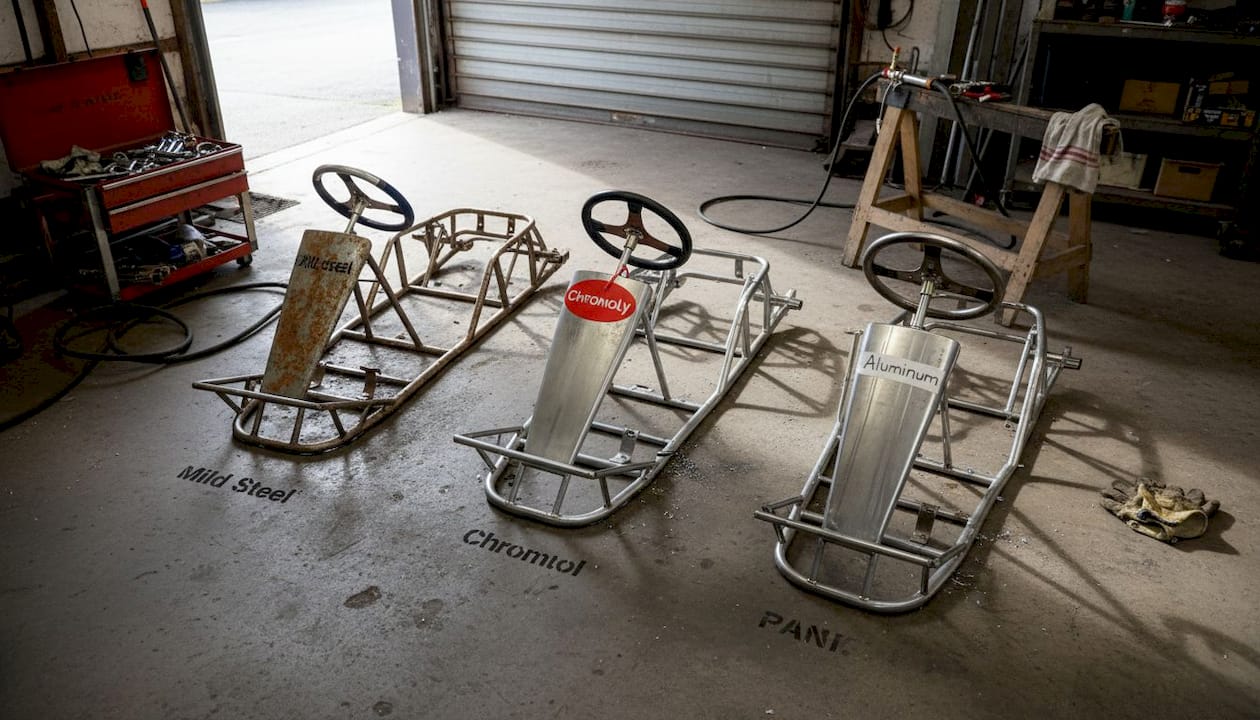
Mild steel 1018 delivers a tensile strength in the range of 340 to 440 MPa. It is reliable, consistent, and sufficient for recreational go-karting. The fatigue resistance is adequate for moderate use, meaning a well-built mild steel frame will hold up for years of weekend riding without cracking.
Chromoly 4130 is in a completely different league. Research on steel mechanical properties shows 4130 delivers a Brinell hardness of 200 to 300, fatigue strength between 320 and 666 MPa, and tensile strength ranging from 530 to 1040 MPa compared to mild steel grades 1018 and 1020. That means a chromoly frame can be built with thinner, lighter tubing while still matching or exceeding the strength of a heavier mild steel frame. That is the core appeal for competitive racing.
“A chromoly frame built for racing can deliver tensile performance two to three times greater than a comparable mild steel frame at a fraction of the weight penalty.”
Aluminum sits in a unique spot. Grade 6061-T6 has a tensile strength around 310 MPa, which sounds close to mild steel but comes at roughly one-third the weight. The catch is fatigue. Aluminum is more susceptible to fatigue cracking under repeated load cycles, which is a serious consideration for any kart that will be pushed hard on a track.
Here is a side-by-side comparison of key properties:
| Property | Mild Steel 1018 | Chromoly 4130 | Aluminum 6061-T6 |
|---|---|---|---|
| Tensile strength | 340-440 MPa | 530-1040 MPa | 310 MPa |
| Fatigue strength | ~190 MPa | 320-666 MPa | ~97 MPa |
| Density | 7.87 g/cm³ | 7.85 g/cm³ | 2.70 g/cm³ |
| Weld difficulty | Low | Moderate | High |
For safety, frame rigidity matters as much as raw tensile numbers. A stiffer frame transfers power more efficiently and keeps your steering predictable. Chromoly delivers that stiffness at lower weight. Mild steel delivers it at lower cost. Aluminum can deliver it too, but only when the design accounts for its fatigue limitations.
Understanding how these numbers connect to real riding is what separates a good build from a great one. Explore the performance features in go-karts that translate raw materials into on-track results.
Cost, ease of fabrication, and accessibility
Once you understand what the materials can do, the next honest question is what they will cost you in dollars and effort. Both matter enormously in a garage build.
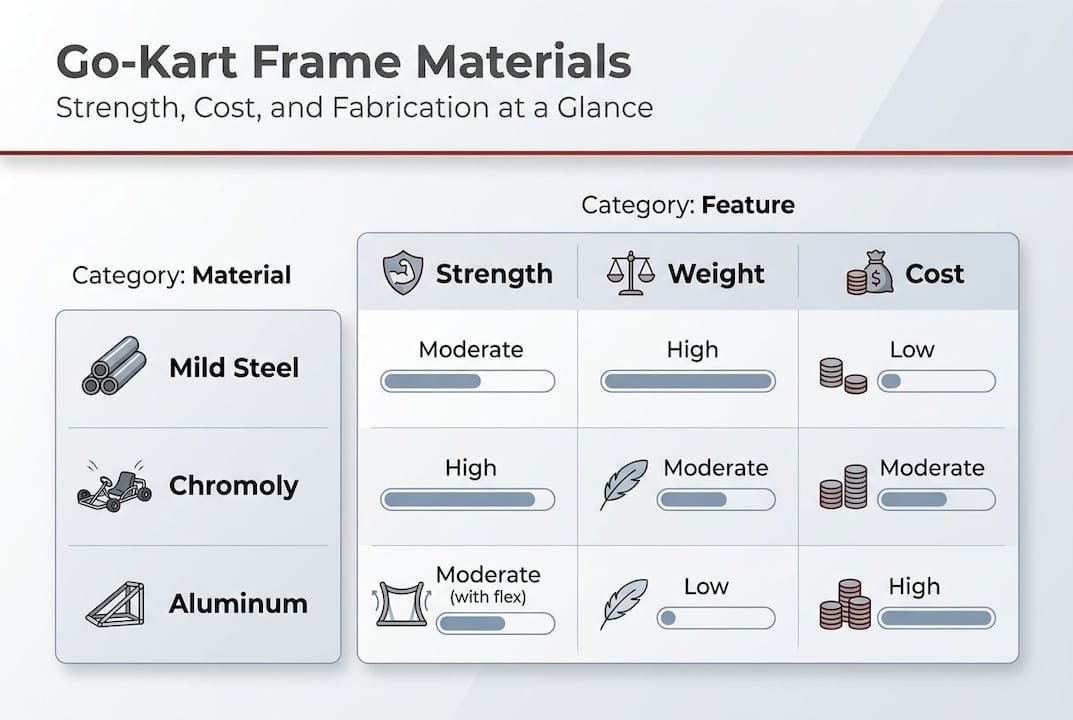
Mild steel wins on cost and accessibility, and it is not a close race. Research into go-kart frame costs confirms that mild steel runs 40 to 50 percent less expensive than chromoly, is easier to weld and bend, and is simpler to repair, making it ideal for hobbyists and DIY recreational kart builds. You can source mild steel tube from almost any local metal supplier or online retailer. It cuts cleanly with a standard tube cutter or angle grinder, bends predictably on a manual tube bender, and welds with a basic MIG setup that most hobbyists already own.
Chromoly carries a real premium. The material cost alone runs higher, and then you add the need for TIG welding to fully realize its strength advantages. MIG welding chromoly is possible, but you lose some of the performance benefits and risk heat distortion that weakens joints. TIG welding takes practice, proper equipment, and time. If you do not already have those skills, the learning curve adds cost in consumables and rework.
Aluminum demands even more. TIG welding aluminum requires a dedicated AC-capable machine, the right filler rod, and clean technique. Mistakes are expensive because aluminum does not forgive the way steel does. Repairs in the field are nearly impossible without proper equipment.
Pro Tip: If you are new to frame fabrication, start with 1018 mild steel DOM (drawn over mandrel) tubing. It has a cleaner, more consistent interior than ERW (electric resistance welded) tube and holds tolerances better for precision bends.
Here is a practical breakdown of what each material demands:
- Mild steel: Basic MIG welder, tube bender, grinder, standard hand tools
- Chromoly: TIG welder, precise fit-up, heat treatment awareness, post-weld stress relief for best results
- Aluminum: AC TIG welder, pre-weld cleaning, careful joint design, experience with aluminum’s behavior under heat
For most hobbyists, the choice is clear. Check out our guide to buying the perfect go-kart if you are weighing a build against a purchase. You can also browse affordable go-karts for ready-to-ride options that skip the fabrication challenge entirely.
Selecting the right frame material for your go-kart project
With the data on the table, it is time to match the right material to your specific situation. This is where most builders go wrong: they pick a material based on what sounds impressive rather than what actually fits their goals, skills, and timeline.
Here is a straightforward framework for making your decision:
- Define your goal. Are you building a fun, durable weekend kart for the family? Or are you chasing lap times at a local track? Fun and durability favor mild steel. Lap times and weight savings favor chromoly.
- Assess your skills honestly. Can you TIG weld or are you willing to learn? If you are running a MIG setup in your garage, mild steel will serve you far better and let you focus on getting the kart right rather than fighting the material.
- Set your budget. Include material, tools, consumables, and rework time. Chromoly budgets need to be 40 to 60 percent higher than mild steel equivalents when you factor in all costs.
- Consider your use environment. Rough terrain and heavy loads push you toward thicker wall mild steel. Track racing pulls you toward chromoly. Both outperform aluminum in most practical go-kart scenarios.
- Plan for repairs. Mild steel is the easiest to fix after a collision or hard use. Chromoly repairs require the same precision as the original build. Aluminum field repairs are rarely practical.
As champion kart builders confirm, mild steel suits hobbyists for ease and cost, while chromoly serves performance-focused builders despite higher cost and the preference for TIG welding.
Pro Tip: Whatever material you choose, go with cold-drawn seamless (CDS) tubing when budget allows. It is dimensionally tighter and structurally cleaner than standard welded tube, which translates to better welds and a more consistent frame.
For wall thickness, stick to 0.083 inches as your baseline for recreational karts and step up to 0.120 inches for heavier builds or rough use. Thinner walls save weight but sacrifice impact resistance.
For more ideas on pushing your build further, our guides on go-kart performance upgrades and the full range of types of go-karts will help you think through the full picture before you commit.
Our take: Why most DIY go-kart builders benefit from simplicity
Here is the honest truth we have seen play out over and over: the builders who obsess over exotic materials often spend more time on the frame than on actually riding. Chromoly and aluminum sound thrilling on paper. But if your TIG welds are inconsistent or your tube fit-up is sloppy, no amount of superior alloy will save the build. The material is only as good as the hands that work it.
Mild steel rewards the builder who focuses on execution. A well-designed, well-welded mild steel frame will outlast a poorly fabricated chromoly frame every single time. We have seen first-hand builds where switching to chromoly added cost, extended the timeline, and delivered a finished kart that was no faster and no lighter than a thoughtful mild steel design would have been.
That said, if you are genuinely competitive and have the skills to back it up, chromoly is absolutely the right call. We respect the commitment it takes. The key is being honest about where you are in your builder journey. Start with what you can master, get the kart on the track, and then refine from there. Customizing your kart starts with a foundation you trust, and customizing your go-kart becomes a lot more fun when the frame underneath is solid.
Next steps: Build, upgrade, or buy with GoKarts USA®
Now that you know what separates a great go-kart frame from an average one, the next move is yours. Whether you are sourcing parts for a custom build, upgrading an existing kart, or ready to skip the fabrication and ride today, we have got you covered.
At GoKarts USA®, we carry options for every type of enthusiast. Younger riders and families will love exploring kids’ ATVs built for safety and fun. If you want something that turns heads and handles beautifully, the TrailMaster Taurus 200GX is worth a close look. And when you are ready to browse the full lineup of machines built for adventure, more go-kart options are waiting for you. Let’s get you out there.
Frequently asked questions
What is the most common material for DIY go-kart frames?
Mild steel is the most common material for DIY go-kart frames due to its affordability and ease of fabrication. Its 40 to 50 percent cost savings over chromoly make it the go-to choice for hobbyists and first-time builders.
Is chromoly steel worth the extra cost for go-kart frames?
Chromoly steel offers superior strength and is preferred for racing, but its cost and fabrication demands limit its practical advantage for most hobby builders. With tensile strength up to 1040 MPa, it earns its place only when you have the skills and budget to match.
What are the typical tubing sizes for go-kart frames?
Tubing for go-kart frames is typically 1.25 to 1.75 inches in diameter with a wall thickness between 0.065 and 0.120 inches. Thicker walls add strength and impact resistance while increasing overall frame weight.
Can aluminum be used for go-kart frames?
Aluminum can be used but is rare, requiring advanced fabrication skills and careful design to match steel’s strength. Grades like 6061-T6 and 7075-T6 are the most practical options when aluminum is the chosen path.
What’s the best frame material for performance upgrades?
Chromoly steel is ideal for performance upgrades due to its high strength, but for most hobbyists, mild steel balances performance, cost, and workability far better. The best choice for hobbyists remains mild steel unless competition-level performance is the explicit goal.