




TL;DR:
- Matching the go-kart to rider age, skill, and terrain ensures safety and enjoyment.
- Safety features like roll cages, harnesses, and proper gear are essential for family fun.
- Buying new offers reliability and warranties; used models require careful inspection before purchase.
Picking the right go-kart for your family feels like a lot. Safety ratings, engine types, price ranges, age restrictions, terrain compatibility — the choices stack up fast and the stakes feel high when kids are involved. We’ve helped thousands of families navigate exactly this challenge, and we know one thing for certain: the right kart transforms weekends into memories. This guide walks you through every critical step, from matching the kart to your rider all the way to inspecting a used model before handing over your money. Follow this roadmap and you’ll land on a choice that delivers real thrills, genuine safety, and lasting value.
Table of Contents
- Clarify your needs: Getting the right fit from the start
- Make safety non-negotiable: Features and gear to require
- New vs. used go-karts: What to inspect and expect
- Key performance factors and ongoing support
- Our hard-won lessons: What most go-kart guides overlook
- Get started with safe, fun go-karting today
- Frequently asked questions
Key Takeaways
| Point | Details |
|---|---|
| Match kart to rider | Assess age, skill, and where you’ll drive to avoid bad fits or wasted money. |
| Prioritize safety gear | Roll cages, harnesses, and the right helmet make all the difference for fun and peace of mind. |
| Compare new vs. used | Weigh warranty, upfront costs, and inspect carefully if buying used to avoid repairs. |
| Focus on ongoing support | Choose reputable brands with good parts access to make sure your kart stays on the road for years. |
Clarify your needs: Getting the right fit from the start
With your buying goals in mind, the next step is identifying what each rider truly needs. Skipping this step is the single biggest mistake families make. You end up with a kart that’s either too powerful for a nervous beginner or too slow for a thrill-seeking teen, and neither outcome is good.
Start by asking the right questions. Who will be driving? How old are they, and how much experience do they have? Where will the kart be used — a flat backyard, a gravel trail, a dirt track? How often will it actually get used? These answers shape every decision that follows.
Rider age, size, skill level, and terrain all determine which kart type fits best. A six-year-old on a smooth lawn needs something completely different from a fourteen-year-old tackling rough trails. Here’s a quick breakdown of the most common scenarios:
- Young kids (ages 5 to 9): Electric karts with speed limiters, low ground clearance, and simple controls. Think flat surfaces, supervised sessions, and easy stop-and-go operation.
- Tweens (ages 10 to 13): Entry-level gas or electric karts with slightly more power, adjustable seats, and basic safety cages. Room to grow into the machine matters here.
- Teens and adults: Gas-powered or high-output electric karts built for off-road use, with full roll cages, harness systems, and real suspension travel.
The terrain question matters just as much as age. Off-road karts need knobby tires, higher ground clearance, and stronger frames. Backyard or pavement karts prioritize smooth handling and lower speeds. Mixing these up leads to frustration and, worse, safety issues.
Pro Tip: Buy slightly ahead of where your child is today. A kart with an adjustable seat, a speed limiter you can dial up over time, and a sturdy frame will serve your family for years instead of one season. Check our kids go-kart selection guide for model-specific recommendations by age group.
| Rider profile | Recommended type | Key feature to prioritize |
|---|---|---|
| Ages 5 to 9 | Electric, low-speed | Speed limiter, simple controls |
| Ages 10 to 13 | Electric or entry gas | Adjustable seat, safety cage |
| Teens and adults | Gas or high-output electric | Full cage, suspension, harness |
Understanding the go-kart buying basics before you shop saves you from costly mismatches and sets every rider up for success.
Make safety non-negotiable: Features and gear to require
Once you’ve matched riders to their perfect type of go-kart, the next must is ensuring every trip is safe. Safety is not a feature you negotiate away to save a hundred dollars. It’s the foundation everything else is built on.
Roll cages, seat belts, hydraulic brakes, and speed limiters are the baseline requirements for any family kart. A roll cage protects riders if the kart tips. A five-point harness keeps smaller riders locked in place during sharp turns. Hydraulic brakes stop the kart reliably, even on downhill terrain. Speed limiters let parents control the maximum velocity until a child has earned more freedom.
Safety first for parents: Teach kids the rules before they ever sit in the seat. Supervise every session, especially early on. Check the terrain for hazards before each ride. Gear is mandatory, every single time, no exceptions.
Here’s how typical safety packages compare to top-tier setups:
| Feature | Standard kart | Top-tier family kart |
|---|---|---|
| Roll cage | Basic tube frame | Full reinforced cage |
| Harness | Lap belt only | 5-point harness |
| Brakes | Mechanical drum | Hydraulic disc |
| Speed control | Fixed throttle | Adjustable limiter |
| Helmet included | No | Sometimes yes |
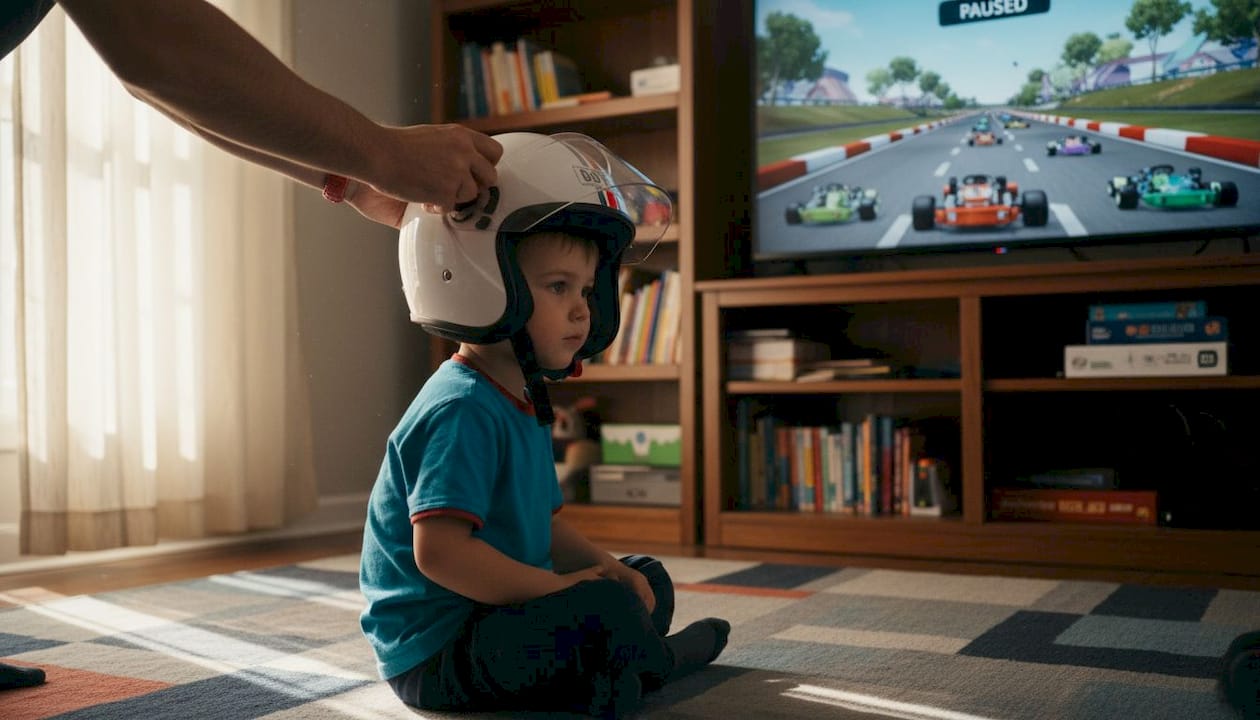
Beyond the kart itself, the gear your rider wears is equally critical. Every session should include a DOT-approved helmet, gloves, closed-toe shoes, and ideally knee and elbow pads for younger kids. These essential safety features and proper gear work together to protect riders from the most common injuries.
Pro Tip: Always test the brakes before buying. Sit in the kart, engage the throttle slightly, and apply the brakes firmly. They should feel responsive and immediate. Soft or spongy brakes are a red flag that signals worn pads or a hydraulic issue.
Teaching kids the rules before they ride is just as important as the hardware. Set clear boundaries for speed, terrain, and supervision. Explore our guide on safe go-kart features and browse go-kart accessories for safety to build out a complete protection setup.
New vs. used go-karts: What to inspect and expect
With safety checks in place, the next decision is whether to go new or save with a used model. Both paths have real merit. The right choice depends on your budget, your mechanical confidence, and how much risk you’re comfortable taking on.
New karts come with manufacturer warranties, the latest safety standards, and zero mystery about their history. You know exactly what you’re getting. Used karts, on the other hand, offer serious savings. Entry-level used go-karts range from $1,100 to $1,600, compared to $2,000 or more for comparable new models. That gap is real money, and for a first-time buyer testing the waters, it can make a lot of sense.
The catch with used karts is that you inherit whatever problems the previous owner had. Here’s what to inspect before you commit:
- Frame integrity: Look for cracks, bends, or welds that look rough or patched. A compromised frame is a safety issue, not a cosmetic one.
- Brake condition: Squeeze the brake lever and press the pedal. They should engage firmly with no sponginess or delay.
- Engine compression: A healthy engine holds compression. A mechanic can test this quickly, or you can feel it by pulling the starter cord — it should offer real resistance.
- Tire condition: Check for uneven wear, cracking on the sidewalls, or tires that look mismatched. Tires affect handling more than most buyers realize.
- Electrical systems: For electric karts, check battery health and charging function. A degraded battery pack is expensive to replace.
Once you’ve passed the visual inspection, take it for a test drive. Here’s a simple numbered checklist:
- Start the engine or power on the kart and listen for unusual sounds.
- Drive slowly and check steering for play or pulling to one side.
- Accelerate moderately and feel for smooth power delivery.
- Apply the brakes firmly from moderate speed and check stopping distance.
- Check for any vibrations, rattles, or warning lights after the ride.
Exploring youth go-kart benefits can also help you decide whether a new model built for growing riders is worth the investment over a used one.
Key performance factors and ongoing support
With your top choices narrowed, it’s time to dig into performance and practical ownership factors so your go-kart is fun and reliable for years. A kart that performs well on day one but falls apart after six months isn’t a deal. It’s a disappointment.
Build quality, maintenance ease, and brand support are the three pillars of long-term satisfaction. Brands like Trailmaster have built their reputation on parts availability and dealer support, which matters enormously when you need a replacement part fast. A kart from a brand with no support network can become a very expensive lawn ornament.
Here’s what to look for when evaluating performance and ownership:
- Adjustable seats and pedals: Kids grow. A kart that adjusts to fit different riders extends its useful life significantly.
- Parts availability: Can you order replacement parts online within a few days? If the answer is unclear, that’s a warning sign.
- Maintenance accessibility: Is the engine easy to reach? Can you change the oil or check the belt without special tools?
- Warranty coverage: New karts should offer at least a 90-day warranty on the engine and frame. Anything less deserves scrutiny.
| Brand | Warranty | Parts availability | Support quality |
|---|---|---|---|
| Trailmaster | 6 to 12 months | Excellent | Strong dealer network |
| Generic imports | 30 to 90 days | Limited | Minimal |
| GokartsUSA brands | Varies by model | Good | Direct online support |
One insight worth sharing: electric karts are genuinely easier for families to own. They’re quieter, produce no fumes, and skip the carburetor cleaning and fuel mixing that gas engines demand. Our guide on electric go-karts for families breaks down why so many parents are making the switch. For a deeper look at what separates good karts from great ones, our performance features overview covers the technical side without the jargon.
Our hard-won lessons: What most go-kart guides overlook
Now that you know the concrete steps, here’s what our years of experience have taught us that you won’t find in most buying guides.
Most shoppers fixate on price and top speed. Those two numbers feel like the whole story. But the families who end up happiest with their purchase almost never mention those things six months later. What they talk about is how easy the kart is to use, how quickly they got support when something needed fixing, and how often everyone actually wants to ride it.
The hidden costs of poor build quality are real. A cheap kart that breaks down after a few rides doesn’t just cost you repair money. It kills the enthusiasm that made you buy it in the first place. We’ve seen it happen too many times.
Common rookie mistakes include skipping the test ride entirely, buying more power than a new driver can handle, and never establishing safety rules before the first session. These aren’t small oversights. They shape whether go-karting becomes a beloved family tradition or a frustrating regret.
Our honest advice: the best go-kart is the one your family actually wants to use often. Ease of use, reliable support, and safe thrills matter far more than raw specs. Browse our go-kart selection wisdom to see how these principles translate into specific model choices.
Get started with safe, fun go-karting today
Ready to put these steps into action? You’ve got the knowledge. Now it’s time to find the kart that brings it all together for your family.

At GokartsUSA.biz®, we’ve built our catalog around exactly what families need: proven safety, real performance, and prices that make sense. Whether you’re exploring affordable kids ATVs for younger riders or checking out family go-kart options for the whole crew, every model is selected with your adventure in mind. Browse our full go-kart catalog to find the perfect fit, with free shipping options and expert support ready to help you every step of the way.
Frequently asked questions
What is the best type of go-kart for family recreation?
Electric karts suit families best because they run quietly, produce no fumes, offer adjustable speed settings for different riders, and require far less maintenance than gas-powered alternatives.
What safety gear is essential for go-karting with kids?
Every young rider needs a DOT-approved helmet, 5-point harness, closed-toe shoes, and gloves at minimum. Adult supervision is mandatory during every session, no exceptions.
How can I inspect a used go-kart before purchase?
Check for frame cracks, brake response, engine compression, and tire condition, then complete a test drive to confirm smooth steering, power delivery, and stopping performance.
Do go-karts require much maintenance for occasional use?
Electric karts need minimal upkeep compared to gas models, which require regular engine checks, oil changes, and fuel system cleaning. For casual family use, electric is the lower-effort choice.
Is it safe for young children to drive go-karts?
Yes, provided the kart includes speed limiters and safety features appropriate for their age and size, and a responsible adult supervises every single ride.