




TL;DR:
- Outdoor vehicle safety standards for ATVs, UTVs, and ROVs include federal and voluntary guidelines focused on design, operation, and protective gear. Compliance with safety features like roll cages, seatbelts, and helmets significantly reduces injury risks, especially for younger riders. Regulations are actively evolving, making ongoing safety awareness and vehicle-appropriate choices essential for riders.
Outdoor vehicle safety standards are defined as the mandatory and voluntary regulations that govern how all-terrain vehicles (ATVs), utility task vehicles (UTVs), and recreational off-highway vehicles are designed, built, and operated to protect riders and passengers. Two primary frameworks shape this space: the Federal Motor Vehicle Safety Standards (FMVSS), administered by the National Highway Traffic Safety Administration (NHTSA), and the voluntary ANSI/SVIA guidelines developed by the Specialty Vehicle Institute of America (SVIA). Understanding which rules apply to your vehicle type is the first step toward real protection on the trail.
What are the key outdoor vehicle safety standards for ATVs, UTVs, and ROVs?
Off-road vehicles operate under a different regulatory framework than passenger cars. Road vehicles must meet FMVSS; off-road vehicles depend more on voluntary guidelines like ANSI/SVIA. That distinction matters because it means safety levels can vary significantly between models and manufacturers.
The ANSI/SVIA voluntary standards cover critical design elements including rollover protection structures (ROPS), operator restraints, speed governors, and stability requirements. ROPS are the roll bars or cages built into UTVs to protect occupants if the vehicle tips. Speed governors limit top speed, which directly reduces the severity of crashes. These features are not legally required on all off-road vehicles, which is why knowing your specific model’s compliance status is so important.
Age requirements add another layer of regulation. The minimum age for public land operation is 16 in states like Kansas, but age alone does not guarantee safe operation. Skill, judgment, and physical size all factor into whether a rider can safely control a given vehicle. Many states also require operator licensing or completion of a safety course before allowing minors on public trails.
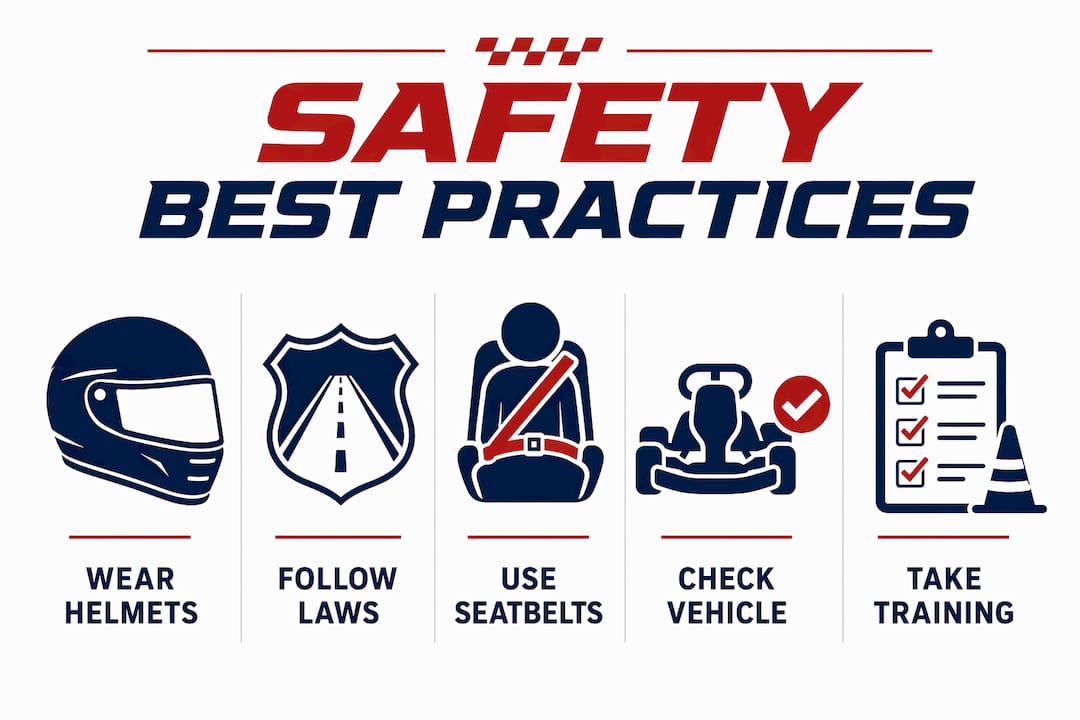
Protective gear requirements are among the clearest and most consistent outdoor vehicle guidelines across all jurisdictions:
- DOT-compliant helmet: Required or strongly recommended every ride, for every rider
- Eye protection: Goggles or a face shield to guard against debris
- Gloves: Improve grip and protect hands in a fall
- Long sleeves and pants: Reduce abrasion injuries
- Over-the-ankle boots: Protect feet and ankles from impact
Pro Tip: Always check your state’s specific ATV and UTV laws before heading out. State rules on helmets, age limits, and passenger restrictions vary widely and change regularly.
How do safety features differ between ATVs and UTVs?
The design gap between ATVs and UTVs is the single biggest factor in off-road vehicle safety outcomes. UTVs are designed with roll bars, seatbelts, and speed governors to enhance safety during farm and recreational use. ATVs, by contrast, are typically single-seat, open vehicles with no roll cage and no seatbelt. That design difference explains most of the risk gap between the two vehicle types.
UTVs’ heavier, wider build and lower center of gravity make them significantly more stable on uneven terrain. The roll cage in a UTV keeps occupants inside the vehicle during a rollover, which is the most dangerous type of off-road crash. A seatbelt keeps the rider in the seat, where the ROPS can do its job. Without both working together, neither provides full protection.
| Feature | ATV | UTV |
|---|---|---|
| Roll cage (ROPS) | Not standard | Standard on most models |
| Seatbelt | Not included | Standard on most models |
| Speed governor | Varies by model | Common on most models |
| Passenger capacity | Single rider (typically) | 2–4 passengers |
| Stability | Lower, more agile | Higher, more stable |
Carrying passengers on single-seat ATVs is a primary cause of rollover crashes. A second rider shifts the center of gravity, reduces the operator’s control, and overloads a vehicle not engineered for that weight distribution. This is one of the most common and preventable causes of serious ATV injuries.
Pro Tip: If your family needs to carry multiple riders, choose a UTV with proper seating and restraints rather than adding a passenger to a single-seat ATV. The vehicle’s design determines its safe capacity.
For parents choosing between vehicle types, the Gokartsusa guide on selecting a family vehicle breaks down how to match the right design to your riders’ ages and skill levels.
What are best practices for safe outdoor vehicle operation?
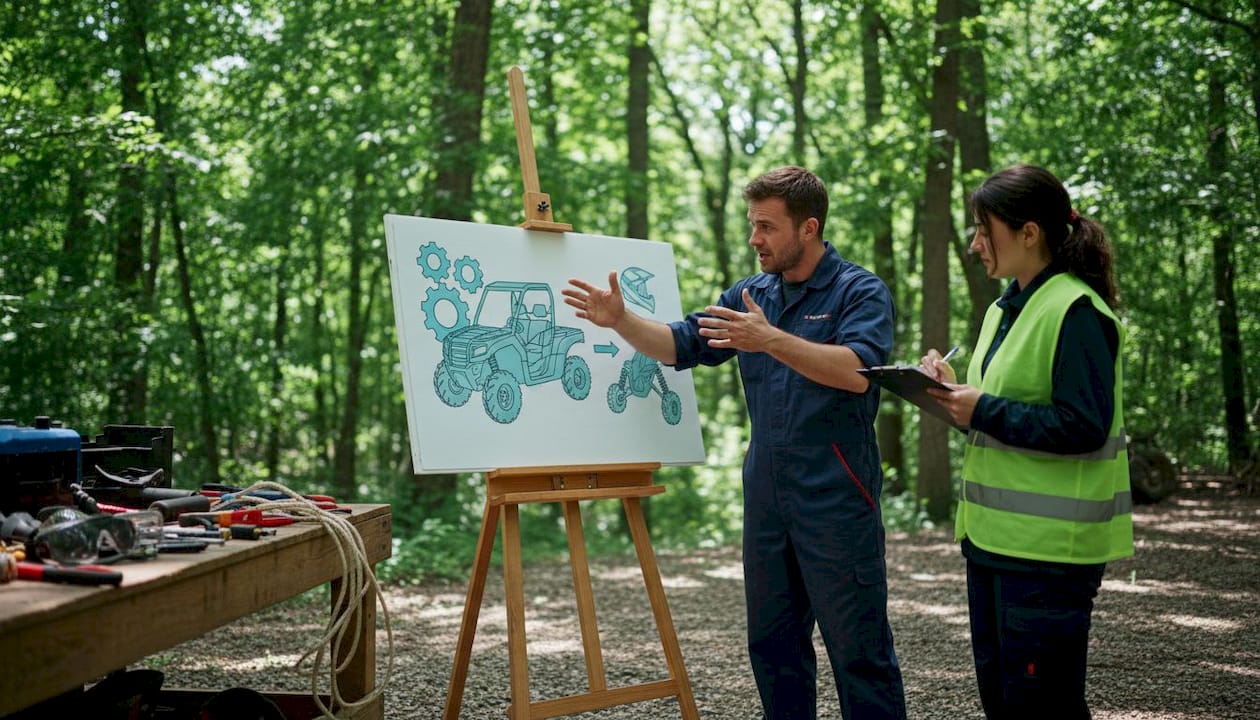
Safe operation starts before the engine turns over. Formal rider safety courses are widely recommended and effective at improving handling skills for all riders. The Motorcycle Safety Foundation (MSF) offers off-highway vehicle (OHV) training programs that cover braking, turning, and emergency response. Completing a course is the single highest-return safety investment a new rider can make.
Rider-vehicle matching is equally critical and frequently overlooked. Youth operators often struggle to reach controls safely, increasing accident risk when a vehicle is too large for their body. A child who cannot fully grip the handlebars or reach the foot controls cannot respond to hazards in time. Always test control reach before any ride, not just at the point of purchase.
Follow these steps before every ride to stay compliant with vehicle safety regulations:
- Check tires: Look for proper inflation and visible damage. Low or uneven tire pressure affects handling and increases rollover risk.
- Inspect ROPS and seatbelts: Confirm roll bars are structurally sound and all belts latch and retract correctly.
- Test brakes: Apply both front and rear brakes at low speed to confirm full function.
- Verify fuel and fluids: Check oil, coolant, and fuel levels before departure.
- Confirm protective gear: Every rider wears a DOT-compliant helmet and full protective gear before the vehicle moves.
- Review terrain: Identify hazards like steep slopes, water crossings, and loose surfaces before you ride them.
Operational discipline matters as much as equipment. Avoid carrying passengers on vehicles not rated for them. Stay within the vehicle’s speed and load limits. Never ride on paved roads unless the vehicle is specifically designed and registered for that use. Safety features like ROPS and seatbelts only protect operators if actively and correctly used every ride. A roll cage on a vehicle whose rider skips the seatbelt offers only partial protection.
Pro Tip: Build a pre-ride checklist and keep it on the vehicle. Riders who follow a physical checklist catch problems that memory alone misses, especially on early morning or back-to-back riding days.
For a deeper look at smarter ATV riding habits, Gokartsusa has published a detailed guide covering terrain reading, load management, and emergency response.
How are outdoor vehicle safety regulations evolving in 2026?
Federal safety standards are not static. NHTSA finalized rulemaking in 2026 updating Federal Motor Vehicle Safety Standard No. 214, which governs side impact protection. The update removed obsolete testing sections and refined the requirements for vehicles subject to FMVSS. That change reflects a broader trend: regulators are actively tightening vehicle safety norms as crash data and technology improve.
Voluntary industry standards are evolving alongside federal rules. SVIA continues to update ANSI/SVIA guidelines as new safety research emerges and vehicle designs change. The industry is also developing advanced rollover prevention systems that use electronic stability control to detect and correct dangerous tipping conditions before a crash occurs. These systems are already common in passenger vehicles and are moving into the off-road segment.
| Regulatory area | 2026 status | Trend |
|---|---|---|
| FMVSS No. 214 (side impact) | Updated, obsolete sections removed | Tightening |
| ANSI/SVIA voluntary standards | Active revision cycle | Expanding coverage |
| Electronic stability control | Emerging in off-road segment | Adoption growing |
| Age and licensing rules | State-level variation | Gradual standardization |
Recreational riders and parents should treat safety compliance as an ongoing practice, not a one-time check. Regulations change, vehicle technology advances, and your riders grow. Revisiting the rules each season keeps your family ahead of the curve rather than catching up after an incident.
Key Takeaways
Outdoor vehicle safety depends on matching the right vehicle to the right rider, using protective gear every ride, and staying current with both federal and voluntary safety standards.
| Point | Details |
|---|---|
| Know your regulatory framework | Off-road vehicles follow ANSI/SVIA voluntary standards, not full FMVSS mandates. |
| UTVs offer more built-in protection | Roll bars, seatbelts, and speed governors make UTVs safer than open ATVs. |
| Rider-vehicle matching prevents injuries | Children must physically reach all controls before operating any vehicle. |
| Gear up every single ride | DOT-compliant helmets and full protective gear are non-negotiable for every rider. |
| Safety standards are actively changing | FMVSS and ANSI/SVIA rules updated in 2026; check for changes each season. |
What I’ve learned about safety standards that most riders get wrong
The most dangerous assumption in off-road riding is that a vehicle with safety features is automatically a safe vehicle. I’ve seen it repeatedly: a family buys a UTV with a roll cage and seatbelts, then lets the kids ride without buckling up because “the cage is right there.” That thinking misunderstands how ROPS actually works. ROPS and seatbelts require correct daily use to be effective. The cage protects you only if the belt keeps you inside it.
The second thing most riders get wrong is vehicle sizing for kids. Parents often buy a vehicle their child will “grow into,” which means the child is operating a machine they cannot fully control right now. A child who cannot reach the brake lever in an emergency is in a genuinely dangerous situation, regardless of how many safety features the vehicle has. The ergonomic mismatch between youth riders and oversized vehicles is one of the most common and most preventable risk factors in youth off-road riding.
My honest recommendation: treat rider training as mandatory, not optional. The Motorcycle Safety Foundation’s OHV programs exist precisely because reading about riding and actually riding are two completely different skill sets. A formal course teaches muscle memory, not just rules. That muscle memory is what saves you when something goes wrong on the trail.
The culture of safety in this community is strong, but it has a blind spot around complacency. The riders who get hurt are rarely beginners who know nothing. They are often experienced riders who stopped checking their gear, stopped buckling up, or stopped respecting terrain limits. Safety is an active practice. Treat it that way every single time you ride.
— Mario
Age-appropriate vehicles with real safety features at Gokartsusa
Choosing a vehicle that fits your rider’s age, size, and skill level is the foundation of safe outdoor riding. Gokartsusa carries a full lineup of powersports vehicles built with those priorities in mind.

The Mini Sport Kids ATV features a parental remote start and kill switch, giving adults direct control over when and how the vehicle operates. For younger riders ready for their first kart, the Sport Kart Kids Gas Go Kart is engineered for ages 8 and up with built-in safety controls. Every vehicle in the Gokartsusa catalog comes with detailed specs so you can match the right model to your rider before the first ride. Browse the full selection at GokartsUSA.biz and ride with confidence.
FAQ
What is the difference between FMVSS and ANSI/SVIA standards?
FMVSS standards are federal regulations that apply primarily to road vehicles and are enforced by NHTSA. ANSI/SVIA standards are voluntary industry guidelines that govern the design and safety features of off-road vehicles like ATVs and UTVs.
What age can a child legally operate an ATV?
The minimum age to operate an ATV on public land varies by state. In Kansas, for example, the minimum age is 16 for public land and road use, though skill and physical size matter as much as age for safe operation.
Do UTVs require seatbelts by law?
Seatbelt requirements for UTVs vary by state and usage context. Most UTVs are built with seatbelts as standard equipment, and safety organizations strongly recommend using them on every ride regardless of local legal requirements.
What helmet standard applies to off-road vehicle riders?
DOT-compliant helmets are the recognized standard for off-road vehicle riders. The Motorcycle Safety Foundation recommends wearing a DOT-certified helmet every time you ride, along with eye protection and appropriate clothing.
How often do outdoor vehicle safety regulations change?
Federal standards like FMVSS are updated through formal NHTSA rulemaking, which occurred as recently as june 2026 with changes to side impact protections. Voluntary ANSI/SVIA standards are revised on an ongoing cycle, so riders should review current guidelines at least once per season.