




TL;DR:
- Gas engines provide fast refueling and durable performance for long outdoor rides. Electric motors offer quiet operation, instant torque, and lower maintenance but depend on longer recharging times. The best choice depends on riding conditions, regional energy costs, and environmental priorities.
Choosing between gas and electric power for recreational vehicles is a decision defined by three factors: performance, cost, and environmental impact. Gas engines deliver strong power output and quick refueling, making them a natural fit for riders who want raw speed and long sessions on the trail. Electric motors answer with instant torque, quieter operation, and lower maintenance demands. Neither option wins across every category. The right choice depends on how you ride, where you ride, and what you value most in a powersports experience.
Why choose gas vs electric: performance on the track and trail
Gas and electric propulsion systems deliver power in fundamentally different ways. Gas engines build power through combustion, producing a broad torque curve that many riders associate with the classic powersports feel. Electric motors, by contrast, deliver instant torque from a dead stop, which translates to sharp acceleration without any lag.

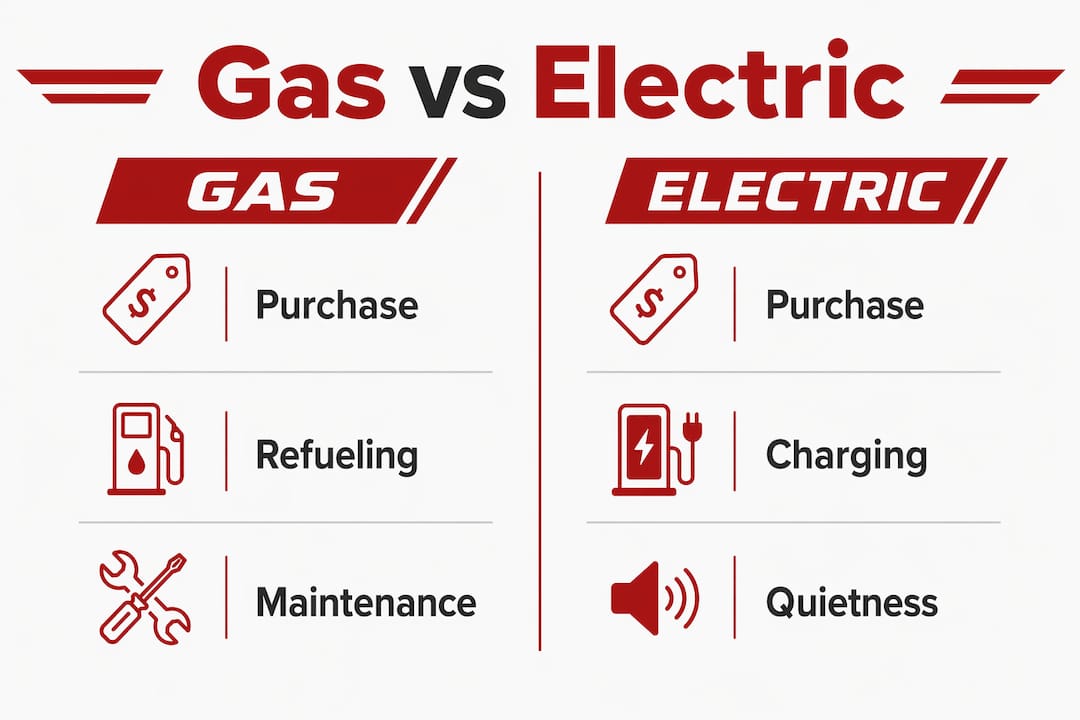
Refueling is one of the clearest gas vs electric advantages for recreational use. A gas tank fills in minutes, letting you get back on the track fast. Recharging an electric vehicle takes considerably longer, which matters when you are mid-session at a track or trail far from a charging point. That practical edge keeps gas engines popular for extended outdoor use.
Noise and smoothness tell a different story. Electric vehicles run quietly, which reduces fatigue on longer rides and makes them more welcome in noise-sensitive areas. Gas engines produce the roar that many enthusiasts love, but that sound comes with vibration and heat that add to rider fatigue over time.
Maintenance is another area where the two systems split. Gas engines require regular oil changes, air filter replacements, spark plug checks, and annual combustion inspections to manage carbon monoxide risks. Electric systems skip most of that, though they still need electrical system checks and battery monitoring.
Gas power pros and cons at a glance:
- Gas pros: Quick refueling, strong sustained power output, wide availability of fuel, familiar feel for experienced riders
- Gas cons: Regular maintenance schedule, louder operation, emissions during use, heavier drivetrain components
- Electric pros: Instant torque, quieter ride, lower maintenance needs, no direct emissions
- Electric cons: Longer recharge times, range limits on extended sessions, higher upfront cost in some categories
Pro Tip: If you ride at a track with a fuel station nearby, gas gives you the freedom to run all day without planning around charge times. If you ride in a neighborhood or shared space, electric keeps the peace.
What are the cost differences between gas and electric recreational vehicles?
Upfront cost is the first number most buyers look at, but it rarely tells the complete story. Gas-powered go-karts and mini bikes often carry a lower purchase price than comparable electric models. That gap can close quickly once you factor in fuel, maintenance, and infrastructure.
Regional energy costs vary significantly across the U.S. Electricity in the Northeast runs 10–30% more expensive than natural gas, while California electricity can cost up to 50% more than gas. Midwest riders often find gas 15–35% cheaper per unit of energy. Those differences directly affect your operating costs over a riding season.
Equipment efficiency matters as much as fuel price. High-efficiency systems that focus on useful energy delivered rather than raw fuel price give a more accurate picture of real-world costs. A well-tuned gas engine and a properly rated electric motor both outperform poorly maintained versions of themselves, regardless of fuel type.
Infrastructure costs can tip the balance in unexpected ways. Installing a new gas line can run $2,000 to $8,000 if one is not already available at your property. Electrical panel upgrades for home charging stations carry their own price tag. Always get both quoted before committing to either system.
| Cost category | Gas | Electric |
|---|---|---|
| Typical purchase price | Lower to mid-range | Mid to higher range |
| Fuel or energy cost | Varies by region; often lower | Varies by region; can be higher |
| Routine maintenance | Higher (oil, filters, spark plugs) | Lower (battery checks, electrical) |
| Infrastructure setup | Gas line if not present | Charging station or panel upgrade |
| Long-term reliability | Proven, parts widely available | Fewer moving parts, longer motor life |
Pro Tip: Calculate your total cost of ownership over three years, not just the sticker price. Include fuel, maintenance, and any setup costs. That number often changes which option looks like the better deal.
What environmental factors influence the choice between gas and electric?
Environmental impact is a genuine factor for many riders, not just a marketing talking point. Natural gas emits approximately 50% less CO2 than coal and 30% less than oil per unit of energy. That makes gas the cleanest-burning fossil fuel available, which matters when comparing it to older combustion alternatives.
The methane problem complicates that picture. Methane leakage during gas extraction is a significant greenhouse gas concern. Methane is roughly 80 times more potent than CO2 over a 20-year period. That leakage can offset a meaningful portion of the emissions benefit that gas combustion provides over coal or oil.
Electric systems produce zero direct emissions at the point of use. Their actual environmental footprint depends on how the electricity is generated. A vehicle charged from a coal-heavy grid carries indirect emissions. One charged from solar panels or a renewable-heavy utility carries far less. Electric systems paired with renewable energy and time-of-use rates can significantly reduce both carbon footprint and energy costs.
“The environmental case for electric vehicles strengthens as the grid gets cleaner. Riders who charge from renewable sources today are already operating at a fraction of the emissions produced by gas combustion, and that advantage will only grow as utilities add more wind and solar capacity.”
Key environmental considerations:
- Gas burns cleaner than coal or oil but still produces CO2 and nitrogen oxides during combustion
- Methane leakage upstream of combustion is a real and measurable concern
- Electric vehicles shift emissions to the power grid, making their footprint grid-dependent
- Pairing electric vehicles with home solar panels eliminates most lifecycle emissions
- Air quality at the point of use is always better with electric, which matters for indoor tracks and enclosed spaces
How do regional and practical factors affect the gas vs electric decision?
Where you live shapes this decision as much as what you ride. Cold climates with harsh winters favor gas power because gas engines maintain consistent output in low temperatures. Regions with over 4,000 heating degree days see gas systems outperform electric alternatives in sustained cold conditions. Electric battery performance drops in extreme cold, reducing range and power output.
Milder climates tell a different story. Riders in the South, Southwest, and Pacific Coast states often find electric systems perform at full capacity year-round. Battery range stays consistent, and the lower maintenance burden becomes a genuine advantage across a long riding season.
Local utility rates and available incentives also shift the math. Some states offer rebates on electric vehicle purchases or home charging equipment. Check your state’s energy office website before buying, because those incentives can reduce the effective purchase price by a meaningful amount.
| Scenario | Better fit | Reason |
|---|---|---|
| Cold climate, long sessions | Gas | Consistent power, quick refueling in remote areas |
| Mild climate, neighborhood use | Electric | Quiet operation, lower running costs |
| Remote trail riding | Gas | Fuel availability, no charging infrastructure needed |
| Track or enclosed venue | Electric | No emissions, lower noise levels |
| Budget-focused buyer | Gas | Lower upfront cost, widely available parts |
| Eco-conscious rider with solar | Electric | Near-zero lifecycle emissions when charged renewably |
Dual-fuel or hybrid setups exist in the broader powersports world and represent a practical middle ground. They use each power source where it performs best, switching based on conditions. For riders who want the best of both worlds without compromise, that approach is worth researching as the technology matures.
Resale value is a practical factor that most buyers overlook. In colder U.S. regions, gas-powered vehicles often hold stronger resale value because buyers in those markets expect gas systems. In mild regions, efficient electric models increasingly command strong resale prices as demand for cleaner options grows.
Key Takeaways
Gas power wins on refueling speed and cold-weather performance, while electric wins on maintenance simplicity, quiet operation, and environmental impact, making the right choice entirely dependent on your riding conditions and priorities.
| Point | Details |
|---|---|
| Performance split | Gas offers quick refueling and sustained power; electric delivers instant torque and quieter operation. |
| Cost depends on region | Electricity costs 10–50% more than gas in many U.S. regions, but maintenance savings can offset that gap. |
| Environmental nuance | Electric vehicles produce zero direct emissions, but their footprint depends on how the grid generates power. |
| Climate drives the decision | Cold climates favor gas; mild climates favor electric for year-round efficiency and lower running costs. |
| Infrastructure costs matter | Gas line installation or electrical panel upgrades can add thousands to upfront costs on either side. |
What I’ve learned after years in the powersports world
The gas vs electric debate gets oversimplified constantly. People pick a side and defend it like a sports team. The reality I’ve seen is more practical than that.
Gas engines belong on the trail when you are riding hard, riding far, and riding somewhere without a charging station in sight. The horsepower and torque that a well-built gas engine delivers still feels unmatched for serious off-road sessions. Quick refueling keeps the adventure moving. That matters when you are out with a group and nobody wants to wait two hours for a battery to recover.
Electric systems have earned genuine respect, and I say that as someone who grew up around gas engines. The quiet operation, the instant response off the line, and the near-zero maintenance schedule make electric vehicles a smarter choice for a lot of riders, especially families with kids who are just getting started. The electric go-kart advantages for family use are real and growing.
The trend line is clear. Grids are getting cleaner. Battery technology is improving every year. The gap between gas and electric performance is narrowing. But gas is not going away from recreational vehicles anytime soon, and for good reason. The infrastructure, the feel, and the freedom it provides in remote settings are hard to replace. My honest advice: choose based on where and how you actually ride, not based on which technology sounds better in a conversation.
— Mario
Gokartsusa’s gas-powered vehicles for riders ready to hit the trail
Riders who have weighed the options and landed on gas power will find a strong lineup waiting at Gokartsusa. The catalog covers everything from entry-level karts for younger riders to capable machines built for more experienced enthusiasts.

The Sport Kart Kids Gas Go Kart runs a 2.5hp 4-stroke engine and suits riders ages 8 and up, delivering real performance in a size that builds confidence. For those leaning toward two wheels, the Gas Powered Mini Bike offers a 3.5hp 4-stroke automatic setup that is approachable for ages 12 and up. Gokartsusa also carries the Mini Sport Kids ATV with a 110cc gas engine and parental remote start and kill switch, a feature that gives parents real peace of mind on the trail. Free shipping and seasonal promotions make it a great time to compare models and find the right fit.
FAQ
Which is better for kids, gas or electric?
Electric vehicles are quieter, require less maintenance, and produce no direct emissions, making them a practical choice for younger or beginner riders. Gas models suit older kids who want more power and longer ride sessions without waiting for a recharge.
How much does it cost to maintain a gas go-kart vs electric?
Gas go-karts require regular oil changes, spark plug replacements, and air filter checks, adding up to more frequent service costs. Electric go-karts have fewer moving parts and skip most of that routine maintenance, though battery health monitoring is still needed.
Does cold weather affect electric recreational vehicles?
Cold temperatures reduce battery performance in electric vehicles, shortening range and lowering power output. Gas engines maintain more consistent performance in cold climates, which is why gas remains the preferred choice for riders in northern U.S. states.
Are gas-powered recreational vehicles better for remote trail riding?
Gas vehicles are the stronger choice for remote trail riding because fuel is widely available and refueling takes only minutes. Electric vehicles depend on charging infrastructure that is rarely present in remote outdoor locations.
Do electric recreational vehicles have lower emissions than gas?
Electric vehicles produce zero direct emissions at the point of use, but their total environmental footprint depends on the electricity source. Riders who charge from solar or renewable-heavy grids operate at significantly lower lifecycle emissions than gas-powered alternatives.