




Many modern scooters include ABS, usually a front-only single-channel unit on lighter models, and it measurably cuts your odds of a lockup crash. Before you buy or ride, check the spec sheet for “ABS,” “single-channel ABS,” or “two-channel ABS,” since coverage varies by model and model year. ABS is a genuine safety upgrade, but it supplements good braking technique. It never replaces it.
TL;DR:
- Single-channel ABS systems mainly protect the front wheel and are common on light scooters, weighing around 420 grams for under 300cc models.
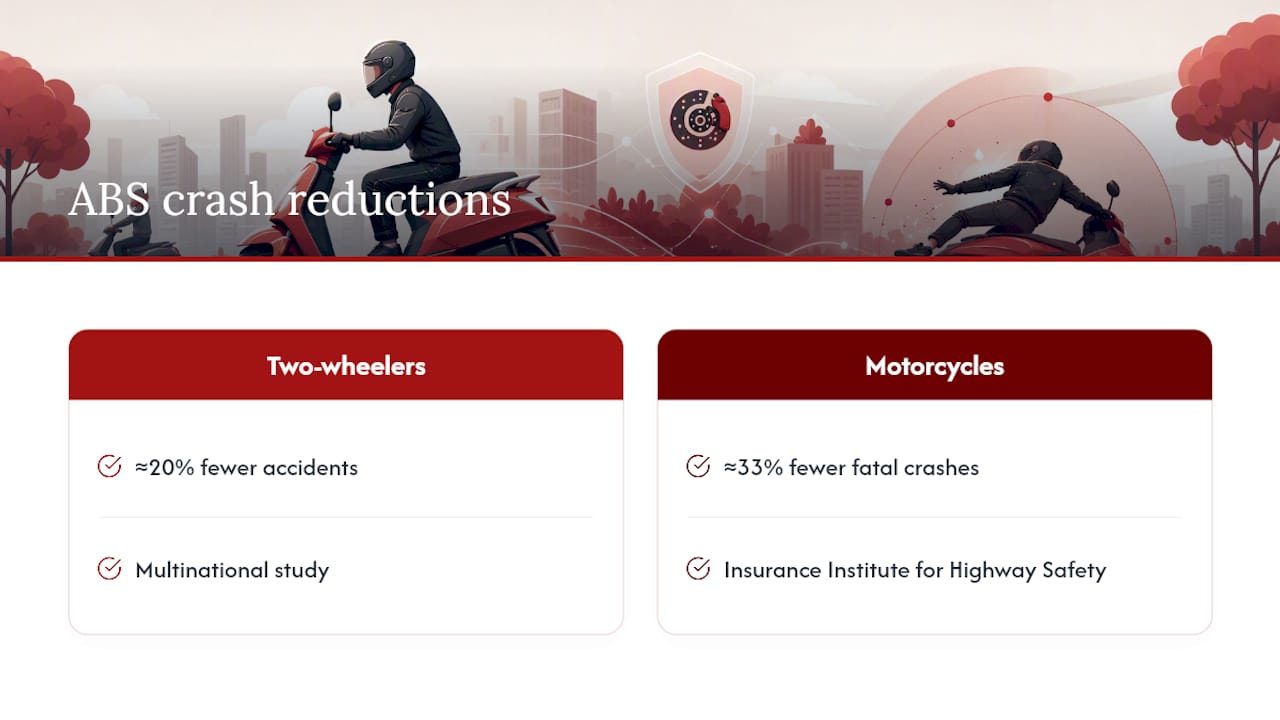
- ABS prevents about 20% of two-wheeler accidents by allowing full-force braking without wheel lockup, especially on wet or uneven surfaces.
- Many budget scooters still lack ABS, so always verify labels and sensor placement in manuals to confirm specific model coverage before purchase.
- ABS effectiveness diminishes at low speeds, on loose gravel, or ice, where traction limits braking performance more than the system itself.
- For daily commuting and higher speeds, combining mechanical brakes with either dual-channel ABS or a well-tuned combined braking system provides the best safety margin.
Table of Contents
- How Scooter ABS Brakes Actually Work
- Which Scooters Have ABS Brakes (and How to Check)
- The Real Benefits of ABS Brakes on Scooters, and Where They Fall Short
- ABS vs. CBS: Which Scooter Brake System Wins?
- Braking Technique and Maintenance for ABS-Equipped Scooters
- Is ABS Worth It for Your Scooter?
- Keep Your Scooter’s Brakes Ready for the Road
- Sources
- FAQ
How Scooter ABS Brakes Actually Work
An ABS-equipped scooter reads wheel speed dozens of times per second through sensors mounted near each hub. When the control unit detects a wheel decelerating faster than the road surface allows, meaning it’s about to skid, it tells a hydraulic or electronic modulator to briefly release and reapply brake pressure. That’s the buzzing pulse you feel through the lever or pedal when ABS kicks in. It’s not a malfunction. It’s the system working exactly as designed.
Scooters split into two camps here:
- Single-channel ABS monitors and controls only the front wheel, where lockups are more dangerous because they can throw the rider over the handlebars.
- Two-channel ABS manages both wheels independently, giving fuller protection but adding weight, cost, and complexity.
Suppliers like Continental built compact single-channel ABS units specifically for scooters and small motorcycles, weighing around 420 grams for machines under 300cc. That’s light enough that manufacturers stopped treating ABS as a premium-only feature. On electric scooters, things get more interesting: some designs blend traditional ABS with the motor’s own regenerative braking, using slip-ratio estimates to keep torque response fast without overriding the mechanical system.
Which Scooters Have ABS Brakes (and How to Check)
ABS shows up most reliably on mid-power and high-power urban scooters, along with a growing share of electric mopeds built for daily commuting. Budget-tier scooters, especially smaller-displacement models aimed at short neighborhood trips, still ship without it more often than not. Here’s how to confirm what you’re actually getting:
- Read the spec sheet labels carefully. Look for “ABS,” “single-channel ABS,” or “E-ABS” (the electrical variant used on some e-scooters). Vague phrasing like “advanced braking” usually means no ABS at all.
- Check wheel coverage. A spec that says “front ABS” or “single-channel” only protects the front wheel; “dual-channel” or “two-channel” covers both.
- Confirm sensor placement in the manual or dealer listing. Manufacturer pages and VIN-specific documentation will list which wheel carries the speed sensor, which tells you the real channel count regardless of marketing copy.
- Cross-check the model year. A trim name can carry ABS one year and drop it the next as manufacturers cut costs, so confirm fitment against the exact year you’re buying.
Continental helped push single-channel ABS into series production on scooters like the Vespa Primavera and Sprint back in 2014, and that adoption curve has only climbed since. Still, availability shifts by region and by brand, so always confirm with the dealer or owner’s manual before you assume a feature is standard.
The Real Benefits of ABS Brakes on Scooters, and Where They Fall Short
A multinational effectiveness study found ABS prevents roughly 20% of two-wheeler accidents, largely because it lets riders brake at full force without the fear of a locked wheel sliding out from under them. That’s the core benefit: ABS removes the guesswork from panic stops, particularly on wet or uneven pavement where a locked front wheel is the fastest way to go down. The Insurance Institute for Highway Safety has documented similarly strong results on motorcycles, where ABS cuts fatal crash rates by about a third.
ABS won’t save you everywhere, though. At crawling speeds, on deep loose gravel, or on sheet ice, the system may have too little wheel-speed data to modulate effectively, and traction itself is the limiting factor, not brake control. ABS also can’t fix a bad riding stance, a late reaction, or a steering mistake mid-stop. Think of it as raising your safety margin, not handing you a license to brake later or ride faster than conditions allow.
ABS vs. CBS: Which Scooter Brake System Wins?
Combined braking systems (CBS) work on a different principle entirely: instead of preventing lockup, CBS links the front and rear brakes so a single lever pull applies calibrated force to both wheels at once. Peer-reviewed engineering work on lightweight scooters shows a well-tuned CBS setup can exceed homologation deceleration requirements, hitting a mean fully developed deceleration of 5.246 meters per second squared in testing, but getting there demands careful force-distribution tuning between the front and rear circuits.
Here’s how the systems stack up in practice:
- CBS improves everyday stopping consistency for riders who forget to use both brakes, but it does nothing once a wheel actually locks.
- Single-channel ABS protects the front wheel specifically, where lockup carries the highest risk of a rider going over the bars.
- Two-channel ABS covers both wheels independently for the fullest protection, at a higher cost and weight penalty.
- Electrical ABS on BLDC e-scooters uses slip-ratio estimators to modulate motor braking, a promising approach but one still bound by battery energy limits at very low speeds.
For daily urban commuting, prioritize a scooter with reliable mechanical disc brakes paired with either dual-channel ABS or a well-tuned CBS. That combination covers the widest range of real-world stops.
Braking Technique and Maintenance for ABS-Equipped Scooters
Riding an ABS scooter well comes down to trusting the system instead of fighting it. When you feel the lever or pedal pulse during a hard stop, hold steady pressure and keep the scooter pointed straight; the ABS controller is already modulating brake force faster than you can react manually, and sudden changes in grip or steering during that pulse tend to cause instability rather than prevent it.
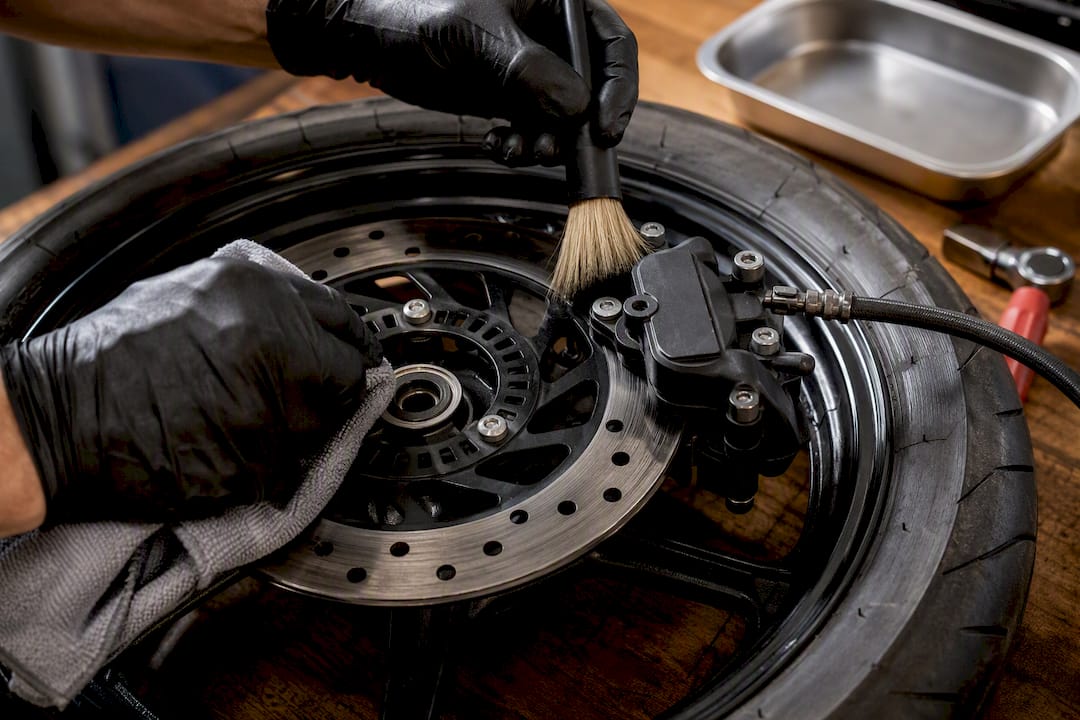
- Inspect brake pads and rotors regularly for wear, scoring, or glazing, since worn friction material changes how quickly ABS can engage.
- Check the area around the wheel-speed sensor for dirt, debris, or a damaged sensor ring, since a fouled sensor can trigger false ABS activation or disable it entirely.
- Have hydraulic lines and fluid checked at professional service intervals, since spongy lines undermine even a perfectly tuned ABS controller.
- Adjust your speed on loose gravel or ice, where ABS has less to work with. Slow down before the surface changes, not during it.
Pro Tip: Before you ever need ABS in traffic, find an empty lot and squeeze the brakes hard at low speed just to feel the pulse. Knowing what that sensation feels like ahead of time keeps you from flinching off the brakes during a real emergency stop.
For pad and rotor replacements, a rear hydraulic brake assembly or a set of hydraulic brake pads covers most routine service needs, and if brake dust has built up on your rotors, a short dwell-time cleaning method can restore clean stopping surfaces without damaging the finish.
Is ABS Worth It for Your Scooter?
ABS earns its cost for anyone commuting daily in traffic, riding a higher-speed-capable scooter, or regularly carrying a passenger or cargo where stopping distances stretch out. If you’re puttering around a quiet neighborhood on a tight budget, your money is often better spent on quality mechanical brakes and disciplined maintenance instead. Either way, check the exact spec sheet, test-ride before you commit, and confirm a shop can service the system down the road.
— Mario
Keep Your Scooter’s Brakes Ready for the Road
Whatever you’re riding, from a first scooter to a full-size go-kart, some retailers stock brake components that keep stopping power sharp instead of leaving you guessing. Hydraulic brake calipers, replacement pads, and electronic components sized for real fitment, not generic guesses, are available at some suppliers, so you can order once and get it right.

If your ABS-equipped ride needs a caliper swap, our rear brake caliper page covers common fitments, and our go-kart brake safety guide walks through the same inspection habits that keep any braking system, ABS or not, working when it counts. Browse the full lineup of go-karts, mini bikes, and powersports gear to see what fits your garage, and reach out to our team if you need help confirming a part before you order.
Sources
- Effectiveness of Anti-Lock Braking Systems (Multi-national study)
- Motorcycle ABS availability by make and model — IIHS
- Continental introduces single-channel ABS
FAQ
Which Scooters Have ABS Brakes?
Most mid-power and high-power urban scooters and many modern electric mopeds now offer ABS, typically as front-only single-channel units. Coverage varies by brand and model year, so always confirm the exact trim on the manufacturer’s spec page before buying.
What Are the Benefits of ABS Brakes on Scooters?
ABS lets you brake at full force without the wheel locking up and sliding out, which is especially valuable on wet or uneven pavement. A multinational study found ABS prevents roughly 20% of two-wheeler accidents, and the IIHS reports it cuts fatal motorcycle crash rates by a substantial margin.
What Does ABS Mean on a Scooter?
ABS stands for anti-lock braking system, an electronic setup that senses when a wheel is about to skid and pulses brake pressure to keep it rolling instead of sliding. You’ll feel that pulsing through the lever or pedal during a hard stop, which is normal, not a sign of trouble.
Which Brake System Is Best for a Scooter?
For most commuters, a scooter with reliable mechanical disc brakes plus either two-channel ABS or a well-tuned combined braking system covers the widest range of real-world stops. Single-channel ABS remains a solid, lighter-weight option that protects the more dangerous front-wheel lockup on smaller scooters, while parts like a replacement caliper keep either system performing as designed.