




A youth vehicle certification is a state-issued or state-approved credential that proves a young rider under 18 has learned the safety rules, hand controls, and trail etiquette needed to legally operate an off-highway vehicle (OHV) on public land. Most programs run as a one-time online course or an in-person clinic, finishes with a short test, and hands you a printable certificate the moment your rider passes. If you’re standing in your garage right now wondering whether your kid needs one before this weekend’s ride, your next move is simple: check your state’s outdoor recreation or parks agency page for its list of approved providers.
That’s the short answer. Here’s everything else you need before you hit the trail.
Key Takeaways
Youth vehicle certification is a safety education requirement that grants conditional legal permission for under-18 riders to operate OHVs on public land, not a substitute for ongoing supervised practice.
| Point | Details |
|---|---|
| Definition | Youth vehicle certification proves a rider under 18 learned OHV safety rules and machine control before riding on public land. |
| Who needs it | Most states require it for riders roughly 12 to 15 without a valid driver’s license; rules vary, so check locally. |
| How to get it | Register with a state-approved provider, complete online or in-person coursework, and pass the exam to print your certificate. |
| Carry proof | Keep a printed and digital copy of the certificate on hand every time your rider hits public trails. |
| Beyond the certificate | Pair certification with staged supervised practice and a properly sized machine, like those in Gokartsusa’s youth ATV and go-kart lineup. |
Where to verify requirements and register
For registration, start directly with Utah’s Youth Certification Course or North Dakota Parks and Recreation’s youth OHV courses, both of which list approved providers and registration windows directly on their state pages. For safety guidance beyond the minimum legal requirement, the ATV Safety Institute and NHTSA’s teen driving resources offer the research backing behind graduated exposure and hands-on training recommendations. If your family also has a teen approaching road driving age, Michigan’s Secretary of State page on new drivers is a useful reference for how separate the on-road and off-road systems really are.
Table of Contents
- What Is Youth Vehicle Certification, Exactly?
- Who Needs Youth Vehicle Certification?
- Which Vehicles and Activities Does Certification Cover?
- How Do You Get Youth Vehicle Certification?
- Where Do You Find Approved Youth Vehicle Certification Courses?
- What Do Youth Vehicle Certification Courses Actually Teach?
- What Does Certification Cost, and How Long Does It Last?
- How Should Parents Supervise Young Riders Beyond the Certificate?
- What Happens If a Youth Rides Without Certification?
- Why Experts Say Certification Alone Isn’t Enough
- Ready for the Right Machine After Certification?
- Sources
What Is Youth Vehicle Certification, Exactly?
Youth vehicle certification (sometimes called youth OHV certification or young driver certification, depending on the state) is a safety education requirement, not a driver’s license. It doesn’t authorize a teen to drive on the street. It grants permission, under specific conditions set by state law, to operate an ATV, off-highway motorcycle, side-by-side, or snowmobile on public trails and OHV-designated land.
This is fundamentally different from the graduated driver licensing systems most states use for teen road drivers. Michigan’s Secretary of State, for example, requires two segments of driver education and a staged licensing path (Learner’s, Intermediate, Full License) before a teen can drive unsupervised on public roads. OHV certification runs on a separate track entirely, built around off-road machine control, trail etiquette, and environmental stewardship rather than traffic law.
Where the two systems actually agree is on the underlying philosophy: a young person shouldn’t be handed full independence before proving they understand the risks and the machine.
Who Needs Youth Vehicle Certification?
Every state sets its own age brackets and exceptions, so treat any age listed here as a starting point, not a nationwide rule. Two examples make the pattern clear.
- Under roughly 11 to 12: many states bar unsupervised operation on public land regardless of certification status.
- Ages 12 to 15 without a valid driver’s license or learner’s permit: North Dakota Parks and Recreation requires this group to complete a safety certification class before riding anywhere beyond their parents’ own property.
- Under 18 generally: Utah’s youth OHV program requires a certificate plus direct adult supervision, and mandates that the rider be physically able to reach and operate the controls.
- Riding on the family’s own private property: often exempt, but “private property” has a narrower legal definition than most parents assume, so verify it before assuming your backyard counts.
- Supervised riding alongside a licensed adult: some states relax certification requirements in this scenario, but not all, and supervision rules vary sharply by state.
Here’s the detail that trips up a lot of families: several states don’t just require the course, they require you to carry proof of it while riding. A completed course sitting in a filing cabinet at home doesn’t satisfy the law if a ranger stops your teen on the trail and asks to see it.
Which Vehicles and Activities Does Certification Cover?
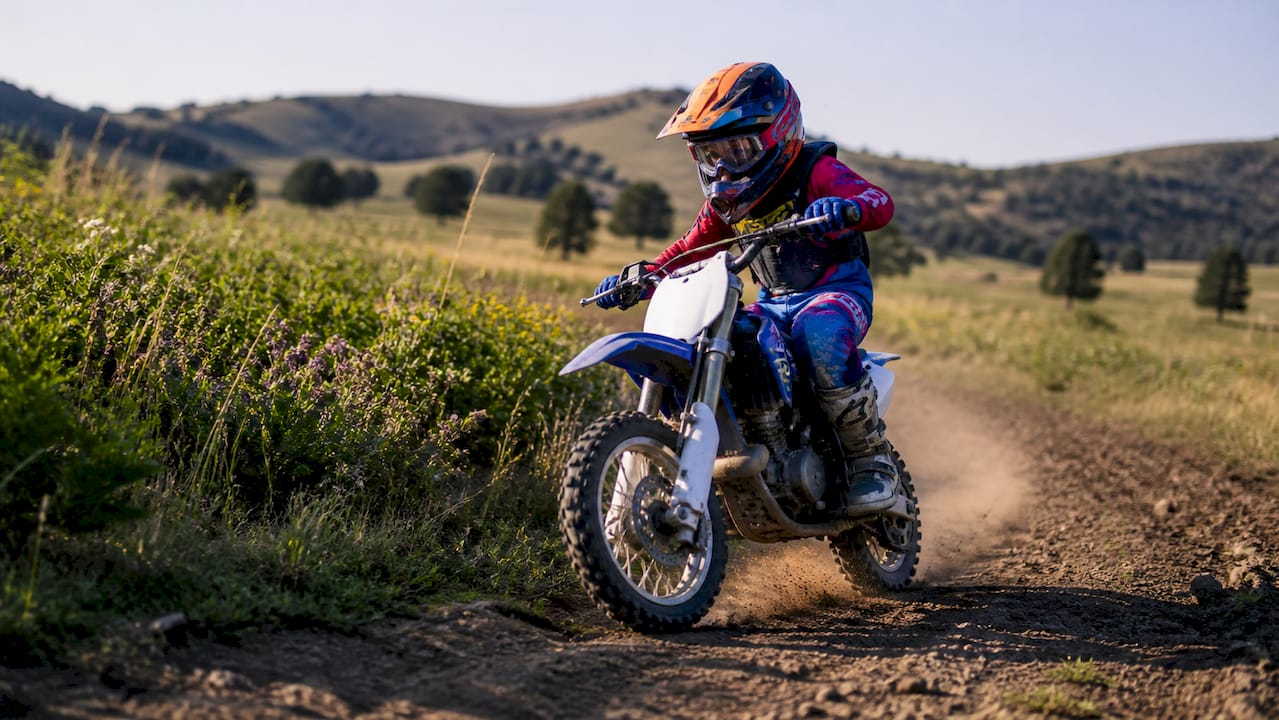
Youth vehicle certification typically covers four vehicle categories: all-terrain vehicles (ATVs), off-highway motorcycles (OHMs, including mini dirt bikes), side-by-sides or utility task vehicles (UTVs), and snowmobiles. The exact list depends on your state’s statute, and it’s worth reading the fine print, because coverage doesn’t always bundle neatly.
The certification generally governs operation on public land, designated OHV trails, and state-managed riding areas, not private property. Some states relax the rules considerably once you’re riding on land you or a relative owns outright. That said, don’t assume: a growing number of counties have local ordinances that apply even on private acreage, particularly near residential zones.
One wrinkle worth flagging: snowmobile certification is sometimes handled as a separate course from ATV, OHM, and UTV certification, even within the same state agency. If your family rides both dirt trails in summer and snow trails in winter, check whether one course covers you for both or whether you’ll need to complete two separate programs.
How Do You Get Youth Vehicle Certification?
Getting certified follows a fairly consistent sequence across states, whether you take the course online or in person.
- Confirm your state’s requirement. Search your state’s parks, outdoor recreation, or natural resources agency site for the exact age thresholds and exemptions that apply where you ride.
- Find an approved provider. States publish a list of vetted courses. Don’t substitute a random YouTube tutorial or a generic online safety quiz. It won’t count.
- Register. Most portals ask for the rider’s age, a parent or guardian email, and sometimes a small registration fee.
- Complete the coursework. This is either a self-paced online module with videos and quizzes, or an in-person clinic with hands-on skills practice.
- Pass the test. Online courses usually require a passing score on a multiple-choice exam before the certificate unlocks.
- Print and save the certificate. Most state programs, including Utah’s, generate a printable certificate the instant your rider passes.
The online-versus-in-person choice matters more than it looks on paper. Online certification is convenient and often cheaper, but it can’t teach a nine-year-old how their body should shift weight through a tight switchback or how quickly a machine responds to emergency braking. In-person clinics add instructor feedback on those physical skills, which is exactly the kind of muscle memory a video can’t build.
Don’t wait until the morning of a planned ride to discover your teen needs a retake.
Pro Tip: Keep both a printed copy of the certificate in your glove box or gear bag and a digital copy saved to your phone and a cloud drive. Certificates get lost, glove boxes get cleaned out, and phones die. Redundancy costs you nothing and saves a ruined trail day.
Where Do You Find Approved Youth Vehicle Certification Courses?
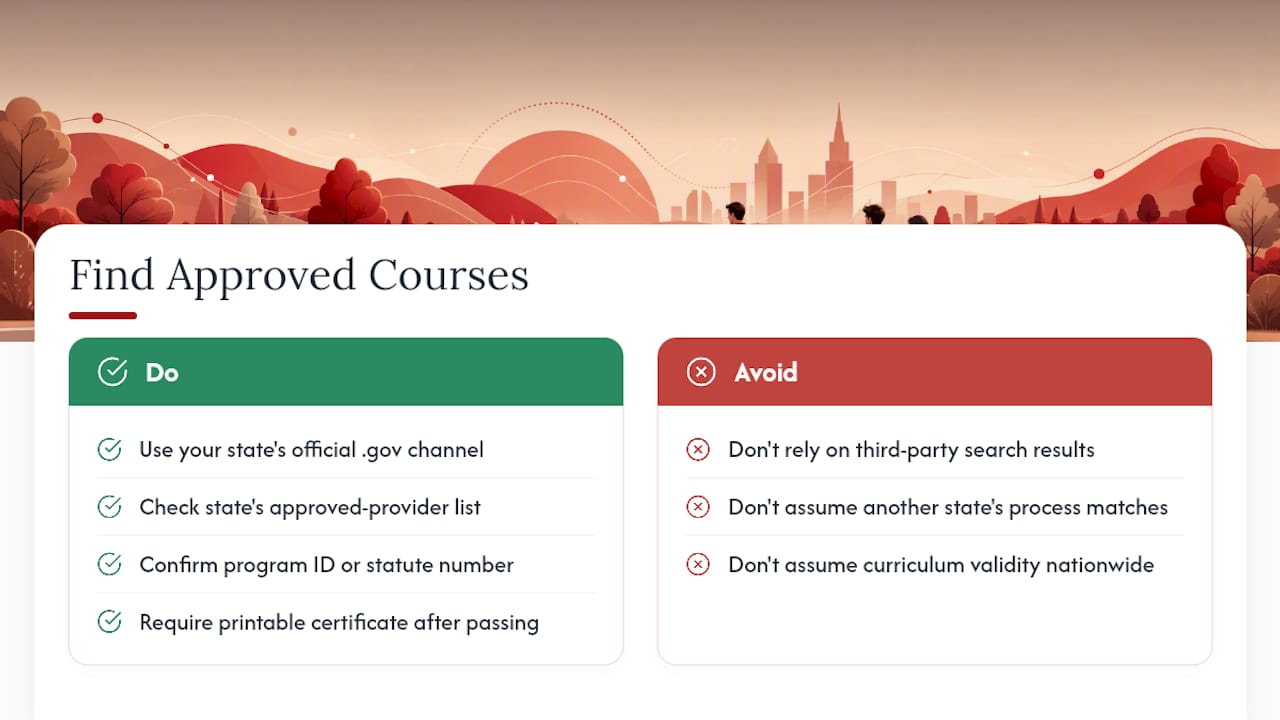
Start with your state’s official channel, not a third-party search result. State-run and state-approved programs live on .gov domains tied to outdoor recreation divisions, parks departments, or natural resources agencies, and those pages list exactly which providers count.
Utah’s Division of Outdoor Recreation runs its own youth certification course directly, with an online option, a listed fee, and an instantly printable certificate on passing. North Dakota Parks and Recreation takes a different approach, offering free in-person youth OHV safety courses with limited seats alongside a paid online path, and it publishes its own registration windows each season. Michigan handles licensing for on-road teen drivers through its Secretary of State office rather than an outdoor recreation agency, which underscores why you shouldn’t assume one state’s process maps cleanly onto another’s.
To verify a provider is legitimate, look for three things: the course appears on your state’s official approved-provider list, it references a program ID or state statute number, and it issues a printable operator license or certificate immediately after you pass. Third-party sites like ATVSafety.com and atvcourse.com offer certification pathways too, but confirm your state actually recognizes them before your teen sinks hours into the modules. “Today’s OHV Rider,” a common curriculum name used across several state programs, is another one worth checking against your specific state’s approved list rather than assuming nationwide validity.
What Do Youth Vehicle Certification Courses Actually Teach?
The curriculum is built around keeping a young rider upright, in control, and aware of what’s around them, not just passing a quiz.
Expect lessons on safe riding fundamentals, correct machine sizing for the rider’s height and strength, weight distribution through turns, throttle and brake control, shifting where applicable, trail etiquette around other riders and hikers, and basic environmental stewardship for the land they’re riding on. None of this is filler. A rider who doesn’t understand weight shift is far more likely to roll a machine on uneven terrain, and a rider who doesn’t understand trail right-of-way is a hazard to everyone else out there.
Hands-on clinics add physical practice that online modules simply can’t replicate: mounting and dismounting safely, executing emergency braking, and running low-speed maneuvers under an instructor’s eye. The ATV Safety Institute’s youth training resources are direct on this point, online modules build a useful knowledge base, but they don’t substitute for supervised, hands-on repetition when it comes to skills that require real-time balance correction. Online curriculum, by contrast, leans on instructional video and scored quizzes, which work well for teaching rules and judgment but less well for teaching reflexes.
As mentioned earlier, some states run snowmobile content as a separate module from ATV, OHM, and UTV content, so don’t assume one certificate automatically covers both.
What Does Certification Cost, and How Long Does It Last?
Costs vary by state and by format, but a few concrete numbers help set expectations. Utah’s official online youth course runs $34.95, a flat one-time fee for a course that issues a printable certificate the moment you pass. North Dakota takes the opposite approach for its in-person option: free enrollment, though seats are limited and tend to fill quickly each season, according to the North Dakota Parks and Recreation program page.
| Program | Format | Typical Cost | Certificate Delivery |
|---|---|---|---|
| Utah Youth Certification Course | Online | $34.95 | Printable immediately on passing |
| North Dakota Youth OHV Safety Course | In-person | Free (limited seats) | Issued through the state program |
| North Dakota Youth OHV Safety Course | Online | Paid option available | Printable on completion |
Most youth vehicle certifications are one-time credentials. Pass once, and in many states that certificate is valid for life, with no annual renewal or refresher course required. That said, “valid for life” is a common phrasing, not a universal rule, so confirm your own state’s policy before assuming your certificate never needs a second look. A handful of states do require renewal after a set number of years, and a few updates their curriculum periodically in ways that could affect older certificates.
Carry proof the moment you’re on the trail. Most programs generate a printable operator license or certificate instantly on passing, and that’s the document you want in a waterproof pouch on the machine, not a screenshot buried in a photo album your teen forgot to open. If your rider’s certificate is ever lost or damaged, the fix is usually straightforward: log back into the state’s course portal or contact the issuing agency directly, since most retain a digital record tied to the original registration and can reissue proof without a full retake.
How Should Parents Supervise Young Riders Beyond the Certificate?
A certificate proves your teen learned the rules. It doesn’t prove they’ve internalized them under real trail conditions, and treating it as the finish line is the single most common mistake parents make.
- Start with direct, hands-on adult supervision for every ride, even after certification, especially on unfamiliar terrain.
- Introduce complex terrain, steep grades, and higher speeds gradually rather than all at once.
- Keep a simple practice log noting what terrain your rider has handled and where they still struggle.
- Recheck machine fit every few months. A growing rider can outgrow a machine’s proportions in a single season.
- Confirm your teen can comfortably reach the throttle, brake, and clutch (if applicable) without stretching or repositioning mid-ride.
- Enroll in a hands-on clinic in addition to any online module whenever one is available in your area.
- Attend the course alongside your teen when the format allows it. You’ll spot gaps in their understanding that they won’t admit to on their own.
Machine sizing deserves special attention because it’s the variable that changes fastest; for practical advice, check this ATV Battery Maintenance Guide for Longer Battery Life – Banshee Battery. A vehicle that fit perfectly at the start of riding season might already be too small six months later, and an undersized or oversized machine undermines every safety habit the course just taught. Gokartsusa’s guide on teaching kids ATV riding walks through practical fit checks you can run in your own driveway before the next ride.
Pro Tip: Before each riding season, have your teen sit on the machine fully geared up and run through every control by name: throttle, brake, kill switch. If they hesitate on any of them, that’s your cue to schedule a refresher, not your cue to hit the trail.
What Happens If a Youth Rides Without Certification?
Consequences vary widely by state, but they’re rarely trivial. Depending on where you live, riding without the required certification can mean fines, restricted access to public OHV land, and in some jurisdictions, temporary confiscation of the vehicle. Enforcement intensity also varies, some counties patrol trails actively, others rely on complaint-driven enforcement, which means the actual risk on the ground can differ from what the statute technically allows.
Because these penalties differ so much by jurisdiction, the only reliable way to know your exact exposure is to check your own state’s parks or recreation agency page, or call local law enforcement directly. Don’t rely on what a neighboring state requires, and don’t assume a rule you read online still applies after this year’s legislative session.
One more distinction worth repeating: private property rules and public land rules are not the same thing, and conflating them is how well-meaning parents end up out of compliance without realizing it.
Why Experts Say Certification Alone Isn’t Enough
Every safety organization that studies youth OHV riding lands on the same conclusion: certification is a floor, not a ceiling. The ATV Safety Institute frames it directly, a completed course establishes a foundation, but it doesn’t guarantee proficiency across every terrain type a rider will eventually encounter, and the institute pushes hands-on RiderCourse training as the logical next step after any online module.
NHTSA’s teen driving research reinforces the same principle from a different angle, built around road vehicles rather than OHVs. Its data on graduated exposure shows that staged, supervised practice measurably reduces crash risk for novice operators compared to unsupervised independence granted right after a single training event. The mechanism is intuitive even without the research: skill under low-pressure conditions doesn’t automatically transfer to skill under real trail stress, tight turns, sudden obstacles, uneven grades, without repetition.
This is exactly why certification often functions as a gateway rather than an endpoint. Passing the course is frequently what unlocks eligibility for hands-on clinics and supervised group rides in the first place. Skipping that next step means your teen has the legal paperwork but not the repetitions that actually build safe instincts.
A parent’s practical recommendation
Certification plus supervised practice plus properly fitted gear beats certification alone every time, and that’s not a close call. If your teen hasn’t completed a course yet, the single most useful thing you can do this weekend is pull up your state’s list of approved providers and get them enrolled, then follow it with at least one hands-on clinic before letting them ride unsupervised on anything beyond flat, familiar ground.
Ready for the Right Machine After Certification?
Once your teen has that certificate in hand, the next decision that actually affects their safety is the machine itself. A vehicle that’s too big for a young rider undoes half of what the course just taught, no matter how well they scored on the exam. Gokartsusa’s youth lineup is built around that exact concern: machines sized for growing riders, with features like parental remote start and kill switches that let you set real limits while your teen builds experience.

Look for a model that lets your rider maintain full control of the throttle and brakes without stretching, and pair it with a properly rated helmet every single time they ride. The Mini Sport Kids ATV with parental remote start and kill switch gives you that extra layer of control while your teen logs supervised hours. If your family’s headed toward karting instead, the Sport Kart Kids Gas Go Kart is built for exactly this stage, sized for younger riders and designed to keep the fun proportional to the skill they’ve just proven they have. Browse Gokartsusa’s youth vehicle lineup and match the machine to the certificate your rider just earned.
Sources
- Utah Youth Certification Course - Utah Outdoor Recreation
- Youth OHV Safety Courses open for registration | North Dakota Parks and Recreation
- NHTSA — Teen Driving
- New drivers (under 18) — Michigan Secretary of State