




Expect to pay in a range starting around one thousand dollars for a starter 50–70cc youth ATV, somewhat more for a 90–110cc model, and higher for a 125cc or teen-sized machine, with youth side-by-sides priced above most quads. The sticker price is only the starting line. Destination charges, setup, taxes, and safety gear will add to that number before your child ever throws a leg over the seat, so let fit and safety features guide your choice rather than the lowest tag on the lot.
TL;DR:
- Buying a youth ATV involves additional costs such as destination charges, setup fees, taxes, and safety gear, which can add several hundred dollars to the sticker price.
- A well-supported brand with a reliable dealer network and a solid warranty often results in lower long-term costs despite a higher initial price.
- Engine size alone is less important than safety features like throttle limiters and remote kill switches, especially when choosing between similar models.
- Getting a written out-the-door quote helps avoid surprises and ensures all fees are transparent before purchase.
- Resale value depends more on brand support and maintenance history than on the original purchase price or engine displacement.
Table of Contents
- Youth ATV Prices By Engine Size And Category
- What Turns MSRP Into Your Real Out-The-Door Price
- Warranty, Parts, And Resale: The Costs Hiding Past The Sticker
- Buying Checklist: Fit, Safety, And A Realistic Budget
- GoKartsUSA’s Resources For Priced, Safe Youth ATV Shopping
- Financing A Youth ATV: What Payment Plans Actually Look Like
- What Happens To A Youth ATV’s Value Down The Road
- The Real Trade-Off Parents Face on Youth ATV Prices
- See Current Youth ATV Prices And Get An Out-The-Door Quote
- Sources
- FAQ
Youth ATV Prices By Engine Size And Category
The engine size on the spec sheet tells you a lot about where a model lands on price, but it’s the features bolted around that engine that really separate a bargain from a liability. Here’s how the U.S. market breaks down right now.
- 50–70cc starter models ($1,000–$2,500): Built for riders roughly 6 to 10 years old, these machines almost always ship with a throttle limiter and a tether safety switch so a parent can cap top speed or cut the engine remotely. Polaris prices its Outlaw 70 starting around $2,999, while budget-focused retailers list smaller generic 50cc quads under $1,500.
- 90–110cc beginner and intermediate models ($1,500–$3,700): This is the sweet spot for riders roughly 8 to 12, and it’s where you start seeing real mechanical upgrades. Fuel-injected engines replace carburetors on some models, suspension travel improves, and manufacturer pricing for machines like the Polaris Sportsman 110 lands in the mid $3,000s.
- 125cc and up, teen and adult-transition models ($2,500–$5,500+): Bigger frames, stronger hydraulic brakes, and features that mimic full-size adult ATVs push these into the higher bracket. A buyer’s guide from Dirt Wheels Magazine shows youth and crossover models spanning roughly $1,099 to $5,599 depending on brand and displacement.
- Entry youth UTVs and side-by-sides: These typically start well above quad pricing because you’re paying for a roll cage, seatbelts, doors, and a two-seat cab instead of a single saddle. The added structure and safety equipment are the trade-off for the higher entry point.
If you’re weighing a well-equipped 110cc against an underpowered 125cc, the smaller displacement with better parental controls is often the smarter buy for a growing rider, not the bigger number on the fuel tank.
What Turns MSRP Into Your Real Out-The-Door Price
Manufacturer’s suggested retail price, or MSRP, is the number on the spec sheet, not the number you’ll actually pay at checkout. Dealers add several charges on top, and understanding them ahead of time keeps you from feeling ambushed at the register.
- Destination charge. Nearly every dealer-sold ATV carries a freight fee to move it from the factory or warehouse to the showroom floor, often several hundred dollars.
- Dealer prep and setup. Someone has to assemble, inspect, and adjust the machine before it’s rideable, and that labor typically shows up as a separate line item.
- Documentation and title fees. Paperwork processing is a small but real add on, and it varies by dealer.
- Sales tax, title, and registration. These are set by your state and sometimes your county, so a machine priced identically in two states can cost noticeably different amounts once you drive it home.
- Safety gear and accessories. Budget for a properly fitted youth helmet, gloves, and a protective riding jacket, plus a parental remote kill fob if it isn’t bundled with the ATV.
The single best move before you sign anything is asking for a written out-the-door quote that itemizes every fee. That one request turns a vague sticker price into a number you can actually compare across dealers, and it prevents the classic surprise where a $2,999 quad quietly becomes a $3,600 invoice.
Warranty, Parts, And Resale: The Costs Hiding Past The Sticker
The purchase price only tells part of the story. What you pay over the next two or three years of ownership often depends more on brand support than on the number you saw on day one.
Statistic Callout: Manufacturer youth models like the Suzuki QuadSport Z50 commonly ship with a 12-month limited warranty. That single year of coverage can absorb the cost of an early defect that would otherwise come straight out of your pocket.
A few factors worth weighing before you commit to a lower price tag:
- Warranty length and terms protect you against early mechanical failures, and 12 months is a common industry benchmark to compare against.
- Parts availability and dealer network determine how fast a repair happens. Cheaper generic machines sold outside established dealer networks often mean longer waits and harder-to-find replacement parts.
- Routine maintenance adds up regardless of brand. Oil changes, tires, brake pads, and air filters are recurring costs every youth ATV owner should plan for.
- Resale value tends to track brand reputation and documented service history far more than it tracks the original discount you scored at purchase.
Paying a few hundred dollars more for a supported brand name frequently pays for itself the first time something needs fixing.
Buying Checklist: Fit, Safety, And A Realistic Budget
Before you fall in love with a color or a horsepower number, run through this checklist. It’s the difference between a machine that fits your child today and one that gets outgrown, outmatched, or returned.
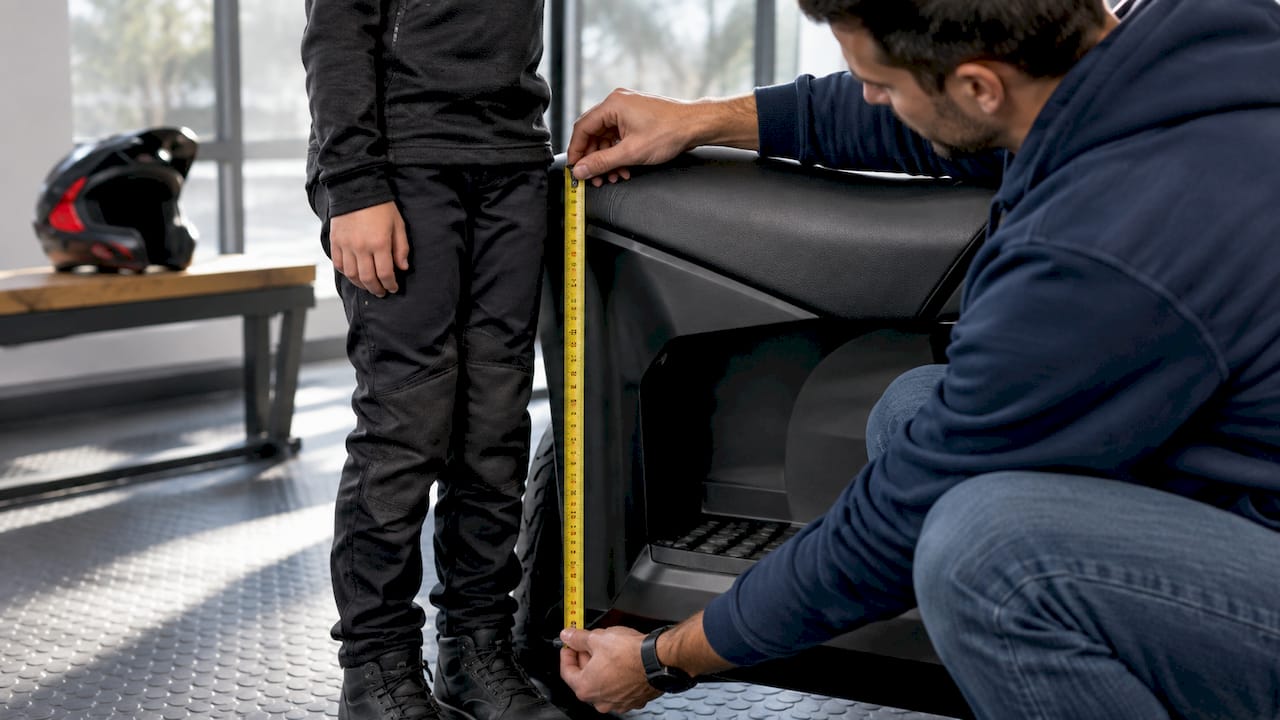
- Fit first. Check seat height, how easily your child reaches the handlebars and brake levers, and confirm the machine’s stated weight limit against your rider.
- Do a supervised test-sit or slow ride whenever possible, since a quad that looks right on a spec sheet can still feel wrong under an actual kid.
- Confirm the safety features, including a throttle limiter, a tether or remote kill switch, keyed ignition, and brakes that respond predictably at low speed.
- Ask the dealer directly about warranty length and coverage, where the nearest service center is, and whether parts are stocked locally or special-ordered.
- Request a written out-the-door price before you commit, and add protective gear, first-year service, and registration to your total budget rather than treating them as afterthoughts.
Age recommendations printed on the box are a starting point, not a guarantee. Guidance from the New York State Department of Health makes clear that fit, strength, and direct supervision matter as much as the age number on the label.
Pro Tip: Bring a tape measure to the dealership. A quick check of your child’s inseam against the quad’s seat height catches sizing mismatches that spec sheets alone can hide.
GoKartsUSA’s Resources For Priced, Safe Youth ATV Shopping
GoKartsUSA specializes in entry-level go-karts, mini bikes, dirt bikes, and youth ATVs, and we back seasonal promotions like spring sales, free shipping, and bundled helmets with straightforward product pages so you can see what you’re paying for before you buy. If safety is your first filter, not just price, our ATV Safety Checklist for Riders and Parents in 2026 and our guide on how to teach kids ATV riding safely are worth reading before you shop. If you’re ready to compare a specific model against your budget or want an inventory check, reach out to our team for a written quote.
Financing A Youth ATV: What Payment Plans Actually Look Like
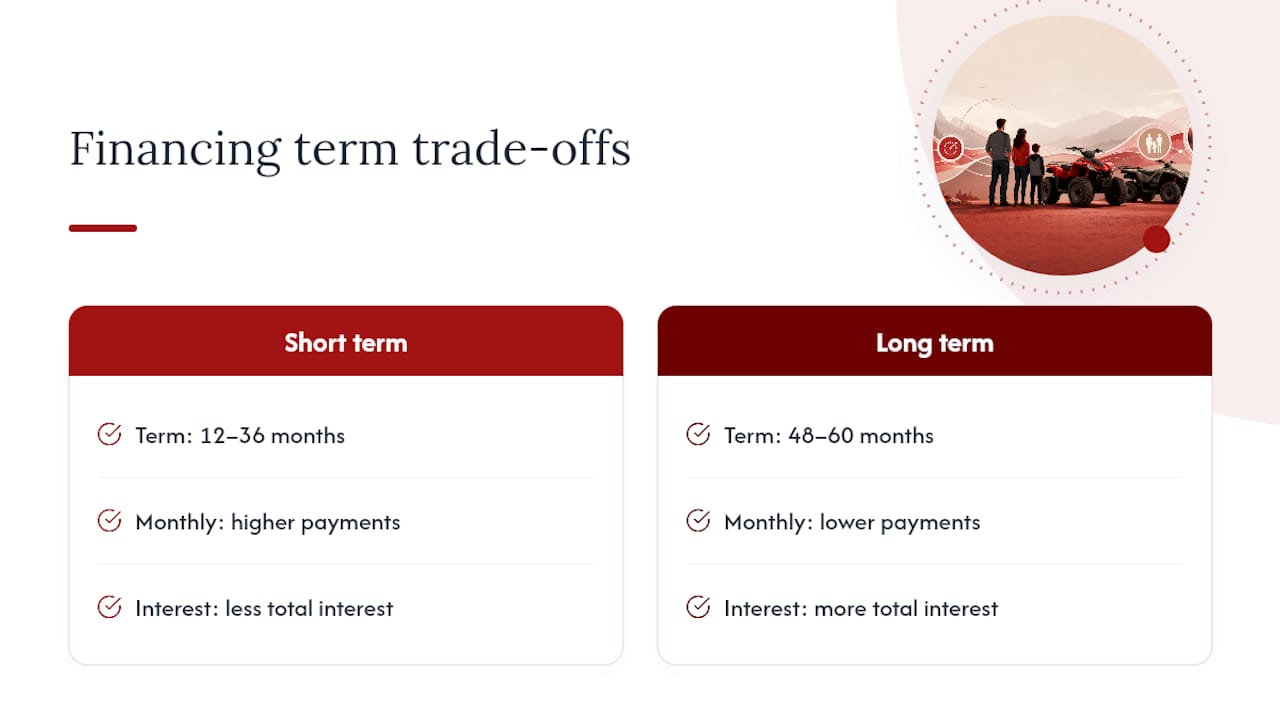
Most dealers and online retailers, GoKartsUSA included, offer financing options that split the purchase into monthly installments rather than requiring the full price upfront. Terms typically run from 12 to 60 months, and the monthly payment shifts a lot depending on the term length you pick, not just the price of the machine.
A shorter term means higher monthly payments but less total interest paid over the life of the loan. A longer term stretches the payment down to something that fits a tighter monthly budget, but you’ll pay more in interest by the time it’s paid off. For a $3,000 youth ATV, that’s the practical trade-off: comfortable monthly payments now, or a lower total cost later.
Approval and rates depend on credit history, and some retailers offer promotional financing windows, like zero-percent introductory rates for a limited term, tied to seasonal sales events. Read the fine print on any promotional rate before you sign, since many convert to a standard rate if the balance isn’t paid off within the promotional window.
Whichever way you finance, add the out-the-door price, not just the MSRP, into your loan calculation. Financing a $2,999 quad that actually costs $3,600 once fees and gear are included means budgeting your monthly payment against the real number, not the number on the spec sheet.
What Happens To A Youth ATV’s Value Down The Road
Kids outgrow ATVs fast, often within a year or two, which makes resale and trade-in value a real part of the total cost of ownership, not an afterthought. A youth quad that’s well maintained, from a brand with strong dealer support, and comes with documented service records will hold value noticeably better than a generic machine bought purely on lowest price.
Trade-in offers from dealers tend to favor recognizable brand names with active parts availability, since a dealer knows they can resell or service that machine easily. A no-name budget quad, even one that ran fine for your family, is often harder for a dealer to move and will typically pull a lower trade-in offer as a result.
If resale matters to your plan, that’s another argument for spending slightly more upfront on a supported brand rather than chasing the absolute lowest sticker price. Keep basic maintenance records, even informal ones, since a documented oil change and tire history can support a stronger asking price when you’re ready to sell privately or trade toward your child’s next machine.
The Real Trade-Off Parents Face on Youth ATV Prices
The conventional wisdom pushes parents toward the cheapest sticker price they can find, and that advice undersells what actually determines whether a youth ATV purchase works out. Price bands matter, but they’re a budgeting tool, not a decision-making tool. The research here points to a clearer priority order: fit and safety features first, brand support and warranty second, and raw price third.
A $1,200 machine with no throttle limiter and no dealer network nearby isn’t actually cheaper than a $2,000 machine with both, once you account for the risk and the repair headaches. Where most buying guides fall short is treating engine size as the main variable. It isn’t. A properly limited 110cc quad is frequently the safer, smarter choice over an ill-fitting 125cc, regardless of what the displacement numbers suggest.
If you take one thing from this, let it be the out-the-door quote. Get it in writing, compare it across two or three dealers, and let that number, not the MSRP, guide your final call.
— Mario
See Current Youth ATV Prices And Get An Out-The-Door Quote
An online powersports retailer carries a selection of entry-level youth ATVs, including models built with parental remote start and kill features, alongside financing options and seasonal promotional deals like bundled helmets and free shipping. If the price bands and checklist above have you ready to compare a real model against your budget, our Mini Sport Kids ATV with parental remote start and kill is a straightforward example of what a well-equipped 110cc youth quad looks like at retail.
Browse our full inventory of youth-ready vehicles to compare models side by side, or contact our team directly to request a written out-the-door quote before you commit to anything. We’ll walk you through what’s included, what’s optional, and what your total cost looks like once destination, setup, and gear are factored in, so there’s no surprise waiting at pickup.
Sources
- Youth & Kids ATVs, 4 Wheelers & Side-by-Sides | Polaris
- BUYER’S GUIDE: YOUTH ATVs & UTVs - Dirt Wheels Magazine
- ATV safety guidance — New York State Department of Health
- Suzuki Cycles - 2026 QuadSport Z50
FAQ
How Much Does A Kid’s ATV Cost?
Most youth ATVs in the U.S. run $1,000 to $2,500 for 50–70cc starter models, $1,500 to $3,700 for 90–110cc models, and $2,500 to $5,500 or more for 125cc and teen-sized machines, before taxes, destination fees, and gear.
What Is The Best Youth ATV For The Money?
The best value is typically a 90–110cc model with fuel injection, a throttle limiter, and a tether or remote kill switch, since those features protect both your child and your investment better than raw engine size alone.
What Size ATV Is Best For An 11-Year-Old?
Most 11-year-olds fit well on a 90–110cc youth model, but seat height, arm reach to the controls, and the manufacturer’s weight limit matter more than age alone, according to safety guidance from the New York State Department of Health.
What Is The Cheapest ATV On The Market?
Budget generic 50cc youth ATVs can be found for roughly $1,000 to $1,500 through select retailers, though brand-name manufacturer models with stronger parts support and dealer networks typically start in the low $2,000s.
Does GoKartsUSA Offer Financing On Youth ATVs?
GoKartsUSA offers financing options alongside seasonal promotions like free shipping and bundled accessories; current pricing and financing terms are listed on individual product pages.