




When people search “atv parks USA,” most are actually shopping for a real ATV or UTV to buy, not a place to ride one. This guide treats it that way. Your next move: pick a machine sized right for your rider, confirm safety training before the throttle ever twists, and buy from a retailer that stands behind assembly, parts, and warranty. Those three decisions, backed by CPSC safety data, ASI RiderCourse enrollment, and a retailer like Gokartsusa that ships with clear assembly and parts support, cover 90% of what determines whether your family’s first ATV purchase goes well.
Here’s what to nail down before you check out:
- Confirm the engine size matches your rider’s age and physical fit, not just their enthusiasm.
- Enroll in (or plan to enroll in) the ASI RiderCourse before the machine ever leaves the driveway.
- Choose a retailer with documented assembly instructions, VIN verification, and real parts availability.
Key Takeaways
The safest and most successful ATV purchase matches engine size to rider fit, requires RiderCourse training before the first ride, and comes from a retailer with clear assembly and parts support.
| Point | Details |
|---|---|
| Match size to age and fit | Use under 70cc for ages 6 to 11 and 70 to 90cc for ages 12 to 15, then confirm with a physical fit test. |
| Train before riding | Complete the free ASI online E-Course, then schedule the hands-on RiderCourse session. |
| Verify state rules first | Check your state DMV or off-highway vehicle office for registration and title requirements before buying. |
| Confirm delivery and parts | Check assembled vs. crated shipping, verify the VIN on arrival, and confirm warranty and parts availability in writing. |
| Buy from a supported retailer | Gokartsusa’s Mini Sport Kids ATV includes a parental kill switch and speed limiter, with assembly and parts support included. |
Table of Contents
- Your ATV Parks USA Buying Checklist Before You Click “Buy”
- How Do You Choose the Right ATV Size for Kids and Adults?
- Why the ASI RiderCourse Matters More Than You Think
- What to Check When Your ATV Arrives at Your Door
- Registration and State Rules You Need to Verify First
- Which Starter Models and Accessories Should You Buy First?
- How to Prepare for the First Ride Safely
- A Note From Mario at Gokartsusa
- How Gokartsusa Makes Your First ATV Purchase Easier
- Frequently Asked Questions
- Sources
Your ATV Parks USA Buying Checklist Before You Click “Buy”
Comparing listings gets overwhelming fast once you factor in engine size, shipping weight, and five different warranty terms across five browser tabs. Here’s the order that actually matters, in the sequence smart buyers work through it.
- Match engine size to rider age and body. Don’t buy on hope that they’ll “grow into it.”
- Budget for a DOT helmet, goggles, and gloves separately. These aren’t optional add ons; treat them as part of the purchase price.
- Check the warranty terms and what parts are stocked. A cheap machine with no parts support costs more in the long run.
- Confirm whether it ships assembled or crated, and who’s doing final assembly if it’s the latter.
- Verify your state’s registration and title rules before you commit, since transport and trailer costs add up fast.
Pro Tip: Screenshot the product page’s warranty language and parts-availability statement before you buy. Retailers change page copy, and you’ll want proof of what you were promised if a part fails in year two.
How Do You Choose the Right ATV Size for Kids and Adults?
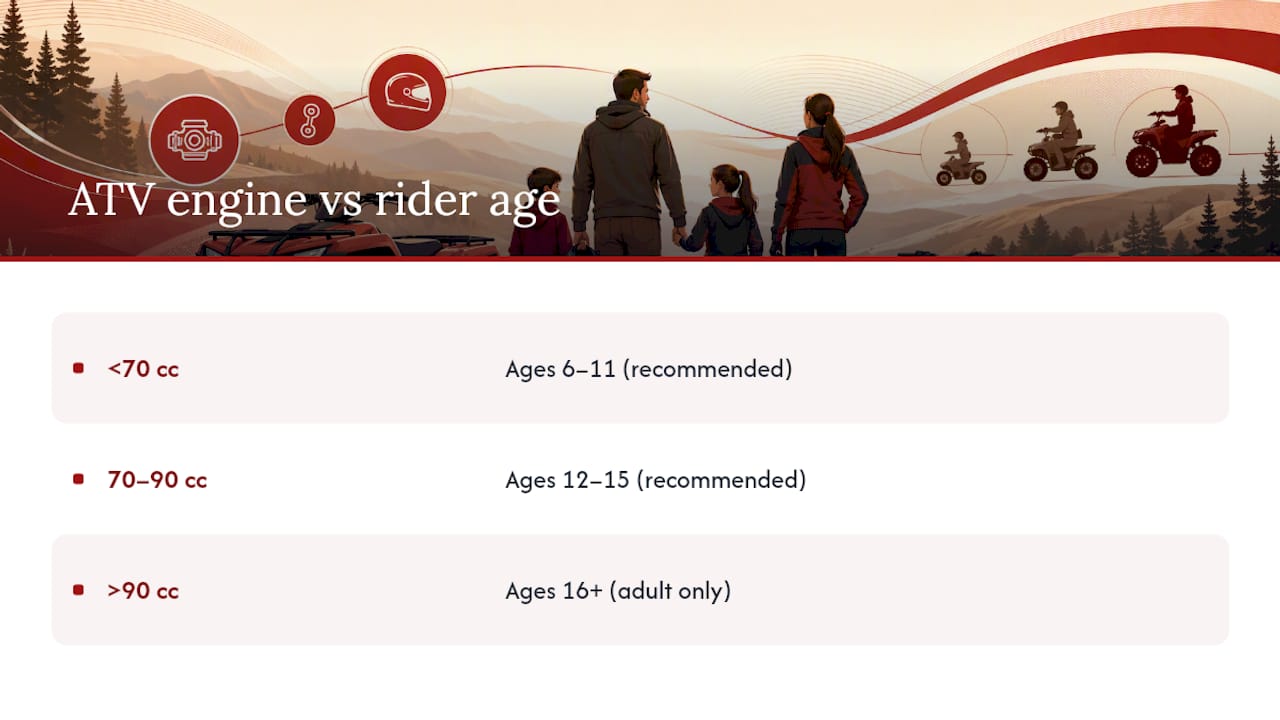
Engine displacement, not price or paint color, is the real safety spec. Extension guidance recommends under 70cc for riders ages 6 to 11, and 70cc to 90cc for ages 12 to 15. Anything above 90cc is built for adult riders and shouldn’t go to anyone under 16, regardless of how tall they seem for their age.
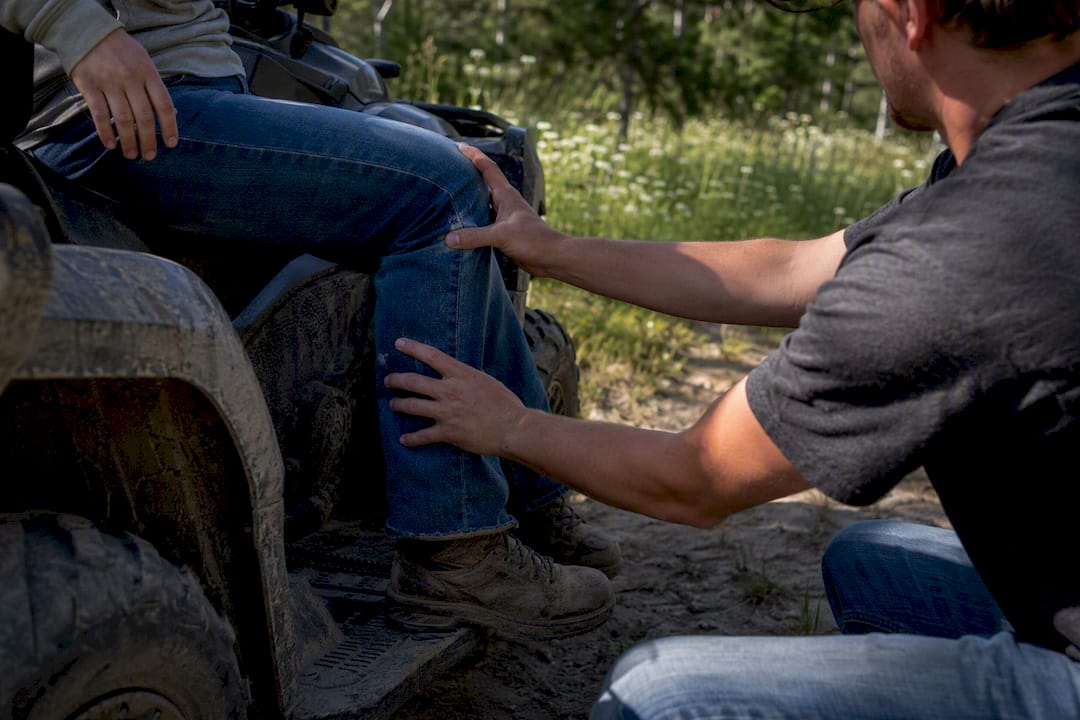
Size on paper still needs a physical check. Pediatric guidance from UI Health’s Stead Family Children’s Hospital recommends three fit tests: the rider’s back sits against the seat, knees bend at roughly 90 degrees when hands reach the controls, and both feet plant flat on the footrests. Skip any machine that fails these tests, even if it’s the “next size up” you were planning to buy in a year anyway.
Stick to four wheels. Three-wheeled ATVs are inherently less stable and extension safety literature advises against them entirely.
CPSC data shows nearly 300 youth deaths occurred among riders under 16 in a recent three-year window, with many involving kids on adult-size machines.
Why the ASI RiderCourse Matters More Than You Think
Training isn’t a formality here. It’s the difference between a confident rider and a dangerous guess. The ATV Safety Institute recommends every new rider complete the free online E-Course, then follow it with a hands-on RiderCourse session. Some new-ATV purchases even qualify for a free hands-on seat, so check before you assume you’ll pay out of pocket.
ATVs are not toys. The ASI stresses that even experienced adult riders benefit from hands-on RiderCourse training, and that children should never ride unsupervised until they’ve completed it.
Between 2018 and 2020, CPSC recorded over 100,000 emergency-department injuries and an annual average of more than 800 deaths tied to ATVs, UTVs, and other off-highway vehicles nationwide.
Build your gear list around that reality:
- DOT-certified helmet, sized and fitted, not borrowed
- Goggles rated for dust and debris
- Over-the-ankle boots and riding gloves
- One rider per seat unless the machine is explicitly built for a passenger
Our riding techniques guide walks through supervised practice drills that pair well with RiderCourse fundamentals.
What to Check When Your ATV Arrives at Your Door
Buying online means the transaction doesn’t end at checkout. It ends when the machine is verified, assembled, and running the way the listing promised.
- Confirm assembled vs. crated delivery upfront. Some retailers ship ready to ride; others require final assembly on your end, and you need to know which before the truck shows up.
- Check the VIN on the frame against your paperwork the moment it arrives. Buyer guides treat this as a non-negotiable step, and it’s the fastest way to catch a shipping or paperwork error.
- Photograph the VIN plate and crate condition before you sign for delivery, in case damage claims come up later.
- Pin down warranty scope and parts availability in writing, not just a verbal promise from a sales rep.
- Ask about support response times. A retailer that answers assembly questions within a day beats one that takes a week, especially the first time you’re bolting on a wheel assembly yourself.
Registration and State Rules You Need to Verify First
Every state handles ATV registration differently, and skipping this step is how buyers end up with a machine they can’t legally title or resell.
- Check your state DMV or off-highway vehicle office before you finalize a purchase, since rules vary widely across the country.
- Some states require formal title transfer on used ATVs; others don’t track titles at all, so confirm the local process before buying secondhand.
- Registration fees, inspection requirements, and local trail-use permits all add to your real cost of ownership beyond the sticker price.
The CPSC ATV Safety Information Center is a solid starting point for understanding how state-level rules interact with federal safety guidance.
Which Starter Models and Accessories Should You Buy First?
An entry-level youth ATV with the right built-in safety features beats a bigger machine with none. Look for a parental remote start/kill switch and a speed limiter before you look at colors or graphics packages. Gokartsusa’s Mini Sport Kids ATV includes both, giving parents a way to cap top speed and cut power remotely while a young rider is still building skill.
Round out the purchase with the gear that actually gets used every ride:
- DOT-approved youth helmet sized for a snug, not loose, fit
- Riding goggles and gloves rated for dust and impact
- A trailer or hitch-mounted rack with tie-downs rated for the machine’s weight
- A basic tool kit for pre-ride checks
For a broader look at entry-level machines built around safety features rather than raw speed, our entry-level ATV guide for beginners breaks down what separates a genuine starter model from a scaled-down adult machine.
How to Prepare for the First Ride Safely
- Walk through a pre-ride inspection: tires, brakes, throttle response, and the VIN against your paperwork one more time.
- Fit gear before the engine starts, not after, so helmet straps and boot fit get checked in a calm moment.
- Run a short supervised practice session in an open, flat area away from traffic or trails.
- Schedule the hands-on RiderCourse component if your rider only completed the online E-Course so far.
- Set clear family rules on where, when, and how far a young rider can go without an adult present.
Pro Tip: Run the first practice session on grass, not gravel or pavement. A low-speed tip-over on soft ground teaches balance without teaching fear.
Our parent’s guide to teaching kids ATV riding walks through this staging process in more detail if you want a week-by-week plan.
A Note From Mario at Gokartsusa
We build our product pages and safety posts around one goal: matching families with the right machine, not the biggest one. If you’re stuck on fit, use our sizing checklist or reach out to our support team for real assembly help.
How Gokartsusa Makes Your First ATV Purchase Easier
Gokartsusa is the direct path to an age-appropriate ATV backed by real assembly and parts support, not a guessing game across five marketplace listings with no phone number attached. Our Mini Sport Kids ATV comes with a parental remote start/kill switch built in, so you control top speed and power while your rider builds skill and confidence.

Seasonal promotions, including spring sales and free shipping on select models, apply directly on the product page, and our team can walk you through assembly steps before the crate even arrives. If lighting or visibility accessories are on your list too, Wheel Light Express covers UTV lighting options worth reviewing alongside your ATV purchase. When you’re ready, check the fit specs on the Mini Sport Kids ATV page and reach out to our support team with any assembly questions before you check out.
Frequently Asked Questions
What does “ATV parks USA” actually mean when I’m shopping online? In the context of buying a vehicle, it reflects the broader search interest in ATVs across the United States, and this guide focuses squarely on choosing and purchasing the right machine rather than finding places to ride it.
What’s the safest starter engine size for a first-time young rider? Extension guidance points to under 70cc for riders ages 6 to 11 and 70cc to 90cc for ages 12 to 15, with anything above that reserved for riders 16 and older.
Do I need to complete RiderCourse training before my ATV arrives? You don’t need to finish it before delivery, but plan to complete the online E-Course immediately and schedule the hands-on RiderCourse session before your rider’s first supervised practice.
How do I know if an online ATV retailer is trustworthy? Look for clear warranty terms, documented parts availability, transparent assembly instructions, and responsive customer support. A listing with none of those is a warning sign regardless of price.
Does every state require ATV registration and titling? No. Requirements vary by state, and some require title transfer on used machines while others don’t track titles at all, so check your state DMV or off-highway vehicle office before you buy.
Sources
- CPSC news release and ATV safety reporting
- ATVs and youth: matching children and vehicles (Penn State extension)
- ASI tips and RiderCourse information (ATV Safety Institute)
- How to buy a used UTV or ATV (Dirt Wheels)
- Choosing the right size ATV and UTV for safe riding (UI Health — Stead Family Children’s Hospital)