




For most U.S. buyers, getting LTL freight quotes through a broker or marketplace strikes the best balance between price and protection. Choose enclosed transport or full truckload only for high-value racing karts or bulk moves. Start now: measure your kart, weigh it, snap photos of its condition, and request quotes that include liftgate service and declared value coverage before you commit to a carrier.
TL;DR:
- Using a freight marketplace or broker provides the best price comparison and includes options like liftgate and declared value coverage for most shipments.
- Enclosed transport or full truckload shipping is recommended for high-value or delicate go-karts, which typically cost between $500 and $1,000 or more depending on distance.
- Proper preparation involves cleaning, photographing, draining fluids, securing loose parts, and choosing between palletizing or crating based on value and distance.
- Shipping costs are influenced by freight class, distance, packaging, and added services like residential delivery and liftgate, with flexible pickup windows often reducing expenses.
- Obtaining multiple quotes, confirming declared value limits, and documenting condition beforehand are crucial steps to ensure protection and smooth claims if damage occurs.
Table of Contents
- Which Go-Kart Shipping Methods Actually Make Sense?
- What Drives the Price of Go-Kart Shipping?
- How Do You Prepare a Go-Kart for Pickup and Transit?
- How Do You Choose and Book a Reliable Carrier?
- What Delivery Timelines and Services Should You Expect?
- Quick Reference: Cost and Transit by Method
- Where GokartsUSA Fits Into Your Shipping Plan
- What’s the One Move That Actually Protects You Here?
- Ready to Buy? Here’s How GokartsUSA Makes Shipping Simple
- Where This Information Comes From
- Sources
Which Go-Kart Shipping Methods Actually Make Sense?
Five real paths exist for getting a go-kart from point A to point B, and each one fits a different situation.
- Freight marketplace or broker. Sites like uShip let carriers bid on your listed shipment, while a broker such as FreightCenter shops multiple carriers for you and can arrange liftgate service, crating, or expedited pickup. This is the best starting point for one‑off shipments because it gives you real price comparison instead of a single quote.
- Direct LTL carrier. You book a “less than truckload” slot on a truck already hauling other freight. It’s cost‑effective for single karts since your shipment shares space with other cargo, but expect more handling and transfer points.
- Enclosed carrier. Your kart rides in a covered trailer, shielded from weather and road debris. Open carriers cost less but leave vehicles exposed, so enclosed transport earns its premium when you’re shipping a race-tuned kart with a custom paint job or delicate electronics.
- Full truckload (FTL). Race teams moving several karts to a regional event should book FTL. One truck, one load, minimal handling, which matters when bulk shipments need to avoid repeated loading and unloading.
- DIY trailer or van. If you own a trailer or a truck with enough bed width, hauling it yourself skips freight fees entirely, though it costs your own time and fuel.
If your kart is a custom racing build worth several thousand dollars, spend the extra money on enclosed shipping or a wooden crate. A cracked fairing or bent frame rail costs far more to fix than the price difference between open and enclosed transport.
What Drives the Price of Go-Kart Shipping?
Realistic budgeting starts with knowing what you’re actually paying for. Practitioner reports put open carrier LTL shipments in the $200 to $500 range for most domestic moves, while enclosed or premium services commonly land between $500 and $1,000 or more depending on distance and add-ons. FTL shipments for multiple karts typically run higher per truck but lower per kart when you’re moving several at once. DIY towing costs only fuel and your time, assuming your vehicle can legally and safely handle the load.
Carriers price shipments using freight class, not just weight. FreightCenter notes that go-karts commonly fall into freight class 150 to 175 depending on their size and density, and getting that classification wrong is one of the fastest ways to get hit with a surprise adjustment fee after pickup. Dimensional weight matters too: a bulky, lightweight kart on a large pallet can cost more to ship than a denser item that weighs the same but takes up less trailer space.
| Cost Driver | How It Affects Price |
|---|---|
| Freight class (150 to 175) | Higher class means higher rate per hundred pounds |
| Distance | Longer hauls cost more but often cost less per mile |
| Residential delivery | Adds a surcharge versus a commercial terminal |
| Liftgate service | Extra fee, but often necessary without a loading dock |
| Packaging removal | Palletizing can lower freight class and cost |
Pro Tip: Ask your broker about flexible pickup windows. Carriers fill trailers around their existing routes, and a shipment that can wait two or three extra days for the right truck often costs noticeably less than one demanding next-day pickup.
Terminal pickup instead of residential delivery, consolidating with other shipments heading the same direction, and stripping unnecessary packaging (where the carrier allows it) are the three easiest levers for trimming your quote.
How Do You Prepare a Go-Kart for Pickup and Transit?
Damage claims almost always trace back to prep work that got rushed. Here’s the sequence that actually protects your kart:
- Clean it and photograph every angle. Good lighting, close-ups on existing scratches or dents, and a shot of the VIN or serial number plate. This becomes your baseline if you need to file a damage claim later.
- Drain fluids per carrier rules. Most carriers require fuel drained and batteries disconnected or removed before transit. Ask your broker for the specific policy since it varies by carrier.
- Decide between pallet and crate. Palletizing works for most standard karts and keeps freight class manageable. A full crate makes sense for high-value racing karts or long-distance moves with multiple handling points, and it’s the approach karting logistics specialists recommend for extra protection when the kart is changing hands between several trucks.
- Secure the steering and lock down loose parts. Remove or zip-tie anything that can rattle loose. Wrap fragile components like gauges, mirrors, or aero pieces separately, and number each piece against a written inventory.
- Tie down properly. Use wheel chocks front and back, ratchet straps at four points, and avoid cinching straps directly against wheel bearings or suspension components, which can warp under sustained pressure.
If you’re hauling the kart yourself in a pickup, measure first. Many truck beds are limited to roughly 47 inches between wheel arches, and karting forum members report needing to pull tires off just to make a kart fit. Assuming it’ll slide in without measuring is one of the most common and avoidable mistakes DIY haulers make.
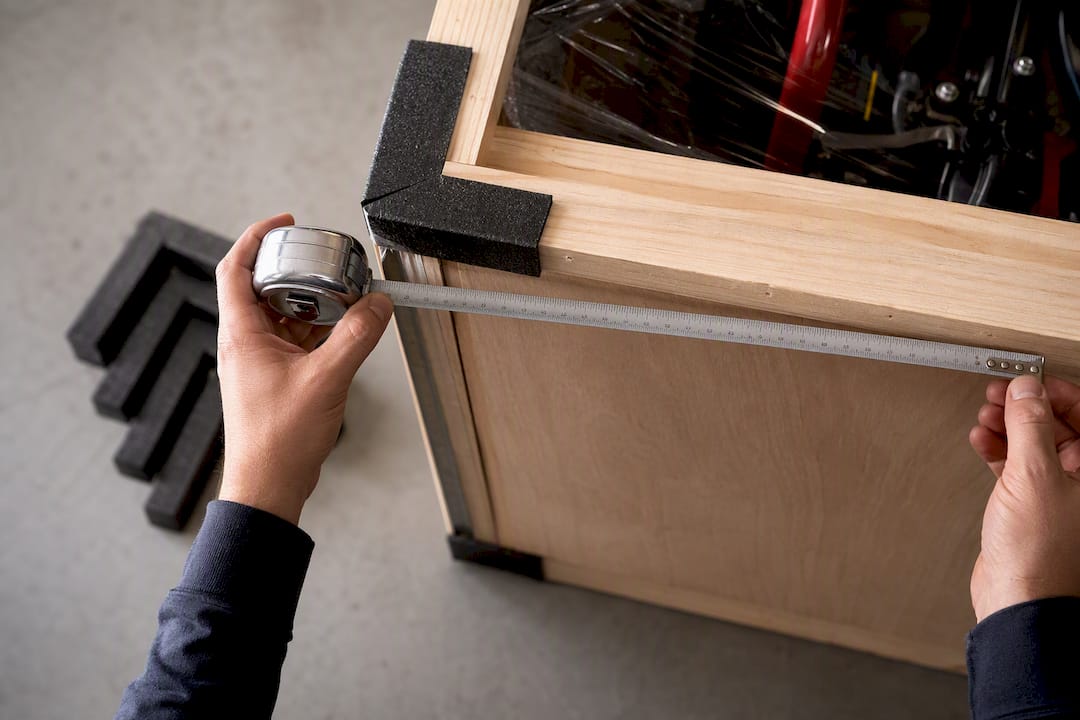
Pro Tip: Take one photo holding a tape measure against the widest point of your kart. It sounds excessive, but it settles any dispute about dimensions before a carrier arrives and charges a reclassification fee on pickup day.
Our go-kart storage guide covers the same fluid-draining and securing steps in more depth if you’re prepping for a long-term move rather than a quick trip.
How Do You Choose and Book a Reliable Carrier?
Before you accept any quote, get direct answers to these questions:
- How many stops or transfers will the shipment make between pickup and delivery?
- What’s your maximum declared value coverage, and does it need to be purchased separately?
- Are liftgate and residential delivery already included, or are they added afterward?
- What’s the realistic pickup window, and how far in advance do I need to book?
- Will I get tracking updates, and who signs the proof of delivery?
Have your paperwork ready before the truck arrives. You’ll need a completed Bill of Lading listing the shipment’s weight and dimensions accurately, your pre-shipment photos, a written condition report, and title or registration documentation if the receiving state requires it for a motorized unit changing hands.
On insurance, understand the gap between carrier liability and third-party cargo coverage. Basic carrier liability is often minimal, calculated by weight rather than actual value, which means a lightweight custom kart could be grossly underinsured in a standard claim. Third-party cargo insurance closes that gap. If damage happens, FreightCenter’s guidance notes that carriers generally require the damage noted on a signed Bill of Lading at delivery, with claims filed within a short window, often 7 to 14 days. Your pre-shipment photos are what make that claim actually stick.
What Delivery Timelines and Services Should You Expect?
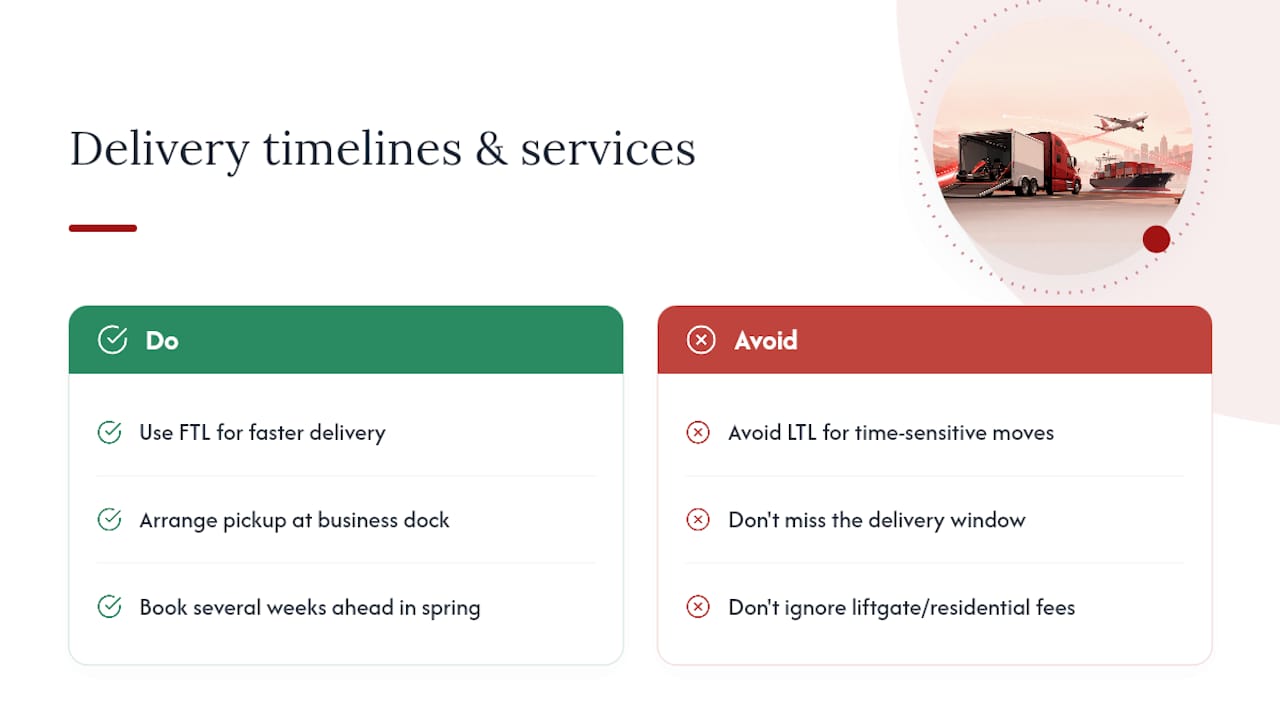
LTL shipments typically take longer than FTL because your kart shares trailer space and gets transferred between trucks along the route. Cross-country LTL may take several days or more, while FTL and shorter regional hauls often arrive within a few days. Distance and routing efficiency matter more than mileage alone.
Liftgate service and residential delivery both carry extra fees, and missing a scheduled delivery window can trigger a redelivery charge. If you have access to a business with a loading dock, arranging pickup there instead of your home often saves money. Book several weeks ahead during spring and early summer, when racing season demand tightens carrier availability.
Quick Reference: Cost and Transit by Method
Where GokartsUSA Fits Into Your Shipping Plan
We built our ATV shipping playbook to cover the same freight class and carrier booking logic that applies directly to go-kart transport, and it’s worth a read if you’re comparing quotes right now. Pair it with our assembly guide for tips on which components come off easiest for shipping and go back on fastest at delivery. Confirm shipping terms at checkout rather than assuming a quote you found elsewhere applies to your order.
What’s the One Move That Actually Protects You Here?
If you take one thing from this guide, get two or three quotes through a marketplace or broker before you touch anything else. Price discovery is free, and it shows you the real range for your specific kart and route instead of a single number you have no way to evaluate. Then confirm the carrier’s declared value limits before you book, not after. Photograph your kart from every angle and keep that condition report with your paperwork. It’s the difference between a five-minute claim conversation and a drawn-out dispute over what your kart looked like before it left your driveway.
— Mario
Ready to Buy? Here’s How GokartsUSA Makes Shipping Simple
Some sellers include shipping terms as part of the purchase conversation from day one, not a separate scramble handled after checkout.

Browse our Sport Kart gas-powered go-kart, built for riders 8 and up, or check out our gas mini bike and 110cc kids ATV if you’re outfitting more than one rider in the family. Every listing typically includes the dimensions and weight needed for a freight quote, and seasonal promotions may reduce your total cost. If you’re not sure how a specific model will ship to your address, contact customer support for more information on shipping options so there are no surprises at delivery.
Where This Information Comes From
- FreightCenter’s go-kart shipping page covers freight class, broker services, and claims procedures.
- Sakae Logistics breaks down open versus enclosed carrier tradeoffs.
- ShipMoto explains when LTL beats FTL and vice versa.
- PKS Go Karts offers real-world price ranges from practitioners.
- Flow Racers details enclosed trailer prep for frequent local hauls.
- Moto Watchdog’s GPS tracker guide is useful if you’re considering tracking for a high-value enclosed shipment.
Sources
- Shipping Go-Karts — FreightCenter
- Open vs Enclosed Auto Transport — Sakae Logistics
- LTL vs FTL — ShipMoto
- Best way to transport a go‑kart — PKS Go Karts