




TL;DR:
- Aftermarket parts can enhance vehicle performance, customization, and lifespan when matched to specific use cases and quality standards.
- Choosing the right fitment, verifying compliance, and planning upgrades carefully prevent costly mistakes and ensure longevity.
Aftermarket parts upgrades can and do improve performance, customization, and longevity — when you choose the right part for the right use case and quality tier. Whether you’re chasing faster lap times, extending the life of a high-mileage vehicle, or simply making your ride feel more like yours, the aftermarket delivers options that OEM catalogs rarely match for variety or value. The key cautions: fitment quality varies widely, some modifications affect emissions compliance and insurance coverage, and the wrong upgrade for your use case can cost more than it saves.
Here’s what this guide covers:
- Top three benefits: measurable performance gains, deep customization, and extended parts availability for older vehicles
- Primary cautions: fitment quality, CARB/EPA compliance, warranty and insurance interactions
- What’s ahead: how upgrades affect specific subsystems, a selection checklist, U.S. legal points, and practical installation guidance
Table of Contents
- What aftermarket parts are and how they’re categorized
- How aftermarket upgrades deliver real benefits across your vehicle
- How aftermarket parts change engine and powertrain performance
- Braking, suspension, and handling upgrades for street and off-road use
- Aesthetics and user-experience upgrades: what actually moves the needle
- How aftermarket parts can extend your vehicle’s lifespan
- OEM vs. aftermarket: quality tiers and trust signals that matter
- How to choose the right aftermarket part for your vehicle and goals
- DIY vs. professional installation: how to decide and what it costs
- U.S.-specific legal, emissions, and safety considerations
- Cost considerations and how aftermarket upgrades affect resale value
- Common mistakes and red flags when buying aftermarket parts
- Industry data and expert insights that validate your choices
- Key Takeaways
- The upgrade decision most owners get backwards
- Useful sources for deeper research
- Ready to put the right parts on the right machine?
What aftermarket parts are and how they’re categorized
Aftermarket parts are components made and sold by third-party manufacturers after a vehicle leaves the factory. They cover everything from windshield wiper blades to full engine rebuild kits. The industry broadly groups them into four categories:
- Performance parts — components designed to increase power, improve handling, or enhance cooling (cold air intakes, coilovers, upgraded rotors)
Fitment types matter as much as category. Direct-fit parts bolt on without modification; vehicle-specific aftermarket parts are engineered for a defined make/model/year; universal parts require fabrication or adaptation. Choosing the wrong fitment type is the single fastest way to turn a good upgrade into an expensive headache.
How aftermarket upgrades deliver real benefits across your vehicle
The role of aftermarket parts upgrading goes well beyond swapping a worn part for a cheaper one. Done right, it reshapes what your vehicle can do.
-
Performance gains — upgraded intakes, exhausts, and tunes work together to improve throttle response, power delivery, and cooling efficiency. Lighter aftermarket wheels reduce unsprung weight, which sharpens acceleration and braking feel in ways that horsepower numbers alone don’t capture.
-
Deep customization — owners consistently prioritize aesthetic and experiential upgrades (wheels, tires, body appearance) over deep mechanical tuning. The aftermarket satisfies that preference with thousands of fitment-specific options no dealer showroom stocks.
-
Extended parts availability — aftermarket suppliers fill the gap when OEMs discontinue components, keeping older vehicles on the road years longer than the factory support window allows.
-
Cost savings vs. OEM — aftermarket wear parts typically cost 40–60% less than equivalent OEM components, which changes the math on repair-vs-upgrade decisions significantly.
-
Aftermarket-driven innovation — EV software, infotainment, and digital customization are accelerating in the aftermarket, changing what “upgrading” means for modern vehicles.
One honest caveat: bigger and pricier isn’t always better. A $1,200 cold air intake on a stock engine with no supporting tune rarely delivers the gains its dyno sheet promises. Match the upgrade to a specific, prioritized goal.
How aftermarket parts change engine and powertrain performance
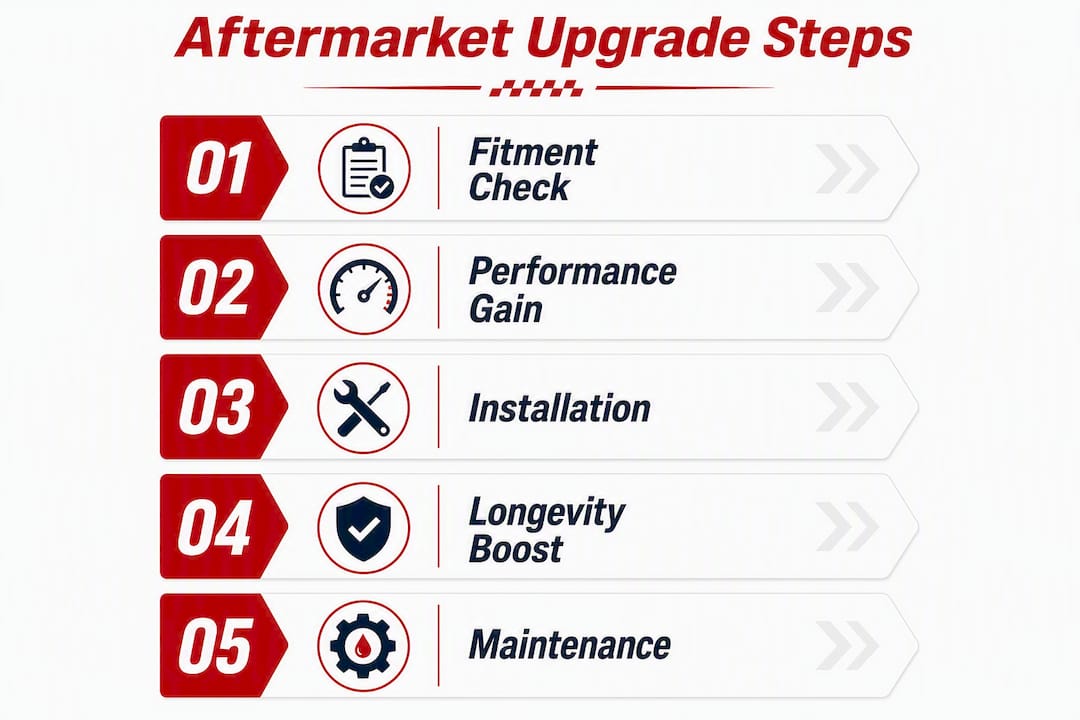
Measurable performance changes from aftermarket engine upgrades are real, but they depend heavily on which parts you combine and whether supporting systems can handle the added stress.
Intake, exhaust, and ECU tuning
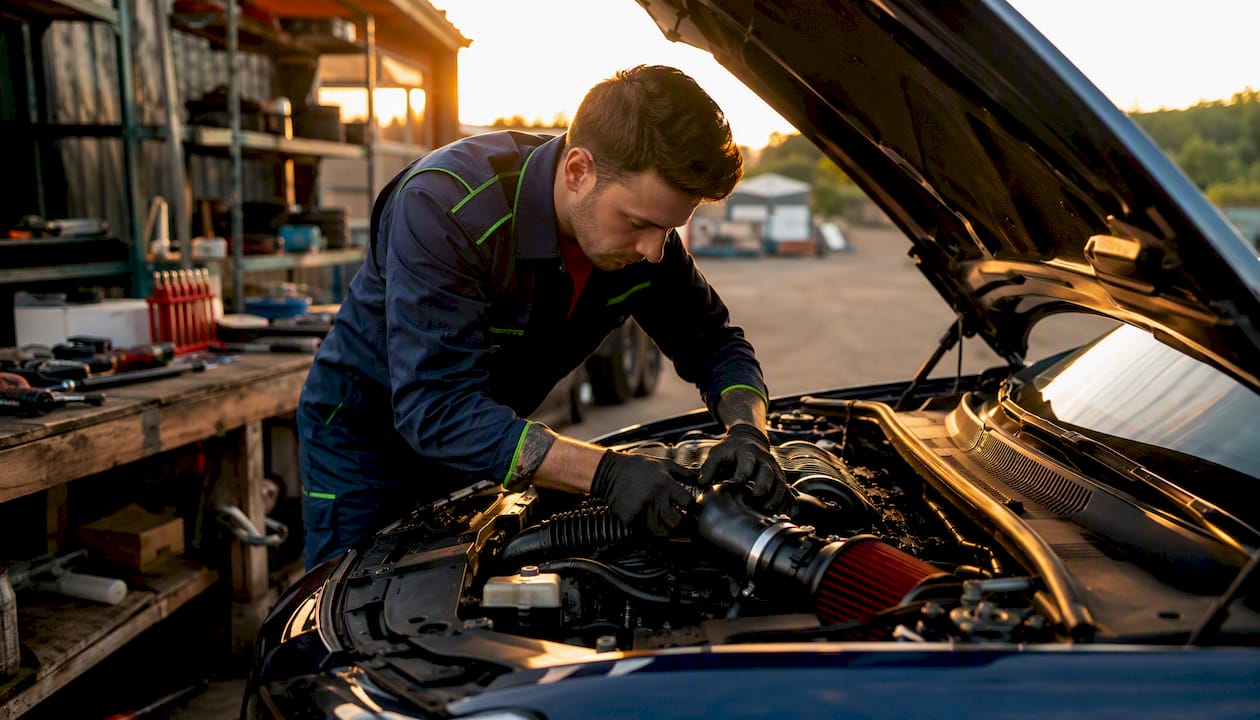
A cold air intake moves the filter away from engine heat, delivering denser air to the combustion chamber. Paired with a less-restrictive exhaust, the engine breathes more freely in both directions. An ECU tune then recalibrates air/fuel ratios and ignition timing to take advantage of that airflow. Each part alone produces modest gains; all three together produce a coherent, noticeable improvement in throttle response and mid-range pull. The common pitfall: a “short ram” intake that pulls warm air from the engine bay can actually reduce performance compared to stock. Always verify the intake routing before buying.
Forced induction
Turbocharger and supercharger kits compress intake air, which is the most effective way to add significant power to a naturally aspirated engine. The catch is that forced induction demands supporting modifications: upgraded fuel injectors, an intercooler, reinforced transmission mounts, and often a standalone fuel management system. Skipping supporting mods is how engines fail under boost.
One caution worth repeating: any modification that affects emissions output — intakes, exhausts, catalytic converters — must comply with EPA federal standards and, in California and CARB-adopting states, carry a CARB Executive Order (EO) number. Non-compliant parts can fail state inspections and void emissions-related warranty coverage.
For a deeper look at how these principles apply to vehicle performance across powersports platforms, Gokartsusa’s guide covers the fundamentals clearly.
Braking, suspension, and handling upgrades for street and off-road use
High-quality suspension, brakes, and tires typically deliver clearer returns for handling and safety than headline horsepower upgrades — for most owners, this is where the money is best spent first.
- Suspension components (springs, coilovers, sway bars, bushings): lower the center of gravity and reduce body roll for street/track use; lift kits and long-travel shocks improve ground clearance and wheel articulation for off-road. Stiffer springs improve cornering but reduce ride comfort on broken pavement — a trade-off that matters a lot for daily commuters and very little for weekend track drivers.
- Brake pads, rotors, and lines: performance pads (e.g., Hawk HPS, EBC Redstuff) resist fade under repeated hard stops. Slotted or drilled rotors improve heat dissipation. Stainless steel brake lines replace expandable rubber hoses, giving a firmer, more consistent pedal feel. For towing owners specifically, upgraded pads rated for higher temperatures are one of the highest-value, lowest-risk upgrades available.
- Tires and wheels: tire compound and width affect grip, wet traction, and fuel economy more than almost any other single component. Lightweight aftermarket wheels reduce unsprung mass, which improves both acceleration and braking response.
Pro Tip: If you tow regularly, upgrade brake pads and cooling before touching the suspension. Fade-resistant pads and a transmission cooler protect the drivetrain under load far more effectively than a suspension lift.
Aesthetics and user-experience upgrades: what actually moves the needle
These upgrades most often deliver the biggest emotional return for the least mechanical risk, and owners consistently choose them first. A set of aftermarket wheels transforms the visual identity of a vehicle without touching a single mechanical system. LED lighting upgrades (headlights, DRLs, interior ambient lighting) improve visibility and modernize the look of older platforms. Aftermarket infotainment systems bring Apple CarPlay, Android Auto, and larger touchscreens to vehicles that shipped without them.
Resale value is where aesthetics get complicated. Tasteful, reversible upgrades — quality wheels, modern audio, clean exterior wraps — tend to attract buyers or at least not repel them. Extreme modifications (aggressive body kits, non-standard paint, loud exhaust systems) narrow the buyer pool significantly. The safest approach for resale: keep the original parts, document everything, and make the vehicle easy to return to near-stock condition.
How aftermarket parts can extend your vehicle’s lifespan
Aftermarket parts can extend vehicle life in two distinct ways, and both are worth understanding before writing off an older machine.
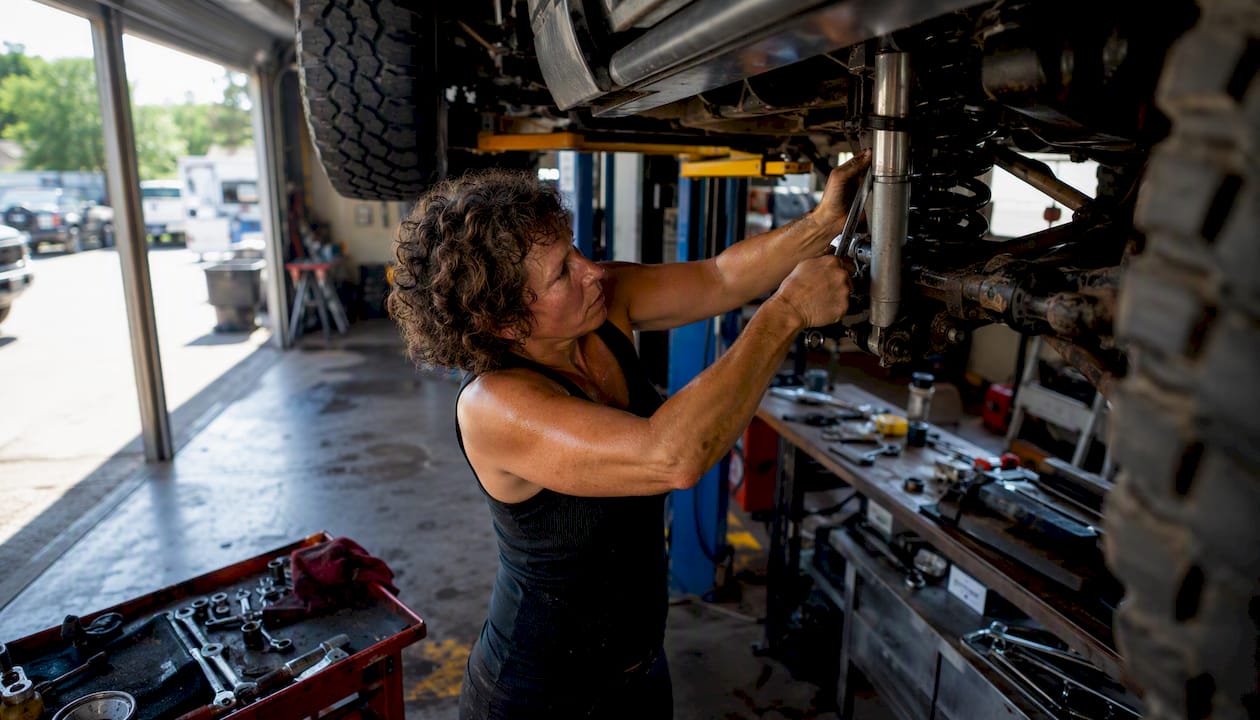
The first is obsolescence replacement. When an OEM stops producing a component, aftermarket suppliers step in to keep older vehicles running. For a 15-year-old truck or a vintage powersports machine, this isn’t a nice-to-have — it’s the only path to continued operation.
The second is heavy-duty replacement for high-stress use. Towing, commercial hauling, and track driving push stock components beyond their design limits. Aftermarket heavy-duty suspension bushings, upgraded brake rotors, and reinforced drivetrain components are engineered for that stress in ways OEM economy-grade parts are not.
The caution: low-quality aftermarket parts can create the opposite effect. Poor fitment leads to extra labor hours to correct gaps and misalignments, and premature failure means buying the same part twice. The hidden cost of a cheap part is often the labor to remove and replace it a second time.
OEM vs. aftermarket: quality tiers and trust signals that matter
Aftermarket quality ranges from economy replacement to race-grade performance; the right tier depends entirely on your goals. Here’s how the three tiers break down:
| Tier | What to expect | Best for |
|---|---|---|
| OEM-equivalent | Matched fitment, similar materials, often same supplier | Repair/maintenance, warranty-sensitive vehicles |
| Economy replacement | Acceptable performance, lower materials cost, variable fitment | Budget repairs, low-stress applications |
| Performance-specialist | Superior materials, engineered for specific use cases, often exceeds OEM spec | Track, towing, enthusiast builds |
Independent repair shops rely on trusted aftermarket brands because they offer cost savings without the “comeback” failures that damage shop reputations. A mechanic’s brand preference is one of the most reliable trust signals available to a consumer.
Other trust signals to check at purchase: manufacturer warranty length and coverage, CARB/EPA compliance listing (for emissions-affecting parts), independent lab certifications (FMVSS, SAE), documented fitment data for your specific vehicle, and verified buyer reviews that mention installation experience.
How to choose the right aftermarket part for your vehicle and goals
Pick parts that solve a specific, prioritized problem — not parts that sound impressive in a forum thread.
- Define your goal first. Reduce brake fade? Improve highway fuel economy? Upgrade cabin tech? The goal determines the category.
- Check vehicle compatibility and fitment data. Year, make, model, trim, and engine code all matter. Verify against the manufacturer’s fitment guide, not just the product title.
- Verify emissions and CARB compliance. If you’re in California or a CARB-adopting state, the part needs an EO number. In all 50 states, EPA rules apply to emissions-affecting components.
- Read teardown and installation reviews. Forum threads, YouTube installs, and shop blogs reveal fitment gaps, missing hardware, and instruction quality that product listings hide.
- Confirm warranty and return policy. A part with no warranty or a 30-day no-return window is a red flag regardless of price.
- Plan supporting mods and budget for labor. A performance exhaust may require a tune. A lift kit may require new alignment specs and longer brake lines. Budget for the full package, not just the headline part.
Three questions to ask before you buy: Is this part vehicle-specific or universal? Does it require additional parts or tuning to function correctly? What’s the warranty, and who handles claims?
Pro Tip: Match the upgrade to the weakest subsystem. Adding power without upgrading brakes and cooling is how enthusiasts create expensive problems. Fix the bottleneck first.
For a step-by-step tuning workflow that applies these principles to powersports vehicles, Gokartsusa’s go-kart tuning guide walks through the process clearly.
DIY vs. professional installation: how to decide and what it costs
DIY installation is reasonable for bolt-on, direct-fit parts that require basic hand tools and no calibration. Professional installation is the right call for engine internals, forced induction, ECU flashing, structural modifications, and anything that affects alignment or safety systems.
| Task | DIY viable? | Typical tools | Avg. labor hours | Risk level |
|---|---|---|---|---|
| Wheel/tire swap | Yes | Floor jack, torque wrench | 1 hr | Low |
| Brake pad/rotor swap | Yes | Basic hand tools, jack stands | 1–2 hrs | Low–Medium |
| Cold air intake | Yes | Basic hand tools | 1 hr | Low |
| Cat-back exhaust | Possible | Lift, pipe tools | 1–3 hrs | Medium |
| Coilover install | Possible | Spring compressor, alignment needed | 2–4 hrs + alignment | Medium |
| ECU flash/tune | No | Dyno, proprietary software | 2–6 hrs | High |
| Turbo/supercharger kit | No | Full shop equipment | 20+ hrs | Very High |
Labor rates in the U.S. vary from roughly $80 to $180 per hour depending on shop type and region. Custom fabrication adds cost that’s difficult to estimate without a quote. Always factor alignment costs into any suspension work.
U.S.-specific legal, emissions, and safety considerations
Some performance modifications are restricted in certain states and can affect inspections, emissions tests, and insurance coverage. This isn’t a reason to avoid upgrades — it’s a reason to check before you buy.
CARB and EPA compliance: California’s Air Resources Board (CARB) requires an Executive Order number for any aftermarket part that affects emissions. Fifteen states currently follow California’s emissions standards, meaning CARB compliance matters well beyond California’s borders. The EPA sets federal baseline rules for all 50 states. Parts that delete or modify catalytic converters, O2 sensors, or EGR systems are federally regulated regardless of state.
State inspections: Modified exhaust systems, suspension lifts beyond state limits, and non-DOT lighting can fail safety or emissions inspections. Check your state’s DMV or inspection program requirements before installing anything that changes ride height, lighting configuration, or exhaust routing.
Warranty and insurance: The Magnuson-Moss Warranty Act protects U.S. consumers from blanket warranty voiding — a dealer cannot void your entire warranty simply because you installed an aftermarket air filter. However, if a modification causes a specific failure, the manufacturer can deny coverage for that component and related damage. Document every installation with receipts, part numbers, and photos. On the insurance side, undisclosed modifications can complicate claims; notify your insurer of significant changes and ask about modified-vehicle endorsements.
This is general information, not legal or regulatory advice. Confirm current rules with your state DMV, the EPA, or CARB before making emissions-sensitive modifications.
Cost considerations and how aftermarket upgrades affect resale value
Aftermarket parts typically cost 40–60% less than equivalent OEM components, which fundamentally changes the repair-vs-upgrade calculation. A brake job that costs $400 with OEM parts might run $160–$240 with quality aftermarket equivalents — leaving budget for a performance pad upgrade that actually improves the vehicle.
Resale dos and don’ts:
- Do keep original parts when you swap them out. A buyer who wants stock can get it; a buyer who wants the upgrade already has it.
- Do document every modification with receipts and installation photos. Provenance builds buyer confidence.
- Don’t assume performance mods add dollar-for-dollar value. Extreme power builds, loud exhausts, and aggressive suspension setups narrow your buyer pool to enthusiasts only.
- Don’t install non-reversible modifications on a vehicle you plan to sell within two years.
Tasteful, reversible upgrades — quality wheels, modern infotainment, fresh lighting — tend to hold or improve perceived value. Polarizing mods reduce it.
Common mistakes and red flags when buying aftermarket parts
- Vague performance claims without dyno data. “Adds up to 15 hp” with no supporting documentation is marketing, not engineering. Ask for dyno sheets or third-party test results.
- Missing fitment documentation. If the listing doesn’t specify year/make/model/trim compatibility, assume it won’t fit correctly. Request fitment photos or installation guides before purchasing.
- No warranty or a restrictive return policy. Reputable manufacturers stand behind their parts. A 30-day return window with restocking fees on a $600 part is a warning sign.
- Parts requiring undocumented fabrication. “May require minor modification” in a product description often means significant custom work. Ask for torque specs and installation instructions upfront.
- Prices that seem too good to be true. The aftermarket quality spectrum is wide; some suppliers prioritize lowest cost over fitment accuracy or material quality. The hidden cost is the labor to correct poor fitment or replace a failed part a second time.
- Buying without a build plan. Purchasing random parts rather than building a balanced package leads to fitment conflicts, wasted spend, and a vehicle that performs worse than stock in some areas. Define the full upgrade path before ordering part one.
Industry data and expert insights that validate your choices
The 40–60% price advantage of aftermarket parts over OEM isn’t just a consumer benefit — it’s why independent repair shops actively prefer trusted aftermarket brands for routine repairs. Shops that recommend aftermarket parts aren’t cutting corners; they’re applying the same cost-benefit logic that makes the aftermarket a $400+ billion global industry.
Two expert insights worth applying directly: First, a trusted local mechanic’s brand preference is a meaningful quality signal. Shops stake their reputation on comeback rates, so they gravitate toward brands that fit correctly and last. Second, the value of any aftermarket part depends on the owner’s use case — a component that transforms a track car can genuinely degrade a daily commuter’s experience. Define use case before defining budget.
For U.S. owners, the 2026 powersports trends guide from Gokartsusa tracks how these dynamics are playing out across karts, mini bikes, and ATVs specifically.
Key Takeaways
Aftermarket upgrades deliver real performance, customization, and longevity gains when you match the part to a specific use case, verify fitment, and confirm U.S. compliance before buying.
| Point | Details |
|---|---|
| Price advantage is significant | Aftermarket parts typically cost 40–60% less than OEM equivalents, changing repair-vs-upgrade math. |
| Use case determines value | A part that helps a track car can hurt a daily commuter — define your goal before choosing any upgrade. |
| Compliance is non-negotiable | CARB/EPA rules and state inspection requirements apply before any emissions-affecting part is installed. |
| Build balanced, not random | Upgrade the weakest subsystem first; adding power without brakes and cooling creates risk, not performance. |
| Gokartsusa for powersports | Gokartsusa stocks go-karts, mini bikes, ATVs, and compatible parts for owners ready to upgrade or start fresh. |
The upgrade decision most owners get backwards
Most enthusiasts start with the headline number — horsepower — and work backward. That’s the wrong order, and the aftermarket’s breadth makes it easy to spend a lot of money proving it.
The upgrades that change how a vehicle feels to drive every single day are almost never the ones with the biggest spec-sheet gains. Stiffer, more responsive brakes. Tires that actually grip in the wet. A suspension that keeps the chassis planted through a corner instead of rolling into it. These changes are immediate, repeatable, and safe. A 20-hp tune on a vehicle with stock brakes and worn tires is a liability, not an upgrade.
The other thing most guides understate: the aftermarket’s real power for everyday owners isn’t performance at all. It’s availability. The ability to keep a vehicle running past the OEM support window, to source a discontinued part, to fix something a dealer no longer stocks — that’s where aftermarket parts deliver the most durable value for the most people. Performance is the exciting part of the story. Availability is the practical one.
Build the safe, reliable foundation first. Then add the exciting parts on top of something that can actually handle them.
Useful sources for deeper research
Before making any emissions-sensitive modification, check your state’s DMV or inspection program for current rules — they change, and CARB-adopting states update their lists periodically.
- FTC — Businessperson’s Guide to Federal Warranty Law: The primary U.S. source on Magnuson-Moss protections; explains what dealers can and cannot do when aftermarket parts are installed.
- Automotive Aftermarket — Wikipedia: A broad overview of the aftermarket industry’s structure, size, and major segments; useful for context on market dynamics.
- Gokartsusa — How to Upgrade Your Go-Kart for Better Performance: Practical, powersports-specific guidance on upgrade priorities, safety checks, and installation considerations for kart and light recreational vehicle owners.
Ready to put the right parts on the right machine?
At Gokartsusa, we’ve built our catalog around one idea: every rider deserves a machine that’s ready for the adventure they have in mind. Whether you’re upgrading a current ride or starting fresh with a new platform, we carry go-karts, mini bikes, ATVs, and compatible parts that are matched, tested, and ready to perform.
The difference between a frustrating upgrade experience and a great one usually comes down to starting with a quality platform. Our Sport Kart Kids Gas Go Kart and Gas Powered Mini Bike are built with enthusiast-grade components from the factory, which means your aftermarket upgrades go on top of something solid — not something that needs fixing first. Free shipping, financing options, and a team that knows powersports inside and out. Browse the full lineup at gokartsusa.biz and find the right starting point for your build.