




Many families assume go-karts are strictly solo adventures designed for racing enthusiasts or older kids. This misconception overlooks an exciting category that transforms outdoor recreation into shared experiences. Dual-seat go-karts provide enough room for two riders, often including adult and child seating arrangements, making them perfect for parents who want to ride alongside their children. This guide explains what dual-seat go-karts are, explores the types available, and provides practical advice for choosing the right model to maximize family bonding and outdoor fun.
Table of Contents
- What Is A Dual-Seat Go-Kart? Basic Features And Design
- Types Of Dual-Seat Go-Karts And Their Family-Friendly Benefits
- How To Choose The Right Dual-Seat Go-Kart For Your Family
- Safety Considerations And Maintenance For Dual-Seat Go-Karts
- Explore Dual-Seat Go-Karts And More For Family Fun
- FAQ
Key takeaways
| Point | Details |
|---|---|
| Shared riding experience | Dual-seat go-karts enable adults and kids to ride together safely, creating memorable bonding moments. |
| Multiple model types | Options include gas, electric, off-road, and sport models tailored for different terrains and family preferences. |
| Safety-first features | Look for seatbelts, roll bars, speed governors, and parental remote controls to ensure secure rides. |
| Selection criteria | Assess size limits, engine power, safety features, and budget before purchasing. |
| Active family lifestyle | These vehicles promote outdoor activity and quality time away from screens. |
What is a dual-seat go-kart? Basic features and design
A dual-seat go-kart is a recreational vehicle designed to accommodate two riders simultaneously, typically featuring side-by-side or tandem seating configurations. Unlike single-seat models built for solo drivers, these machines prioritize shared experiences while maintaining safety and control. The extra seating capacity makes them ideal for parent-child adventures, sibling rides, or couples exploring trails together.
These vehicles generally measure larger than standard go-karts, with reinforced frames to support combined rider weight. Most dual-seat models accommodate total weights between 300 and 500 pounds, depending on construction quality and intended use. The expanded chassis provides stability during turns and uneven terrain navigation.
Engine options vary widely based on model type and target age group. Gas-powered versions typically range from 110cc to 300cc, offering speeds between 15 and 40 mph. Electric models use battery systems ranging from 500 watts to 2000 watts, providing quieter operation with adjustable speed settings. Both powertrains deliver sufficient torque for hill climbing and off-road exploration.
Construction materials directly impact durability and safety. Quality manufacturers use tubular steel frames with powder-coated finishes to resist rust and impact damage. High-density polyethylene body panels protect riders from debris while keeping overall weight manageable. Suspension systems with coil-over shocks absorb bumps and provide comfortable rides across varied landscapes.
Safety features distinguish dual-seat models from basic recreational vehicles:
- Adjustable three-point or four-point harness systems securing both riders
- Integrated roll cages protecting occupants during potential tip-overs
- Hydraulic disc brakes on all four wheels for reliable stopping power
- Safety flags increasing visibility to other riders and vehicles
- Engine kill switches accessible to both driver and passenger
For families new to powersports, reviewing a safe go-kart buying guide helps identify essential features before making investment decisions.
Types of dual-seat go-karts and their family-friendly benefits
Understanding the distinct categories helps families match vehicles to their specific recreation goals and environments. Different models of two-seater go-karts offer various safety, power, and control features tailored for family use, ensuring appropriate options for different experience levels.
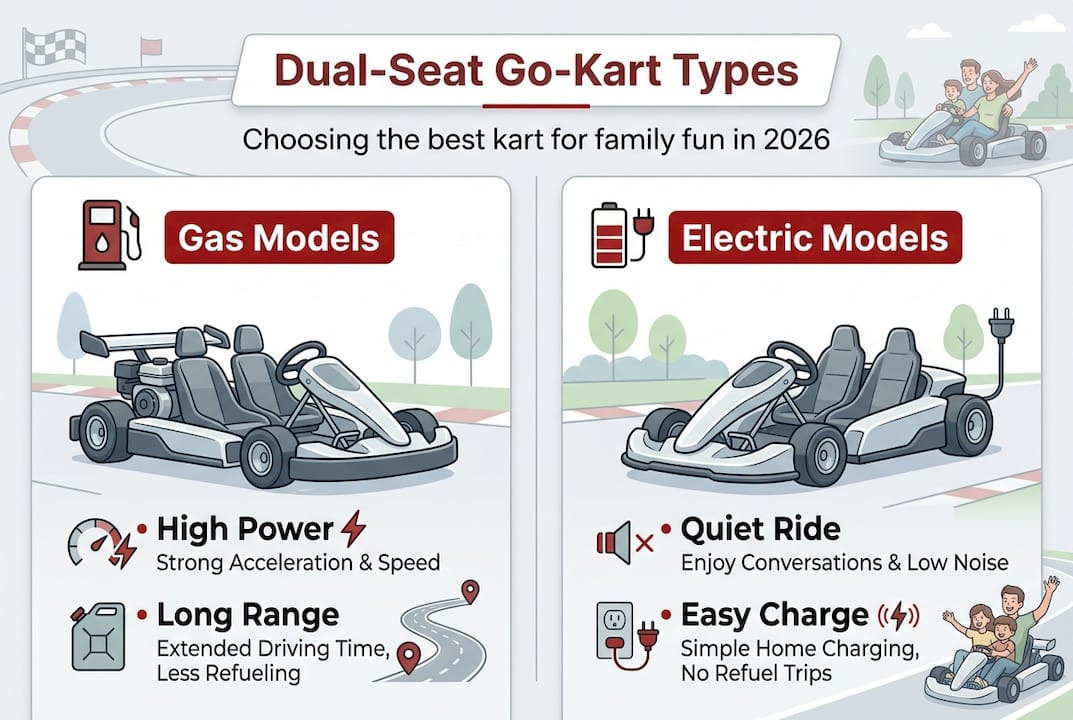
Gas-powered dual-seat go-karts deliver traditional performance with longer run times between refueling. These models excel for families planning extended trail rides or exploring large properties. Four-stroke engines provide reliable power while maintaining reasonable noise levels. Maintenance requirements include regular oil changes and air filter cleaning, tasks that older children can learn as educational opportunities.
Electric dual-seat go-karts prioritize quiet operation and zero emissions, making them neighborhood-friendly options. Battery technology advances now provide 45 to 90 minutes of continuous use per charge. Parents appreciate adjustable speed modes that grow with rider confidence, starting at 5 mph for beginners and increasing to 15 mph for experienced operators. Regenerative braking systems extend battery life while teaching energy conservation concepts.
Off-road dual-seat models feature aggressive tire treads, enhanced ground clearance, and reinforced suspension components. These vehicles handle mud, gravel, grass, and moderate inclines with confidence. Families living near trails or owning acreage benefit from the versatility these machines provide. Many include cargo racks for picnic supplies or exploration gear, transforming rides into mini adventures.
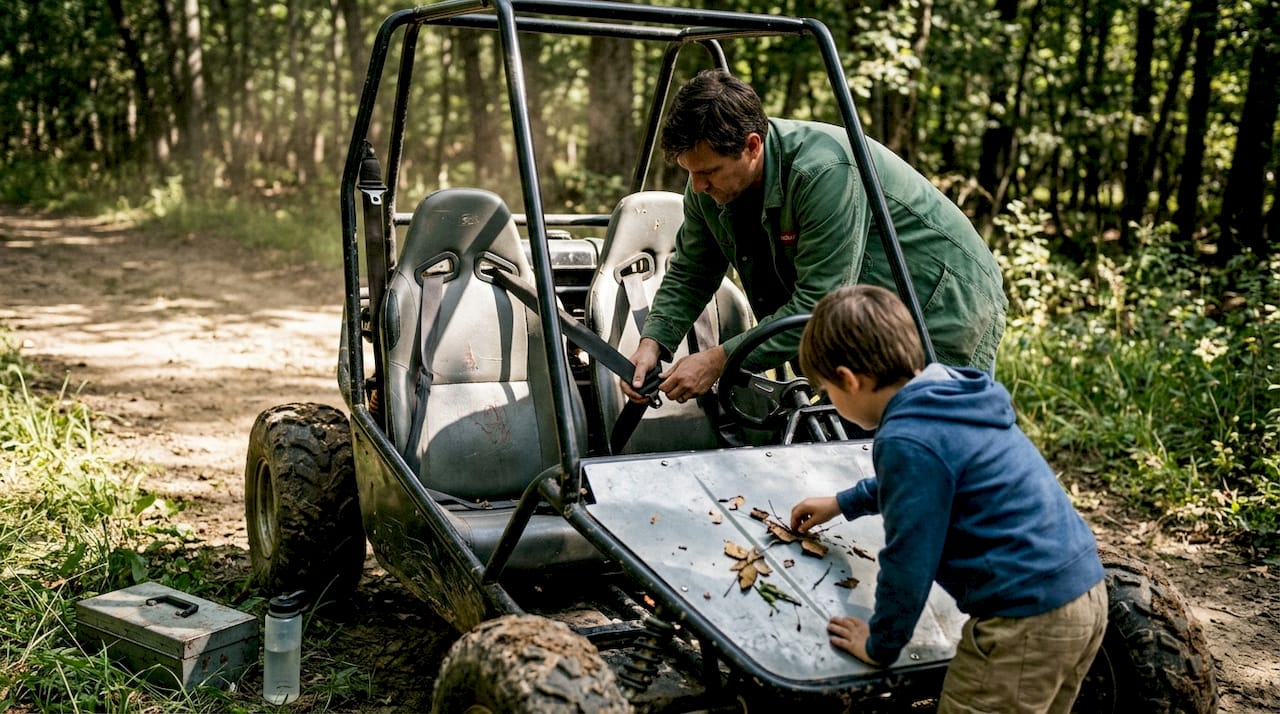
Sport-oriented dual-seat go-karts emphasize speed and handling for families interested in recreational racing. Lower centers of gravity improve cornering performance on paved surfaces or dedicated tracks. While faster than other categories, quality sport models still incorporate governor systems limiting top speeds until riders demonstrate proficiency.
Key family-friendly features across all types include:
- Passenger grab handles providing security for nervous riders
- Adjustable seat positions accommodating different height combinations
- Parental remote controls enabling emergency stops from a distance
- Dual throttle systems allowing either rider to control speed
- Weather-resistant construction supporting year-round storage
Pro Tip: Match your dual-seat go-kart type to your primary terrain. Paved driveways and sidewalks suit sport models, while properties with varied landscapes benefit from off-road capabilities. Consider where you’ll spend 80% of riding time when selecting features.
| Feature | Gas Models | Electric Models | Off-Road Models | Sport Models |
|---|---|---|---|---|
| Power Source | 110-300cc engine | 500-2000W battery | Gas or electric | Gas or electric |
| Top Speed | 25-40 mph | 10-20 mph | 15-30 mph | 30-45 mph |
| Run Time | 2-4 hours | 45-90 minutes | 2-3 hours | 1-2 hours |
| Terrain | Mixed | Smooth | Rough | Paved |
| Price Range | $1,200-$3,500 | $800-$2,200 | $1,500-$4,000 | $2,000-$5,000 |
How to choose the right dual-seat go-kart for your family
Selecting the optimal model requires evaluating several critical factors that directly impact safety, enjoyment, and long-term value. Safety and size compatibility are crucial when selecting go-karts for children and adults to ensure fun and secure rides throughout years of use.
-
Assess combined rider weight limits carefully, adding 20% margin for gear and growth. A 400-pound capacity suits most adult-child combinations, while 500-pound ratings accommodate larger families or teen siblings riding together.
-
Evaluate engine power relative to rider experience and terrain. Beginners benefit from 110cc to 150cc engines providing manageable acceleration. Experienced families tackling hills need 200cc or higher for adequate torque. Electric models between 1000W and 1500W offer comparable performance to small gas engines.
-
Prioritize adjustable speed controls matching skill development. Quality models feature three to five speed settings, allowing gradual progression from 8 mph beginner modes to full performance. This flexibility extends vehicle usefulness as children mature and gain confidence.
-
Verify comprehensive safety equipment beyond basic requirements. Look for models including reinforced door bars, padded steering wheels, and adjustable pedal positions. Four-wheel hydraulic disc brakes provide superior stopping power compared to rear-only systems. Roll cage designs should meet or exceed recreational vehicle safety standards.
-
Investigate parental control options for younger riders. Remote engine kill switches let adults stop vehicles instantly from up to 100 feet away. Some advanced models include smartphone apps monitoring speed, location, and battery status in real time. These features provide peace of mind during early riding sessions.
-
Calculate total ownership costs including maintenance, fuel or electricity, and replacement parts. Gas models require oil, filters, and spark plugs annually, averaging $150 in consumables. Electric versions need battery replacements every 2 to 4 years, costing $200 to $400. Factor these expenses into budget planning.
-
Research warranty coverage and manufacturer support. Reputable brands offer 90-day to 1-year warranties covering frame defects and major components. Access to replacement parts ensures long-term serviceability. Read customer reviews focusing on post-purchase support experiences.
-
Consider storage requirements and climate protection. Dual-seat go-karts measure 60 to 80 inches long and 45 to 55 inches wide, requiring garage space or weather-resistant covers. Models with removable batteries simplify winter storage in cold climates.
Pro Tip: Test ride different models before purchasing if possible. Many dealers offer demonstration events or rental programs. Fifteen minutes of actual riding reveals comfort issues, noise levels, and handling characteristics that specifications alone cannot convey. Bring your intended riding partner to assess fit and function together.
For families prioritizing kids go-kart safety tips, focusing on models with comprehensive protective features and graduated performance capabilities ensures positive experiences from first rides onward.
Safety considerations and maintenance for dual-seat go-karts
Maximizing enjoyment while minimizing risks requires establishing clear safety protocols and consistent maintenance routines. Regular maintenance and adherence to safety guidelines greatly reduce risk and enhance go-kart performance across seasons and riding conditions.
Establish non-negotiable safety rules before first rides. Both riders must wear DOT-approved helmets properly fitted and fastened. Closed-toe shoes with ankle support prevent foot injuries during entry, exit, and potential impacts. Long pants and long sleeves protect skin from abrasions, sun exposure, and flying debris. Eye protection shields against dust and insects, especially during off-road adventures.
Conduct pre-ride inspections covering critical systems. Check tire pressure monthly, maintaining manufacturer-recommended PSI for optimal handling and wear patterns. Inspect brake pads for thickness, replacing when material measures less than 3mm. Test all lights, horn, and safety flags ensuring visibility to others. Verify seatbelt latches engage fully without fraying or damage. Confirm steering responds smoothly without excessive play or binding.
Designate appropriate riding areas away from traffic, pedestrians, and obstacles. Flat, open spaces work best for beginners building fundamental control skills. Establish clear boundaries marking safe zones, using cones or natural landmarks. Avoid riding near water, steep drop-offs, or areas with hidden hazards like tree stumps or rocks.
Teach proper mounting and dismounting procedures. Riders should enter and exit only when the engine is completely off and the vehicle is stationary. The driver maintains brake pressure until the passenger secures their seatbelt. Before starting, both riders confirm readiness verbally, establishing communication habits that prevent accidents.
Implement graduated exposure for new riders. First sessions should last 15 to 20 minutes in controlled environments, allowing skill development without fatigue. Increase duration and complexity gradually as confidence builds. Experienced riders can mentor beginners, demonstrating proper techniques and decision-making processes.
Maintenance schedules preserve performance and prevent breakdowns:
- Engine oil changes every 20 hours of operation or monthly
- Air filter cleaning every 10 hours, replacement every 50 hours
- Spark plug inspection every 25 hours, replacement annually
- Chain lubrication every 5 hours of use
- Brake fluid replacement every 6 months
- Battery terminal cleaning monthly, electrolyte checks for non-sealed batteries
- Tire rotation every 40 hours to ensure even wear
| Maintenance Task | Frequency | Estimated Time | Skill Level |
|---|---|---|---|
| Tire pressure check | Weekly | 5 minutes | Beginner |
| Chain lubrication | Every 5 hours | 10 minutes | Beginner |
| Oil change | Every 20 hours | 20 minutes | Intermediate |
| Brake inspection | Monthly | 15 minutes | Intermediate |
| Spark plug replacement | Annually | 15 minutes | Intermediate |
| Suspension check | Every 50 hours | 30 minutes | Advanced |
Seasonal storage requires specific preparation. For winter dormancy, fill gas tanks completely to prevent condensation, add fuel stabilizer, and run engines for 5 minutes to distribute treatment. Remove batteries from electric models, storing them in climate-controlled spaces at 50% charge. Clean vehicles thoroughly, removing mud and debris that trap moisture. Apply protective spray to metal components preventing rust formation. Cover stored go-karts with breathable fabric allowing air circulation while blocking dust.
Spring recommissioning involves inspecting all systems after storage. Check fluid levels, tire condition, and battery charge before first rides. Test brakes thoroughly in safe areas before normal operation. Replace any degraded components discovered during inspection.
For comprehensive guidance on ongoing care, explore go-kart safety and maintenance resources covering advanced topics and troubleshooting common issues.
Explore dual-seat go-karts and more for family fun
Now that you understand what makes dual-seat go-karts exceptional family recreation tools, finding the right model becomes your next adventure. GoKarts USA specializes in quality powersports vehicles designed specifically for families seeking safe, exciting outdoor experiences together. Our selection includes dual-seat options with parental remote start and kill features, ensuring you maintain control while children develop riding skills.

Beyond go-karts, explore complementary vehicles like the Mini Sport Kids ATV 110cc, perfect for younger riders building confidence, or the TrailMaster Storm Minibike for compact fun. Our team provides expert guidance matching vehicles to your family’s specific needs, terrain, and experience levels. Visit GoKarts USA today to discover how the right dual-seat go-kart transforms weekends into memorable adventures your family will treasure for years.
FAQ
What is the typical age range for riders of dual-seat go-karts?
Dual-seat go-karts generally accommodate children from about 5 years old when riding with adult supervision up to full adult size limits. The passenger seat allows younger children to experience riding safely while parents maintain control. Most manufacturers specify minimum ages and heights in product documentation, typically requiring passengers to reach at least 42 inches tall with proper seatbelt fit.
Can dual-seat go-karts be used off-road or only on paved tracks?
Many dual-seat models handle both paved surfaces and light off-road terrain effectively, though specific capabilities vary by design. Off-road variants feature enhanced suspension, aggressive tire treads, and increased ground clearance for trails, grass, and gravel. Sport models optimize for smooth surfaces with lower profiles and harder tire compounds. Always match your vehicle choice to your primary riding environment for best performance and safety.
Are there speed limits or parental controls available on dual-seat go-karts?
Yes, quality dual-seat go-karts include adjustable speed governors limiting maximum velocity based on rider experience. Many models offer three to five preset speed modes, starting as low as 5 mph for beginners. Advanced options include remote parental controls allowing adults to stop engines from distances up to 100 feet. Some newer models provide smartphone apps for real-time speed monitoring and location tracking.
How much maintenance does a dual-seat go-kart require?
Routine maintenance includes checking tire pressure weekly, lubricating chains every 5 hours of use, and changing engine oil every 20 hours or monthly. Brake inspections should occur monthly, with fluid replacement every 6 months. Most families spend 30 to 45 minutes monthly on basic upkeep. Following manufacturer schedules prevents major repairs and extends vehicle lifespan significantly, making maintenance a manageable commitment for active families.