




TL;DR:
- Choose go-karts appropriate for your child’s age, weight, and safety features.
- Prioritize safety features like seat belts, roll cages, hydraulic brakes, and low centers of gravity.
- Buy from trusted brands with reliable support and follow proper assembly and maintenance procedures.
Picking the right go-kart for your family sounds exciting until you’re staring at dozens of models with conflicting specs, unclear age ratings, and prices that range from bargain-bin to jaw-dropping. The thrill of outdoor adventure is real, but so is the concern every parent feels about safety. We get it. Whether you’re shopping for a young rider taking their first laps or a teen ready to push the throttle, this guide walks you through kart types, safety features, trusted brands, and a simple buying workflow so your family can hit the ground running with confidence.
Table of Contents
- Understanding go-kart types and suitability by age
- Essential safety features to prioritize
- Top brands, pricing, and where to buy
- Step-by-step purchasing workflow and setup tips
- Our expert family kart buying perspective
- Find the perfect family go-kart with GoKarts USA®
- Frequently asked questions
Key Takeaways
| Point | Details |
|---|---|
| Choose age-appropriate models | Always select go-karts designed for your child’s or family’s age and experience. |
| Prioritize safety features | Look for key elements like hydraulic brakes, low center of gravity, and secure seatbelts. |
| Buy from trusted brands | Reliable brands offer safer, longer-lasting family fun and better support. |
| Follow a step-by-step workflow | A clear buying and setup process ensures a safe and enjoyable first ride. |
Understanding go-kart types and suitability by age
With the basics clear, let’s break down which kart types fit your family’s needs. The recreational go-kart world breaks into three main categories: electric, gas-powered, and pedal karts. Each serves a different rider, and choosing the wrong type is one of the most common mistakes families make.
Pedal karts are ideal for toddlers and young children under age 5. They require no engine, no fuel, and no charging. Pure leg power and pure fun. These are ground-level adventures for little ones still building coordination.
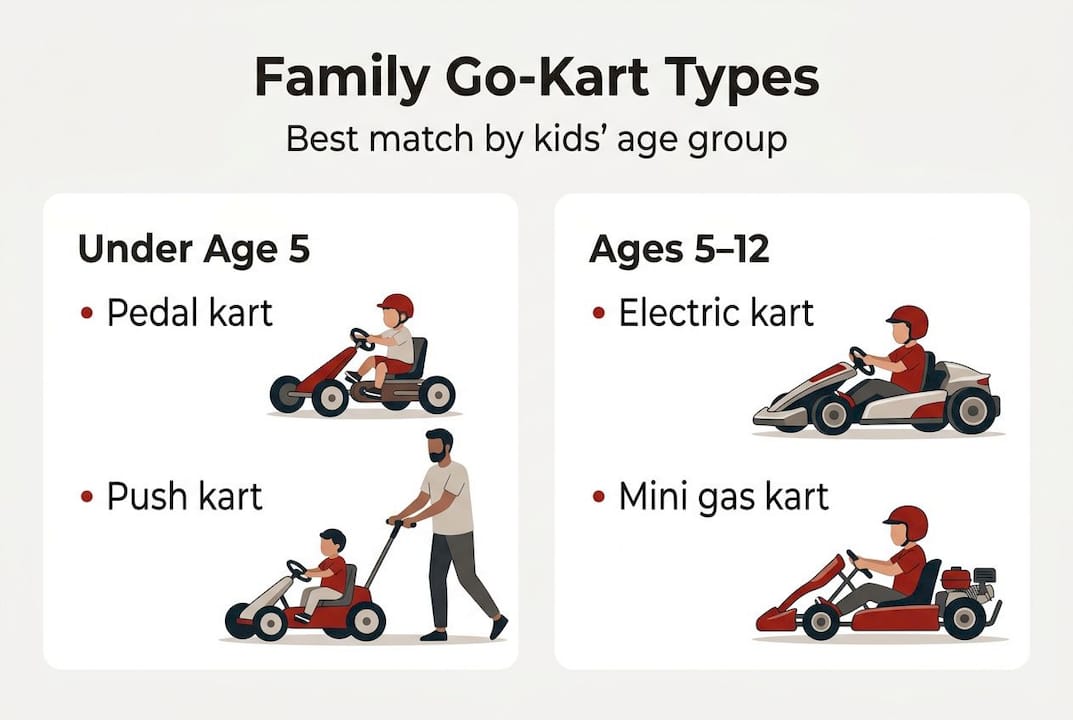
Electric karts are the sweet spot for kids aged 5 to 12. They run quietly, require minimal maintenance, and are easy to control at lower speeds. Models like the TrailMaster Mini offer child-safe speed limits under 15 mph with child-specific frame geometry and seat sizing. For teens and adults, electric options scale up significantly with adjustable seats and speeds reaching 25 mph or more.
Gas-powered karts deliver the most authentic karting experience. They’re typically suited for teens 13 and older and adults, with power outputs that push speeds from 25 to 40 mph depending on engine displacement. These karts reward riders who are ready to learn throttle control, braking, and basic mechanical awareness.
When choosing kids go-karts, your first filter should always be the manufacturer’s stated age, weight, and height limits. Don’t assume a kart is safe just because your child can physically fit in the seat.
Here’s a quick comparison of the three kart types:
| Kart type | Age range | Speed range | Key feature |
|---|---|---|---|
| Pedal kart | 2 to 5 years | Walking pace | No engine, safest option |
| Electric kart | 5 to 14 years | 9 to 25 mph | Quiet, low maintenance |
| Gas-powered kart | 13 years and up | 25 to 40 mph | Authentic performance |
Here are the core features to evaluate by age group:
- Young kids (5 to 8): Speed governor or limiter, padded frame, adjustable seat, easy-reach pedals
- Older kids (9 to 12): Disc brakes, higher weight limit, roll cage, safety flag mount
- Teens and adults: Adjustable seat and steering column, hydraulic brakes, full roll cage, helmet compatibility
Pro Tip: Always verify the kart’s maximum weight capacity before buying. A kart rated for 130 lbs puts a heavier child at risk even if the age range seems to match. Use the full go-kart buying checklist to stay organized during your search.
Essential safety features to prioritize
Once you know the right kart type, it’s critical to check for essential safety features before purchasing. A go-kart’s speed and style mean nothing if it isn’t built to protect your rider when things go sideways.
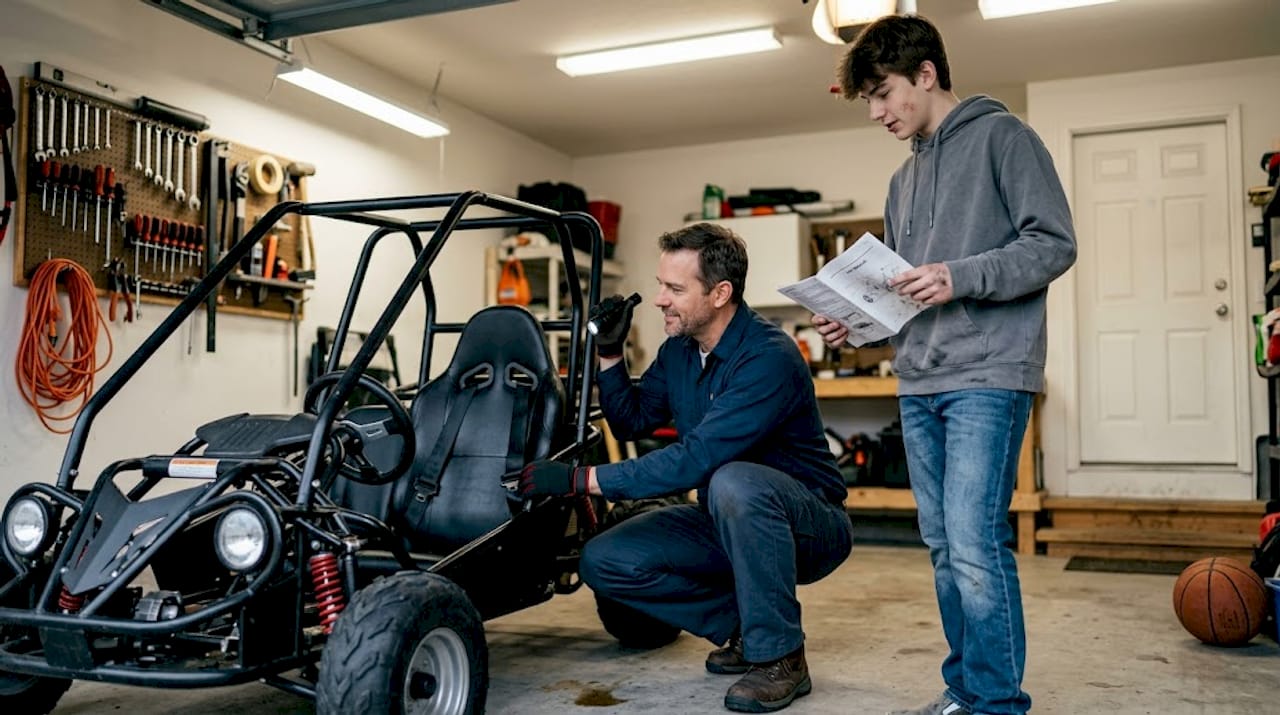
Safety ratings and certifications are your starting point. Look for karts that meet or exceed ASTM (American Society for Testing and Materials) standards. A kart with documented testing behind it is far more trustworthy than one with vague “quality guaranteed” language and no third-party verification.
The safety features for family go-karts you absolutely cannot skip include a proper seat belt, a full or partial roll cage, and a low center of gravity. A low center of gravity (CG) dramatically reduces the chance of tipping during sharp turns, especially on uneven terrain. Hydraulic brakes outperform basic drum brakes on wet surfaces and gravel, giving riders more control in real-world conditions.
“A low center of gravity reduces tipping risk significantly. Hydraulic brakes perform better on wet or gravel surfaces. Gas engines also need adequate cooldown time after sessions to avoid costly internal rebuilds.” — GoKarts USA safety guide
Here are the top 5 safety checks every buyer should complete before finalizing a purchase:
- Seat belt and harness: Must be a proper 3-point or 5-point harness, not a simple lap belt.
- Roll cage construction: Steel tubing, fully welded, surrounding the driver on all critical sides.
- Braking system: Hydraulic disc brakes preferred; check for responsive feel and easy reach.
- Speed governor: Essential for younger riders; confirm it’s factory-installed and lockable.
- Frame rigidity: No flex or wobble when you press on the sides; a weak frame is a serious red flag.
For detailed guidance on kid kart safety must-haves, we always recommend reviewing specs with a focus on what happens during a hard stop or unexpected bump, not just during a smooth lap.
Pro Tip: Buying a safe kart is only half the equation. Teach your young riders proper habits from day one: always wear a helmet, no passengers, no sharp turns at full speed. A safety-conscious rider using a well-built kart is the real winning combination.
Top brands, pricing, and where to buy
After prioritizing safety, your choice of brand and dealer is the next big factor in overall value and support. Brand reputation in the go-kart world is earned through years of consistent manufacturing, reliable parts supply, and responsive customer service.
When it comes to children’s electric karts, trusted go-kart brands like Razor and Coleman consistently lead reliability rankings. Cheap imports with unfamiliar names often suffer from frame assembly issues, inconsistent welds, and near-impossible replacement parts. The money you save upfront disappears fast when you’re hunting down a proprietary bolt or a discontinued motor.
For families serious about the recreational karting lifestyle, TrailMaster and BMS are brands we stand behind. They offer robust frames, solid warranty coverage, and parts availability that keeps your kart running season after season.
Here’s a practical pricing breakdown for family recreational karts:
| Brand | Price range | Best for |
|---|---|---|
| Razor | $300 to $700 | Young children, electric entry-level |
| Coleman | $500 to $900 | Kids and teens, gas and electric |
| TrailMaster | $900 to $1,800 | Teens and adults, recreational performance |
| BMS | $1,200 to $2,500 | Adults, premium builds, family all-ages |
Where you buy matters just as much as what you buy. Here are the main sourcing options:
- Specialized online retailers like GoKarts USA® offer curated selections with safety vetting, customer support, and shipping support.
- Powersports dealerships let you see karts in person, though selection is sometimes limited.
- Big-box retail stores carry entry-level options but rarely offer after-sale support or parts.
- Private sellers and auction sites carry risk unless you can verify service history and parts availability.
Use our go-kart buying workflow to map your priorities before you browse, so you’re comparing apples to apples across sellers.
Step-by-step purchasing workflow and setup tips
Understanding exactly how to move from decision to first ride ensures your family’s go-kart experience starts off right. Skipping steps here is how buyers end up with assembly headaches or surprise compatibility issues on delivery day.
Follow this workflow for a smooth buying and setup experience:
- Define your rider profile: Age, weight, height, and experience level. Use manufacturer specs, not guesses.
- Set a realistic budget: Include gear, a helmet, and a first-service parts kit in your total cost.
- Research and shortlist: Use reviews, brand guides, and the step-by-step buying workflow to narrow to two or three models.
- Verify safety certifications: Confirm the model meets ASTM or equivalent safety standards before ordering.
- Place your order and confirm shipping details: Note delivery windows, crate sizes, and any freight handling requirements.
- Inspect on arrival: Before signing delivery paperwork, check for frame damage, loose welds, and packaging completeness.
- Follow the assembly checklist: Tighten all fasteners to spec, connect all safety devices, and test brakes before the first ride.
- Complete warranty registration: Do this the same day. Gaps in registration can complicate future claims.
- Run a controlled first session: Stay at low speeds in a flat, open area. This breaks in the engine and familiarizes your rider with the controls.
For setting up your go-kart correctly, pay special attention to tire pressure, chain tension, and brake pad clearance. These three items cause most early-ride issues.
A critical reminder from the experts: gas engines need cooldown time after hard sessions to prevent internal heat damage. Never shut off a gas kart immediately after pushing it at speed. Let it idle for two to three minutes first.
Pro Tip: Schedule a full safety inspection after the first five hours of ride time. Fasteners loosen during break-in, and catching them early prevents bigger problems down the road.
Our expert family kart buying perspective
With the technical and practical advice covered, here’s our candid take based on years of helping families choose karts. The most common mistake we see? Families fixate on top speed or the lowest price and walk away from the conversation that actually matters: long-term support and parts availability.
A go-kart isn’t a one-time purchase. It’s a relationship with a machine that needs maintenance, occasional repairs, and sometimes upgrades as your rider grows. Choosing a kart from a brand or retailer that disappears after the sale is a frustrating experience we hear about far too often.
What most shoppers overlook is whether the safety features can be upgraded over time. A kart that grows with your child, one that can accept a better harness, a roll cage extension, or a speed governor adjustment, delivers years more value than a fixed-spec budget model. We also strongly believe that learning about youth go-karts and safety technology before you shop puts you in a completely different position at checkout.
Long-term satisfaction comes from balancing three things: a kart that’s safe, a rider who loves it, and a support network that keeps it running. That’s the formula.
Find the perfect family go-kart with GoKarts USA®
Ready to take the next step? Here’s how GoKarts USA® can help you put everything above into action.
At GoKarts USA®, we’ve done the vetting work for you. Every kart in our catalog is selected for safety, reliability, and genuine family enjoyment. Whether you’re looking for a beginner-friendly electric model or a full-featured gas kart for older riders, we have options at every price point. Check out the Mini Sport Kids ATV for younger adventurers or the powerful TrailMaster Taurus 200GX for family cruising. Browse our full range of go-kart options and find the ride that fits your family’s adventure perfectly.
Frequently asked questions
What is the safest go-kart speed for kids?
For kids aged 5 to 12, karts under 15 mph with child-specific designs are the safest choice, keeping speed appropriate while building riding confidence.
Which brands are best for family go-karts?
Stick with established names like Razor, Coleman, and TrailMaster. Trusted brands deliver better frame quality, parts availability, and after-sale support than unknown budget imports.
What are must-have safety features for recreational karts?
Prioritize seat belts, roll cages, a low center of gravity, and hydraulic brakes. These features work together to reduce tipping risk and improve stopping power in real riding conditions.
How much should I budget for a family go-kart?
Expect to spend between $600 and $2,500 depending on the kart type, brand, and features. Factor in gear, helmets, and a basic parts kit when setting your total budget.
How can I avoid common assembly mistakes with new karts?
Follow the manufacturer’s assembly checklist completely, verify all fastener torque specs, and contact your retailer immediately if anything seems misaligned or incomplete on delivery.