




TL;DR:
- Hobbyist mini bikes are rugged, capable off-road machines for all ages, not toys.
- Maintenance involves simple routine checks like oil changes and chain lubrication, easy for beginners.
- They are safe and versatile, suitable for family trail riding and outdoor fun when used responsibly.
Mini bikes have a reputation problem. Most people picture a wobbly little toy buzzing around a backyard, ridden by a six-year-old in oversized gear. The reality is far more interesting. Hobbyist mini bikes are rugged, capable machines that appeal to teens, adults, and entire families looking for affordable outdoor adventure. They’re not racing bikes, and they’re not toys. They sit in a sweet spot between accessibility and real riding performance. In this guide, we’ll break down exactly what defines a hobbyist mini bike, how the mechanics work, how they compare to similar bikes, and what you need to know to ride safely and legally.
Table of Contents
- What is a hobbyist mini bike?
- Mini bike mechanics and DIY maintenance essentials
- Mini bikes vs pit bikes vs pocket bikes: Key differences
- Safety tips and legal considerations for hobbyist mini bikes
- The surprising truth about hobbyist mini bikes: Not just ‘kids’ stuff’
- Ready for your own mini bike adventure?
- Frequently asked questions
Key Takeaways
| Point | Details |
|---|---|
| What defines a mini bike | Mini bikes are small, gas-powered bikes built for easy, fun off-road riding and DIY maintenance. |
| Simple care, great fun | With basic tools and casual upkeep, mini bikes offer reliable recreation for all ages. |
| Know the differences | Mini bikes are more family-friendly and forgiving than pit or pocket bikes. |
| Safety and legality matter | Ride safely, avoid overloading, and always check local laws before using mini bikes. |
What is a hobbyist mini bike?
A hobbyist mini bike is a small, gasoline-powered off-road bike built for recreational riding rather than racing or commuting. Think trail rides, backyard laps, camping trips, and weekend family fun. These machines are compact, tough, and surprisingly capable on light off-road terrain.
The core features are what set them apart. According to FRP GMB100 specs, most hobbyist mini bikes include:
- Air-cooled 4-stroke OHV engine: No oil mixing, no fuss. Just fill the gas tank and go.
- Pull-start ignition: Simple and reliable, even for younger riders.
- Chain drive system: Efficient power transfer and easy to maintain at home.
- Rear disc or drum brake: Controlled stopping without complicated hydraulics.
- Knobby off-road tires: Built for dirt, gravel, and uneven ground.
Engine sizes typically run from 50cc up to 212cc, giving you options whether you’re buying for a child or a full-grown adult who just wants to unwind on the weekend. That range is part of what makes mini bikes so versatile.
Hobbyists love these machines for a few key reasons. They’re affordable compared to full-size dirt bikes or ATVs. Parts are widely available and inexpensive. Maintenance doesn’t require a professional mechanic. And they’re genuinely fun, not in a watered-down way, but in a “let’s go again” kind of way.
You can learn more about riding responsibly in our mini bike safety overview, and if you’re shopping for younger riders, our guide on mini bikes for kids covers what to look for by age and size.
Pro Tip: Adults who ride mini bikes regularly report serious stress relief benefits. There’s something about the focus required to navigate a trail that clears your head better than most activities.
These aren’t just entry-level machines that you outgrow. Many experienced riders keep a mini bike around specifically because it’s low-stakes, low-cost, and high-fun. The hobbyist label fits perfectly because that’s exactly the spirit they’re built for.
Mini bike mechanics and DIY maintenance essentials
Now that you know what a mini bike is, it’s time to dig into how they’re built and how easy it is to keep them running. The good news: mini bike mechanics are about as beginner-friendly as it gets in the powersports world.
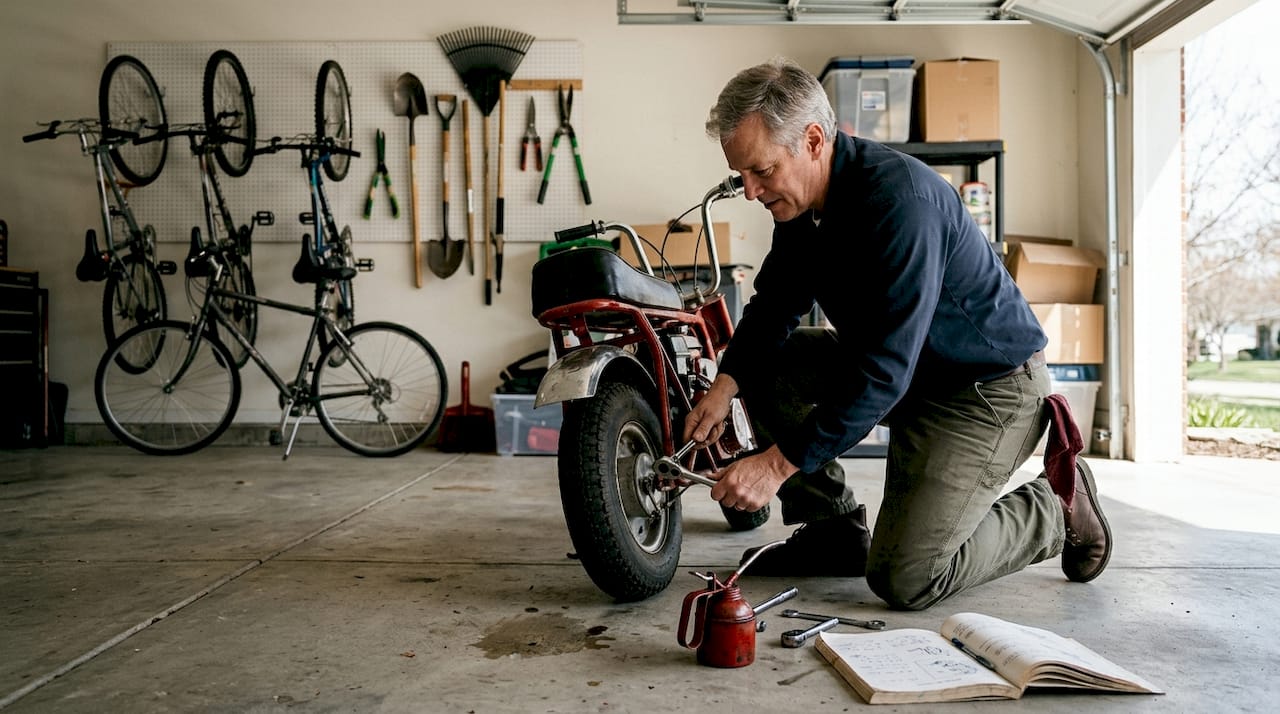
The heart of most hobbyist mini bikes is an air-cooled 4-stroke OHV engine. OHV stands for overhead valve, which means the valves sit above the combustion chamber. This design runs cooler, burns fuel more efficiently, and requires less maintenance than older 2-stroke designs. You don’t mix oil into the fuel. You simply check the oil level, change it on schedule, and ride.
Maintaining your mini bike properly is the single biggest factor in how long it lasts. Regular upkeep keeps your bike running strong and can reduce breakdown risk by up to 50%. Here’s the essential maintenance routine:
- Oil change every 10 to 15 riding hours. Fresh oil keeps the engine cool and prevents wear. This is the most important task and takes about 15 minutes.
- Chain lubrication every few rides. A dry chain wears fast and can snap. Use a dedicated chain lube and wipe away the excess.
- Carburetor cleaning every season. Fuel residue builds up and clogs jets. A clean carb means reliable starting and smooth throttle response.
- Tire pressure check before every ride. Proper pressure affects handling and safety more than most riders realize.
- Brake inspection monthly. Check pad wear and cable tension. Brakes should feel firm, not spongy.
All of these tasks can be done with basic hand tools. No specialized equipment required. Our detailed mini bike maintenance steps guide walks you through each one, and if something does go wrong, our troubleshooting mini bike issues resource covers the most common problems step by step.
Pro Tip: Keep a simple maintenance log, a notebook or a phone note works fine. Record the date, riding hours, and what you did. When oil changes happen every 10 to 15 hours, it’s easy to lose track without a record. This habit alone extends engine life significantly.
For new owners, our mini bike setup guide covers everything from assembly to first-ride checks so you start on the right foot.
Mini bikes vs pit bikes vs pocket bikes: Key differences
Once you understand the mechanics, it’s easier to see why mini bikes stand out from other small bikes. These three categories get confused constantly, and the differences actually matter a lot when you’re choosing the right machine for your needs.
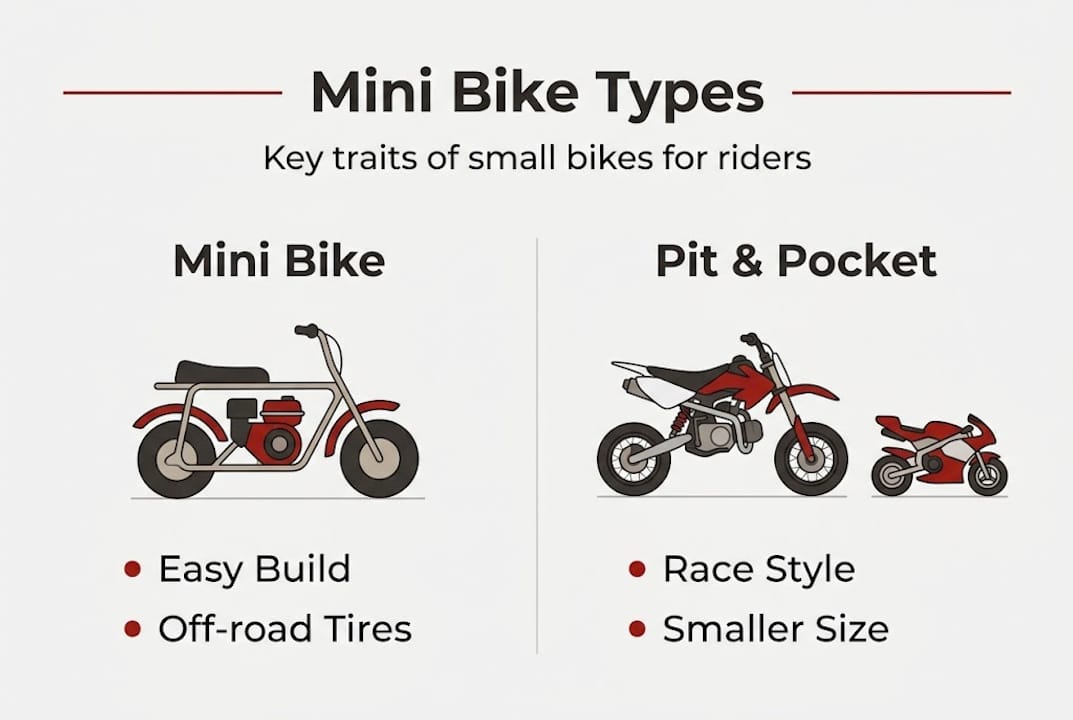
As Slashgear’s comparison guide explains, mini bikes are built for relaxed everyday use and durability, pit bikes are designed for aggressive track riding, and pocket bikes are track-only machines with almost no suspension.
| Feature | Mini bike | Pit bike | Pocket bike |
|---|---|---|---|
| Engine size | 50 to 212cc | 50 to 150cc | 40 to 50cc |
| Suspension | Soft, forgiving | Stiff, performance | Minimal to none |
| Best terrain | Dirt, trails, backyard | Motocross tracks | Smooth pavement only |
| Rider experience | Beginner to intermediate | Intermediate to advanced | Advanced |
| Maintenance ease | High | Moderate | Low |
| Price range | Affordable | Moderate to high | Moderate |
“Mini bikes offer a smoother, more forgiving ride for beginners and hobbyists, making them the most accessible entry point into the world of small-engine riding.”
Here’s when a mini bike is clearly the better choice:
- You want a machine the whole family can share and enjoy.
- You’re riding on trails, dirt paths, or private property rather than a track.
- You’re a beginner or buying for a child who is still learning.
- Budget matters and you want something affordable to maintain.
- You value durability over raw performance.
Pit bikes are excellent if you’re training for motocross or want to practice jumps and technical maneuvers. Pocket bikes are genuinely fun on smooth tracks but have no business on gravel or dirt. For most hobbyists and families, the mini bike wins on every practical level.
Our guide on choosing mini bikes for family fun goes deeper on matching the right model to your family’s needs, and if you’re an adult rider specifically, check out our picks for top mini bikes for adults.
Safety tips and legal considerations for hobbyist mini bikes
Understanding what a mini bike is means also knowing how to stay safe and legal while enjoying your ride. This is where a lot of new riders and parents get caught off guard.
The most common risks come from three areas. First, overloading the bike beyond its rated weight capacity strains the suspension and frame, making handling unpredictable. Second, riding at speeds the small frame wasn’t designed for increases stopping distance and reduces stability. Third, skipping safety gear because “it’s just a mini bike” leads to avoidable injuries. As noted in this safety guide, street modifications are also a significant risk that many riders underestimate.
Here are the safety practices every rider and parent should follow:
- Always wear a properly fitted helmet, gloves, and closed-toe shoes at minimum.
- Match the bike’s engine size and seat height to the rider’s age and experience.
- Never allow riders to exceed the manufacturer’s recommended weight limit.
- Supervise younger riders on all terrain until they demonstrate consistent control.
- Inspect the bike before every ride, brakes, tires, chain, and throttle response.
On the legal side, the situation varies significantly depending on where you live. Most mini bikes are classified as off-road vehicles and are not street legal by default.
| Location type | Typical rules |
|---|---|
| Private property | Generally legal with owner permission |
| Public off-road parks | Legal with registration in most states |
| Public roads | Illegal in most states without full street conversion |
| Sidewalks or bike paths | Illegal in virtually all jurisdictions |
Pro Tip: Never modify your mini bike for street use without researching your specific city and state laws first. What’s allowed in one county may carry a fine or impoundment in the next. When in doubt, keep it off the road.
Our beginner mini bike safety guide is a great starting point for new riders, and we also cover pocket bike safety tips for parents navigating the smaller end of the market. If you’re weighing options, our ATV vs mini bike safety breakdown helps you compare both.
The surprising truth about hobbyist mini bikes: Not just ‘kids’ stuff’
We’ve seen a pattern over the years at GoKarts USA®. A parent buys a mini bike for their kid, watches a few rides, and then quietly asks if there’s one that fits an adult. It happens constantly. And honestly, it makes complete sense.
Hobbyist mini bikes aren’t dangerous when used sensibly. They’re economical, fixable with basic tools, and capable of delivering real riding satisfaction at a fraction of the cost of a full-size machine. More importantly, they create shared experiences. Families that ride together build something that goes beyond the hobby itself. There’s mechanical learning, problem-solving, and genuine outdoor time that screens simply can’t replicate.
The outdated idea that mini bikes are just beginner toys misses the bigger picture. They’re a gateway to mechanical confidence, outdoor adventure, and family connection. Adults rediscover the joy of hands-on learning when they wrench on a mini bike alongside their kids. That’s not a small thing. Explore what mini bikes for families can look like when you approach them with the right mindset.
Ready for your own mini bike adventure?
You’ve got the knowledge. Now it’s time to put it into action. Whether you’re shopping for a first-time young rider or looking for something you and your family can enjoy together on the trails, GoKarts USA® has you covered.

We carry a wide selection of mini bikes, parts, and accessories built for hobbyists and families at every level. From the mini sport kids ATV that’s perfect for younger riders just getting started, to replacement parts like pocket bike footpegs for keeping your current ride in top shape, we stock what you need. Browse our full lineup at the GoKarts USA® mini bike shop and find the right machine for your next adventure. Free shipping deals and seasonal promotions make it even easier to get rolling.
Frequently asked questions
What makes a bike a ‘mini bike’ versus other small motorcycles?
Mini bikes have a lower seat height, smaller frames, off-road tires, and are built for relaxed fun. Unlike pit or pocket bikes, which are designed for track use, mini bikes prioritize comfort and durability for everyday recreational riding.
How hard is it to maintain a hobbyist mini bike?
Maintenance is straightforward. Oil changes, chain lube, and carburetor cleaning every 10 to 15 riding hours cover the essentials, and all of it can be done with basic hand tools at home.
Are mini bikes safe for kids and family use?
Yes, when used properly. Mini bikes feature forgiving suspension and durable builds that make them more beginner-friendly than pit or pocket bikes, especially for younger or less experienced riders.
Can I ride a mini bike on public roads?
In most cases, no. Legality varies by location, and the majority of mini bikes are classified as off-road vehicles. Always check your local and state laws before riding anywhere outside private property.